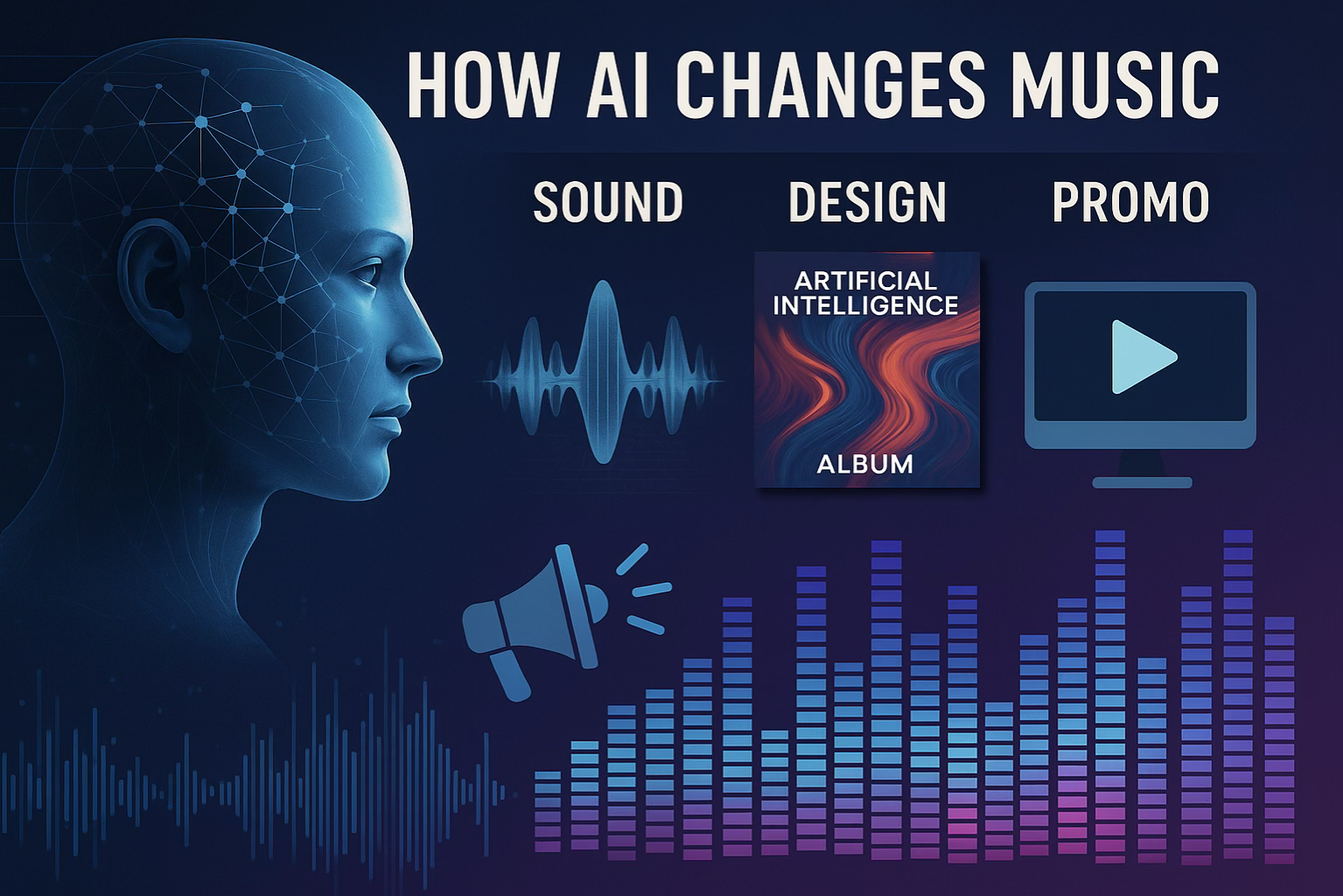
Artificial intelligence reshapes music at every stage of creation. Musicians, designers, and marketing teams test neural tools in composition, mixing, visual work, and promotional planning. These systems process data at high speed, generate new material, and support experimentation. Artists control the direction while algorithms handle large workloads and repetitive tasks.
The online casino Сorgi bet demonstrates how digital entertainment platforms use structured data and algorithmic tools to maintain smooth operation. Its developers work with predictive models that monitor user flow, detect irregular patterns, and maintain fairness controls. They apply analytical systems to balance pacing, adjust interface logic, and run simulations that test player behavior under different conditions. This approach reduces errors and strengthens overall stability. The platform also tracks regional traffic spikes, session patterns, and engagement cycles, which allows teams to tune internal mechanisms without direct promotion. These techniques show how neural tools function in environments that demand accuracy, consistency, and real-time monitoring.
AI in sound creation
Producers rely on neural networks for composition and sound design. They create audio sketches by entering prompts and adjusting parameters. These models generate harmonies, rhythms, and textures that help musicians explore fresh directions. The process accelerates early development because creators no longer spend long periods shaping every draft manually.
AI-driven synthesis broadens the available sonic range. Instead of loading samples and reshaping them, musicians create waveforms with precise control over timbre, structure, and movement. Neural systems also blend synthetic and natural sources into hybrid instruments. These results appear quickly, which supports more experimentation.
Producers study large catalogs through analytical models that track chord tendencies, rhythmic density, and structural habits. Musicians use this information to push their writing in new directions. They treat data as a reference, not a template, because the final decisions always remain in human hands.
Vocalists also use neural tools. They test phrasing, timing, and stylistic choices through algorithmic suggestions. A singer reviews multiple variations and picks the version that fits the track. This reduces wasted studio time and helps artists refine ideas before final recording.
AI assistance also speeds technical cleanup. Noise reduction, stem separation, and early mixing steps take less time because algorithms handle precision edits with high accuracy. Producers then focus on creative detail rather than mechanical correction.
AI in visual design for music releases
Neural networks influence artwork, video segments, and stage graphics. Designers generate early concepts through prompts, then refine them manually. This workflow reduces the gap between idea and execution.
Designers use these systems to produce several types of material:
- Rough artwork drafts that help shape the release direction
- Typography variations for logos and titles
- Visualizers that sync with rhythm and dynamic shifts
Artists rarely publish AI output without editing. They adjust perspective, tone, detail, and structure to maintain identity. Neural tools only handle the fastest layers of the process.
Music videos also evolve. Some creators generate background scenes or abstract elements and combine them with live footage. This reduces production barriers without lowering creative ambition.
The rise of AI supports independent musicians. They form strong visual identities without relying on large external teams. At the same time, designers avoid stylistic uniformity by building private datasets and mixing AI layers with traditional techniques.
AI in promotion and audience research
Neural networks support promotion by analyzing listener behavior and generating early drafts of communication. Marketing teams examine posting schedules, track performance, audience retention, and geographic activity. These insights help them understand what listeners expect and how content spreads online.
AI-written drafts speed creation of announcements, tour updates, and captions. Specialists edit the text to maintain a consistent tone. The model provides structure, while humans shape the message.
Short-form content also benefits from analytical tools. Systems detect which moments in a track create higher listener response. Musicians use this knowledge when selecting snippets for teasers.
Fan interaction analysis grows as well. Models read comment patterns, detect repeated requests, and highlight topics that listeners discuss most. This helps artists understand future direction without speculation.
Tour planning also changes. Neural systems track early engagement in different regions and highlight cities with strong response. Independent musicians gain strategic insight that previously required large research teams.
Visual promotion adopts AI as well. Artists produce drafts for posters, lyric cards, and looped segments. They then refine these results to match the tone of the release and the expectations of their audience.
Ethical considerations
AI raises questions about data sourcing, authorship, and consent. Musicians want assurance that training materials respect rights. Many build private datasets that contain only their own recordings, sketches, or sound libraries. This protects creative identity and avoids conflict.
Some creators worry that AI-generated material may reduce the value of human craft. Others argue that the algorithm only reacts to prompts and never sets artistic goals. In practice, musicians preserve authorship by editing every output and directing the full workflow.
Volume presents another issue. AI can generate large quantities of audio, visuals, or text. Without careful filtering, the material becomes disorganized. Artists respond by curating only the strongest pieces and discarding the rest.
AI detection tools also create challenges because they sometimes mark human material as AI-generated. This drives researchers to improve detection logic.
Listener attitudes vary. Some accept AI involvement without concern, while others prefer clear disclosure. No strict rule exists yet, but transparency strengthens trust.
Table: Practical uses of neural networks in music workflows
| Area | Function | Effect on workflow |
| Composition | Generate harmonic and rhythmic ideas | Speeds early development |
| Sound design | Produce new timbres and hybrid instruments | Expands available textures |
| Mixing | Clean stems and reduce noise | Shortens technical editing |
| Visual design | Create artwork drafts and typography variations | Supports broader exploration |
| Promotion | Analyze listener behavior and draft messages | Reduces workload and improves planning |
Human control in AI-driven environments
Musicians, designers, and marketing teams maintain full control of creative direction. Neural systems offer speed and variation, but humans decide which results matter. They evaluate drafts, correct structural issues, reshape tonal balance, and refine visual composition.
As AI tools grow more advanced, artists adopt more technical knowledge. They study how prompt construction influences results, how datasets shape style, and how parameter adjustments alter structural output. This understanding grants stronger oversight.
Some musicians combine AI drafts with analog instruments, hand-drawn elements, or documentary footage. This blend keeps their identity clear and prevents overreliance on algorithmic output.
How musicians adapt to rapid AI progress
Artists respond to rapid changes with structured habits. They study model updates, test new functions, and refine workflows. They discuss findings with peers to expand collective knowledge.
Musicians manage integration through several steps:
- 1.They identify repetitive or time-intensive tasks.
- 2.They assign these tasks to neural systems under controlled conditions.
- 3.They refine any promising results through manual work.
- 4.They maintain organized archives of both human-made and AI-assisted material.
- 5.They track listener response to measure the impact of new methods.
This process supports experimentation while preserving consistency and direction.
The future direction of AI in music
Future AI development in music will likely focus on personalization. Models will adapt more precisely to individual styles. Musicians may build custom systems trained on older albums, rehearsal material, or improvisations. These models will generate outputs that align more closely with each artist’s established direction.
Collaborative work may also change. Creators from distant regions will exchange AI-assisted drafts and refine them together. This reduces logistical complexity and encourages cross-regional cooperation.
Audience interaction will evolve as listeners receive adaptive versions of tracks based on their mood or listening habits. Musicians will decide how much flexibility to grant while keeping artistic control intact.
Design workflows will continue shifting. Artists will combine algorithmic sketches with hand-made elements to form distinct visual identities for each release.
Promotional strategies may rely more on real-time analysis. Neural models will track the effectiveness of posts, schedule timing, and content structure. Specialists will refine messaging with human judgment.
Conclusion
AI changes music by expanding the tools available for sound creation, design, and promotion. Neural networks assist with composition, mixing, artwork, and audience research. They shorten technical tasks and increase experimentation. Human intent guides the final outcome because artists evaluate every result and decide which material enters the final project.
Digital environments outside music, such as the structure used in corgi bet, show how algorithmic precision supports consistency and stability. In music, similar methods strengthen creative workflows without taking agency away from the creator.
Musicians who understand both the strengths and limitations of these systems can shape richer projects and maintain full control over their creative direction.