
Review by Christopher Manson for MPM
The night was thick with a cold, cloying mizzle, the kind that seeps into the bones and turns breath to mist. Low clouds hung heavy over Birmingham, pressing down upon the city like a mourner’s veil, their underbellies aglow with the blood-red shimmer of high-rise cranes.
Streetlights flickered in pools of reflected neon, and the distant wail of sirens cut through the damp hush. A quick, filthy kebab was much needed, and drew strange looks from the servers as we requested 2 large, trays of just the medusa like meat tendrils, smothered in chilli sauce and garlic mayo, inhaled in the dry conclave of the kebab shop, before we join the restless throng, stood in anticipation. The queue outside the O2 Institute had now snaked around the building, a restless gathering of dark silhouettes, shifting foot to foot, shoulders hunched against the relentless drizzle. Voices rose in bursts of laughter and anticipation, boots scuffed wet pavement, as cold hands pushed deep into pockets as the excitement rose in expectation.
When at last the doors groaned open, the crowd surged slowly forward, spilling inside like the tide breaking over jagged rocks. The warmth of bodies replaced the chill, the scent of damp leather and spilled beer settling into the air. The hall yawned vast and expectant, the stage looming at its heart, dominated by Tremonti’s towering backdrop, a spectral angel, arms outstretched in silent benediction, its gaze hollow yet commanding. It stood like a sentinel, as if awaiting the arrival of the faithful, ushering them into a night of fury and fire. Those that knew instantly recognised the angel with the out-swept arms as the cover to the long awaited, 6th album.
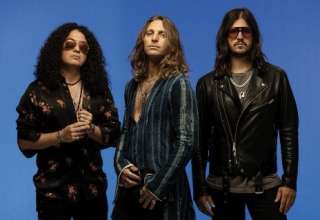
But before Tremonti’s sermon of steel, there was an offering, a band whose arrival on stage would strike like a hammer on anvil, sending shockwaves through the expectant mass. From the valleys of Merthyr Tydfil, forged in the iron heart of Wales, came Florence Black. A power trio of formidable force, comprising Tristan Thomas on guitar and vocals, Jordan Evans on bass, and Perry Davies behind the drum kit, they carried with them the weight of a land steeped in history, it’s very soil ringing with the echoes of toil and hardship.
Their name, Florence Black, was more than mere moniker, it was a ghost from the past. Legend spoke of a woman lost to time, a tragic beauty who once wandered the desolate moors, her heart heavy with despair. Some said she had been wronged, left broken and betrayed; others whispered of a crime, a desperate act born of love turned sour. It was said her spirit still roamed the wild expanse of Wales, wailing on the wind, searching for solace that would never come. If ever there was a band to bear her name, it was this one, dark, relentless, and fuelled by a primal, unyielding force.

The first notes of Start Again cleaved through the air like the crack of a thunderhead. Guitars roared to life, thick as storm clouds, while Perry Davies’ drums pounded with a concussive force that rattled ribs and sent drinks quivering in outstretched hands. Jordan Evans stalked the stage, bass slung low, his presence a force of gravity that pulled the crowd into their world. Thomas, at the helm, was a tempest, his voice rising in raw, unvarnished power, his guitar spitting venom and melody in equal measure.

The O2 Institute, though still filling, began to move as Bed of Nails rumbled forth, a sledgehammer riff grinding through the space like the turning of great iron gears. Heads began to swirl, bodies to lurch, as Florence Black tightened their grip, their energy spreading like wildfire. The band had no need for subtlety—this was music delivered with the force of a blacksmith’s hammer, each strike ringing with precision and weight.

The heavy churn of The Deep End dragged the audience further under, its relentless rhythm a tide pulling them into the abyss. The lights, previously stark and white, now flared into deep blues and purples, the stage bathed in eerie luminescence, while the shadows of the band loomed large against the backdrop. The air grew thicker, the crowd pushing closer, emboldened by the dark majesty of the sound.

By the time Look Up erupted, the audience was theirs. Hands shot into the air, fists pounding in time with the relentless beat. Rockin’ Ring kept the fire burning, its pulsing, primal energy an invocation of something deep and ancient—an unshackled, wild joy that surged through the veins of the gathered souls. Evans leaned into the crowd, grinning through the onslaught, urging them forward. Davies, lost in the storm of his own creation, battered the drums as if each strike were chiselling his name into the annals of rock history.

Then came Zulu, its crushing weight and seething riffage sending fresh waves of movement through the throng. The sound was monolithic, a great black tide sweeping the hall, drowning hesitation, erasing the outside world until nothing remained but this moment—this unstoppable wall of rock and thunder.
Finally, they unleashed Sun and Moon, their debut single and a song that, even years later, still carried the full power of its inception. The crowd, now wholly enraptured, clapped and cheered, their voices rising to meet the fury. The energy in the room reached a fever pitch, surging like a storm over the moors, wild and untamed. As the final chords crashed and faded into the ether, cheers erupted, a testament to the new converts won in those fleeting yet ferocious minutes.

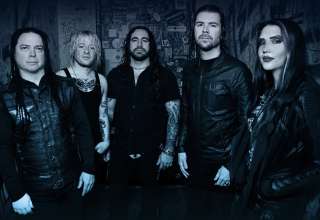
The band posed for a final moment, bathed in the glow of stage lights, immortalised in a snapshot of triumph. Then, as swiftly as they had arrived, they were gone. The stage was theirs no longer; roadies descended like wraiths, clearing cables and hauling amps, the machinery of the night shifting towards its next chapter. The angel above remained unmoved, arms ever open, waiting for the next ritual to begin.
But for those who had witnessed it, Florence Black had left their mark, etched deep into the bones, like the spectre of their namesake wandering the wilds, never to be forgotten.
As the embers of Florence Black’s set smouldered in the air, their hurried departure leaving a ghost of sound hanging beneath the vaulted ceiling of the O2 Institute, the crowd pressed closer to the stage, an eager tide drawn toward the pulpit. The black-cloaked figure of the backdrop loomed over them, its wings outstretched, its silent benediction cast in the glow of the house lights. The words, “The End Will Show Us How,” were stretched into an unfamiliar sprawl, their reversed order like a cryptic scripture meant to be deciphered by only the most devoted.
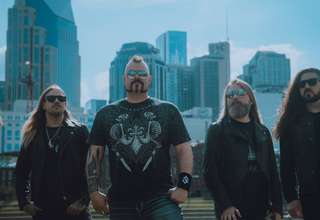
Mark Tremonti’s name carries weight in the rock and metal world, his past etched in the annals of heavy music as the guitarist for Creed, a founding member of Alter Bridge, and the mastermind behind his own band, Tremonti. What began as a solo project in 2011 quickly grew into a force unto itself, a sanctuary for the guitarist’s heavier, darker inclinations. Their debut, All I Was (2012), struck like a sudden storm, raw and relentless. Cauterize and Dust followed in 2015 and 2016 respectively, each album a refinement of the band’s sound, blending towering riffs with haunting melodies. A Dying Machine (2018) introduced a conceptual depth, telling a story of synthetic beings and the fragility of human ambition, while Marching in Time (2021) reflected the uncertainty of a world unravelling at the seams. Now, with The End Will Show Us How (2025), Tremonti’s sixth offering, the band has sharpened their blade, delivering a collection of tracks that cut through the darkness with both fury and finesse.

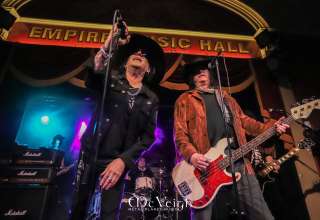
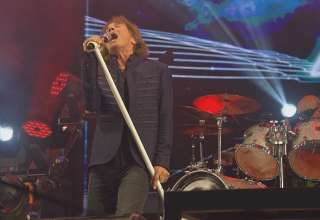
As the house lights dimmed, the air thickened with anticipation. Tanner Keegan, Ryan Bennett, and Eric Friedman took their places, their figures spectral in the gloom. Then came Tremonti himself, stepping into the glow of the spotlights, his much’d beloved one off PRS guitar, name STELLA after his daughter, slung low, his presence, commanding, his eyes darting as he smiled quietly. Without a word, the band struck, launching into Wish You Well with the force of a hammer against an anvil. The song’s opening riff was a flurry of movement, a hurricane of sound as Tremonti’s voice rang out, raw yet melodic. The crowd, already ablaze from the night’s first act, roared in approval, fists in the air, heads snapping to the relentless beat. Ryan Bennett’s drums thundered through the hall, each strike reverberating through the bones of those in attendance, while Keegan’s bass added a snarling weight beneath the carnage, as he bounced across the stage with each seismic heartbeat.

Cauterize followed, its chugging intro sending shockwaves through the floorboards. The guitars bit hard, each note searing like iron fresh from the forge. Tremonti’s vocals soared over the chaos, despite being under the weather, his voice was still laced with urgency, the kind of desperation found in a man clawing his way free from the abyss. The chorus, vast and towering, had the audience shouting in unison, their voices rising to meet his. It was an unrelenting charge forward, no space to breathe, no respite given.
Then came You Waste Your Time, and once again, the opening riff struck like lightning against a storm-darkened sky. The song’s breakneck pace left no room for hesitation, and the crowd responded in kind, moving as one entity, a writhing sea of bodies lost in the maelstrom. Tremonti’s solo was a blistering display of technique and emotion, his fingers dancing over the frets with effortless precision. Keegan and Friedman flanked him, their harmonies weaving through the sonic assault like twin spectres in the night.

Tomorrow We Will Fail saw the band shift gears, the doom-laden intro hanging heavy in the air, its slow build casting an ominous shadow. Tremonti’s vocals dripped with despair, a lamentation against the inevitable. The chorus swelled like a storm surge, crashing over the audience in waves of distortion and melody. Bennett’s drumming was nothing short of colossal, each strike resonating through the cavernous hall, a heartbeat of impending doom.
Then, The Things I’ve Seen, a track soaked in melancholy, its verses painting images of loss and regret. The guitars shimmered like distant lights through fog, the melody haunting. The crowd swayed, hypnotized by the ebb and flow of the song’s dynamics, drawn into the confessional nature of the lyrics. Tremonti’s voice carried the weight of a man who has walked through fire and come out the other side, scarred but unbroken.
Throw Them to the Lions was a feral beast, snarling and snapping, its relentless rhythm sending shockwaves through the venue. The chorus hit like a war cry, the band wielding their instruments like weapons, every note a strike, every beat a call to arms. The pit ignited, a furious cyclone of movement, as the crowd lost themselves to the sheer brutality of the moment.

Then Another Heart, its opening riff a scalpel through the din, slicing through flesh and bone with surgical precision. The rhythm section roared to life, Keegan’s bass rattling ribcages, Bennett’s drums a relentless barrage of cannon fire. Tremonti’s voice was an incantation, each syllable laced with urgency, a preacher atop a pulpit, delivering his sermon with unshakable conviction. The crowd surged, feeding off the energy, a feedback loop of fury and devotion.
It’s Not Over was a moment of celestial clarity, its chorus soaring like a prayer whispered beneath the arches of a ruined cathedral. The audience, caught in its embrace, sang as one, their voices lifted toward the heavens, unyielding and pure.
Then So You’re Afraid—a frantic sprint through the dark, the guitars biting, the drums unrelenting. It was chaos held together by sheer will, a runaway train threatening to fly from the rails at any second, only to be wrangled back into control by the band’s mastery.

Flying Monkeys slithered into existence, a serpentine groove winding its way through the crowd. Its hypnotic rhythm coiled around them, pulling them deeper into the abyss. It was a slow descent into madness, each note a whispered temptation, each lyric a siren’s call.
The spectral hush of Dust followed, Tremonti’s voice a spectral lament, carrying the weight of sorrow across the silent throng. The guitars wept beneath his words, each note a tear, the crowd holding its breath, suspended in the moment.

Catching Fire reignited the inferno, its chorus searing through the darkness, an anthem of defiance against oblivion. My Last Mistake was a furious confession, the sound of a man purging his soul through distortion and sweat.
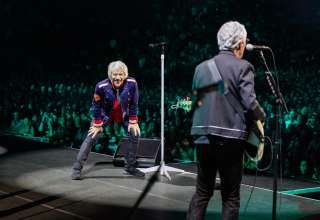
Then came Marching in Time. Before its first notes rang out, or the crowd erupted, Tremonti declared the night had one more surprise, Sophie Burrell, guitarist, YouTube virtuoso, and rising force in rock, stepped forward to join the fray. Tremonti’s daughter, Stella, has dubbed her “Gophie” in a childhood mispronunciation, and tonight, she was a warrior in her own right, duelling Tremonti in a six-string battle for the ages. Their chemistry was electric, and rightly so as Sophie had been allowed into the hallowed family, her relationship with drummer Ryan was unceremoniously delivered to the crowd, and from thenceforth a dance of sorcery and steel ensued that left the audience in no doubt to the consumption of Sophie into the bands beating heart.

Tremonti, those modern-day minstrels stood on the stage for the cries of approval most unexpected. For weeks, the tour had marched onward without heed to the pleas of the faithful, but tonight, the restless spirits of the crowd would not be denied. There had been repeated calls for a certain song, and tonight these calls had finally been heard, A name known to the many, that word is DECAY!

Mark Tremonti, that gaunt maestro of the six-stringed sabbath, stood silhouetted against the infernal glare, his visage a mask of grim resolve. The faintest smirk curled his lip, as though privy to some arcane jest, before he raised a skeletal hand to silence the din. “You’ve summoned it,” he intoned, his voice a gravelled whisper that slithered through the hall. “Now bear witness.”
Decay erupted like a fissure splitting the earth. The guitar’s wail pierced the veil, a keening spectre unleashed, as Tremonti’s fingers danced across the fretboard with diabolical precision. Eric Friedman’s bass thrummed low and malignant, a subterranean pulse that quickened the blood, while Ryan Bennett’s drums struck like the fists of some chthonic titan, each beat a tombstone slammed upon the grave of silence.

The crowd, now a seething maelstrom, howled the lyrics as if exorcising ancient curses. Tremonti’s voice, raw and phantasmal, wove through the tempest: “All we are… is decay…” The words hung like a requiem, a threnody of despair and defiance that seemed to seep into the very stones of the venue. Above, the lights strobed like dying stars, casting jagged shadows that twisted and lunged, as though the building itself had sprung to unholy life.

In the song’s final throes, the band conjured a cacophony worthy of the abyss, a crescendo of feedback and fury that collapsed into a sudden, aching void. For a heartbeat, the world stood still, the audience gasping as if surfacing from some collective nightmare. Then, the dam broke. A roar surged forth, primal and unhinged, shaking the rafters as the players retreated into the gloom, their task complete, the air itself seemed to quiver with a spectral energy, as though the very walls bore witness to the unholy communion between band and audience.
The crowd, a seething mass of humanity, stood transfixed, refused to let them go. A chant rose, low and guttural, demanding one more. “Ten more!” someone bellowed, lost in the fervour, their souls laid bare before the altar of sound. Yet, the night was not yet spent; the shadows still clung to the corners, whispering of one final offering.

The band returned to the stage, their figures silhouetted against the crimson glow of the lights, like phantoms summoned from some nether realm. With a roar that seemed to tear the fabric of reality asunder, they launched into All the Wicked Things. The opening riff was a jagged blade, slicing through the lingering haze of the previous songs, its edge sharp and merciless. Tremonti’s voice, a guttural incantation, rose above the din, a call to arms that stirred the blood and set the hearts of the crowd aflame. The chorus descended like a storm, a deluge of sound that drowned all reason and left only primal fervour in its wake. The guitars snarled and hissed, their harmonies twisting like serpents in a deadly dance, while Bennett’s drums pounded with the relentless fury of a war machine. The song’s final moments were a maelstrom of chaos and control, a testament to the band’s mastery over the forces they had unleashed.

Yet, even as the echoes of All the Wicked Things faded into the ether, a darker presence began to stir. The stage was bathed in an eerie, otherworldly light, and the opening notes of A Dying Machine crept into the room like a shadow stretching across a desolate moor. The song was a slow, deliberate incantation, its verses laden with a mournful weight, Tremonti’s voice carrying the burden of a thousand sorrows. The guitars shimmered with a ghostly beauty, their melodies weaving a tapestry of despair and fleeting hope. The crowd stood as one, their collective breath held, their souls ensnared by the spell of the music.

And then, the storm broke. The final chorus of A Dying Machine erupted with a force that seemed to shake the very foundations of the earth. Tremonti’s guitar solo was a cry of anguish and defiance, each note a dagger to the heart, each phrase a lament for the fallen. Keegan’s bass rumbled like distant thunder, while Bennett’s drums were the heartbeat of a world teetering on the brink of oblivion. The audience, swept up in the tempest, raised their voices in a unified cry, their voices blending with Tremonti’s to create a moment of pure, unadulterated catharsis. It was as though the veil between worlds had been torn asunder, and for a fleeting instant, the living and the dead stood as one.

As the final note faded into the void, the band stood together, their figures silhouetted against the blinding light of the stage. The crowd erupted into applause, a deafening roar that seemed to rise from the very depths of their souls. Tremonti, ever the humble maestro, raised his guitar in salute, his face a mask of exhaustion and triumph. The night had been a journey through darkness and light, a testament to the power of music to transcend the mortal coil and touch something eternal.

And then, as the house lights rose and the first strains of the exit music began to play, the crowd began to disperse, their hearts still pounding, their minds still reeling from the experience. They had borne witness to something extraordinary, a performance that would linger in their memories like a haunting, long after the echoes of the music had faded into the night. For Tremonti and his band, it was another chapter in a saga defined by passion and precision. For the audience, it was a reminder of the dark allure of music, its power to stir the soul and awaken the shadows that dwell within.
The End had indeed shown them How, and in its wake, they we were forever changed.
Photography by Manny Manson for MPM