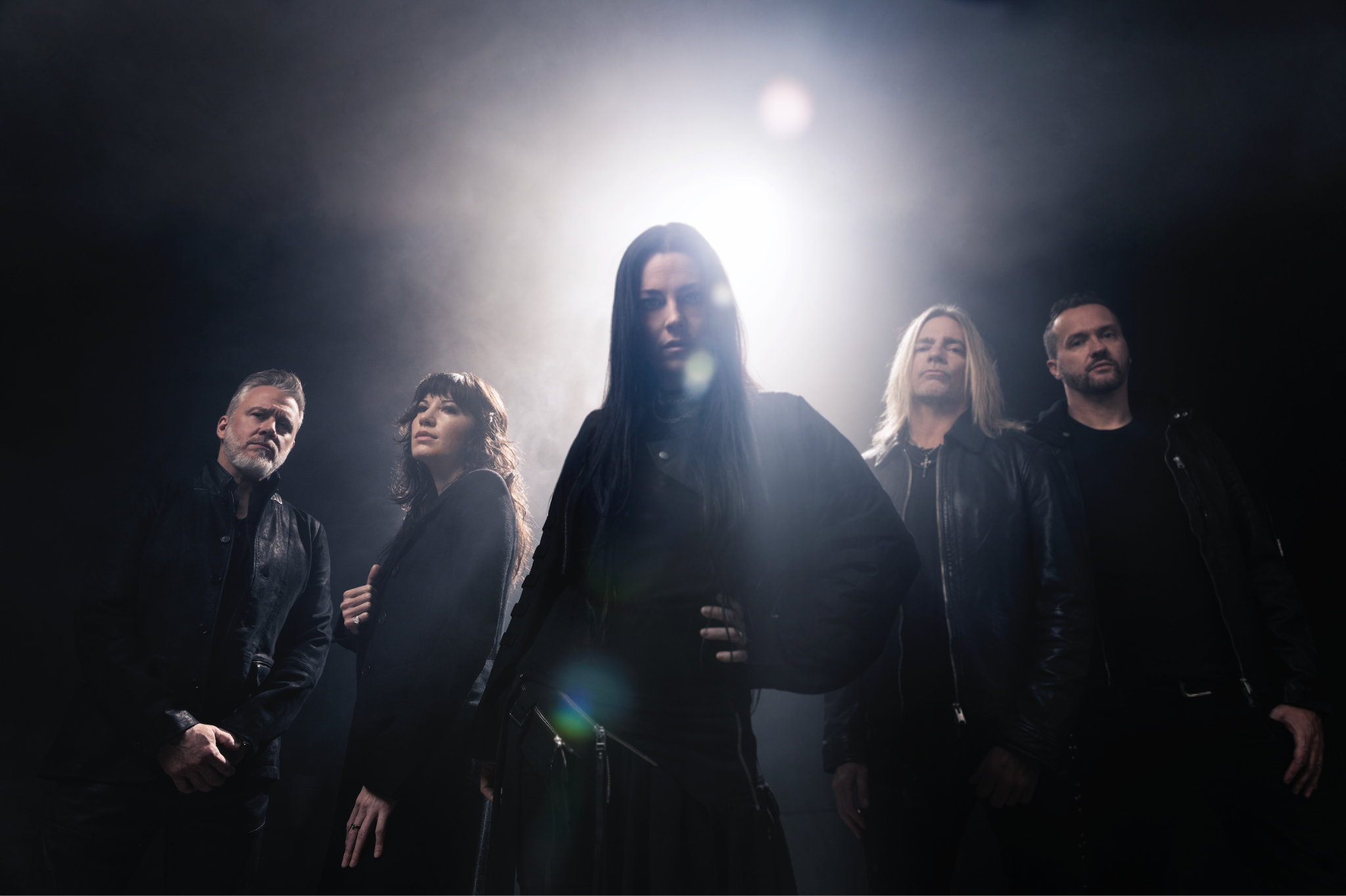
Review by Rick Eaglestone for MPM
Some bands earn a legacy and spend the remainder of their career managing it carefully. Evanescence have never operated that way.
When Amy Lee and Ben Moody’s debut album Fallen arrived in 2003 and sold over seventeen million copies worldwide — one of the best-selling rock records of the twenty-first century, a record that launched two of the defining singles of that decade and won the band two Grammy Awards — Lee used the platform she built not to replicate what worked but to push against the edges of what Evanescence is supposed to sound like. Synthesis stripped the band back to orchestral arrangements. The Bitter Truth arrived as their most politically direct and sonically heavy work. Now, five years on, Sanctuary arrives as their sixth studio album and, in several important respects, their most adventurous one yet.
The context surrounding this record is as important as the music itself. Across the three-plus years of its creation, the world outside shifted into something Lee describes as a period of manufactured confusion — an era of political disorientation, misinformation and social fracture that made the search for genuine human connection feel both more urgent and more difficult. Speaking to Kerrang! for the album’s cover story, she described the record’s central preoccupation as finding each other, dark as it may be, because you cannot fix what you refuse to face. That impulse — to name the darkness before insisting on the light — animates every track on Sanctuary and gives the record a moral seriousness that separates it from most of what passes for hard rock in 2026.
The album also marks a structural shift in how Evanescence work. For the first time in their recording history, Sanctuary carries multiple producers: Nick Raskulinecz, whose credits include Korn, Foo Fighters and Rush, contributes five tracks; the remaining material was handled by Zakk Cervini and Jordan Fish, whose collective production fingerprints can be found across Bad Omens, Bring Me The Horizon, Spiritbox and Architects. Zakk Cervini also mixed the full album. The result is a record with a wider tonal range than any Evanescence release since The Open Door in 2006 — not inconsistent, but genuinely varied, each producer’s approach serving the emotional register of the songs assigned to them.
Equally significant is the arrival of bassist Emma Anzai, making Sanctuary the first Evanescence album to feature her on record. Tim McCord, previously the band’s bassist, has shifted to guitar alongside Troy McLawhorn, creating a configuration that Lee has spoken about with visible enthusiasm. The rhythm section of Anzai and drummer Will Hunt provides the album with a low-end weight and forward momentum that the band’s more orchestral recent work had occasionally diluted. The strings — arranged by Michael Wandmacher, performed by cellist Dave Eggar (a longstanding Lee collaborator), and conducted by Susie Bench, who worked on the Synthesis Live tour — sit alongside rather than above the band, complementing the arrangements without dominating them.
The album opens with Beautiful Lie a track whose title announces its thematic territory plainly: the seduction of comfortable falsehood and the particular courage required to reject it. Lee’s piano arrives first, as it has across so many Evanescence openings, but the production here carries a tension from the first bar that signals the heavier direction to follow. At four minutes eleven seconds it is the album’s longest piece and earns the runtime by moving through several emotional registers before arriving at a conclusion that refuses the comfort it has spent four minutes naming. A considered and confident way to begin.
Tell me when you’ve had enough demonstrates what Cervini and Fish bring to this record: a more contemporary production approach, electronic elements woven into the arrangement with confidence rather than apology, and a rhythmic drive that sits closer to the harder end of the band’s range. Lee’s vocal delivery carries the directness that defined the best moments of The Bitter Truth while the melodic architecture beneath it is unmistakably Evanescence. The chorus is substantial. It will become one of the tour’s set-defining moments.
The album’s lead single, Who Will You Follow directly addresses the themes Lee has articulated publicly ahead of the release. Opening with piano and voice before the guitars and electronics arrive to reframe the track entirely, it is a song about the disorientation of living in an information environment where certainty has been systematically dismantled — and about the specific act of reaching through that noise toward something real. Revolver praised it as a powerful anthem driven by urgent chord changes and emotional force, and the assessment holds: this is a track with the commercial precision of the band’s biggest singles and the lyrical weight of their most considered work. Co-produced by Cervini and Fish, it represents the clearest statement of what this era of Evanescence sounds like.
Where Who Will You Follow pushes outward toward collective reckoning, Rapture turns inward. The arrangement is more contained, the dynamic range more carefully managed, and the emotional register shifts from political confrontation to something closer to personal accounting. Anzai’s bass sits prominently in the mix, providing a depth to the rhythm section that gives Lee’s vocal the foundation it needs to carry the lyrical weight. At three minutes twenty-nine seconds it is one of the album’s more economical pieces: tight, focused, and uninterested in overstaying its welcome.
It feels like Afterlife has really launched this entire era and the one that marks Evanescence’s most significant chart milestone in over two decades. Released in March 2025 as part of the Netflix animated series Devil May Cry soundtrack, co-written with composer Alex Seaver and produced by Nick Raskulinecz and Seaver, it became the band’s first-ever number one on the Billboard Mainstream Rock Airplay chart in July 2025 — ending a twenty-two-year wait since their first appearance on the chart with “Bring Me to Life” — and subsequently topped the Rock & Alternative Airplay chart, accumulating over 150 million streams globally. In the context of the full album, it sits as a centrepiece rather than an intrusion: the themes of mortality, emotional pain and defiant hope connect directly to the record’s broader preoccupations, and the track earns its position on its own terms.
The title track provides the album’s clearest statement of its own intent. Lee has explained that the title emerged spontaneously during a live show in Australia in November 2025, when she found herself telling the audience that what they were sharing was a space of truth and community — not an escape from the chaos outside, but a refusal to accept the lies that make it worse. The song carries that exact quality: it does not promise safety, it provides presence. At four minutes eighteen seconds it occupies the album’s structural midpoint and functions as such, consolidating what has come before and opening the space for what follows.
Lee has spoken about completing this ballad How Do I Heal while on a family trip to Hawaii — the specific circumstances of its finishing giving it an additional dimension when heard in context. It is the album’s most personally exposed piece, a song that asks its own question without the certainty of an answer and allows the arrangement to carry an emotional weight that lyrics alone could not. The string writing, by Michael Wandmacher and performed by Dave Eggar, is at its most affecting here: present without overwhelming, complementing the band rather than substituting for it. One of the record’s most quietly powerful moments.
About Uswidens the album’s lens from individual reckoning to collective responsibility. The production carries a density and forward momentum that connects it to the Raskulinecz side of the album’s DNA, while the melodic construction draws on the carefully balanced cathedral architecture that Lee has been building for over two decades: heavy enough to move, precise enough to hold. At four minutes fifty seconds it is the album’s most expansive mid-record piece and uses the space with genuine purpose.
Calm Downfunctions as irony rather than instruction. The Cervini and Fish production approach is most audible here in the electronic elements that sit alongside McLawhorn and McCord’s guitar layers, creating a textural tension that suits the lyrical territory. Hunt’s drumming provides the track’s forward propulsion with a force that underlines Anzai’s bass lines rather than competing with them. An energetic and uncompromising late-album statement that earns its place in the sequence.
Despite the title, Self Destruct is a track about recognition rather than capitulation — the act of naming a destructive pattern as the first step toward breaking it. The production carries an industrial edge that sits comfortably within the harder end of the band’s range without losing the melodic intelligence that distinguishes them. Lee’s vocal performance here carries the intensity of someone who has identified the precise word for something she has been circling. Studio notes suggest this arrived late in the recording process, which may account for the focused urgency of its delivery.
The album’s most emotionally exposed track, Forever Without You at five minutes sixteen seconds its longest sustained piece. The explicit content marker on digital platforms signals the lyrical territory accurately — this is not a song that approaches its subject from a safe distance, and Lee does not deliver it at one either. The arrangement strips back progressively as the track develops, allowing the vocal more space as the music provides less support — a structural choice that is as effective as any on the record. It is the kind of song that requires trust from the listener to fully reach and makes the reaching worthwhile.
The album closes on its most resolved and, in some ways, its most quietly radical note. After eleven tracks of confronting what is false, broken or refused, Wide Open Heart arrives at a statement of receptiveness: the willingness to remain open to connection despite the accumulated evidence that it is difficult. At three minutes thirty-six seconds it is deliberate in its brevity, making its case without insisting on its own significance. As a closing statement for an album built on the premise that truth and genuine community must be actively chosen rather than inherited, it lands with the weight of something earned rather than assumed.
Sanctuary is the work of a band at full creative capacity and the work of a songwriter who has found both the language and the collaborators to say what she needs to say at exactly the right moment. The decision to work with multiple producers for the first time gives the album a tonal breadth that never tips into inconsistency; the arrival of Emma Anzai as a full recorded member gives the rhythm section a weight and presence the band has needed; and the thematic architecture that Lee has built across twelve tracks — the search for truth, the refusal to let confusion become resignation, the insistence on the possibility of genuine human contact — holds together with the coherence of an album that has been genuinely considered rather than assembled.
Five years is a long time between studio albums. On the evidence of what that time has produced, every month of it was warranted. The 2026 world tour, which kicks off in West Palm Beach on June 11 with Spiritbox and Nova Twins as North American support acts, will place this material in front of the largest audiences of the band’s recent career. On the evidence of what Sanctuary delivers, they are fully equal to the occasion.
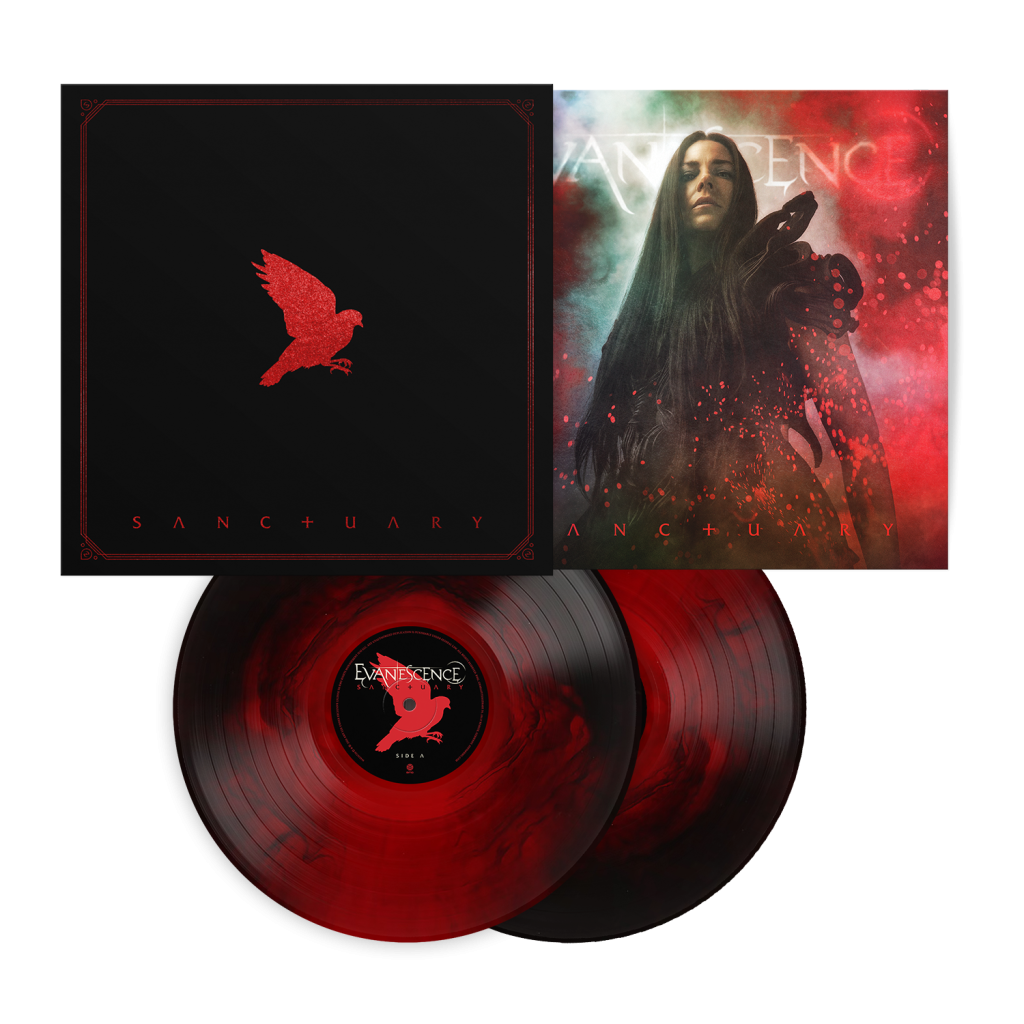
Sanctuary Track listing:
01. Beautiful Lie
02. Tell Me When You’ve Had Enough
03. Who Will You Follow
04. Rapture
05. Afterlife
06. Sanctuary
07. How Do I Heal
08. About Us
09. Calm Down
10. Self Destruct
11. Forever Without You
12. Wide Open Heart
Line-up:
Amy Lee – Lead Vocals, Piano, Keyboards
Troy McLawhorn – Guitar, Backing Vocals
Tim McCord – Guitar
Will Hunt – Drums
Emma Anzai – Bass, Backing Vocals
Website: www.evanescence.com
Spotify: open.spotify.com/artist/5nGIFgo0shDenQYSE0Sn7c
Instagram: www.instagram.com/evanescenceofficial
Facebook: www.facebook.com/dvntownsend
9/10
A record that earns its title. Career-defining, and long overdue.