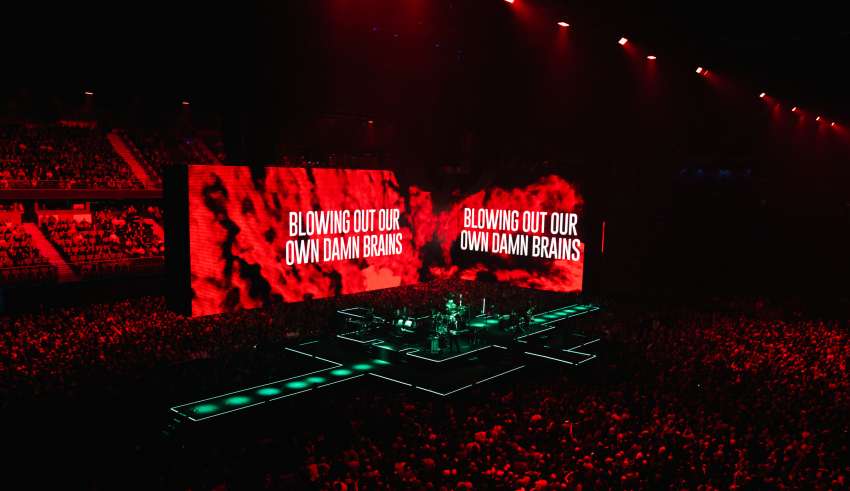
You’ve dialled in your setlist, your soundcheck is crisp, and you’re playing the best songs of your career — but the crowd just isn’t moving. What gives? Here’s a hard truth: indie bands, DJs, and singer-songwriters pour countless hours into their music, yet treat lighting as an afterthought. It’s the fast track to a flat, forgettable performance.
In a piece for Digital Music News, performance coach Tom Jackson didn’t mince words. “Here’s one truism about live performances: if you create a more engaging show, your merch sales always go up.” But most artists “slave away to get the perfect recording, but just wing it at gigs.”
Lighting, theatrics, and stage movement aren’t frills — they’re the missing piece between a great set and a show people remember.
This article walks you through the straightforward lighting logic that lifts a gig from amateurish to electric. No theater degree required.
Why Your Stage Looks Flat: The 3 Biggest Lighting Sins
The biggest lighting sins all stem from one mistake: treating light like a flood lamp. The following three habits will instantly flatten your stage.
First, flat front light — those fixtures aimed straight down or at eye level give performers ‘raccoon eyes’: deep, hollow shadows under the eyes and chin that destroy dimension on camera. Move lights to a 30–45° angle in front for a simple two-point setup that restores facial shape.
Second, mixed color temperatures. Running a 3,200K warm wash next to a 5,600K cool wash at the same time scrambles camera white balance, turning skin tones blotchy. The fix is boring but critical: standardize every fixture to one target Kelvin (4,000K works for most live acts).
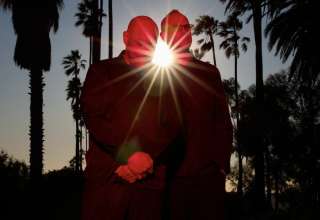
Third, no backlight. Without a light behind and above the performer, they blend into the backdrop like a 2D cutout. Add even one rear fixture, and you get a halo effect that creates instant depth — especially on livestreams.
And while you’re at it, aim for 600–1,000 lux on the talent’s face; any less and the video turns to grain, any more and highlights blow out.
Lighting Angles That Create Depth (The McCandless Method Explained)
Now that you know what to avoid, let’s stack some angles. Professional stage lighting uses five basic positions: front, back, side, top, and up light. Combine them right and you sculpt the performer instead of flattening them.
The father of modern stage lighting, Stanley McCandless, nailed this back in 1932. His method — two front lights, each raised 45° and offset 45° to opposite sides, one warm amber and one cool pale blue — is still the industry standard, according to the ETC Connect Blog.
Why does it work so well? A light directly at eye level kills contrast and makes faces look like pancakes. Lift it to 45° and add an offset fill, and you get the natural shadows of sunlight — the deep, dimensional look that separates YouTube bedroom covers from arena headliners.
If you’re hauling your own rig, start with a simple upgrade: one backlight. Position it behind and slightly above the performer and you’ll get that halo effect described earlier. Combine that with a two-point front system and you’ve just transformed a flat DIY stage into a three-dimensional performance space.
For context, a small 300-square-foot stage needs roughly 15,000 lumens total to light actors and scenery — less than you might think.
Color Temperature: Setting Mood Without Confusing Cameras
Lights don’t just illuminate — they color the audience’s emotional perception. Mastering color temperature is one of the cheapest ways to shape a show.
The Kelvin scale runs from warm (2,700K–3,500K, candlelight cozy) to cool (4,500K–6,000K, bright and energetic). For live music, go for 3,200K–4,500K as a sweet spot that keeps faces clear while adding enough energy to hold a crowd.
Push to 4,500K–6,000K for a DJ set where flashy pops and intense visuals rule. Dial back to 2,700K–3,500K for intimate, theatrical moments.
But color temperature isn’t just about aesthetics — it has documented psychological effects. A 2021 peer-reviewed study published in PMC found that cool white light slashes positive mood compared to warm white light at the same brightness.
Red light, meanwhile, measurably spikes audience tension and anxiety, while blue tones calm it. Use this deliberately: a red wash for a dramatic payoff, blue for an introspective bridge.
The golden rule? Standardize your rig to one target Kelvin — say 4,000K — and re-check all fixtures monthly. Mixed temperatures are the silent killer of professional-looking video and cohesive stage tone.
Fixture Types & the LED Revolution: What to Buy First
When you’re building a first light rig, the sea of moving heads can feel overwhelming. But they boil down to three categories you actually need:
- Wash: wide, soft coverage. Use it to bathe the stage in color and set the atmosphere.
- Spot: sharp and focused, often with gobos (pattern wheels). Perfect for highlighting a performer or projecting textures.
- Beam: an ultra-narrow, high-intensity shaft that cuts through the air — dramatic, especially with a fog machine, but overkill in a tiny bar.
Most professional rigs blend all three, but for a band or DJ starting out, a pair of wash fixtures plus one spot will cover the basics with style.
Now is a surprisingly good time to buy. Mordor Intelligence reports that LED fixtures captured 71.83% of the programmable stage lighting market in 2024, and average fixture prices have dropped 40% since 2023 while CRI scores exceed 95. A single LED unit can replace multiple halogen fixtures, cut touring weight, and last 25,000–50,000+ hours compared to 1,000–2,000 for halogen.
For indie acts and mobile DJs, brands like SHEHDS (established 2015, CE/ROHS/UL/FCC certified, sold in 100+ countries, with a 4‑star Trustpilot rating and over 179 on‑site reviews) deliver usable stage lighting equipment at a fraction of pro prices — for example, a 19×15W RGBW moving head zoom/wash for ~$219 or an 18×18W flat PAR for ~$86.
The energy math is a nice bonus too. Swapping ten 1,000W halogen fixtures for ten 300W LED equivalents saves 7 kWh per hour of operation, according to Vello Light. At 500 hours of use and $0.15 per kWh, that’s roughly $525 saved annually — before you even factor in reduced HVAC load and lamp-change labor.
DMX Basics: Taming the Light Show With One Cable
Once you have a handful of fixtures, you need a way to command them without tap-dancing across a dozen power strips. That’s where DMX512 comes in.
The SHEHDS Blog explains it simply: a single DMX ‘universe’ handles up to 512 channels, each with a value from 0 to 255. A basic RGBW wash fixture eats 4 channels; a moving head with pan, tilt, color, and gobos might gobble 16 or more. For simple gigs, one universe is plenty.
The #1 wiring mistake? Splitting one output to several fixtures in a star pattern. DMX must be daisy-chained, device to device, with a terminator plugged into the last fixture in the line to kill signal reflections that cause flickering and random light spasms.
Wireless DMX now makes this even simpler. Sub‑5 ms latency and 99.9% packet redundancy have convinced major festivals to cut miles of copper per main stage, saving over 1.5 tonnes of transport weight.
Money for Upgrades: Small‑Venue Funding Opens Doors
Here’s some good news: upgrading your stage doesn’t always mean maxing out a credit card. In 2024, the Live Music Society Surpasses $1 Million in 2024 Funding reported that its Toolbox grants explicitly support sound and lighting improvements for small venues.
If you play rooms that could use a boost, point management toward these grants — a few hundred bucks can cover a basic DMX controller and a couple of LED washes.
Light It Like You Mean It
The shift from flat to fierce is simpler than most artists think. Ditch the straight-on floods, mix your temperatures consistently, add one backlight, and chain a few LED washes through a £90.00 DMX dongle. That’s four changes that transform a visually boring set into a production that holds the room.
Audiences respond to visual intention — and as Tom Jackson reminded us, that intention shows up in merch sales and re-bookings.
So, borrow or buy one backlight and two front LEDs this month. Light it, and watch your flat show become the one people won’t shut up about.