Review by Rick Eaglestone for MPM
Marrow Deep is the ninth Mastodon record and the first in the band’s twenty-five-year history to be made without Brent Hinds, whose serpentine, unpredictable lead guitar was as fundamental to their identity as the low-end churn or Brann Dailor’s octopus-limbed drumming.
For twenty-four years the line-up of Sanders, Hinds, Kelliher and Dailor never wavered; then it did, all at once and in the worst way. Hinds parted ways with the band in March 2025 and died in a motorcycle accident that August. Dailor had lost his mother only weeks before the split. Grief, then, isn’t a theme Mastodon reached for here so much as the weather the whole record was made in, and they’ve named it accordingly, after the Three Fates of Greek myth, the sisters who spin, measure and finally cut the thread of a life. Life, loss, and the threads that keep connecting us to people after they’ve gone: that’s the frame, and it hangs over all twelve tracks like smoke.
For the first time in a quarter of a century there is genuinely new blood in the machine. Guitarist Nick Johnston steps into the impossible job of not-replacing Hinds, while keyboardist João Nogueira makes contributions substantial enough to hand Mastodon more overt synth colour than they have ever carried. Behind the glass sit Patrik Berger and Converge’s Kurt Ballou, an intriguing marriage of pop instinct and granite heaviness, and the album they have captured reacts hard against the sombre, sprawling double-LP prog of 2021’s Hushed and Grim. Where that record brooded for the best part of ninety minutes, this one moves: faster, blunter, more physical, even as it carries more sorrow than anything in the catalogue. The band also chose not to grieve in isolation. The guest list reads like a metal summit, with Josh Homme, Geezer Butler, Randy Blythe, Joe Duplantier, Neil Fallon, and most of Converge all lending a hand, and that communal spirit turns out to be the entire point. Before a note plays you already sense the thesis: this is a record about loss made by people flatly refusing to face it alone.
It is worth remembering how long we have waited, and why. Five years separate Marrow Deep from Hushed and Grim, the longest gap of the band’s career, and it was not an idle one. Mastodon laid their grief bare in a short accompanying documentary, The Mastodon in the Room, which unpicked the fracture with Hinds and the shock of his death, and you can hear that reckoning bleeding into these songs. The stakes could hardly be higher: this is the album that decides whether Mastodon are a going concern or a closed chapter, whether a band defined by an unbroken four-way chemistry can survive the loss of a quarter of itself. That they have answered the question at all is worth something. That they have answered it this emphatically is the real surprise.
Barbarians Blood throws the doors open with no ceremony whatsoever. Converge’s Ben Koller sits in on drums and drives the thing on a punkish, forward-leaning groove that recalls Mastodon’s earliest sludge but scrubbed up with the modern, wide-screen polish they have refined since Emperor of Sand. It is all rhythm and forward motion, and it makes room for the first of Nogueira’s synth solos, an immediate signal that the keyboards here are a lead instrument and not set dressing. As statements of intent go it is lean and unfussy, Mastodon reminding you inside the opening minute that whatever they have lost, they can still hit like a landslide. It is a canny way to start a record this heavy of heart: with the body before the tears.
Poisonous Weapons is muscular enough to have lent its name to the tour rolling out behind the album, and it plays like a rallying cry, the sound of a band planting its feet in the dirt. If the opener is about momentum, this is about weight, a mid-paced pummel that leans on the Sanders, Dailor and Kelliher core doing what they have always done best, interlocking riffs that turn on a sixpence and a rhythm section that hits like tectonic plates. There is a defiance baked into it, the posture of a group that has every reason to fold and simply refuses to, and in sequence it deepens the foundations the opener laid down.
Your Ghost Again is the record’s beating heart, and the fact it arrived back in June as a surprise standalone single tells you exactly how much it meant to them. This is the explicit Hinds elegy. Troy Sanders has said his portion of the song is all about Brent, and for Brent, and it is fittingly untethered, a trippy, psychedelic drift that lets the grief hang in the air rather than screaming it. It is less a headbanger than a séance, the band reaching for a departed friend through a haze of reverb and melody, and it lands all the harder for its restraint. It has already resonated far beyond the studio, becoming a live touchstone across the band’s recent European run and landing at number two in Revolver’s readers’ poll of the best songs of 2026 so far, which is remarkable for a track this deliberately understated. Where a lesser band might have swung for an obvious anthem, Mastodon understand that some losses are too large to shout at, and the song is more moving for knowing the difference.
Snakes For Dinner reintroduces Josh Homme to the Mastodon fold for the first time since Blood Mountain two decades ago. His backing vocals thread through a furious five-minute prog-metal rager built on thrashing, serpentine riffs, but the fury masks the saddest lyric on the album. Dailor has described it as a song about his mother and Brent wrapped in a single feeling of loss, the sense that when someone dies the void seems to swallow everything whole, at least for a while, and that feeling whole again afterward is the hardest work there is. That tension, savage music carrying a grieving heart, is Marrow Deep in microcosm, and it is no surprise the band chose it to lead the campaign.
Out Like A Lamb reads on the title alone, like the exhale after that storm, the lamb to the album’s earlier lion. It is the point where the record widens its lungs and lets some air in, easing into the melodic, more reflective register Mastodon have grown increasingly comfortable in across the back half of their career. After the front-loaded aggression it is a smart piece of sequencing, a change of light that stops the album collapsing into one sustained howl, and a reminder that dynamics have always been this band’s secret weapon just as much as brute force.
In The Ruins was the third single, and knowing its backstory transforms it. The song grew directly out of the catastrophe of Hurricane Helene, which flooded bassist Troy Sanders’s home and scattered his family into the best part of two years of displacement, all of it unfolding while the band were already reeling from the deaths of Hinds and of Dailor’s mother, Michele Lawrence. Rather than wallow, the track turns that wreckage into fuel: a slow-gathering meditation on salvaging what’s left that swells from fragile quiet into genuine, hard-won catharsis. Its accompanying video, animated by Hey Beautiful Jerk, follows a one-eyed creature called Frank on a hallucinatory trek through drowned and broken landscapes, a sly, sad visual analogue for the slow work of rebuilding a life from the debris. It is the emotional Rosetta Stone of the whole record: proof that Marrow Deep refuses to simply mourn and insists instead on what comes after the water recedes.
They’re Coming For You swings the mood back towards menace. The title alone conjures paranoia and pursuit, and the track leans into the darker, more ominous end of the band’s palette, a creeping unease that eventually pays off in heaviness. It’s the album reminding you that catharsis and dread are two sides of the same coin, and that this band can summon the second as easily as the first. In the running order it functions as a shadow falling across the mid-record, tightening the screws before the album’s most adventurous stretch.
Golden Spires is where Nogueira’s keys and Mastodon’s proggier instincts are handed room to stretch. It is the most expansive, most cinematic passage of the mid-record, the melodic ambition of Crack the Skye refracted through a heavier and sadder lens. Not everyone will have the patience for the scenic route, and it asks more of the listener than the singles do, but it’s proof that the widescreen, questing Mastodon is still very much alive, and that the new line-up can chase a horizon as readily as it can chase a riff.
Moth And Bone is the clearest showcase yet for what Nogueira brings to the table. It opens on a soft, glimmering keyboard figure, genuinely pretty and almost weightless, before the rest of the band files in and drags that reverie into heavier, more aggressive territory without ever quite dispelling the spell. It is a lovely piece of dynamic writing, beauty and brutality sharing a single frame, and it quietly makes the case that the keyboardist’s arrival has expanded the band’s vocabulary rather than diluted it. It’s one of the record’s understated essentials.
A Vampire’s Demeanour is the pit-starter. Randy Blythe of Lamb of God brings gang vocals and Converge’s Nate Newton piles in alongside him, and between them they turn this into one of the meanest, most physical things on the album, all snarl and stomp and raised fists. After the atmospheric detours of the preceding run, it lands as a jolt of pure adrenaline, the record baring its teeth at exactly the moment you had started to settle into its more reflective spell. Subtle it is not; a genuine shot to the arm it absolutely is.
The Vanishing is, for my money, the jaw-dropper. It opens on Geezer Butler’s unmistakable fuzz bass, the man who arguably built heavy metal’s low end hitting notes Mastodon grew up worshipping, and unfurls into a smoky, blues-tinged ode to seventies heaviness, all filtered, faraway vocals in the lineage of Sabbath’s own Planet Caravan, with Gojira’s Joe Duplantier adding his voice to the murk. There is a poignant backstory too: Dailor has spoken of his late mother’s devotion to Butler, which makes his presence here feel less like a marquee cameo than a wreath laid at the record’s centre. That it never tips into mere tribute is a credit to the band, who have absorbed the influence rather than photocopied it, and the result is one of the most atmospheric things they have ever committed to tape.
The Three Fates closes the record where the concept always promised it would, and it goes out swinging. Clutch’s Neil Fallon, a Mastodon collaborator going all the way back to Leviathan, arrives to preach a spoken-word sermon over the top, and the band empty the armoury behind him: a towering, fire-and-brimstone finale capped by a Nogueira keyboard solo and some suitably unhinged guitar flair. It is theatrical in the best sense, the sisters’ thread finally cut, the album folding shut on the myth it was named for. As closers go it is both an ending and a benediction, and it sends Marrow Deep out not on a whimper of mourning but on a defiant, communal roar.
What lingers, once the noise fades, is how much heavier the silence feels than the riffs. There is no getting around the Hinds-shaped hole at the centre of Mastodon. His was the wild, unpredictable hand that so often shoved their songs somewhere stranger and more dangerous than they had any right to go, and there are stretches of Marrow Deep where you can feel the band reaching for a jolt of chaos only, he could ever supply. Nick Johnston is a superb, fluent player who never embarrasses himself in an unwinnable role, but capable and electrifying are different words, and once or twice the record settles for the former where Hinds would have insisted on the latter. To pretend otherwise would do a disservice to what made this band singular in the first place.
What Mastodon have built from their grief is genuinely remarkable, and the big choices are all the right ones. Nogueira’s keys are the smartest addition to their sound in years, opening doors the four-piece never could, and the decision to fill the room with friends rather than retreat inward gives the album its backbone and much of its heart. Ballou and Berger keep it heavy and human in equal measure. Set against Hushed and Grim it is leaner, warmer and far more repayable; set against the near-untouchable run of Leviathan and Crack the Skye it can’t quite scale those summits, but vanishingly few records can, and it would be churlish to hold a band’s own past genius against them. This is Mastodon proving they remain, even halved by fate, one of the most ambitious and emotionally literate heavy bands on the planet.

“There will never be another guitar player like Brent Hinds, and we were lucky enough to jam with him for twenty-five years on thousands of stages around the world.” – Bill Kelliher
Marrow Deep – Track listing:
1. Barbarians Blood
2. Poisonous Weapons
3. Your Ghost Again
4. Snakes For Dinner (feat. Josh Homme)
5. Out Like A Lamb
6. In The Ruins
7. They’re Coming For You
8. Golden Spires
9. Moth And Bone
10. A Vampire’s Demeanour (feat. Randy Blythe & Nate Newton)
11. The Vanishing (feat. Geezer Butler & Joe Duplantier)
12. The Three Fates (feat. Neil Fallon)
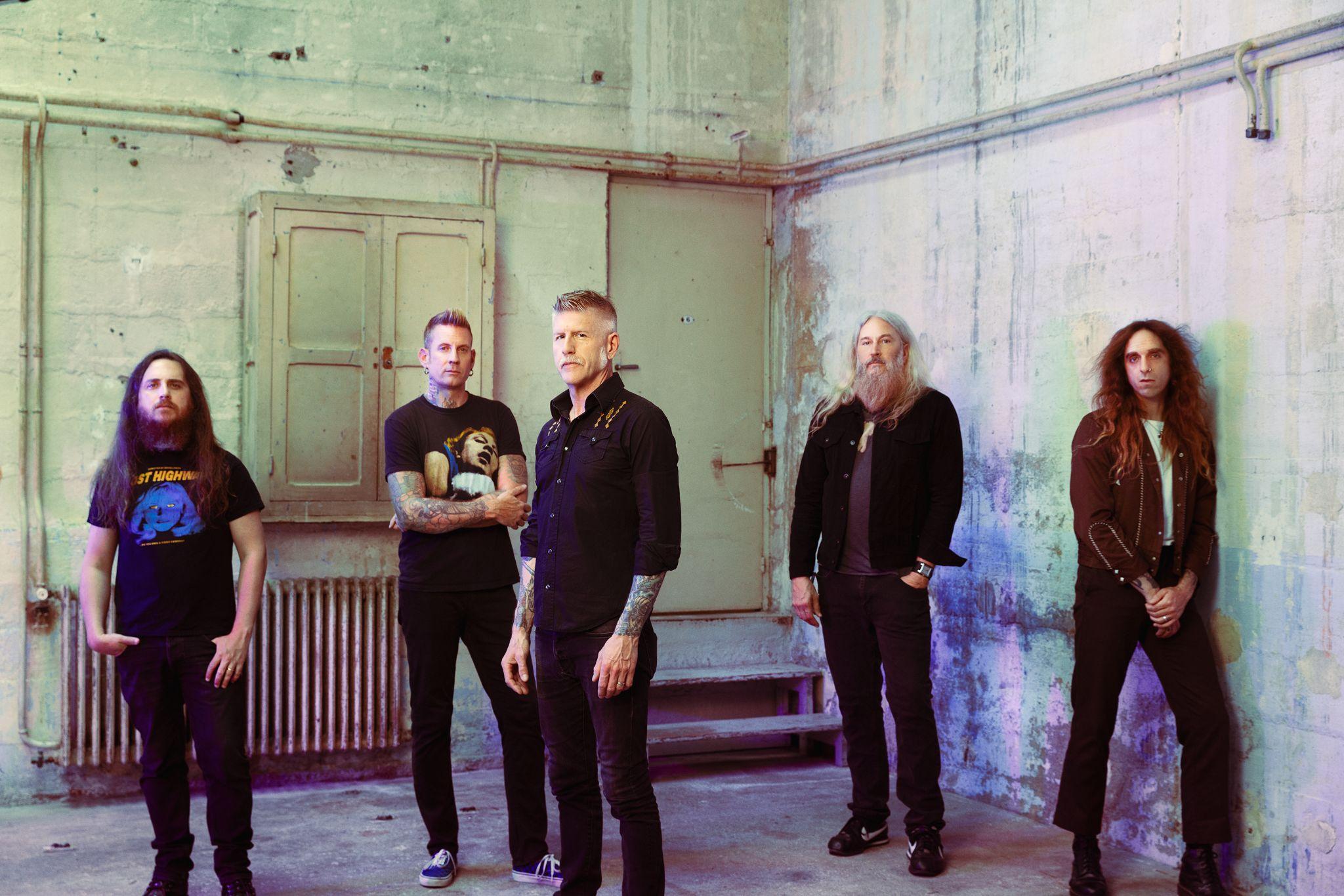
Line-up:
Troy Sanders – Bass, vocals
Brann Dailor – Drums, vocals
Bill Kelliher – Guitar
Nick Johnston – Guitar
João Nogueira – Keyboards
Spotify: https://open.spotify.com/artist/4q8XUsiVwZu3GIaMBB9AbS
Instagram: https://www.instagram.com/mastodonrocks
Facebook: https://www.facebook.com/Mastodon
X: https://x.com/mastodonmusic
Website: https://mastodonrocks.com
9/10