Review & Photography by Nathan Vestal for MPM
Certain concert bills make perfect sense the second you see them, even if the bands themselves occupy completely different corners of heavy music. Ministry, Acid Bath, and Windhand at The Salt Shed was one of those nights. Three bands with very different histories, very different sounds, and very different ideas of what “heavy” is supposed to mean, sharing the same stage in a converted industrial building in Chicago. It looked less like a traditional tour package and more like somebody had assembled a cross-generational survey of distortion, despair, bad decisions, and amplifiers large enough to trigger municipal concern.
The setting was almost too appropriate. The Salt Shed has quickly become one of the better places in Chicago for a show like this because the building still feels industrial without trying too hard to remind you about it every five seconds. Brick, steel, concrete, high ceilings, and the lingering sense that the structure once existed for an actual practical purpose before humans inevitably decided what it really needed was several thousand people drinking beer while being assaulted by down-tuned guitars. By the time Windhand walked out at 6:30, the room already felt less like a concert venue and more like a giant resonating chamber waiting to be activated.
Windhand Opens the Night with a Slow-Motion Wall of Doom
Windhand had the unenviable job of opening a bill where a substantial percentage of the crowd had probably arrived specifically to see one of the next two bands, and they were given only thirty minutes to make their case. They responded by playing four songs and making those thirty minutes feel considerably longer than the clock suggested. “Old Evil,” “Libusen,” “Orchard,” and “Cassock” made up the entire set, which is both completely reasonable for Windhand and mildly absurd when you consider most bands would require twice as many songs to fill the same amount of time.
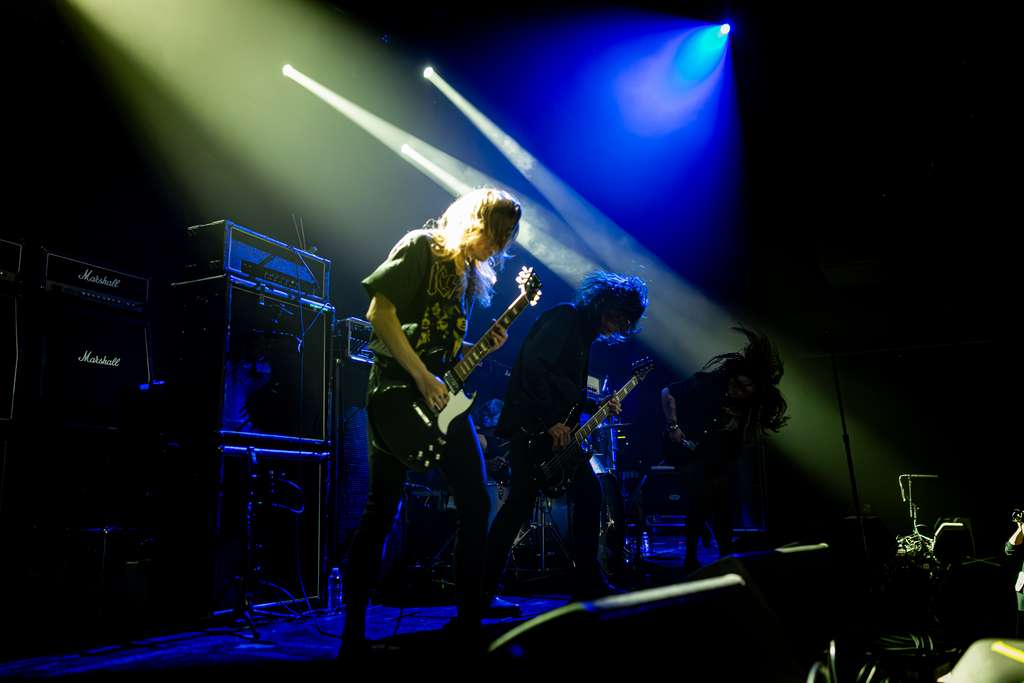
Windhand’s music has never been about speed or technical fireworks. Their strength is in repetition, tone, and patience. The guitars do not so much attack as slowly occupy the room, building layer after layer until the air starts feeling physically heavier. Live, that effect becomes even more pronounced. The riffs are enormous without becoming cluttered, and the rhythm section gives everything the slow, deliberate momentum of something much larger than the people playing it. Windhand understands that doom works best when the audience has enough time to settle into the riff before the riff begins rearranging the furniture inside their skull.
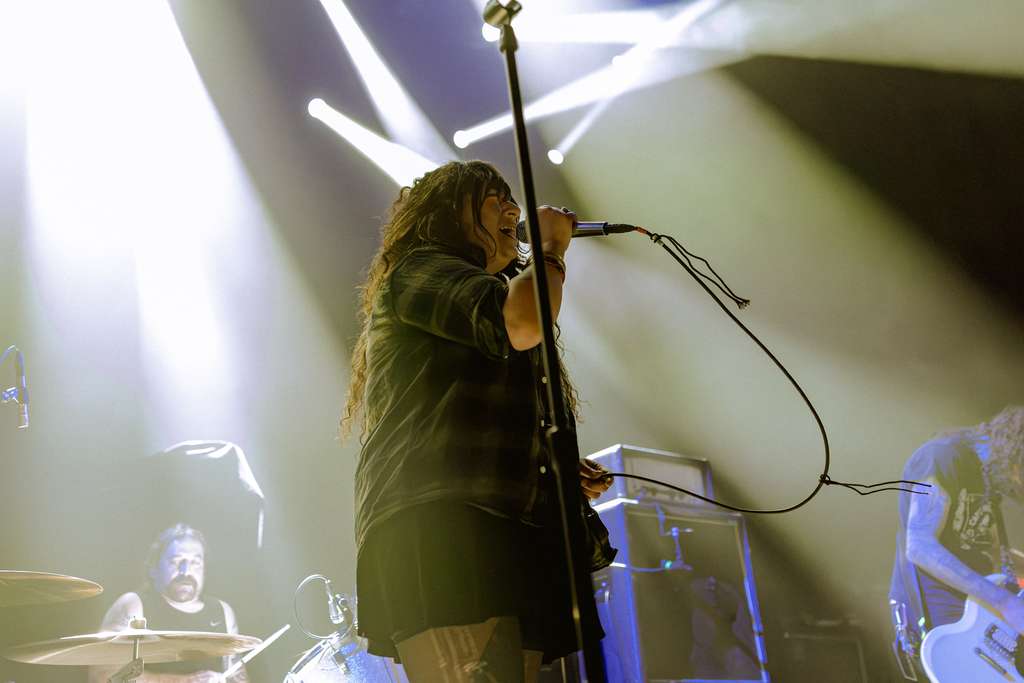
Dorthia Cottrell remains the element that keeps the band from becoming merely an impressive wall of fuzz. Her vocals sit above all that low-end weight with a detached, haunted quality that makes Windhand sound melancholy instead of merely oppressive. The contrast is what gives a song like “Orchard” its power. Underneath her, the band sounds like the floor is collapsing in slow motion, while her voice seems to hover somewhere several feet above the wreckage. It is an unusual combination and one that very few doom bands manage convincingly.
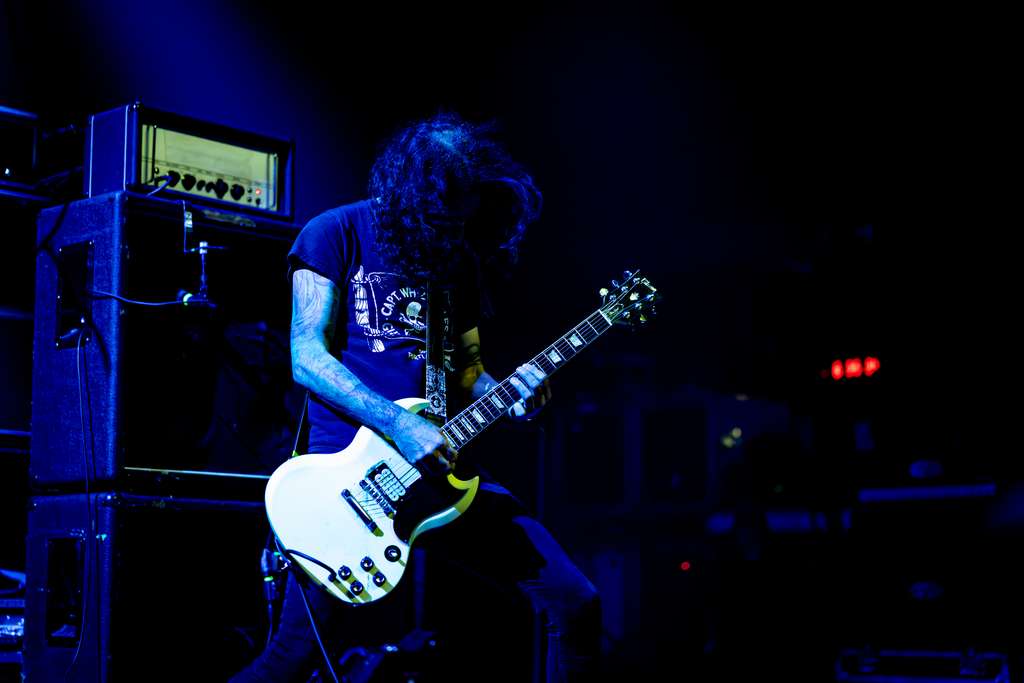
The one weakness was the mix. Cottrell’s vocals were occasionally buried underneath the guitars, and that matters more with Windhand than it would with a band where the singer exists primarily to scream between breakdowns. When the balance worked, Windhand sounded enormous and strangely beautiful. When it did not, the guitars simply swallowed everything.
Still, they were an excellent opener, and thirty minutes felt far too brief. There was no filler, no wasted motion, and no attempt to over-sell themselves. They walked out, created a massive atmosphere, played four songs, and disappeared. It was a restrained opening to a night that was about to become much less restrained.
Acid Bath Turns Thirty Years of Myth into the Night’s Most Powerful Set
Acid Bath was the reason the evening suddenly stopped feeling like a normal concert.
There are reunion bands, and then there are bands whose absence becomes part of their mythology. Acid Bath belongs firmly in the second category. Their original run was short, their catalog is small, and their disappearance left behind the kind of vacuum that allows a band’s reputation to keep expanding long after the actual musicians have moved on. For years, Acid Bath existed as one of those bands people talked about in the past tense with an almost religious intensity. They were not simply influential. They were one of those bands people discovered years too late and immediately became angry that they would never get to see.
Then they came back.
By 2026, Acid Bath’s reunion had moved beyond the initial novelty phase and into something more interesting. They were no longer simply proving they could still do this. They were proving the material still worked on its own terms, without requiring nostalgia to prop it up. Their hour-long Salt Shed set made that point rather violently. They opened with “Tranquilized” and moved through “Bleed Me an Ocean,” “Venus Blue,” “The Bones of Baby Dolls,” “Dead Girl,” “The Mortician’s Flame,” “New Death Sensation,” “Graveflower,” “Paegan Love Song,” and finally “The Blue.”
The first thing that becomes obvious seeing Acid Bath live is how inadequate the sludge-metal label really is. It is not wrong, exactly, but it is hilariously incomplete. Sludge is the foundation, but the music constantly mutates around it. There are moments of death metal, doom, punk, psychedelia, blues, and passages that are simply too strange to fit comfortably anywhere else. The band can sound brutally ugly one moment and almost delicate the next, then destroy the mood with a riff that feels like a transmission falling out of a truck at highway speed.
That unpredictability is what separates Acid Bath from many of the bands they influenced. The heaviness is not constant, which makes it far more effective when it arrives. “Bleed Me an Ocean” and “Venus Blue” both demonstrated that perfectly. The melodic sections were allowed to breathe rather than being treated as brief introductions to the next heavy part, and when the guitars came crashing back in, the contrast made them sound even larger.
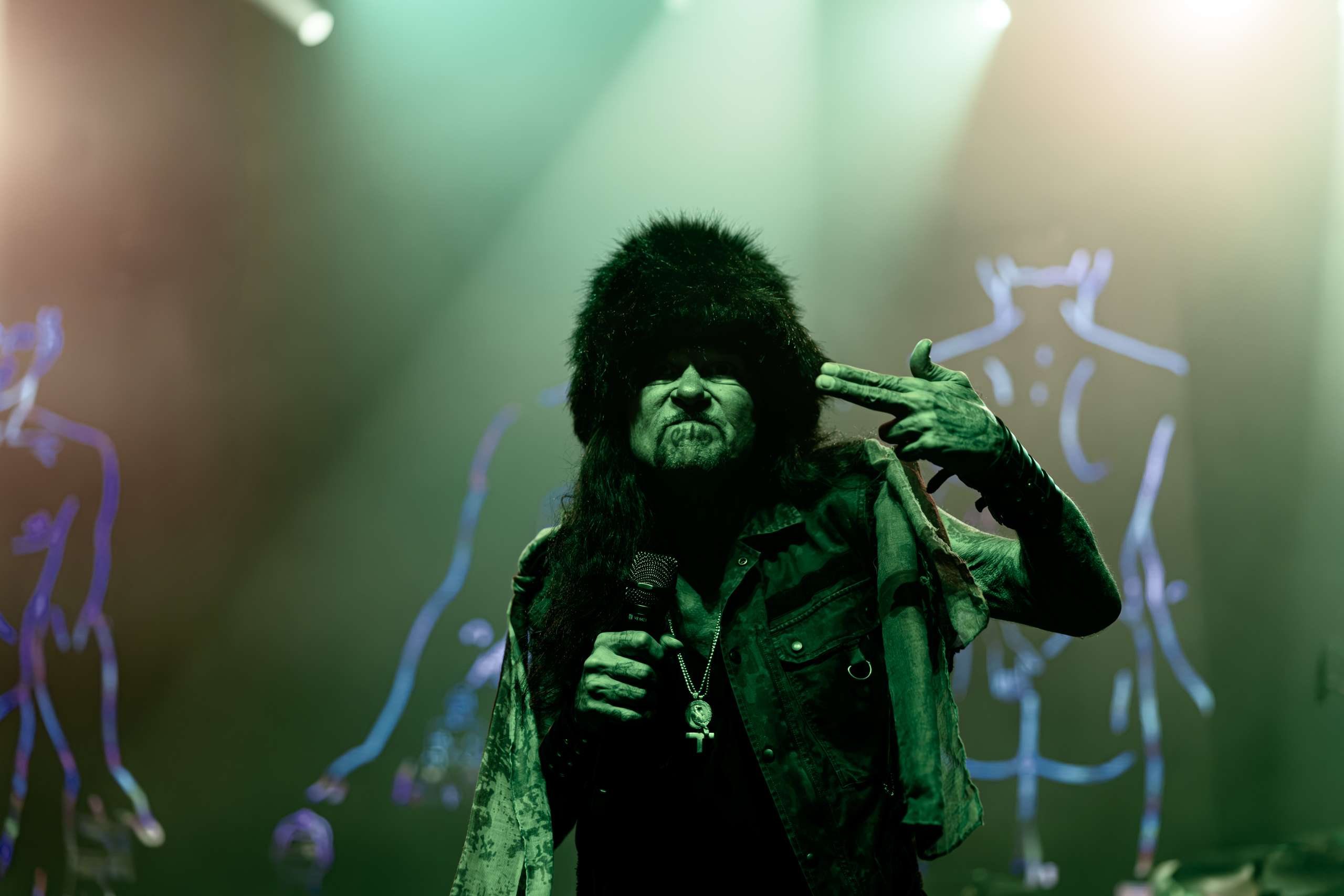
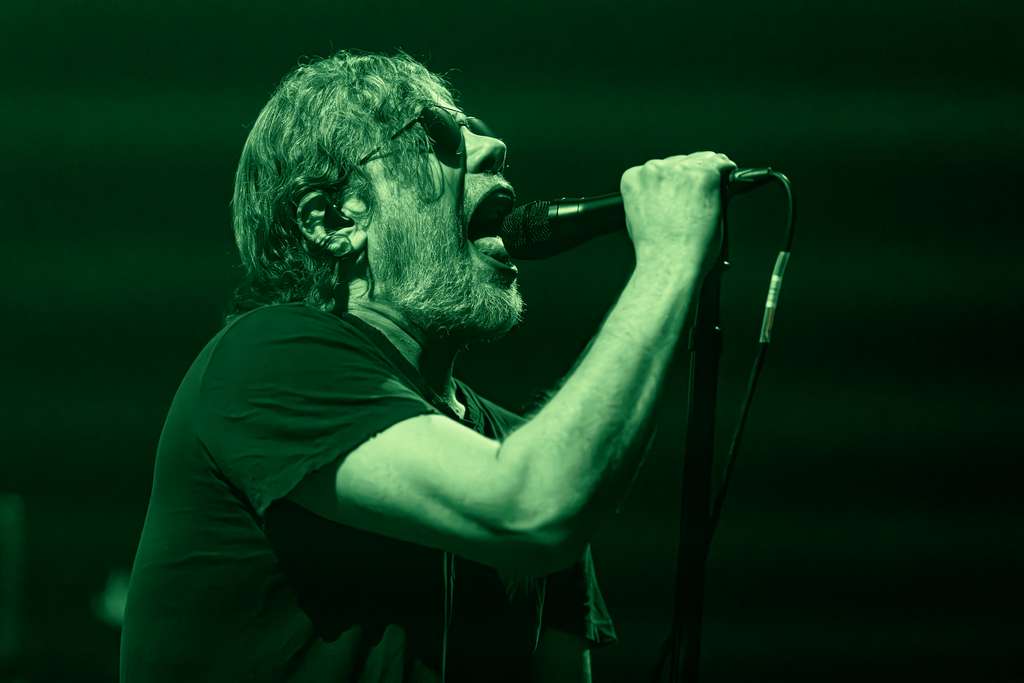
Dax Riggs remains the center of gravity. His voice never sounded like it was designed specifically for metal, and that is exactly why it works so well in Acid Bath. His cleaner delivery still carries that strange Southern melancholy that has followed him through virtually everything he has done, while his harsher vocals retain enough abrasion to keep the songs from becoming comfortable. He can make a line sound wounded, detached, threatening, and half-asleep in the span of a few minutes, which is a surprisingly useful collection of talents when your band sounds like Louisiana itself has developed a substance problem.
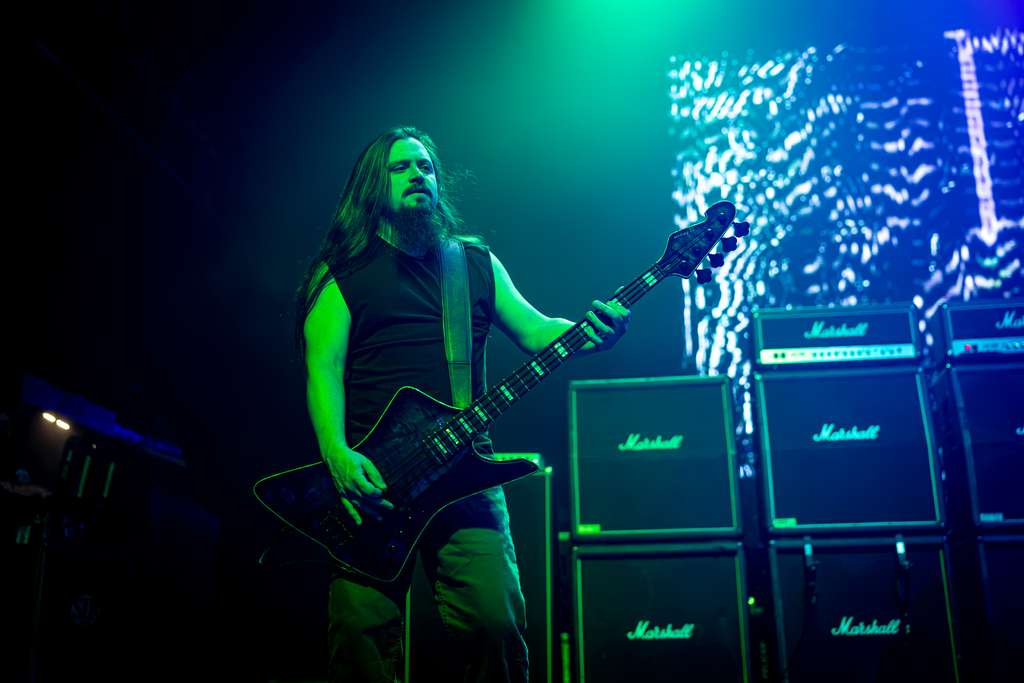
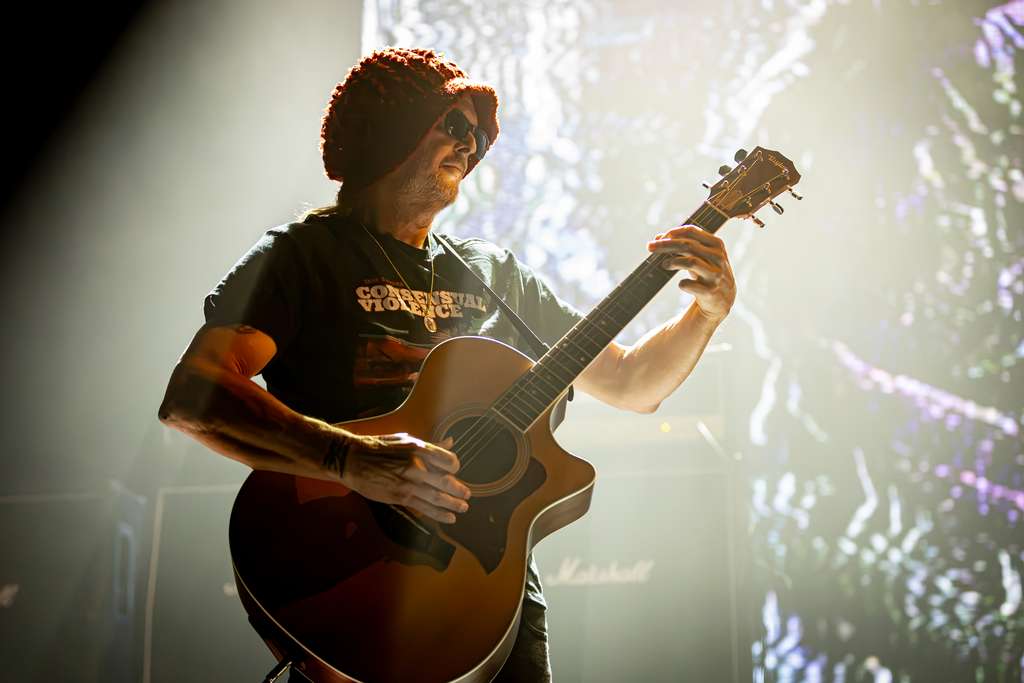
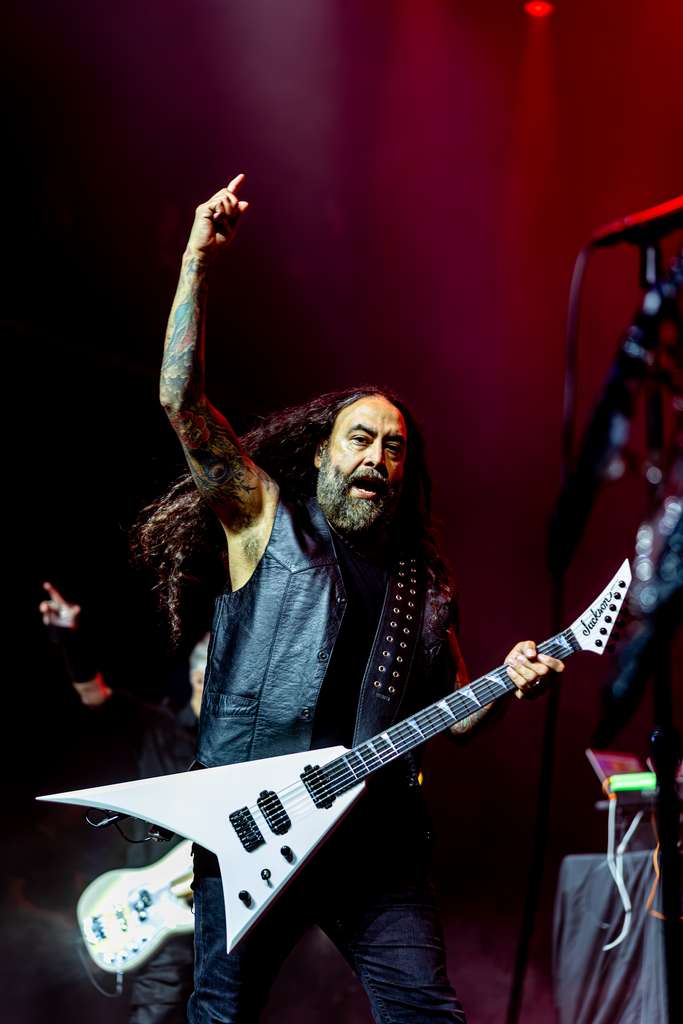
“The Bones of Baby Dolls” carried additional weight with its dedication to late bassist Audie Pitre. The band’s current lineup comprised of original members Riggs and guitarists Sammy Duet and Mike Sanchez along with Shane Wesley on bass, and Alex Bergeron on drums struck a balance without the show feeling like a memorial. “Graveflower” and “Paegan Love Song” were among the strongest moments of the night. Both songs show the band’s ability to stretch beyond conventional metal structure without losing intensity, and by this point the crowd reaction had shifted from excited to completely invested. When “The Blue” finally arrived, there was the brief recognition that happens before a crowd explodes, where thousands of people identify the riff almost simultaneously before the noise actually begins.
“The Blue” remains one of those songs that sounds dangerous because it is so simple. The riff is not complicated. It does not need to be. It just arrives with the kind of weight that makes complexity irrelevant. By the time Acid Bath left the stage at around 8:20, they had played for roughly an hour and left behind a fairly serious problem for the headliner.
Ministry still had to follow them.
Ministry Brings Filth Pig Home, Then Leaves Chicago Wanting More
Ministry taking the stage in Chicago carries its own kind of weight. This is one of those rare cases where the city, the band, and the history are deeply tangled together, and that history became even more important because this particular set leaned heavily into Filth Pig. Six songs from the album made up the core of the eleven-song set: “Reload,” “Crumbs,” “Dead Guy,” “Lava,” “Filth Pig,” and “Useless.”
Before the band began, photographer Paul Elledge, the man associated with the Filth Pig cover, appeared in costume to introduce them, complete with suit, small American flag, and raw meat on his head. It was grotesque, ridiculous, and completely appropriate. Ministry has always worked best when its imagery lands somewhere between political theater, industrial accident, and a visual joke that probably should not be explained to anyone from human resources.
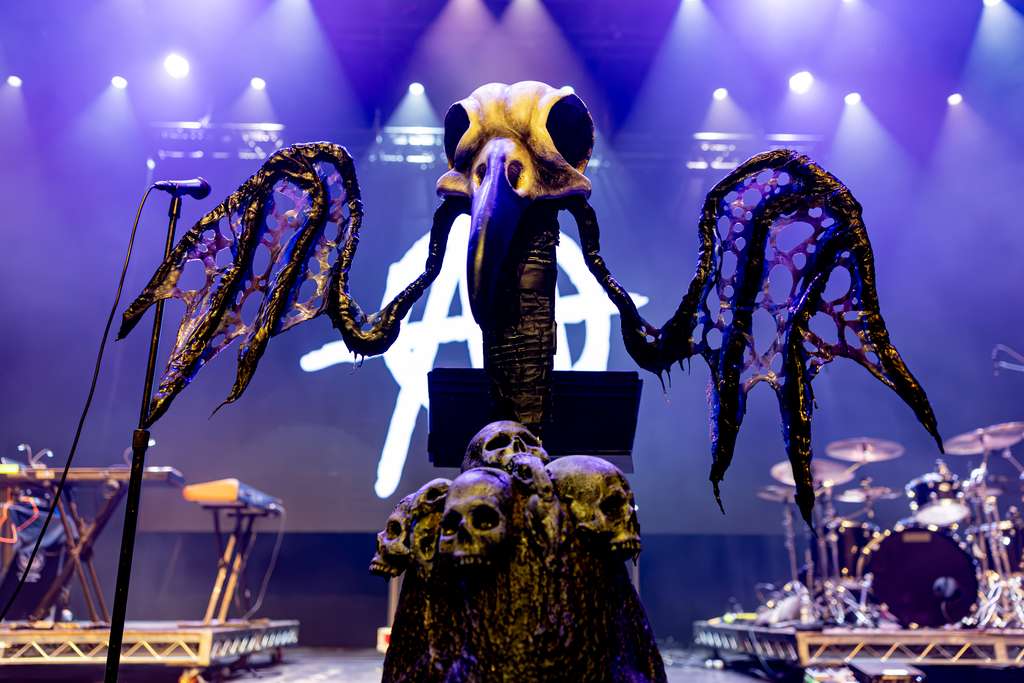
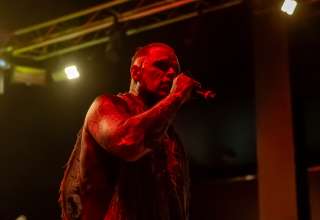
Al Jourgensen appeared on the stage, launched right into “Reload,” and for the first stretch of the set, the choice to center the night around Filth Pig felt completely justified.
That album has aged much better than its original reception suggested. When it arrived in 1996, a lot of listeners wanted another version of Psalm 69 and instead got something slower, uglier, more organic, and deliberately uncomfortable. Thirty years later, those qualities are exactly what make the record interesting. The songs have room to breathe, the guitars are less dependent on machine-gun programming, and the whole album feels diseased in a way that Ministry’s cleaner, faster material sometimes does not.
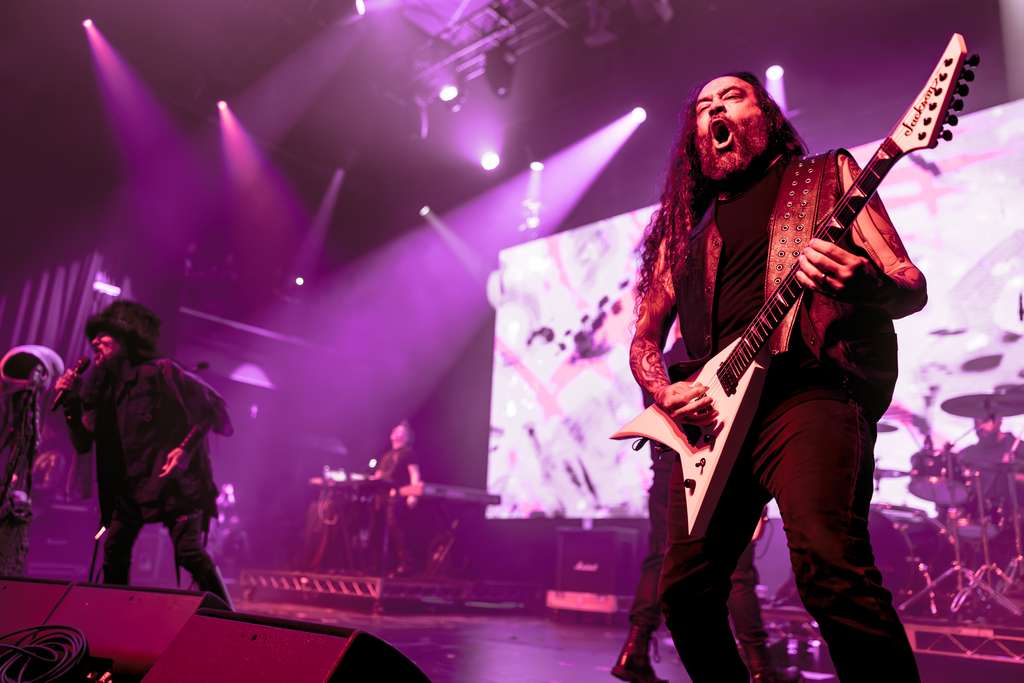
“Crumbs” sounded particularly vicious, with the live guitars from Cesar Soto and Monte Pittman giving the song more muscle than the studio version ever needed. “Dead Guy” dragged itself across the room with the kind of miserable momentum that defines the album, while “Lava” sounded less like a song than a large piece of machinery refusing to shut down. The title track was even better. “Filth Pig” is not one of Ministry’s fastest songs, but live it becomes oppressive in a way speed simply cannot reproduce.
The band itself sounded powerful. The current Ministry lineup, rounded out by Paul D’Amour on bass, Pepe Clark Magaña on drums, and keyboardist John Bechdel, had enough precision to keep the material tight without sanding away the ugliness. That distinction matters with these songs. Filth Pig should never sound polished. It should sound controlled enough to hold together while still leaving the impression that something unhealthy is happening nearby.
One of the evening’s most historically interesting moments came when former bassist Paul Barker joined the band for “Useless,” with the Filth Chicks also appearing during the performance. Ministry’s band dynamics have never exactly resembled a peaceful corporate retreat, so seeing Barker and Jourgensen sharing a stage again added genuine significance beyond simple nostalgia. The song itself sounded excellent, but the context made it one of those moments that longtime fans are likely to remember separately from the rest of the set.
“Scarecrow” was another standout, performed in Chicago for the first time in about thirty years. It fit the night perfectly. Slow, repetitive, oppressive, and almost ritualistic, it sounded enormous inside The Salt Shed. If revisiting Filth Pig was about reclaiming the slower and nastier side of Ministry’s catalog, “Scarecrow” pushed that idea even further back into the band’s history.
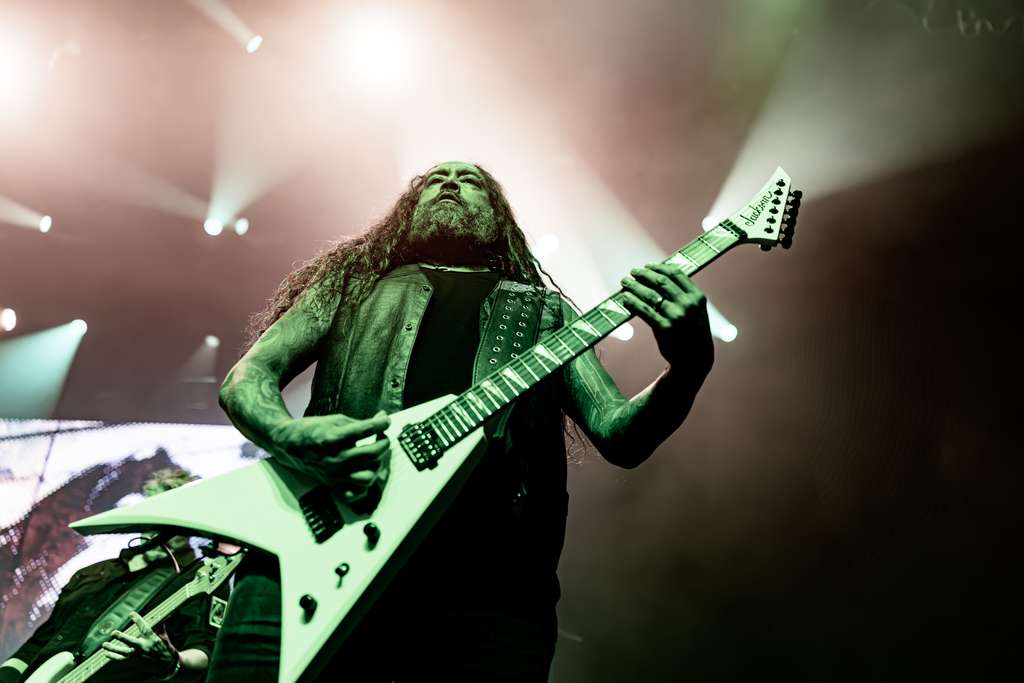
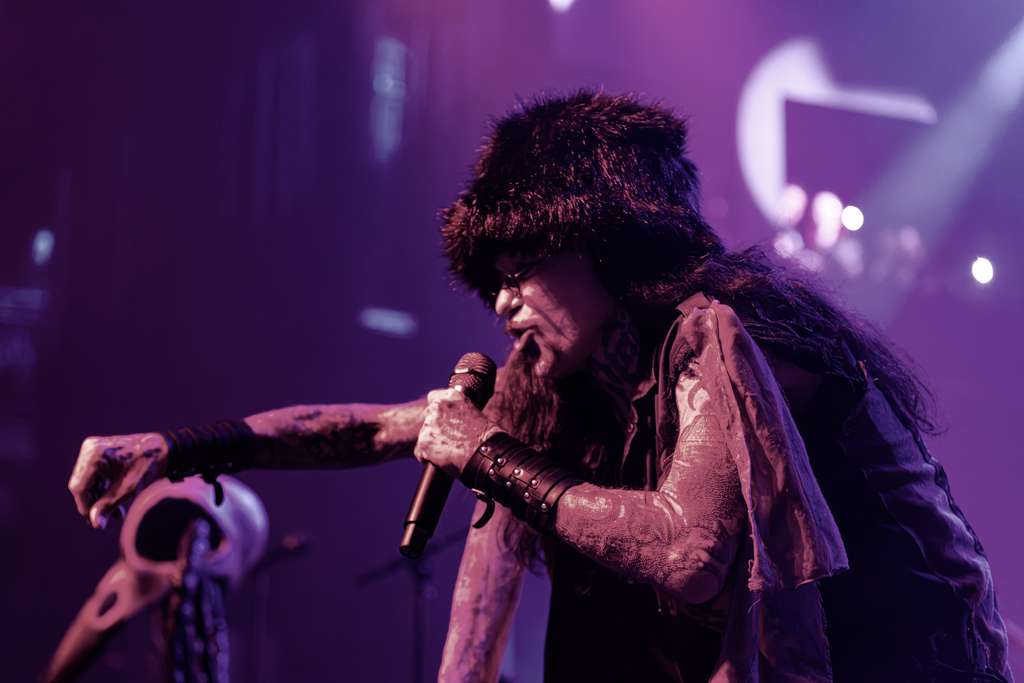
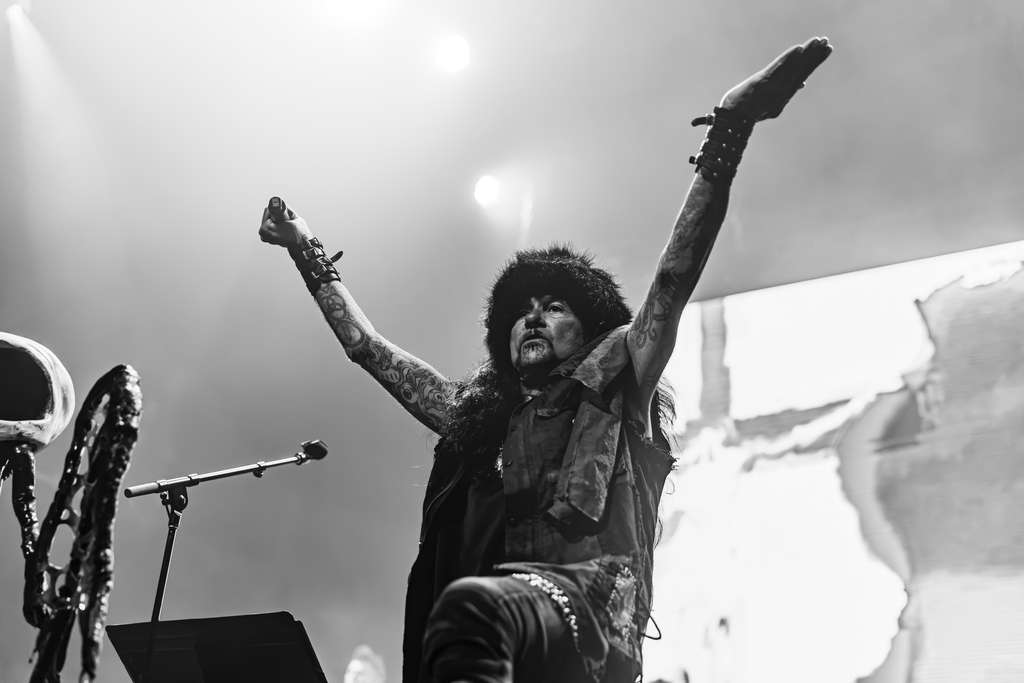
Ministry also used the night to look forward. “Burned Out” and “We Hate” both received live debuts, material tied to the band’s forthcoming final album Hate To Go – Take Out or Delivery. The politically charged graphics in the background came to life with guest vocalist and former RevCo bandmate Josh Bradford, bouncing around the stage, fully decked out in Lederhosen. The decision to debut the songs in Chicago added meaning to the evening. A band this old can easily fall into the trap of becoming its own tribute act, endlessly replaying the same recognizable songs because that is what everybody already knows. Ministry has never seemed particularly interested in making life that easy.
The problem was not what they played. The problem was what they did not.
After the two new songs, Ministry moved into “N.W.O.” and “Just One Fix,” and then the show ended. No encore. No “Thieves.” No “Stigmata.” No “Jesus Built My Hotrod.” The entire Ministry set lasted roughly sixty minutes, from about 8:50 to 9:50. For a headlining performance, especially one attached to a lineup this strong, the ending felt abrupt enough that there was a brief sense in the crowd that perhaps the band was coming back out.
They were not.
That became the most divisive part of the evening. Audience reaction afterward ranged from satisfied to openly disappointed, with several attendees specifically criticizing the short runtime and the absence of more familiar Ministry staples. The frustration was understandable. Only a few weeks earlier at Red Rocks, Ministry had played thirteen songs, including “Stigmata,” “Thieves,” “Goddamn White Trash,” and “Jesus Built My Hotrod.” Chicago received eleven, with the deep Filth Pig focus replacing much of the broader career-spanning material.
Personally, the Filth Pig concept was not the problem. In fact, it was one of the strongest things about the show. Hearing material like “Dead Guy,” “Lava,” and “Useless” given real attention was far more interesting than simply hearing the same greatest-hits sequence Ministry could play anywhere. The issue was that the concept needed another twenty or thirty minutes around it. Keep the Filth Pig material, keep “Scarecrow,” keep the new songs, then finish the night by tearing through two or three of the obvious classics. Nobody would have complained.
Instead, “Just One Fix” ended and the entire evening simply stopped.
That gave Ministry’s performance an odd split personality. The band itself sounded good. The material was interesting. The deep cuts were genuinely worthwhile. The historical moments mattered. Yet the set as a complete headlining performance felt unfinished.
What made this particular lineup work was that none of the three bands approached heaviness in remotely the same way. Windhand’s heaviness was atmospheric. Their music filled the room gradually, relying on tone, repetition, and the slow accumulation of pressure. Acid Bath’s heaviness was emotional and unpredictable, constantly shifting between beauty and ugliness until neither side felt entirely trustworthy. Ministry’s heaviness was mechanical, even when revisiting one of the more organic periods of their career. Their music still carries the sense of machinery, repetition, and something being forced forward whether it wants to move or not.
That variety prevented the show from becoming exhausting. Three bands playing variations of the same style would have turned the evening into four hours of low-frequency soup. Instead, each set reset the room in a different way. Windhand established the mood, Acid Bath transformed the evening into something genuinely special, and Ministry brought the historical significance of playing this material in Chicago.
Still, Acid Bath walked away with the night.
That is not an insult to Ministry. It is simply what happened.
Acid Bath had the best combination of sound, pacing, material, and emotional impact. More importantly, they did not feel like a reunited band living off reputation. They sounded hungry enough that the decades away became almost irrelevant. The performance did not ask the audience to remember why Acid Bath mattered. It demonstrated it.

There is something especially satisfying about watching a band survive its own mythology. Acid Bath had thirty years of expectation stacked against them. People had spent decades imagining what these songs might sound like live, building the band into something larger than reality could reasonably support. That kind of expectation destroys reunion performances all the time.
At The Salt Shed, reality held up.
Windhand deserved more time. Ministry deserved a longer set. Acid Bath deserved exactly the reaction they received.
And for one night in Chicago, a doom band, a long-dead Louisiana cult band, and one of industrial metal’s founding institutions managed to turn an old salt warehouse into a very loud reminder that heaviness has never required a single definition.
It just requires enough amplifiers.