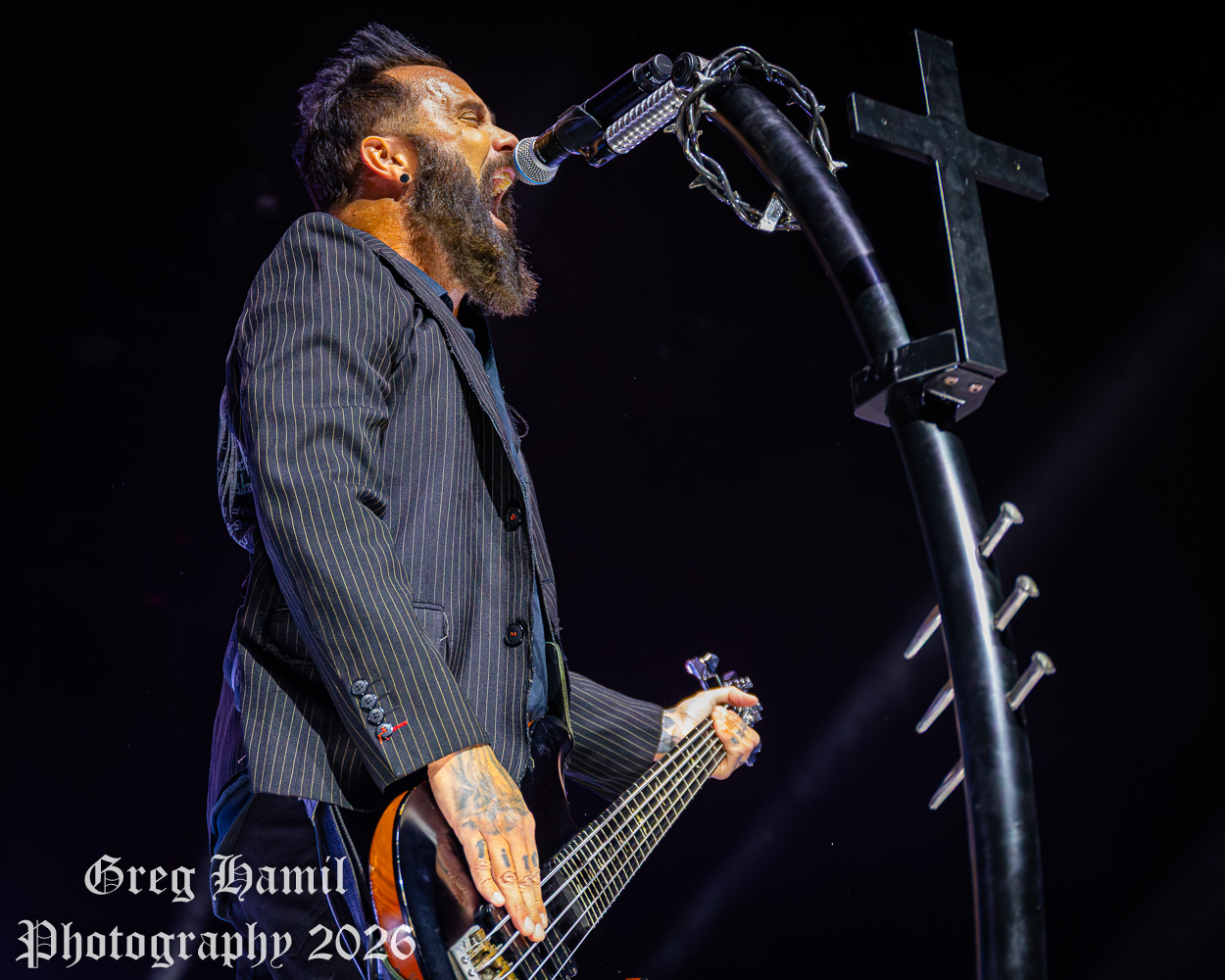
Review & Photos by Greg Hamil for MPM
Twenty years after the release of one of their most influential albums, Skillet brought the Comatose 20 Years, Still Screaming Tour to Milwaukee’s Landmark Credit Union Live on Saturday, October 17, 2026. Joined by Escape the Fate and Autumn Kings, the band delivered a setlist that celebrated its past while demonstrating why its music continues to connect with hard rock audiences.
A Night of Heavy Music in Milwaukee
Few things in rock music carry the same emotional weight as hearing an album that helped define a particular period of your life. Songs that once played through car stereos, headphones, and bedroom speakers take on an entirely different character when revisited decades later.
That was the central appeal of Skillet’s Comatose twentieth-anniversary tour.
The Milwaukee stop brought together three bands representing different approaches to modern rock. Autumn Kings offered a contemporary blend of alternative rock and electronic influences. Escape the Fate brought the aggressive energy of post-hardcore, while Skillet anchored the evening with its unmistakable combination of heavy guitars, orchestral arrangements, and powerful melodic choruses.
Rather than simply presenting another greatest-hits concert, Skillet structured its performance around the album that helped establish its modern musical identity.
The result was a setlist that balanced nostalgia with the band’s continued evolution, offering longtime fans the opportunity to revisit familiar material while also hearing songs from later chapters of its career.
Landmark Credit Union Live: A New Home for Milwaukee Rock
Located at 1051 North Vel R. Phillips Avenue in Milwaukee’s Deer District, Landmark Credit Union Live provided a fitting setting for a concert built around powerful guitars, commanding vocals, and the energy of live rock music.
Opened in February 2026, the approximately 4,500-capacity venue was designed to fill the space between Milwaukee’s smaller music clubs and its major arenas.
The building combines a spacious general-admission floor with elevated seating, allowing concertgoers to experience performances from different perspectives. The main floor offers the traditional standing-room atmosphere associated with rock concerts, while the upper level provides a broader view of the stage.
Its contemporary design also includes premium hospitality spaces, multiple bars, and an outdoor terrace overlooking the Deer District.
One of the venue’s more distinctive features is its effort to incorporate Milwaukee’s character into the building itself. Local artwork, regional food and beverage offerings, and architectural details inspired by the city’s history help distinguish Landmark Credit Union Live from more generic concert facilities.
The surrounding neighborhood adds to its appeal. Located near Fiserv Forum, the venue is within walking distance of numerous restaurants, bars, and entertainment destinations.
For a three-band concert, the building’s layout offers important advantages. A large floor accommodates fans seeking an energetic experience close to the stage, while elevated seating gives others an opportunity to appreciate the full scope of a performance.
Skillet’s layered arrangements, Escape the Fate’s aggressive instrumentation, and Autumn Kings’ combination of electronic textures and guitars were all well matched to the capabilities expected of a modern concert hall.
The October 17 show also carried additional significance because it took place during the venue’s inaugural year. As Milwaukee continues developing its downtown entertainment district, Landmark Credit Union Live represents another important destination for national touring artists.
Autumn Kings: Setting the Tone With Modern Rock Energy
Opening for two established hard rock acts is a challenging assignment, particularly when the headliner is celebrating an album that has maintained a dedicated following for twenty years.
For Autumn Kings, the Milwaukee appearance provided an opportunity to introduce its music to an audience already invested in guitar-driven rock.
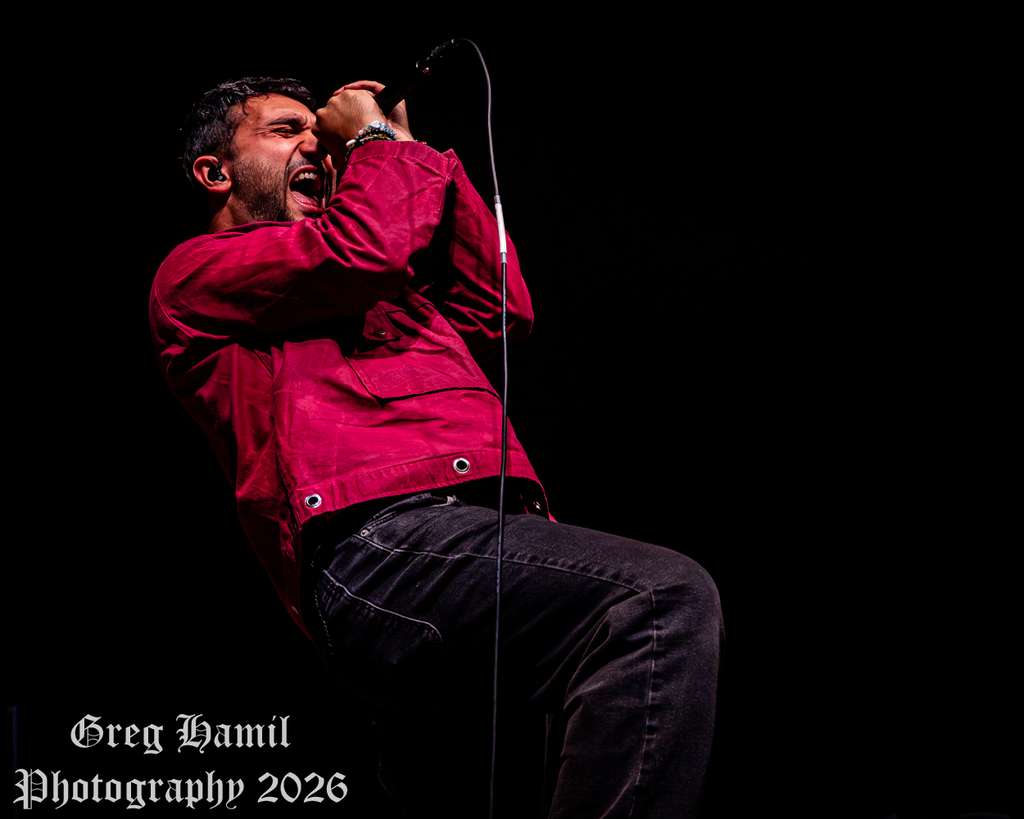
The band’s musical approach blends melodic alternative rock with electronic production and heavier instrumental passages. That combination creates a sound that is contemporary without abandoning the energy and immediacy of traditional rock music.
What makes Autumn Kings interesting in a live setting is the contrast between its accessible songwriting and the heavier elements beneath it.
Atmospheric passages establish a melodic foundation before distorted guitars and more aggressive rhythms push the arrangements forward. Rather than maintaining the same level of intensity throughout, the music relies on dynamic changes that give individual sections greater impact.
That approach is especially valuable for an opening act.
Listeners unfamiliar with a band’s catalog may not immediately recognize individual songs, but strong melodies, memorable choruses, and clearly defined musical transitions can create an immediate connection.
Autumn Kings’ material is designed around those qualities.
The group’s modern production influences also distinguish it from the other performers on the bill. Electronic textures and layered arrangements add depth to the music, while the guitars and drums preserve its rock foundation.
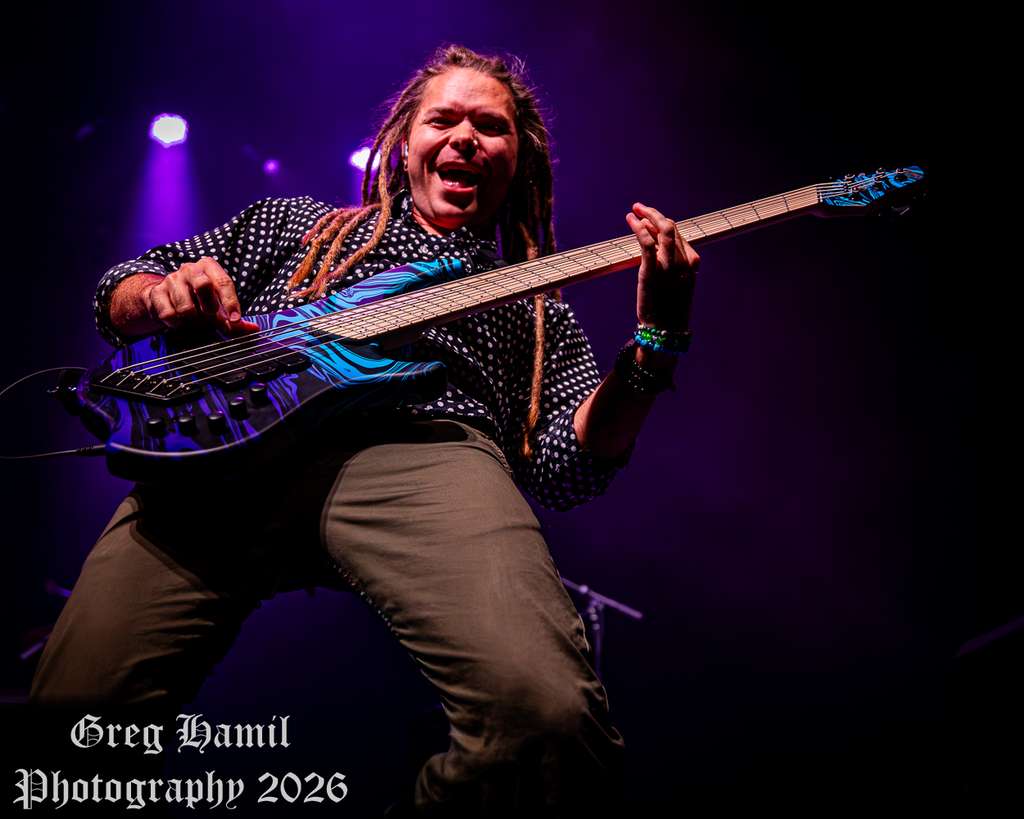
Translating that sound from the studio to the stage requires careful balance. The polished qualities of recorded material must coexist with the physical impact and spontaneity that audiences expect from live rock music.
At its strongest, this style can produce arrangements that feel expansive without losing their emotional directness.
Autumn Kings also provided an important stylistic contrast to Escape the Fate and Skillet.
Where Escape the Fate emphasizes aggression and post-hardcore intensity, and Skillet relies on sweeping anthems and dramatic arrangements, Autumn Kings occupies a more contemporary alternative-rock space.
The band’s role in the concert was therefore more meaningful than simply filling the opening slot.
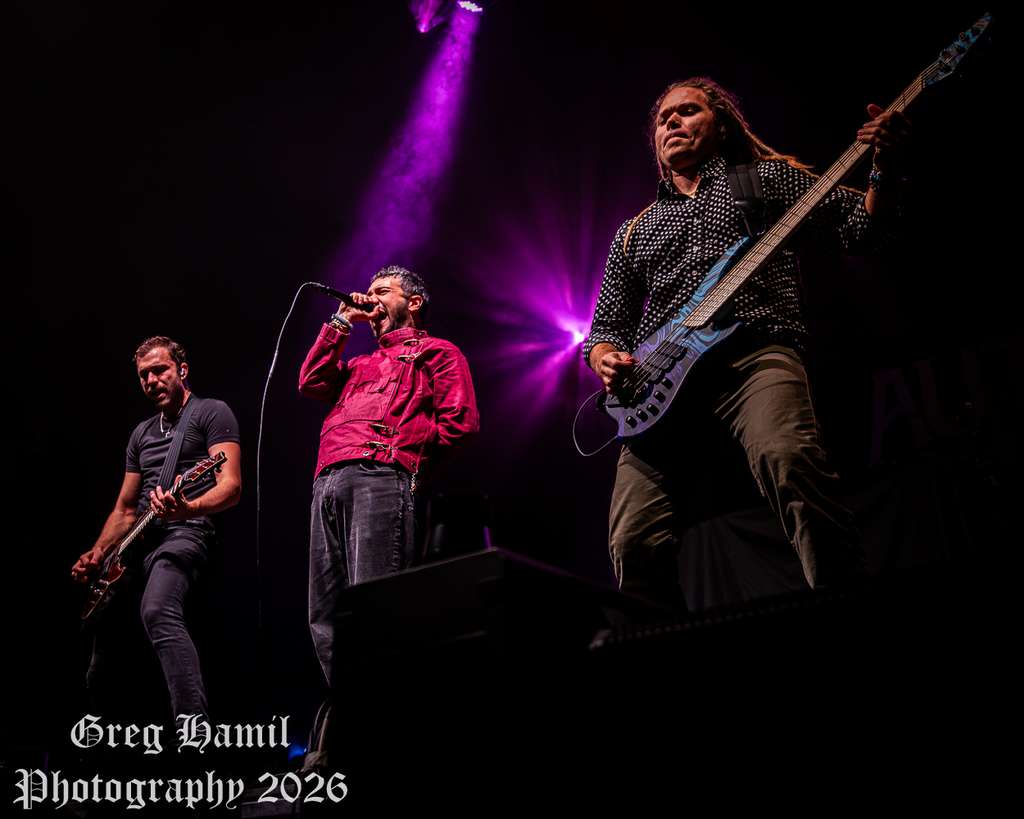
It introduced a newer interpretation of guitar-driven music and helped establish the stylistic variety that would characterize the evening.
For an emerging or developing artist, a national tour provides an invaluable opportunity to reach listeners who may never have encountered its music otherwise.
Autumn Kings’ combination of modern production, strong melodic hooks, and heavier rock influences made it a logical addition to the lineup.
Autumn Kings Setlist: Sleep When I’m Dead – Power – Gone, Gone, Gone – Tongue Tied – Become Numb – Only Human – Young Bloods – Snake Charmer – Hellbound
Escape the Fate: Aggression, Melody, and Post-Hardcore Intensity
Escape the Fate brought a noticeably different musical personality to the bill.
The band’s sound is rooted in the aggressive traditions of post-hardcore and metalcore, incorporating heavy guitar riffs, forceful rhythms, melodic choruses, and dramatic changes in vocal delivery.
At the center of that identity is vocalist Craig Mabbitt.
Mabbitt’s combination of clean singing and harsher vocal techniques gives Escape the Fate much of its distinctive character. His ability to move between melodic passages and more aggressive delivery allows the band’s songs to build tension before releasing it through powerful choruses.
That contrast is particularly important to Escape the Fate’s music.
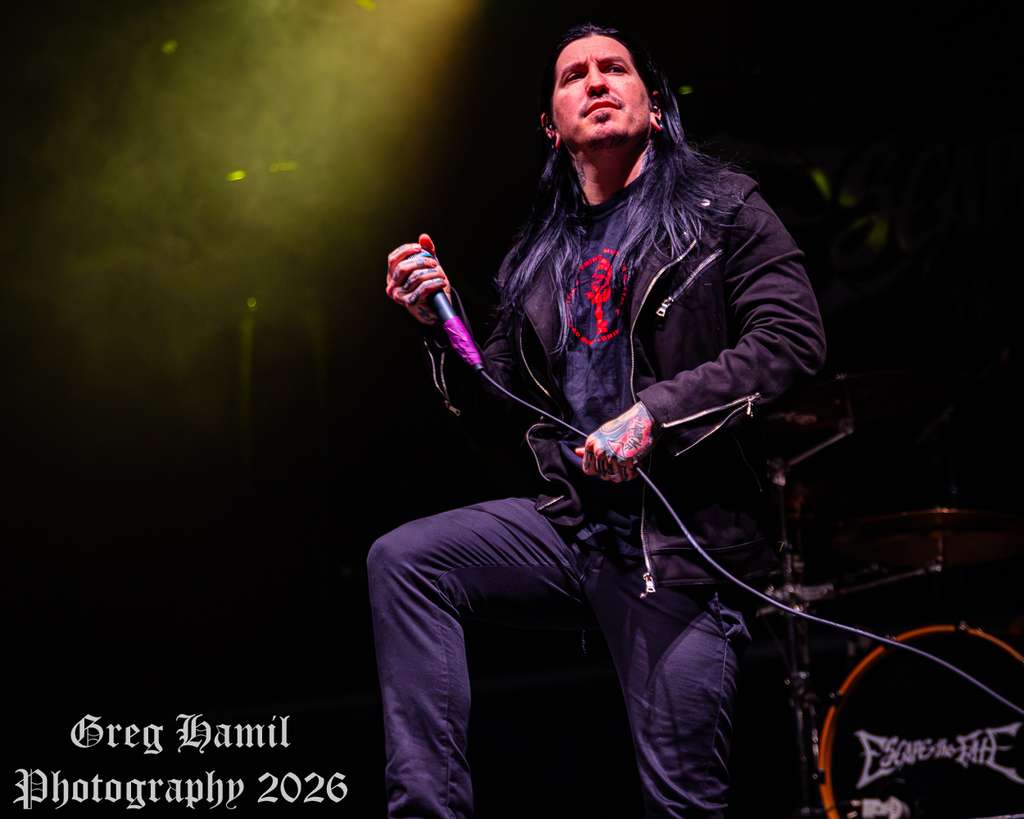
Where a conventional hard rock song may rely on a steady progression from verse to chorus, Escape the Fate frequently introduces sharper transitions, heavier instrumental sections, and sudden changes in intensity.
The guitar arrangements contribute significantly to that approach.
Distorted riffs and metallic rhythms establish an aggressive foundation, while melodic leads and more accessible choruses prevent the music from becoming one-dimensional.
The result is a sound that combines confrontation with emotional accessibility.
Music built for the stage
Escape the Fate’s catalog contains several songs that illustrate why its musical style translates naturally to live performance.
“Gorgeous Nightmare” combines dark melodies with aggressive instrumentation, creating a balance between theatrical atmosphere and hard rock intensity.
“This War Is Ours (The Guillotine II)” emphasizes the band’s heavier side, with forceful rhythms and an arrangement that draws heavily from metalcore.
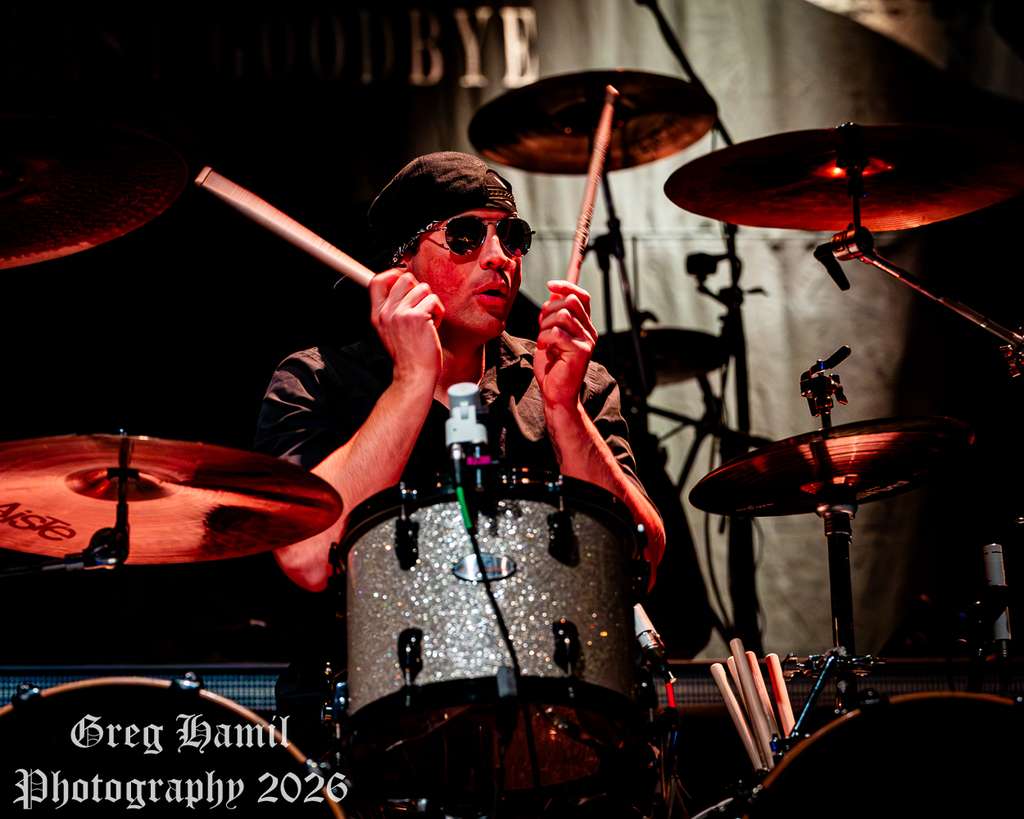
“One for the Money” demonstrates a more direct approach, using a memorable chorus and driving guitar work to create an immediate impact.
These songs were part of the band’s documented performances on the tour, although the precise Milwaukee setlist has not been independently confirmed.
What makes this material effective is its use of contrast.
Aggressive passages create tension, while melodic choruses provide release. Abrupt rhythmic changes introduce unpredictability, and the interaction between vocals and guitars keeps the arrangements moving.
The music also carries a theatrical quality.
Escape the Fate has never been a band that depends entirely on subtlety. Its songs embrace emotional extremes, using heightened vocal delivery and dramatic instrumentation to communicate urgency.
That approach offers a different concert experience from Skillet’s more motivational style.
Skillet frequently builds its music around perseverance and collective determination. Escape the Fate tends to explore darker emotions through more confrontational arrangements.
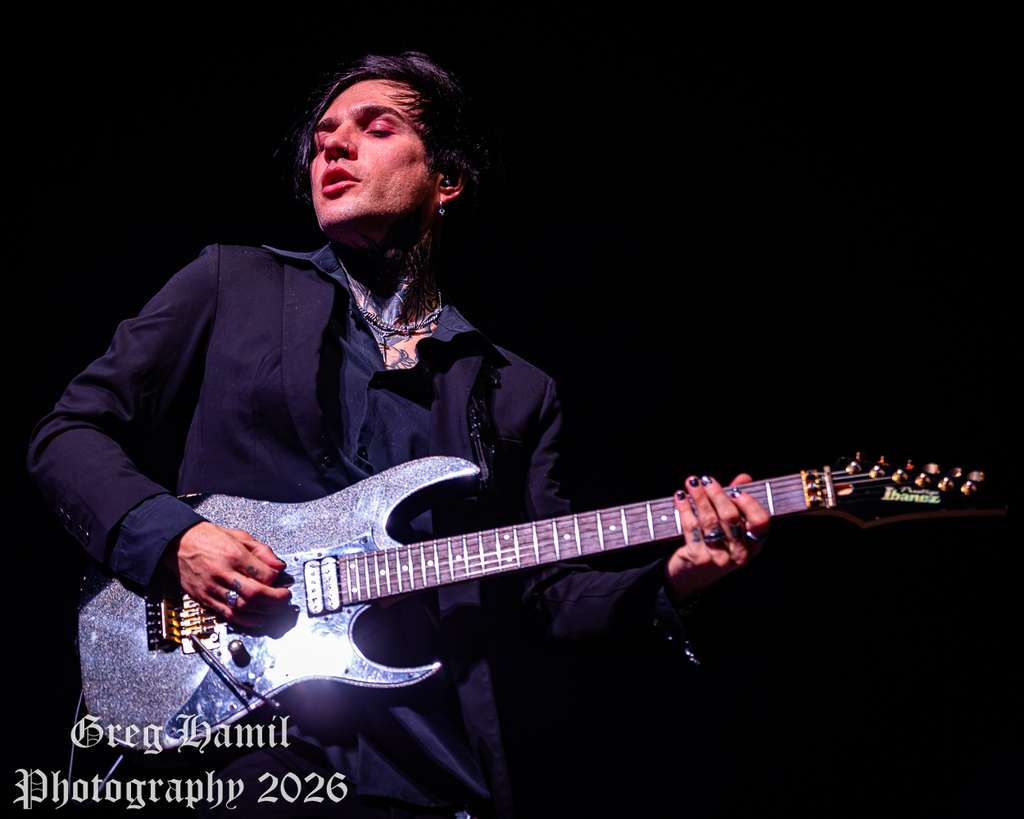
Both approaches can be powerful, but they create different forms of intensity.
A strong contrast to the headliner
Escape the Fate’s placement immediately before Skillet made musical sense.
The band’s heavier arrangements offered a transition from Autumn Kings’ contemporary alternative sound into the more substantial guitar-driven presentation of the headliner.
Its combination of aggressive vocals, technical guitar passages, and melodic hooks also provided variety within a concert otherwise centered on Skillet’s anniversary celebration.
One of the band’s defining qualities is its willingness to move between musical extremes.
A melodic passage can suddenly give way to a heavier breakdown. A harsh vocal section can transition into a cleanly sung chorus. The guitars may alternate between tightly controlled riffs and more expansive melodic arrangements.
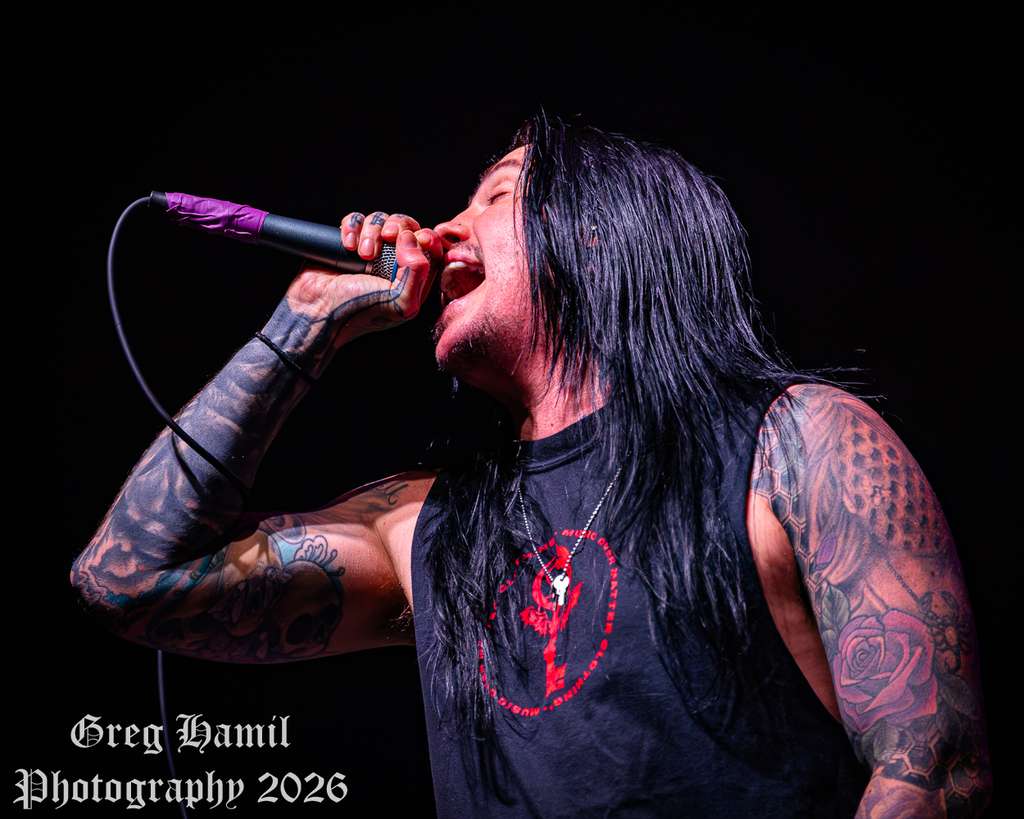
Those shifts are essential to the band’s identity.
They also illustrate why Escape the Fate has remained relevant to listeners who appreciate the intersection of metal, alternative rock, and post-hardcore.
As the middle act, Escape the Fate represented the most confrontational side of the evening’s musical spectrum, providing a stylistic counterweight to Skillet’s more expansive sound.
Escape The Fate Setlist: Paranoia – Gorgeous Nightmare – Idle Potential – Money Power Fame – Déjà vu – Broken Heart – Low – Last Goodbye – This War Is Ours (The Guillotine II) – One for the Money
Skillet: Twenty Years of Comatose Come Full Circle
The main attraction was Skillet’s celebration of Comatose, the 2006 album that helped transform the band into one of modern hard rock’s most recognizable names.
Rather than selecting only the album’s best-known songs, Skillet performed its complete sequence before moving into material from later releases.
That decision gave the concert a clear musical structure.
The first portion revisited the album that established much of the band’s signature sound. The second demonstrated how that foundation developed into the larger, more anthemic style associated with Skillet’s subsequent success.
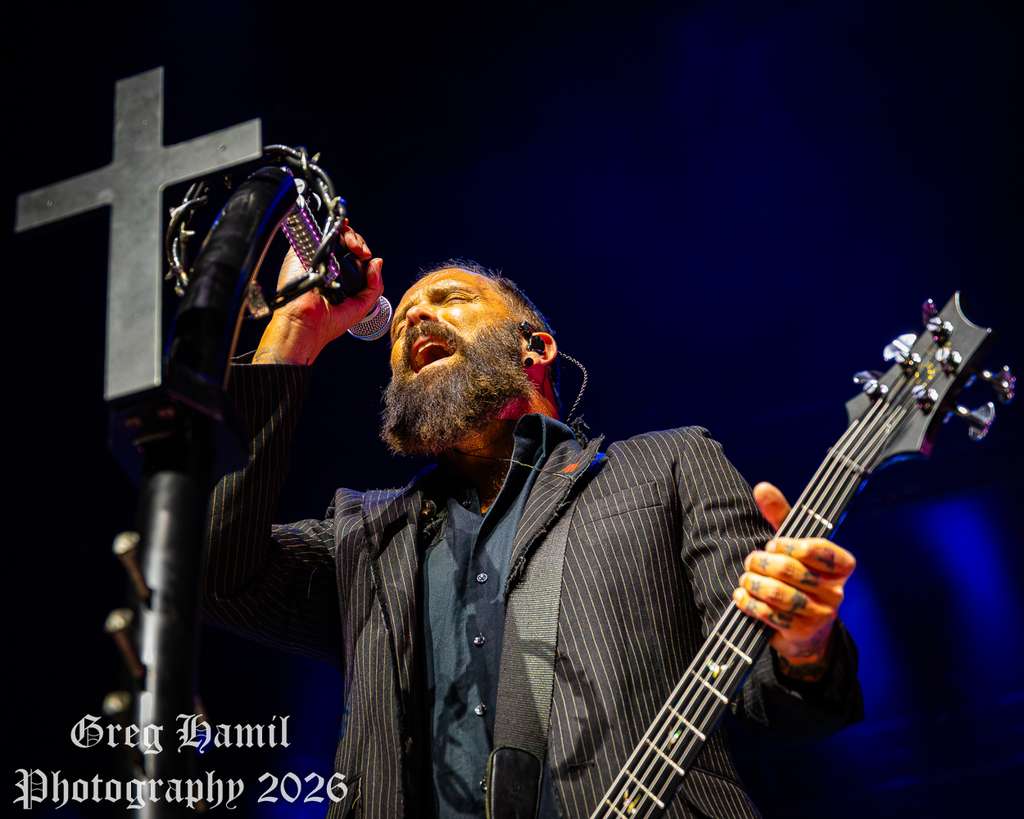
John Cooper: The unmistakable voice of Skillet
John Cooper remains the defining presence in Skillet’s music.
His gritty, forceful vocal delivery gives songs such as “Rebirthing,” “Comatose,” “Monster,” and “The Resistance” their unmistakable character.
There is a raw quality to his singing that contrasts effectively with the band’s carefully arranged instrumentation.
Skillet’s music frequently incorporates orchestral elements, electronic textures, and polished production, but Cooper’s voice provides a sense of immediacy.
He does not depend on elaborate vocal ornamentation. Instead, his delivery emphasizes the strength of the melody and the conviction behind the lyrics.
That approach is particularly effective in songs dealing with struggle, determination, and emotional vulnerability.
His bass playing also contributes to the band’s rhythmic foundation, helping anchor arrangements that often contain multiple layers of guitar and keyboard instrumentation.
As the group’s frontman, Cooper’s musical identity is closely connected to the band’s overall message.
The intensity of his vocal approach reinforces the emotional directness that has helped Skillet maintain a dedicated audience across multiple generations.
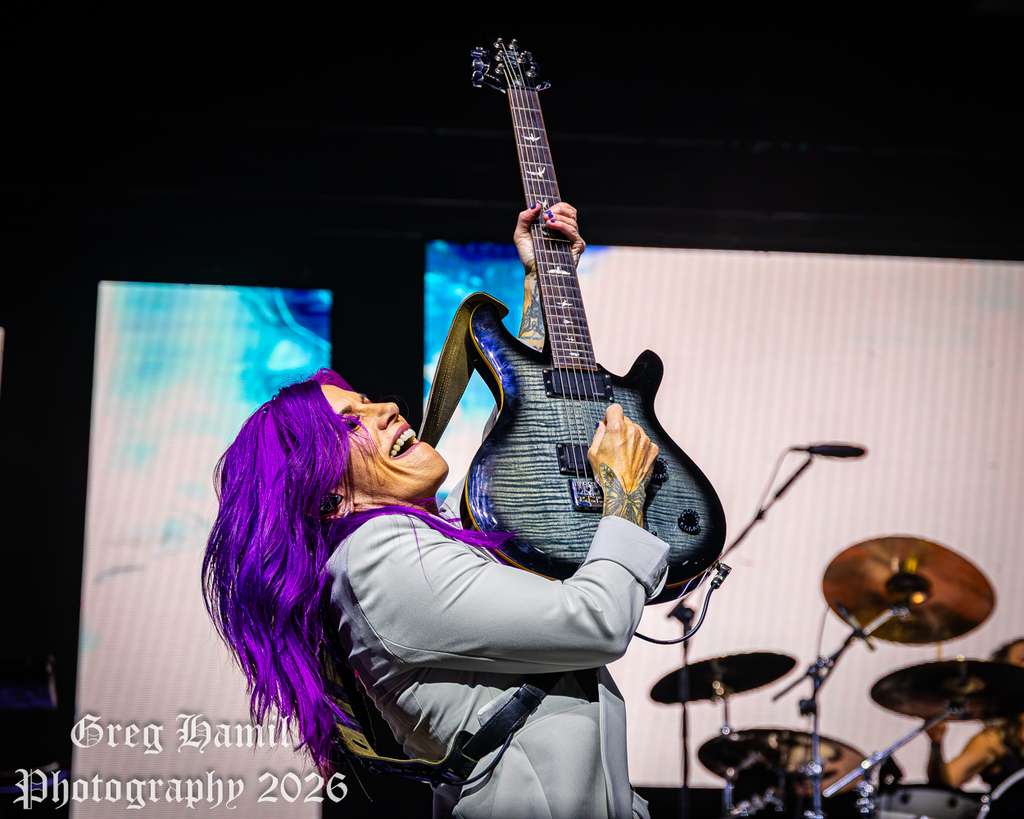
Korey Cooper: Power, movement, and atmosphere
Korey Cooper provides another essential element of Skillet’s musical identity.
Her work on guitar and keyboards helps the band move between aggressive rock arrangements and the cinematic textures that have distinguished its music for years.
On Comatose, those atmospheric elements are especially important.
Songs such as “Rebirthing” and “Comatose” depend on the interaction between heavy guitar riffs and orchestral or electronic arrangements.
Without those additional textures, the songs would lose much of their dramatic character.
Korey’s contributions help preserve that balance.
Her guitar playing adds weight to the heavier material, while the keyboard arrangements provide atmosphere and depth.
The combination allows Skillet to create music that feels expansive without losing the immediacy of a four-piece rock band.
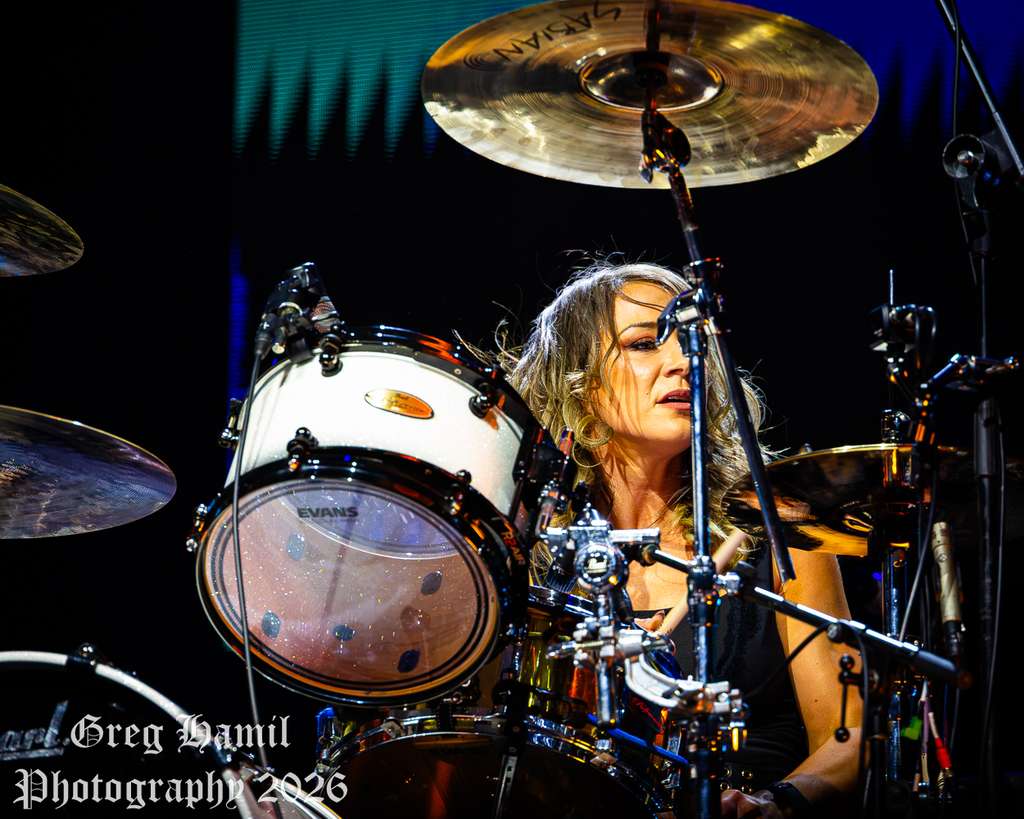
Jen Ledger: Drumming and vocals in perfect balance
Jen Ledger occupies one of the most demanding positions in Skillet’s lineup.
As both drummer and vocalist, she must maintain the rhythmic foundation while contributing melodic passages that are essential to several of the band’s best-known songs.
Her voice provides a striking contrast to John Cooper’s rougher delivery.
That relationship is especially effective in songs such as “Awake and Alive” and “Hero,” where contrasting vocal textures help create emotional depth.
Her drumming is equally important.
Skillet’s music depends heavily on powerful rhythmic arrangements, particularly during its larger choruses.
The drums must deliver physical impact while remaining tightly coordinated with the guitars, bass, and additional production elements.
Ledger’s combination of rhythmic precision and vocal ability gives the band an important dimension that distinguishes it from many comparable hard rock acts.
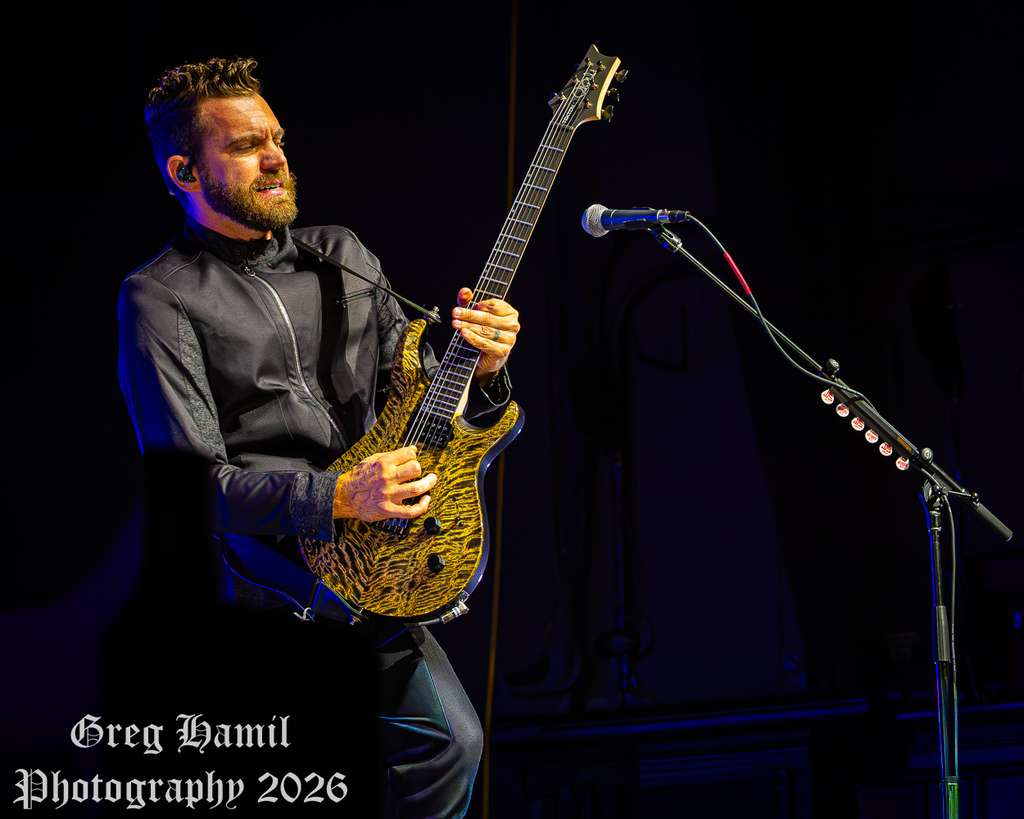
Seth Morrison: The guitar power behind the anthems
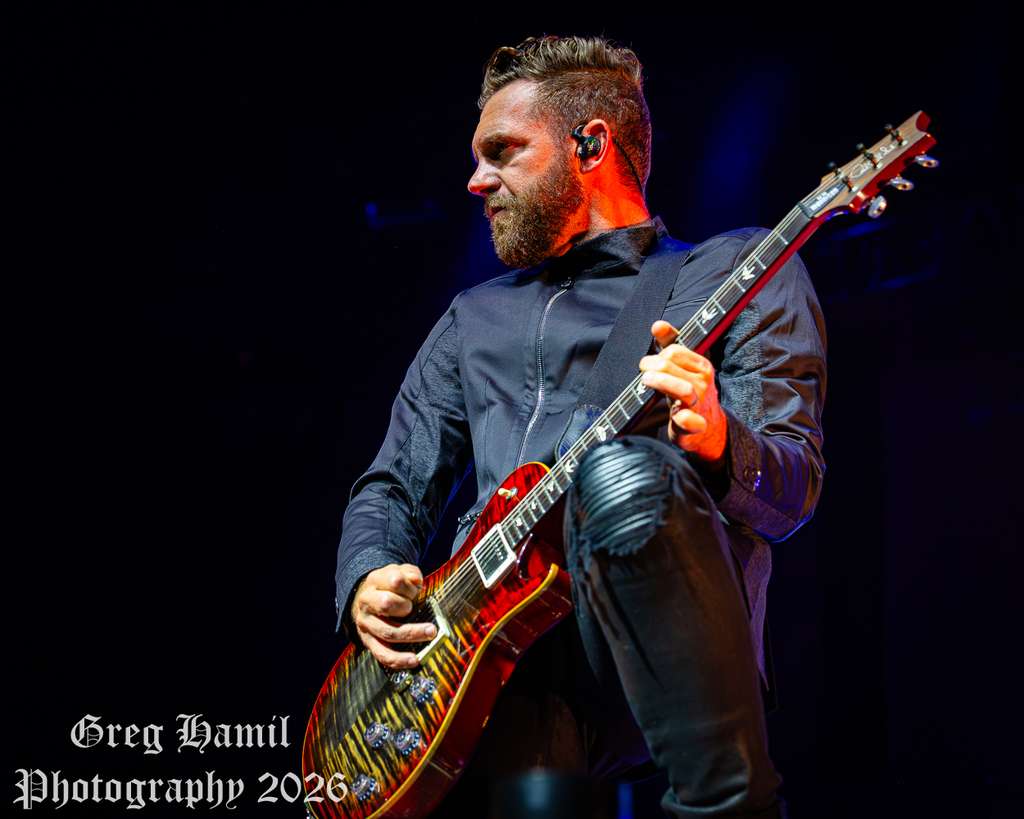
Seth Morrison’s lead guitar work completes Skillet’s instrumental identity.
His playing combines technical precision with melodic restraint, emphasizing riffs and lead passages that support the songs rather than overwhelming them.
That approach is well suited to Skillet’s music.
The band rarely builds its arrangements around extended instrumental improvisation. Instead, its songs depend on carefully structured guitar parts that reinforce the rhythm and melody.
Morrison’s contribution is particularly important during heavier material, where the guitar must provide aggression without sacrificing clarity.
Together, the four musicians create a sound built around coordination and contrast.
Skillet’s music is at its strongest when the guitars, keyboards, drums, and vocals function as parts of a unified arrangement.
The Comatose Performance: Revisiting an Album From Beginning to End
The anniversary portion of the Milwaukee set began with “Rebirthing,” the same song that opens the original album.
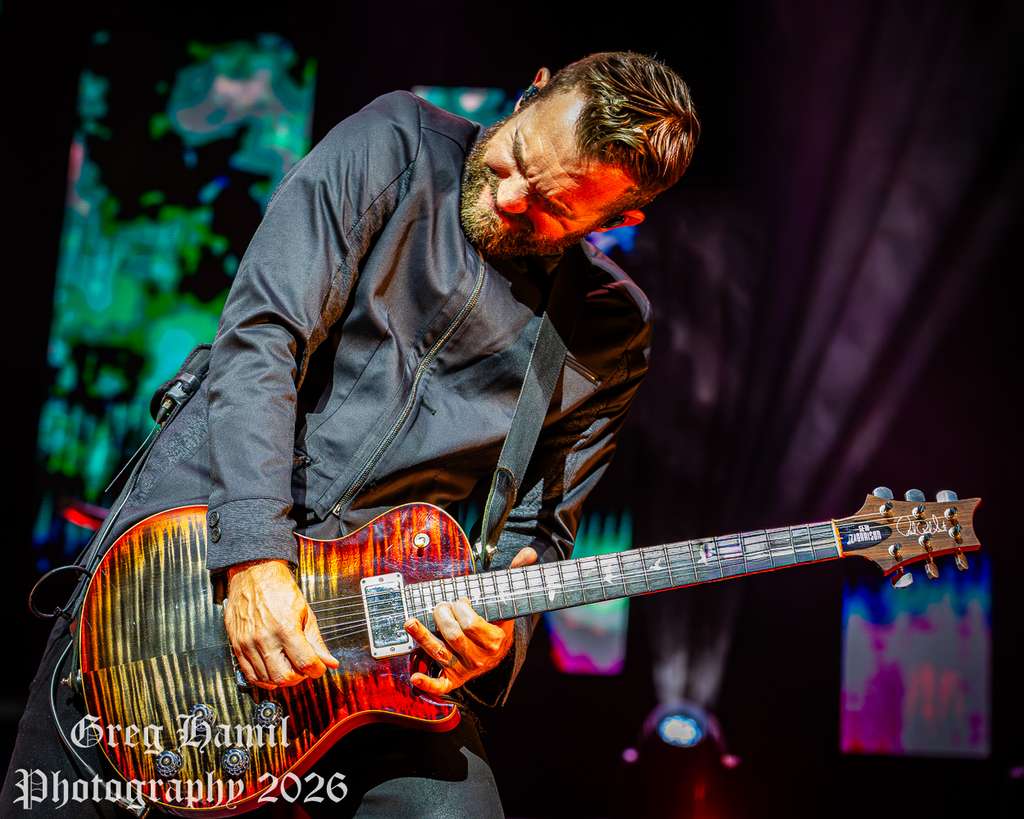
It was an appropriate starting point.
With its orchestral introduction, aggressive guitar work, and urgent vocals, “Rebirthing” immediately establishes the musical character of Comatose.
The song’s themes of renewal and transformation also give it additional significance during an anniversary celebration.
Twenty years after its release, its message remains closely connected to the band’s identity.
“The Last Night” followed, introducing a more emotionally vulnerable dimension.
The song’s lyrics address despair, isolation, and the importance of supporting someone through personal difficulty.
Musically, it balances heavy guitars with an accessible melody, demonstrating Skillet’s ability to explore serious subjects without abandoning the energy of hard rock.
The documented setlist included an extended outro, allowing the arrangement to move beyond its original studio structure.
“Better Than Drugs” continued the momentum with driving rhythms and a forceful chorus. Its extended ending provided another opportunity to emphasize the instrumental character of the song.
The title track, “Comatose,” followed as one of the album’s defining compositions.
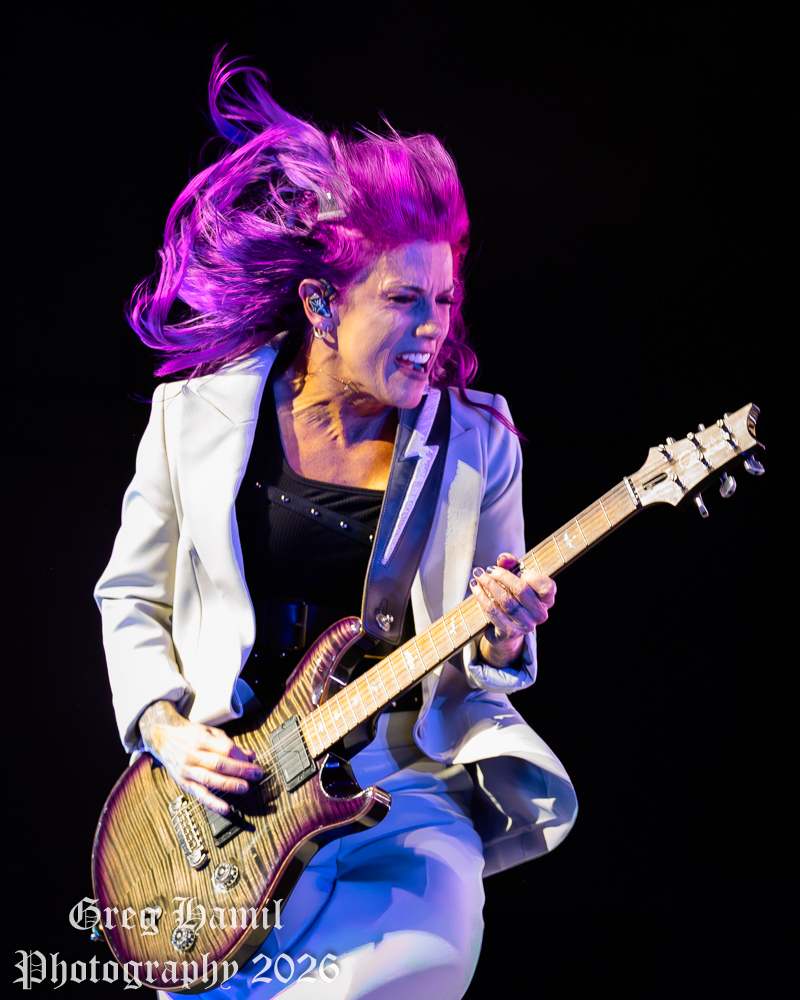
Its combination of atmospheric textures, distorted guitars, and an expansive chorus captures the sound that helped distinguish Skillet during this period.
The song’s central theme of escaping emotional numbness also serves as an appropriate metaphor for the entire anniversary celebration.
The deeper cuts deserve their moment
One of the strongest aspects of the setlist was the inclusion of songs that do not always receive the same attention as Skillet’s biggest hits.
“Falling Inside the Black” emphasized the darker, more atmospheric side of the album.
Its extended introduction added another dimension to a song already characterized by tension and emotional intensity.
“Those Nights” and “The Older I Get” shifted the focus toward more reflective material.
Both songs carry themes that become especially meaningful with the passage of time.
“Those Nights” looks back on shared experiences and the relationships that help people through difficult periods.
“The Older I Get” explores regret, emotional distance, and the complicated consequences of growing older.
For listeners who first encountered these songs in 2006, their meaning may have changed considerably over the following twenty years.
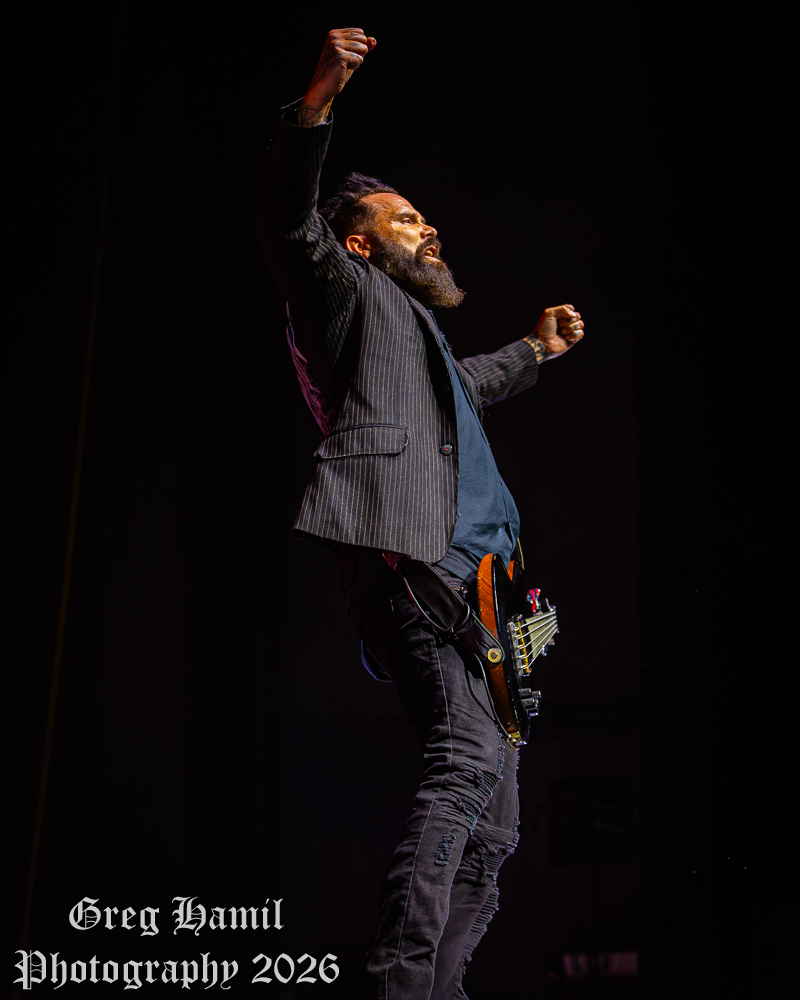
The Milwaukee setlist presented both in shortened arrangements, preserving their place within the album while maintaining the overall pacing.
“Whispers in the Dark” brought the focus back to heavier material.
With its recognizable guitar riff and soaring chorus, the song remains one of the clearest examples of Skillet’s ability to combine aggression with melody.
It also demonstrates why Comatose remains an important release in the band’s catalog.
The album contains songs that are immediately accessible without abandoning the heavier qualities that attracted rock audiences in the first place.
“Yours to Hold”: A change of pace
One of the most interesting choices in the anniversary sequence was the acoustic presentation of “Yours to Hold.”
The song’s emotional directness makes it particularly appropriate for a stripped-down arrangement.
Without the same level of instrumental intensity, greater attention can be placed on the vocal melody and the underlying songwriting.
An acoustic performance also provides an important contrast within a lengthy hard rock set.
After multiple songs built around distorted guitars and powerful rhythms, a quieter arrangement allows the music to take on a different emotional character.
“Yours to Hold” illustrates that Skillet’s strength is not limited to aggressive instrumentation.
The band’s more intimate compositions are equally important to its identity.
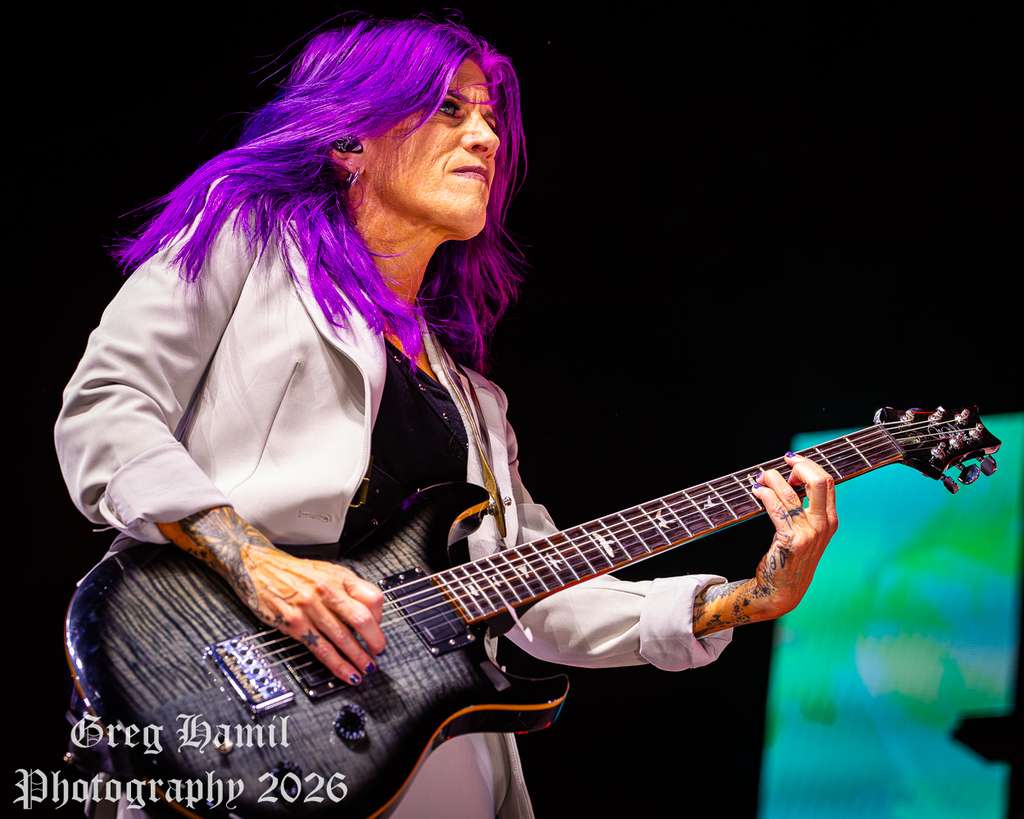
The album sequence concluded with “Looking for Angels,” a song that examines broader questions of compassion, responsibility, and social awareness.
Its distinctive rhythmic vocal approach and socially conscious themes make it an unusual but effective conclusion to Comatose.
Together, the ten songs presented the album as a complete musical statement rather than a collection of individual hits.
From Comatose to the Modern Skillet Sound
After completing the anniversary album sequence, Skillet turned its attention to songs representing later stages of its career.
“Feel Invincible” introduced the more streamlined, motivational sound that has become closely associated with the band’s recent work.
Its forceful rhythm and memorable chorus represent a natural evolution from the musical foundations established on Comatose.
“Awake and Alive” brought the orchestral elements back into focus, while also emphasizing the contrasting vocal styles of John Cooper and Jen Ledger.
The song remains one of the clearest examples of the band’s ability to combine heavy instrumentation with dramatic melodic arrangements.
“Legendary” followed with a more direct, rhythm-driven approach.
Its motivational themes and chant-like chorus reflect the arena-rock identity that Skillet has developed over the years.
The inclusion of “Scream” introduced newer material into the performance, demonstrating that the anniversary tour was not exclusively devoted to the past.
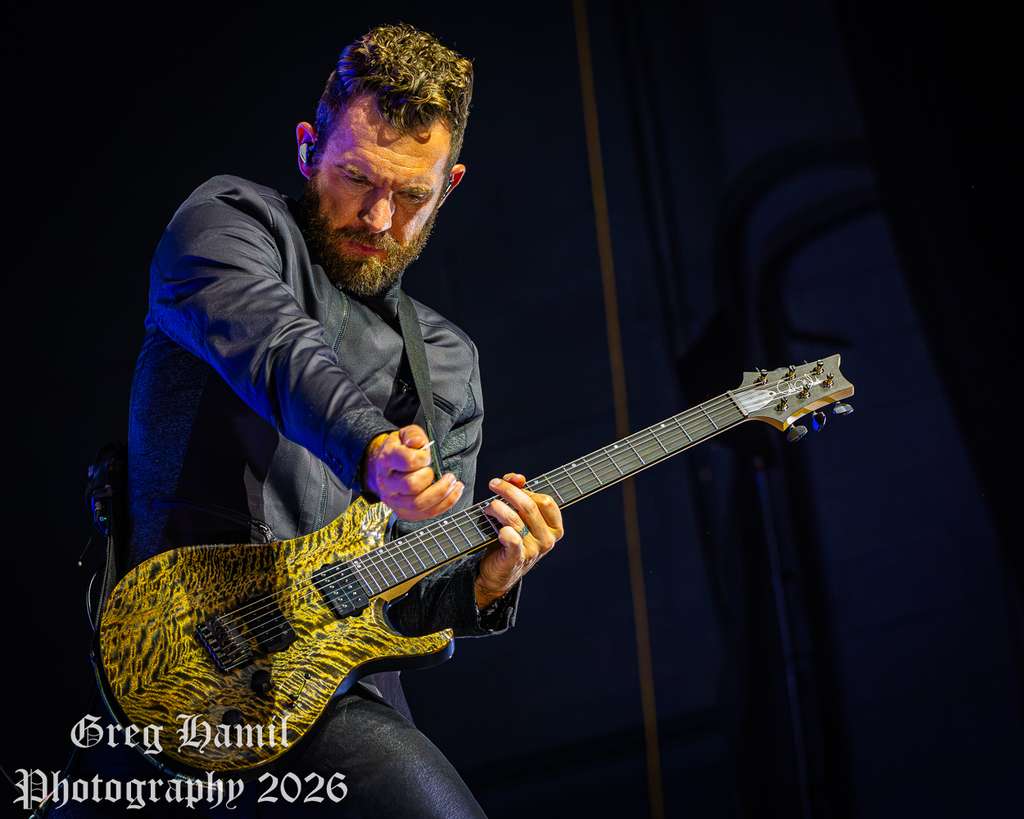
“Psycho in My Head” continued the heavier contemporary direction, exploring internal conflict through an energetic arrangement.
“Hero” and “Monster”: The songs that defined another generation
The later portion of the set included two of Skillet’s most recognizable songs.
“Hero” combines powerful rhythms with the contrasting vocal deliveries of John Cooper and Jen Ledger.
Its message of perseverance and the search for strength remains closely aligned with the band’s broader musical philosophy.
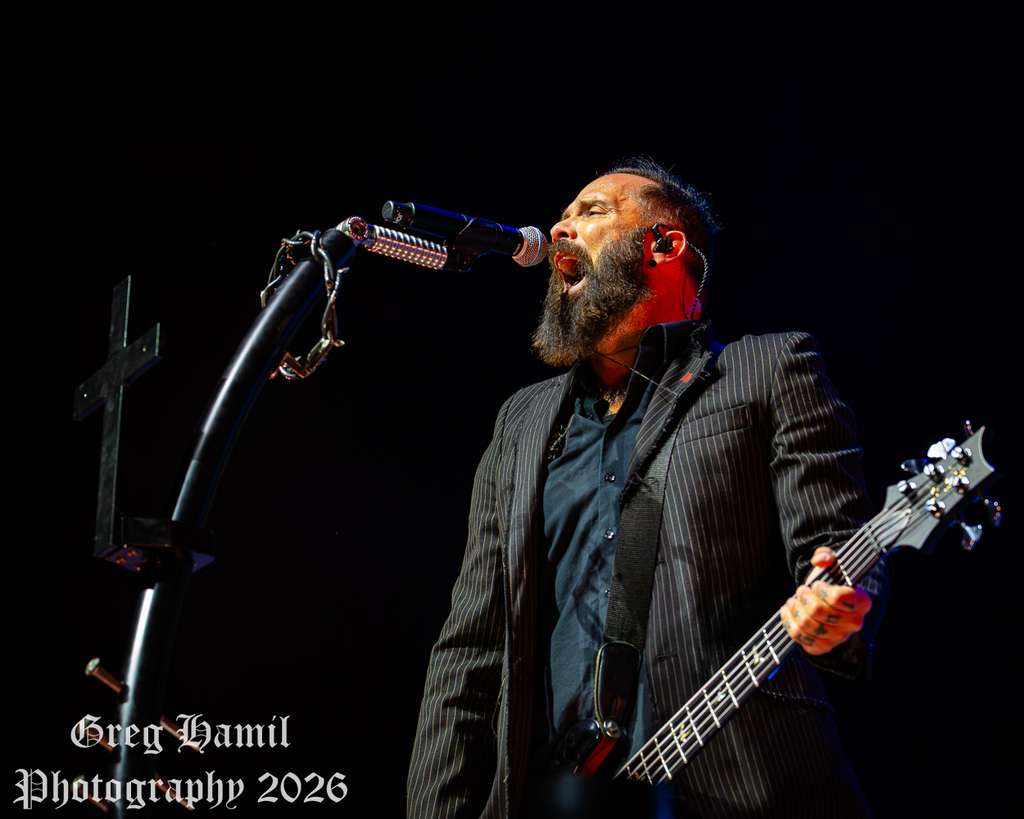
“Monster” represents an even more aggressive side of Skillet.
Its instantly recognizable guitar riff, forceful vocals, and memorable chorus have made it one of the band’s defining compositions.
The song’s exploration of internal struggle gives its heavy arrangement an emotional foundation that extends beyond the music’s physical intensity.
Together, “Hero” and “Monster” demonstrated how Skillet built upon the success of Comatose and reached an even broader audience.
“The Resistance”: An appropriate conclusion
Skillet ended the documented Milwaukee set with an encore performance of “The Resistance.”
As a closing selection, the song brought the evening’s themes together.
Its powerful guitar arrangement, driving rhythm, and message of determination reinforced the musical identity that has carried Skillet through decades of recording and touring.
The concert began with “Rebirthing,” a song about awakening and renewal, and concluded with “The Resistance,” a declaration of perseverance.
That progression gave the setlist a sense of purpose.
Rather than ending with nostalgia alone, Skillet closed with a song representing its continued commitment to the themes that have defined its career.
Skillet Setlist: Rebirthing – The Last Night – Better Than Drugs – Comatose – Falling Inside the Black – Those Nights – The Older I Get – Whispers in the Dark – Yours to Hold – Looking for Angels – Feel Invincible – Awake and Alive – Legendary – Scream – Psycho in My Head – Hero – Monster – The Resistance
Three Bands, Three Different Kinds of Energy
One of the most appealing aspects of the Milwaukee lineup was the contrast between the three performers.
Autumn Kings represented a newer generation of alternative rock, combining modern production techniques with accessible melodies and heavier guitar passages.
Escape the Fate brought the emotional intensity and aggressive arrangements of post-hardcore.
Skillet completed the evening with a more expansive sound, combining hard rock instrumentation, orchestral textures, and powerful melodic choruses.
Each band approached musical intensity differently.
For Autumn Kings, it came through the interaction of electronic elements, melodic hooks, and guitar-driven arrangements.
For Escape the Fate, it emerged through aggressive vocals, heavier rhythms, and sudden changes in musical dynamics.
For Skillet, the impact came from the combination of four musicians working within carefully structured arrangements designed to communicate both physical power and emotional depth.
That variety helped give the concert a broader musical identity.
The anniversary concept provided the evening’s central purpose, but the supporting artists connected that celebration to different branches of contemporary rock.
Final Thoughts: Twenty Years Later, the Music Still Matters
Skillet’s October 17 appearance at Landmark Credit Union Live was built around a simple but powerful idea: celebrate an album that helped define the band’s career while demonstrating how its music has continued to evolve.
The complete Comatose sequence gave longtime listeners an opportunity to revisit songs that have remained meaningful for two decades.
The extended arrangements, shortened versions, and acoustic treatment of “Yours to Hold” also gave the album portion of the set a distinctive live structure.
The second half of the performance connected that history to the band’s later success, with songs such as “Feel Invincible,” “Awake and Alive,” “Hero,” and “Monster.”
Escape the Fate added a heavier, more confrontational dimension to the lineup, while Autumn Kings provided a contemporary alternative-rock perspective.
Landmark Credit Union Live, with its modern facilities and location in Milwaukee’s Deer District, offered an appropriate setting for a concert celebrating both musical history and continued relevance.
Ultimately, the significance of the evening was not simply that Comatose had reached its twentieth anniversary.
It was that the songs still possessed the musical and emotional qualities that made them important in the first place.
The heavy guitars, dramatic arrangements, memorable choruses, and themes of perseverance remain central to Skillet’s identity.
Two decades after the album’s release, those qualities continue to connect the band’s past with its present.
Twenty years after Comatose, Skillet is still screaming—and the music still has something to say.