Review & Photography by Nathan Vestal for MPM
There are certain venues where a show immediately feels like it belongs there. The Arcada Theatre is one of those places. It is old, ornate, slightly excessive, and completely unapologetic about its history, which makes it almost suspiciously well suited for a night built around two bands carrying a lot of heavy-metal history with them.
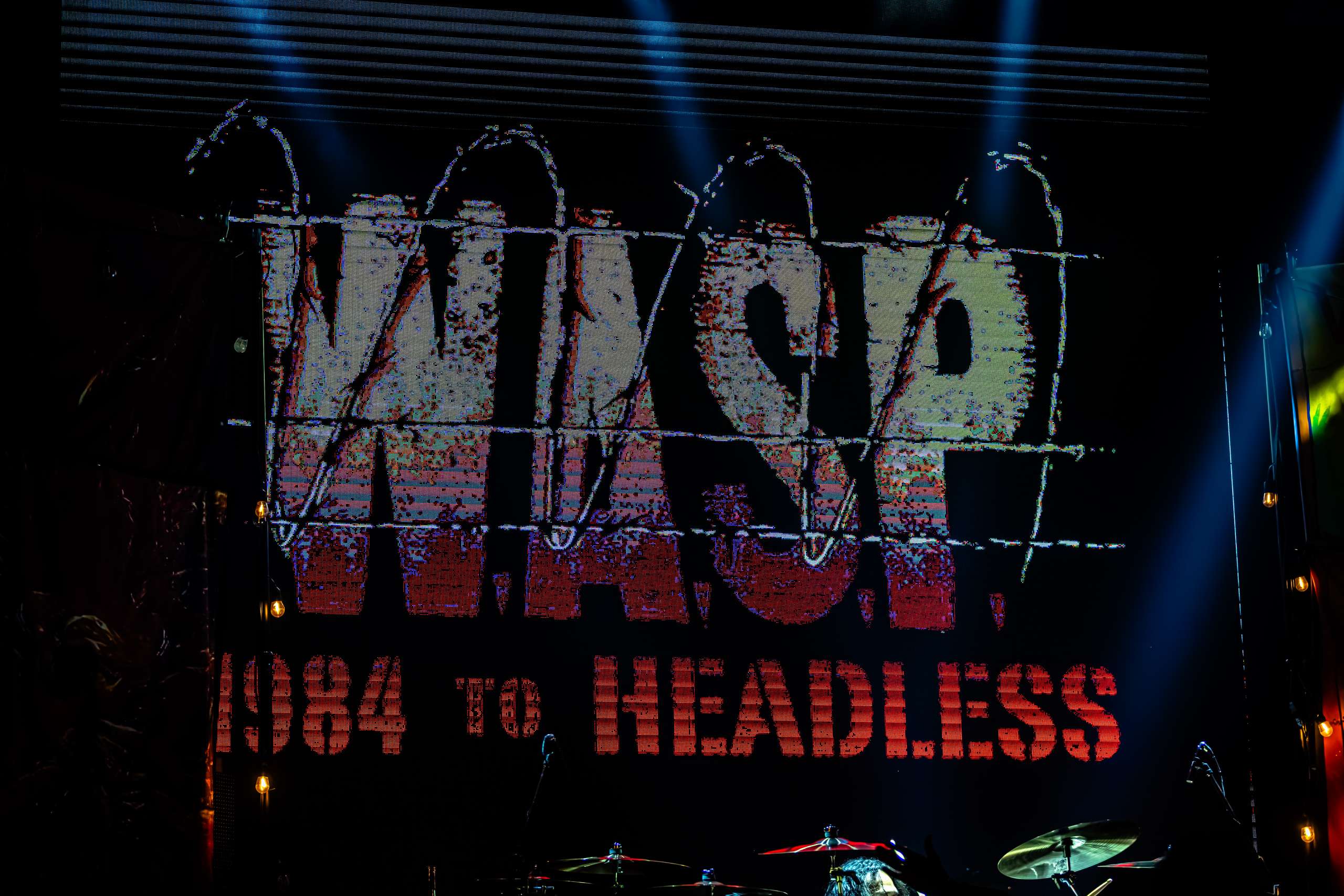
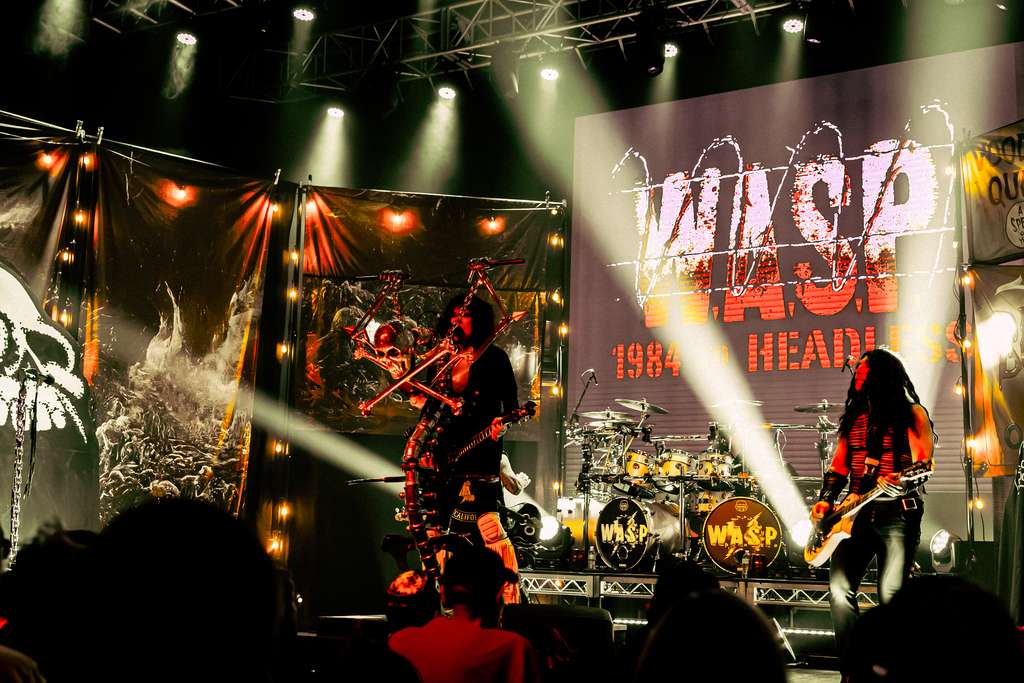
On October 11, W.A.S.P. brought the 1984 to Headless tour to St. Charles for the second of two nights at the Arcada, with K.K.’s Priest opening. The concept behind the tour was straightforward and, for longtime W.A.S.P. fans, extremely appealing: dig heavily into the band’s first four albums, W.A.S.P., The Last Command, Inside the Electric Circus, and The Headless Children, while reviving songs that had either disappeared from the set for decades or had never been played live at all. Blackie Lawless had described the run as a chance to go back into material that fans had not heard in nearly forty years, and the tour was designed around exactly that idea.
K.K.’s Priest brought a different kind of nostalgia. K.K. Downing and Tim “Ripper” Owens arrived with a set that mixed their own material with a substantial amount of Judas Priest history, which was inevitable and, frankly, exactly what most of the room wanted.
K.K.’s Priest
K.K. Downing and Tim “Ripper” Owens Bring the Priest Legacy Back to Life
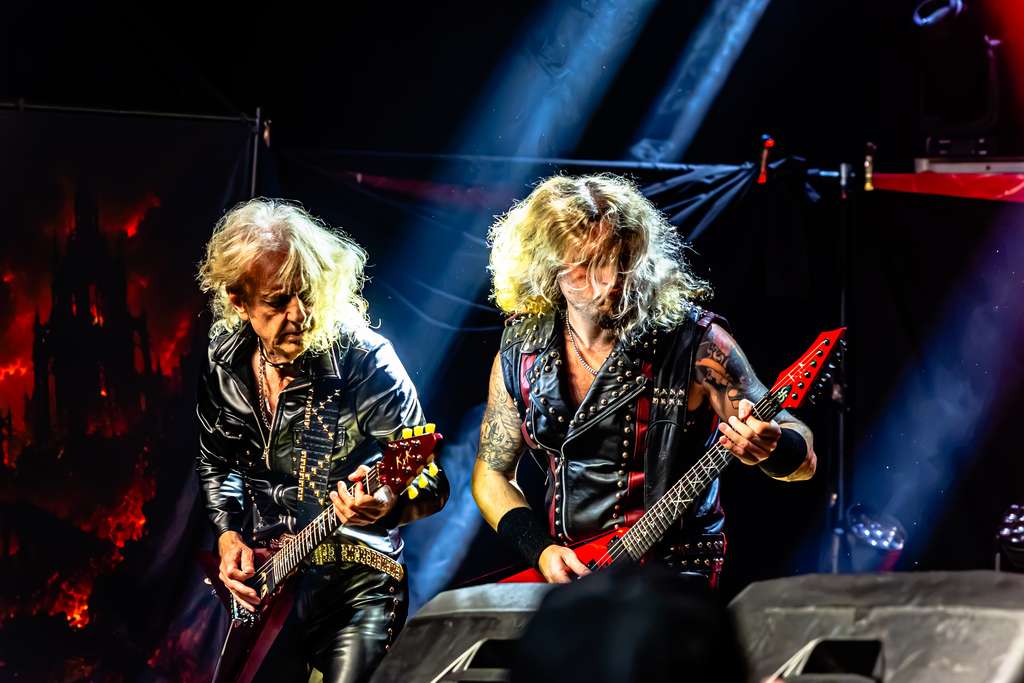
There is no pretending K.K.’s Priest does not carry the weight of Judas Priest with it. Downing spent decades helping define that sound, that visual language, and that entire school of British heavy metal guitar playing. Owens, meanwhile, stepped into Judas Priest during one of the most difficult periods in the band’s history and proved very quickly that he was not some karaoke replacement. So when those two musicians share a stage and start reaching into the Priest catalog, the question is not whether it is legitimate. The question is whether the songs still have enough life in them to feel like more than a historical reenactment.
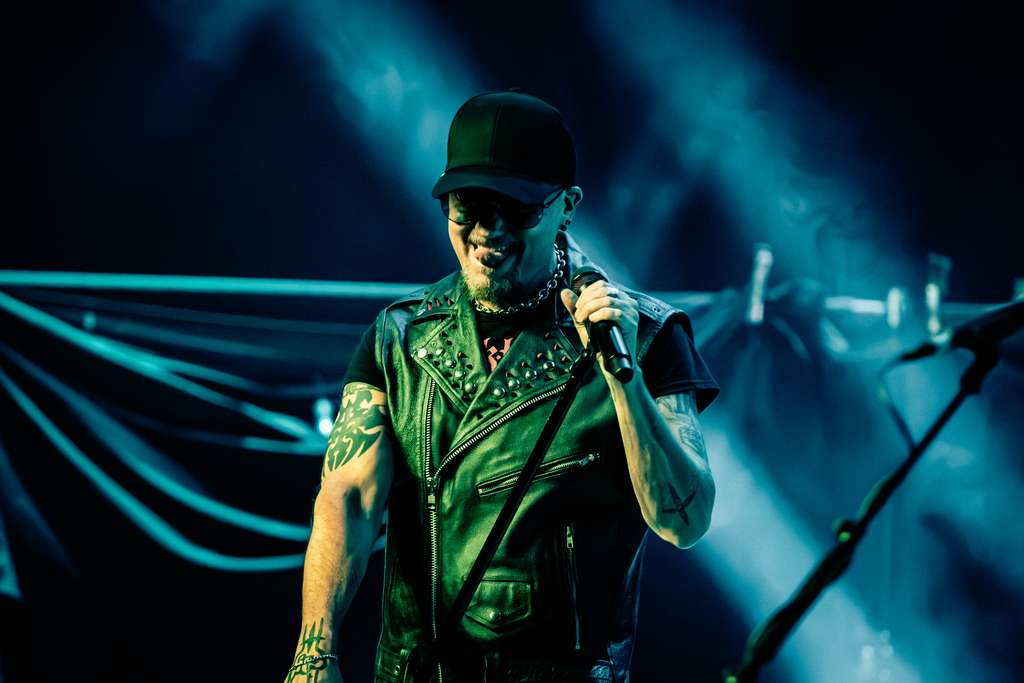
At the Arcada, they did.
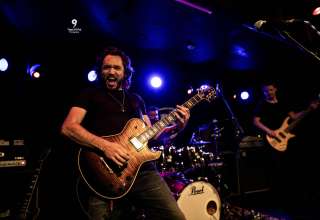
K.K.’s Priest opened with “You’ve Got Another Thing Comin’,” immediately followed by “Breaking the Law” and “Living After Midnight.” That is about as subtle as arriving at dinner in a tank, but subtlety would have been a terrible choice. Those three songs gave the audience exactly what it wanted right away and also established that Owens was going to spend the evening doing what he does best: singing with absurd power and making notes that would cause less responsible vocalists to start pricing throat surgery.
Owens remains one of heavy metal’s most technically intimidating singers. His voice has a metallic edge that cuts through guitars without losing the sense of melody, and his upper register still carries that weaponized clarity that made his Judas Priest years work in the first place. “Beyond the Realms of Death,” “The Sentinel,” and especially “Victim of Changes” gave him room to show that range, and the smaller Arcada room made the vocals feel even more immediate.
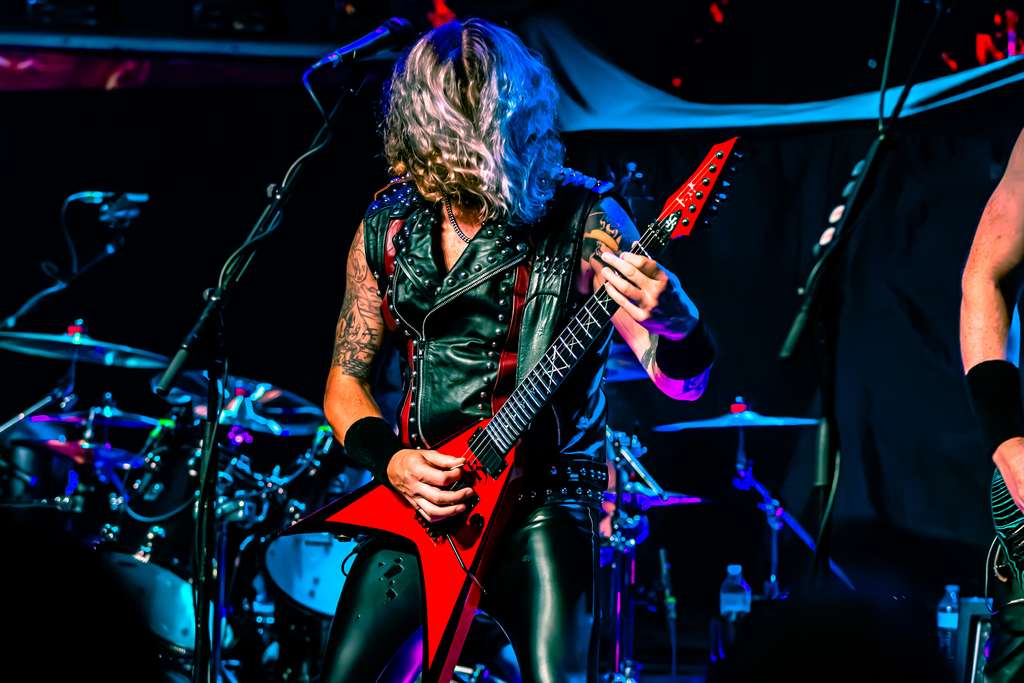
Downing, meanwhile, played exactly the way you would hope he would. He does not need to overstate his presence because his style is already woven into the DNA of this entire kind of metal. The sharp attack, the twin-guitar harmonies, the familiar bends, and the aggressive phrasing all remain intact. Watching him play Priest-era material is strange in the best possible way because the songs do not sound borrowed. They sound reclaimed.
That distinction matters.
The set was not only Judas Priest material. K.K.’s Priest also worked in “Strike of the Viper,” “One More Shot at Glory,” “Hellfire Thunderbolt,” and the encore “Raise Your Fists,” songs drawn from the project’s own catalog. These songs are obviously built from the same classic-metal vocabulary, but they are not trying to disguise that. K.K.’s Priest is not attempting to reinvent electronic music or suddenly become a post-rock band. It exists because Downing still wants to make traditional heavy metal, and there is something refreshingly uncomplicated about that.
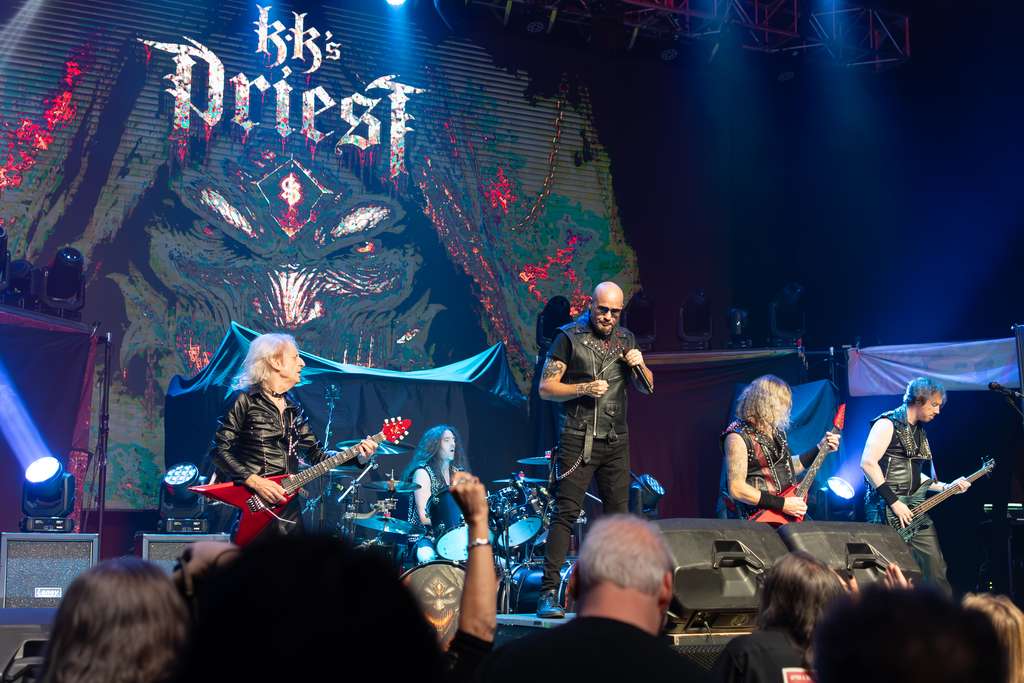
“Hellfire Thunderbolt” fit especially well among the older material. It has enough speed and bite to stand beside classic Priest songs without sounding like the song everyone politely waits through before the hit arrives. “One More Shot at Glory” worked similarly, carrying more of the dramatic, melodic quality that has always suited Downing’s writing.
The balance between old and new was smart. Too much Priest material and K.K.’s Priest risks feeling like a tribute band built around one of the people who actually wrote the music, which is a very strange sentence but nevertheless a real problem. Too much newer material and the room would inevitably be waiting for “The Sentinel.” The Arcada set landed in the middle and largely got away with it.
“Heading Out to the Highway,” “Turbo Lover,” and “Victim of Changes” brought the strongest audience reactions, but “The Sentinel” may have been the best fit for the band itself. That song depends heavily on precision and guitar interplay, and hearing Downing back inside that material remains one of the most satisfying things about this project.
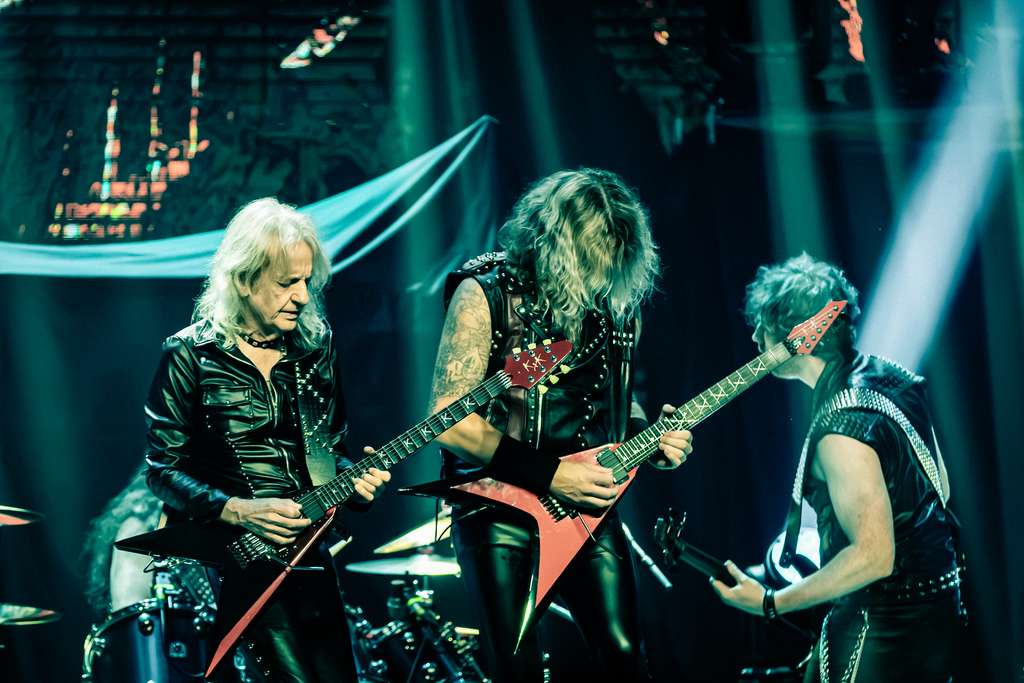
By the time “Raise Your Fists” closed the set, K.K.’s Priest had done more than warm up the room. They had played a concise, powerful set that managed to acknowledge the past without being completely swallowed by it. That is harder than it sounds, especially when your past happens to include one of the most important metal bands ever formed.
Then the stage changed over, and the night became considerably more theatrical.
W.A.S.P.
Blackie Lawless Drags Four Decades of Shock, Sleaze, and Heavy Metal Back Onto the Stage
W.A.S.P. has always occupied an odd place in metal history.
The early band became infamous for the theatrics, the controversy, the stage blood, the saw-blade codpieces, the accusations of corruption, and all the other wonderfully hysterical reasons people in the 1980s became convinced a rock band might bring down Western civilization. Time eventually proved that civilization was perfectly capable of damaging itself without assistance from Lawless, but the controversy helped obscure something important.
W.A.S.P. wrote a lot of very good songs.
That is what the 1984 to Headless tour was really about.
Rather than building another greatest-hits set, Lawless designed the tour around the first four W.A.S.P. records. The idea had apparently been considered years earlier but was delayed, and the 2026 run finally gave the band an excuse to dig into songs that had not been played in decades.
The Arcada show began with The Doors’ “The End” playing over the PA, a suitably dramatic introduction because apparently a normal walk-on song would have been insufficiently ominous. Then W.A.S.P. launched into “Easy Livin’,” their Uriah Heep cover from Inside the Electric Circus. That song had never been performed live by W.A.S.P. before this tour, making it exactly the kind of strange catalog choice that justified the whole concept.
From there, the band moved into “Fistful of Diamonds” and “The Flame,” and it became clear quickly that the set was not going to spend much time apologizing for being old-school heavy metal.
Nor should it.
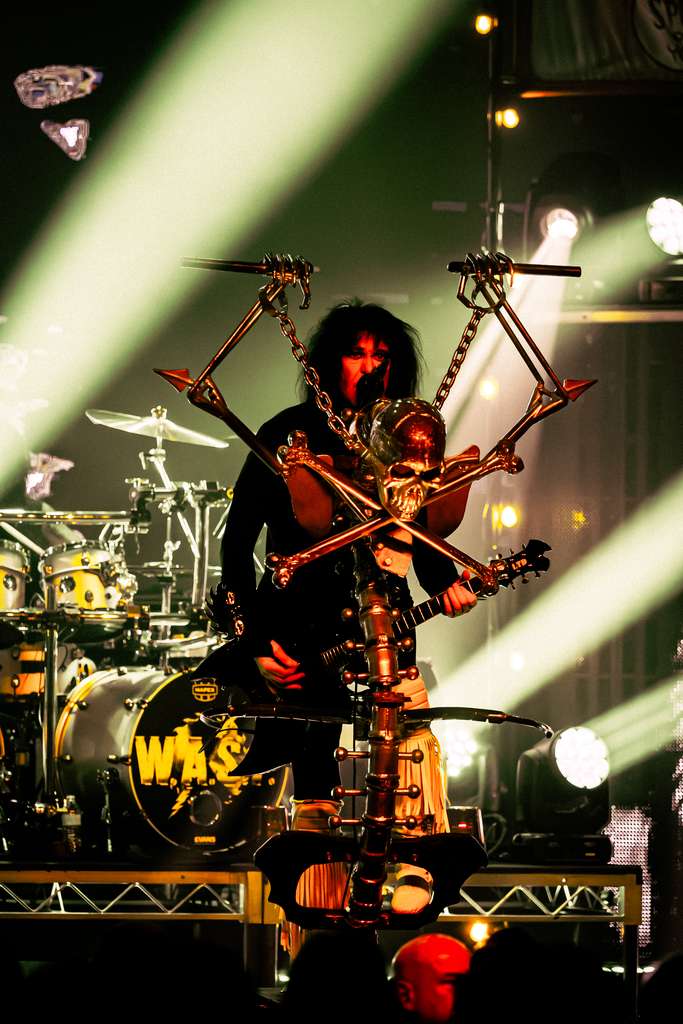
The Arcada is almost unnervingly good for this kind of performance. The ornate theater design gives W.A.S.P.’s stage presentation a sense of scale without requiring arena-level production, and the room is intimate enough that Lawless never felt remote. The band still has that exaggerated silhouette: massive guitar tones, oversized visual presentation, and Lawless standing at the center of it like someone who accidentally wandered out of a 1987 metal magazine and never found his way back.
There is also something fitting about seeing W.A.S.P. in a theater rather than a giant arena. The early shock-rock image was always part carnival, part horror show, and part heavy-metal theater. The Arcada amplifies that side of the band.
“Mr. Cool” was one of the most historically interesting songs in the set. Lawless wrote it before W.A.S.P., while still in Sister, and the song later evolved into material connected to “Cries in the Night.” He had never properly brought the original version to a W.A.S.P. stage until this tour. Lawless has explained that performing it now is partly personal, a way of reclaiming a song tied to some ugly early music-business history.
That kind of deep cut could easily have become dead space in a show, but the context actually helped. This tour was built for precisely this sort of thing. If you are going to advertise a trip through W.A.S.P.’s early history, then play the weird songs. Play the songs nobody expects. Play the things you have not touched since Reagan was president and everyone apparently believed satanic backward masking was one of society’s most pressing concerns.
“On Your Knees” brought the set firmly back into the debut era, and then came one of the night’s better sequences: “Thunderhead,” “Forever Free,” “The Real Me,” and “The Headless Children.”
This was where the show gained real depth.
W.A.S.P. is often remembered first for the rawer early material, but The Headless Children represented a significant change in tone. The songwriting became darker, more serious, and more ambitious. “The Headless Children” itself remains one of the band’s strongest compositions, and hearing it in a room like the Arcada gave it the scale it deserves.
“Forever Free” worked for a completely different reason. W.A.S.P. has always been better at melody than the early controversy suggested, and that song remains one of the clearest examples. Lawless’ voice has changed with age, naturally, but the dramatic phrasing is still there, and the song’s emotional pull survives because it was never dependent on youthful speed.
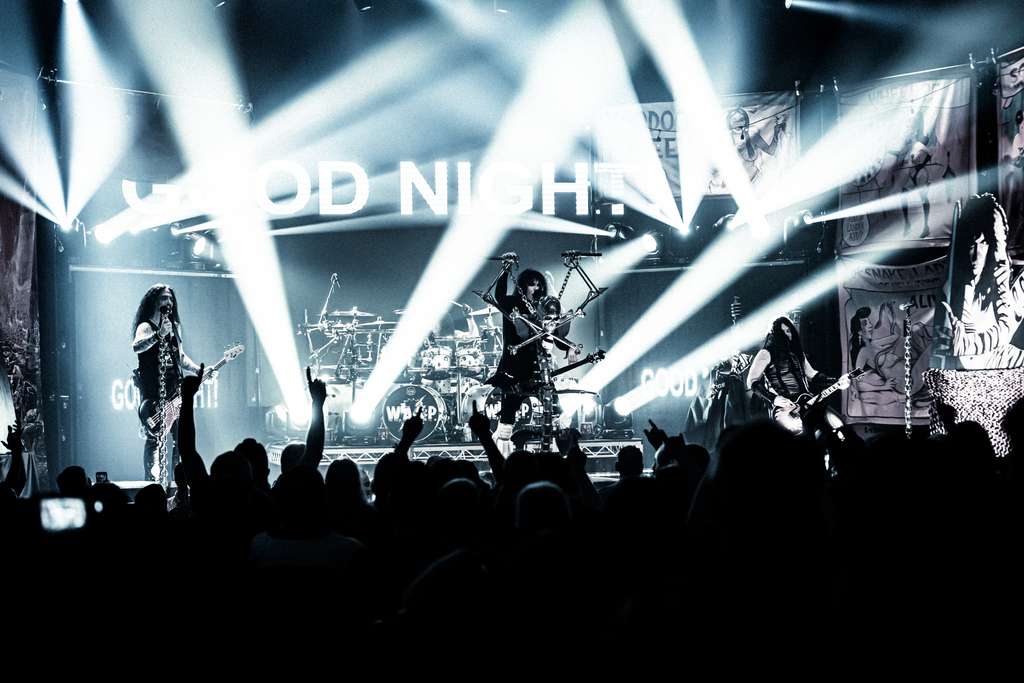
“The Real Me,” the band’s cover of The Who, also continues to work because W.A.S.P. never treats it like a delicate classic-rock tribute. They drag it into their own sound, which is the correct behavior. Reverence is fine, but heavy metal improves considerably when somebody is willing to kick the furniture around.
After “The Headless Children,” the band left briefly and returned to “Mephisto Waltz” as an intro before moving into the section of the night where restraint stopped pretending it had a chance.
“I Wanna Be Somebody” remains one of those songs that explains an entire band in four minutes. It is arrogant, catchy, loud, slightly stupid, and completely sincere, which is basically the foundation of great 1980s heavy metal. The audience reaction proved that forty years have not done much to weaken it.
Then came “L.O.V.E. Machine,” another early W.A.S.P. song that still carries more bite than it has any reasonable right to. The opening riff remains instantly recognizable, and the song still occupies that perfect overlap between heavy metal and sleazy hard rock that made early W.A.S.P. so effective.
The band followed with the “Inside the Electric Circus / I Don’t Need No Doctor” medley, then moved into “Golgotha.” That latter choice was important because it prevented the show from becoming completely sealed inside the 1980s. “Golgotha” comes from the band’s 2015 album of the same name and represents a much more reflective version of Lawless. It also showed that the set’s historical framing did not require pretending W.A.S.P. ceased to exist after 1989.
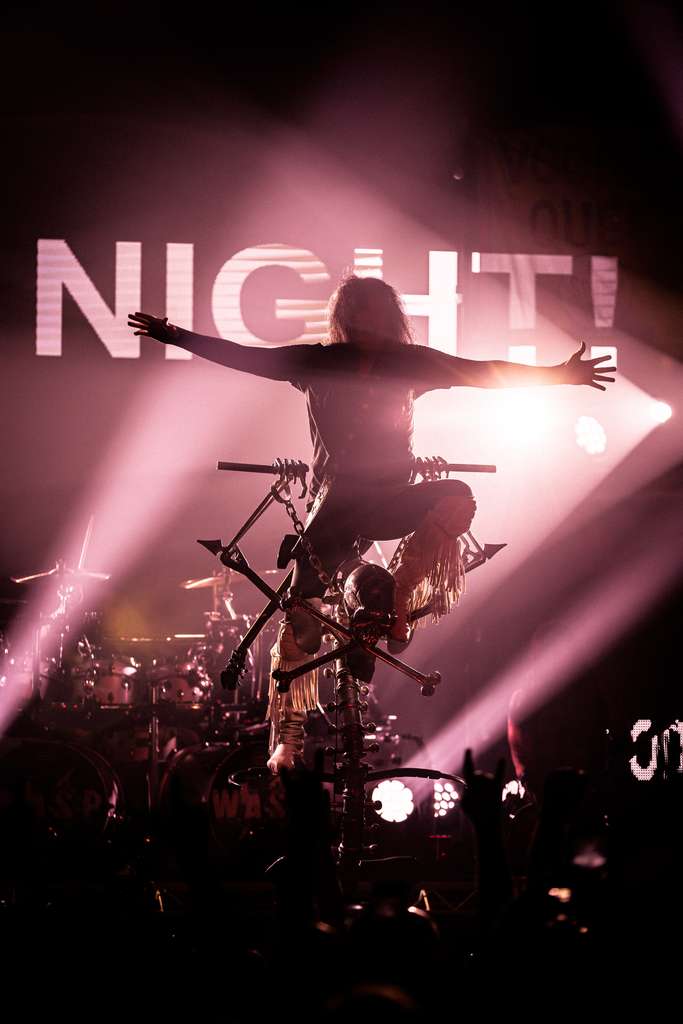
Then came “Wild Child.”
There are W.A.S.P. songs people like, W.A.S.P. songs longtime fans appreciate, and then there is “Wild Child.”
That opening guitar part has become permanently embedded in the band’s identity. The song balances the theatrical and melodic sides of W.A.S.P. almost perfectly, and it still sounds built for a crowd. Seeing it this late in the set felt less like another song and more like the inevitable point where the entire room collectively decided being reasonable had become unnecessary.
“Blind in Texas” closed the night.
It is difficult to imagine a better closer for this particular version of W.A.S.P. The song is ridiculous, loud, enormously catchy, and contains exactly the right amount of drunken swagger for a band whose early reputation involved horrifying concerned parents across the Western world.
Sometimes sophistication is overrated.
W.A.S.P. has gone through an absurd number of lineup changes over the decades, but the band has always fundamentally revolved around Lawless. The current lineup features Lawless alongside guitarist Doug Blair, bassist Mike Duda, and drummer Aquiles Priester.
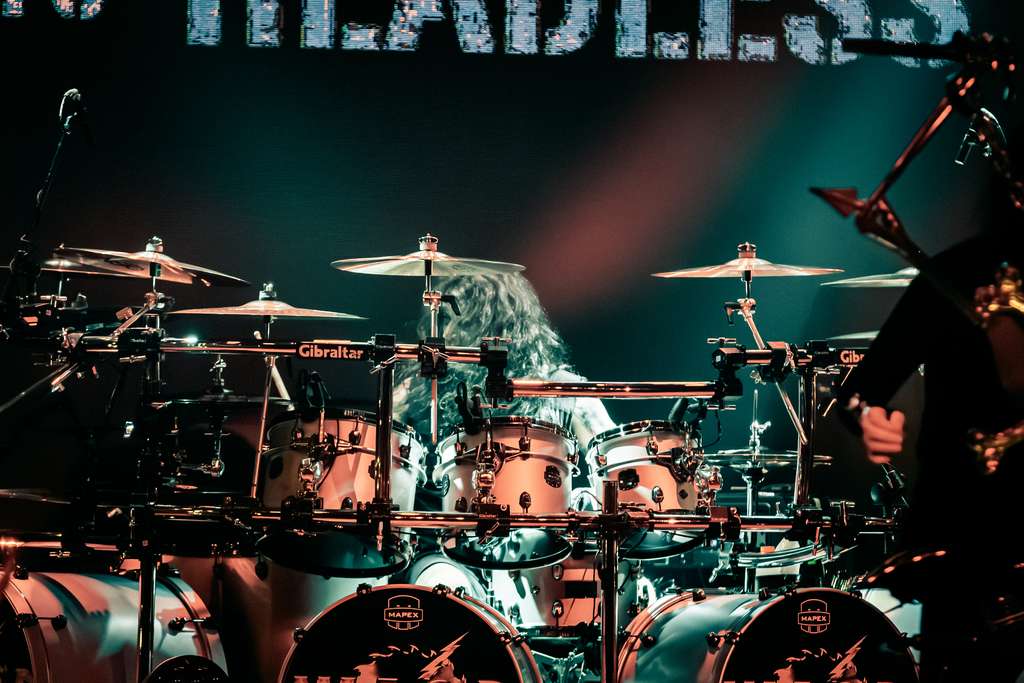
That current band is extremely capable, and Priester in particular gives the songs a lot of power without making them sound overly modern. But the visual and emotional center remains Lawless.
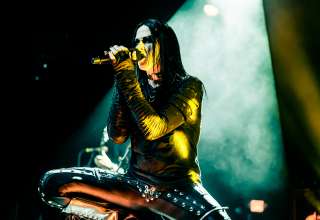
He does not move around the stage like a twenty-five-year-old anymore, because attempting that at sixty-plus would be a fascinating way to test orthopedic insurance, but he does not need to. His stage presence is built around posture, voice, the familiar microphone stand setup, and that unmistakable silhouette.
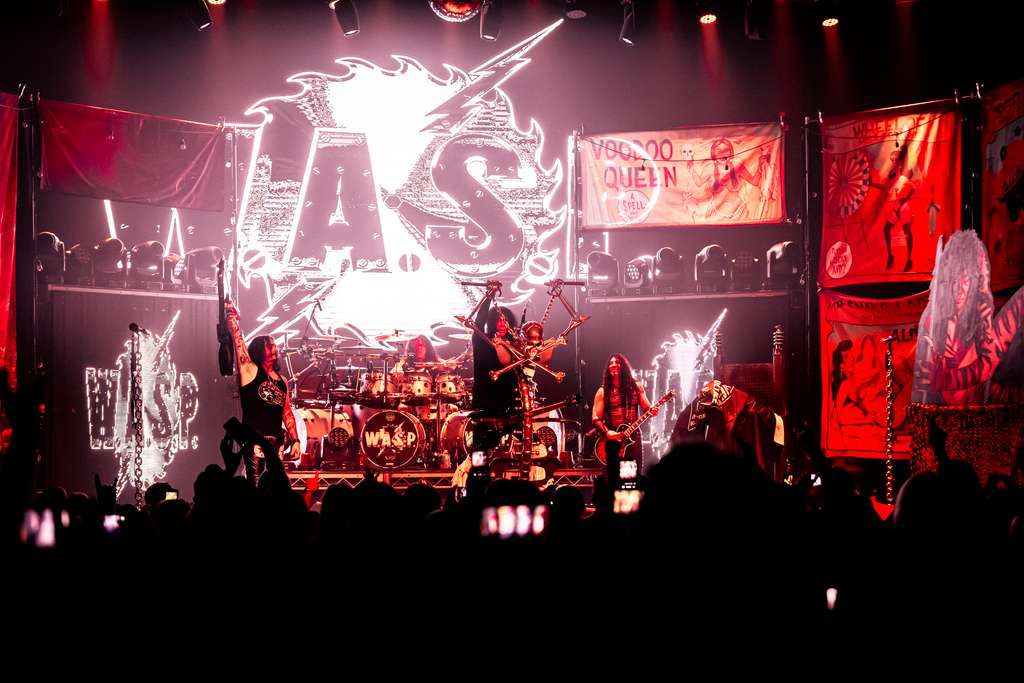
What matters most is that the performance still feels committed.
Legacy bands can become very strange things. Some turn into jukeboxes. Some become nostalgia cruises with amplifiers. Some continue because nobody involved knows how to stop.
W.A.S.P., at least on this tour, seems interested in curating its own history rather than simply repeating it.
That is much more interesting.
The pairing of K.K.’s Priest and W.A.S.P. worked because both bands were dealing with the past in different ways.
K.K.’s Priest is built around continuity. Downing is taking the musical language he helped create with Judas Priest and carrying it forward with Owens and a new catalog. The show openly acknowledges Judas Priest because trying not to would be absurd. Those songs are part of Downing’s life, and they remain part of his musical identity.
W.A.S.P., by contrast, was excavating its own history.
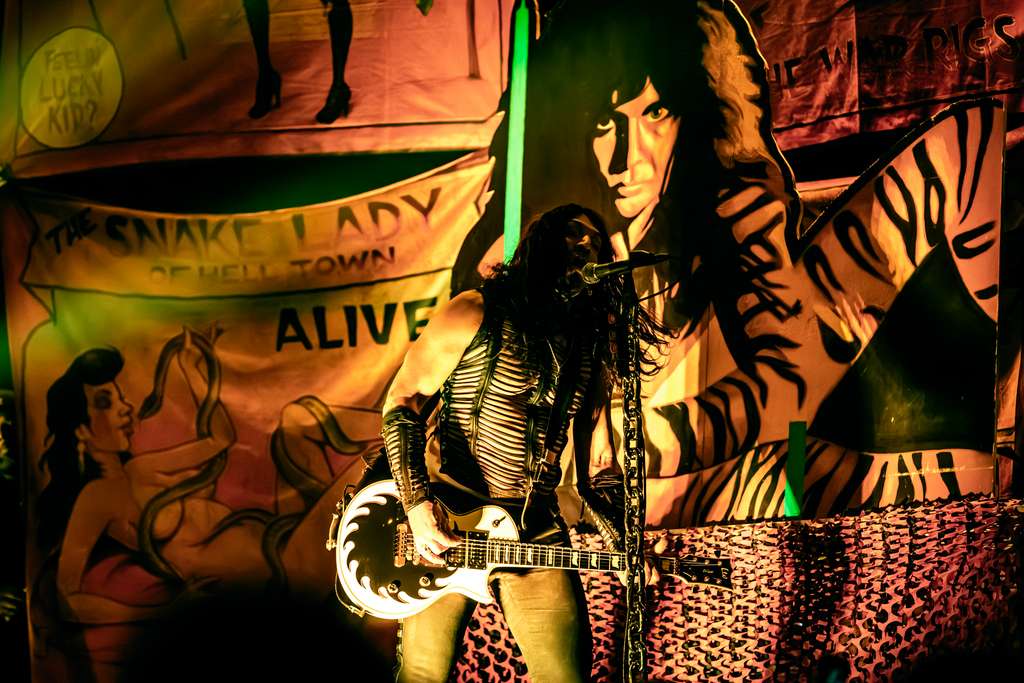
The 1984 to Headless show was not just another evening of familiar hits. It was a deliberate trip through the first phase of the band’s career, including songs that had been ignored for decades and a pre-W.A.S.P. track that most casual fans had probably never heard. That gave the night a sense of discovery despite the age of the material.
Both approaches worked because neither felt embarrassed by the past.
That is important.
There is a weird tendency among older rock bands to spend interviews insisting that they do not want to be considered nostalgia acts while simultaneously selling deluxe forty-year anniversary editions of everything they have ever recorded. Nobody needs that contradiction. If you have a great catalog, use it.
K.K. Downing does.
Blackie Lawless does.
The audience was quite happy about this arrangement.