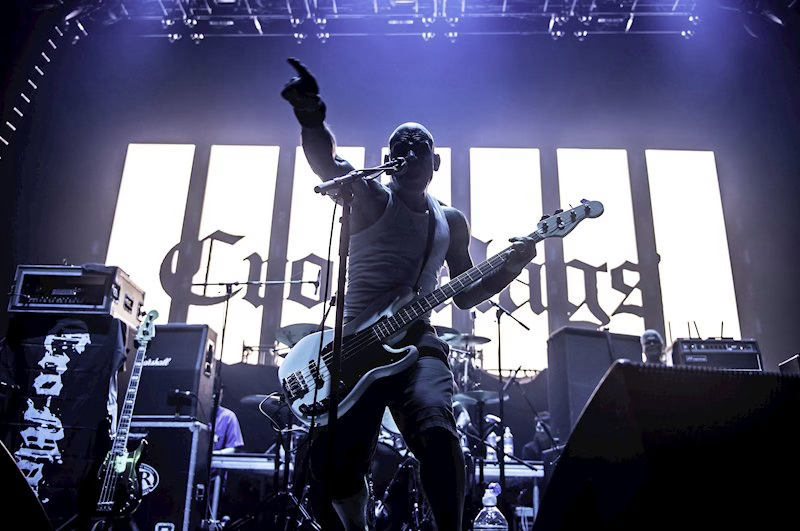
Review by Rick Eaglestone
Re-recording a classic is one of the riskiest moves a band can make. Fans have lived with the originals for decades, every scuffed edge and wonky snare hit has long since become sacred, and the history books are littered with anniversary remakes that nobody asked for, and nobody remembers.
Few albums carry more weight in heavy music than The Age Of Quarrel, the 1986 debut that dragged New York hardcore into a head-on collision with thrash metal and showed a generation of crossover bands how it was done. So, when Harley Flanagan announced that Cro-Mags would revisit the whole thing for its fortieth birthday, the reaction ranged from excitement to raised eyebrows. Age Of Quarrel – 40 Years Of Quarrel lands on 13 November via BLKIIBLK, and Flanagan has framed it as something far more personal than a nostalgia exercise, signing off his statement with the line, “Love wins. My quarrel is over.” The question is whether a record this sacred can be made again without losing what made it matter.
To understand why this project exists, you have to go back to the beginning. Flanagan was a child of the Lower East Side scene, drumming with The Stimulators while still a kid, and by 1982 and 1983 he had written and recorded the first Cro-Mag’s demos entirely on his own, playing every instrument himself. In 1985, with guitarist Parris Mayhew, vocalist John Joseph and drummer Mackie Jayson, the band cut the demo that earned them a deal with Profile’s Rock Hotel imprint, and by the time The Age Of Quarrel arrived in September 1986, with Doug Holland on second guitar, it sounded like nothing else around. It had the speed and street-level fury of hardcore, the riff discipline of metal, and lyrics that drew on Hindu scripture as readily as street life. Even the title comes from Kali Yuga, the Sanskrit name for an age of conflict and illusion. Flanagan took over vocals for 1989’s Best Wishes, and the decades since have been anything but quiet.
Those decades were defined by fracture. For long stretches, rival versions of Cro-Mags existed at the same time, and the legal battle over the name was only settled in 2019, when Flanagan secured the rights to the Cro-Mags name. Running alongside that was a quieter grievance. According to Flanagan, none of the musicians who played on the original record were ever paid, and none received an accounting of its sales. For years he tried to get the original members back together, both to cut the album again and to win back ownership of The Age Of Quarrel and Best Wishes under copyright reversion law, but that opportunity has now passed. The spark came from his documentary Wired For Chaos when some of the original recordings could not be licensed for the soundtrack and had to be cut again. Having started, he decided to finish the job. The songwriters will now be paid through ASCAP and BMI, the remaining proceeds are going to charity, and in Flanagan’s words, “These songs belong to the fans.” A fresh take on Hard Times, cut for the film, surfaced back in January as a first taste of what was coming.
The cast assembled for the job is a fascinating one. Doug Holland, who played on the 1986 original, is back, as is Rocky George, the former Suicidal Tendencies guitarist who has also played in Flanagan’s Cro-Mags. Sepultura’s Greyson Nekrutman sits behind the kit for the whole album, a player from a much younger generation with the technique to give these songs real bite. Around that core, guests from the bands Cro-Mags helped inspire drop in, including Turnstile’s Meg Mills and Rise Against’s Zach Blair, alongside Dave Sharpe.
Behind the desk is Arthur Rizk, and on paper there could hardly be a better choice. His work with Power Trip and Blood Incantation has made him one of the most in-demand producers in extreme music, and his ear for crossover in particular, that sweet spot where a hardcore stomp meets a thrash riff, is about as finely tuned as anyone’s working today. He also plays on the record, which says a great deal about how deep his affection for these songs runs. The label home is telling too. BLKIIBLK, the heavy imprint of the Frontiers Label Group, is also home to Hatebreed, a band whose own sound owes plenty to this album.
Vocally, this is the biggest point of difference, and there is no getting around it. John Joseph’s delivery on the original is one of the defining performances in hardcore, and anyone hoping for a carbon copy will need to adjust. Flanagan himself has described the sound as Age Of Quarrel meets Best Wishes, played like the former but with his deeper voice, and that is a fair summary. His bark is lower and heavier, more weathered, and it shifts the centre of gravity of the songs towards metal. It is not better or worse, simply different, and across sixteen tracks it gives the record its own identity rather than leaving it as a tribute act.
We Gotta Know opens proceedings, just as it did in 1986, with Holland and Dave Sharpe joining in, and that opening riff remains one of the great curtain-raisers in heavy music. Its search for meaning sets the spiritual tone of the album, and hearing Holland back on a song he helped bring to life four decades ago gives the record an instant seal of authenticity.
World Peace led the charge when the album was announced in August, arriving with an official video, and it is a smart choice as a lead single. Its cynical take on humanity’s capacity for self-destruction feels no less relevant in 2026 than it did during the Cold War, and its Motörhead-tinged drive remains utterly infectious.
Show You No Mercy is a short, spiteful jab, the kind of song that is over before you have finished processing it. Nekrutman’s drumming pushes it hard, and it is a reminder that this was always a band who understood the power of economy.
Malfunction leans into weight rather than speed. It is a slower, metallic grinder built on one of the album’s nastiest riffs, and with Rizk’s production giving the low-end room to breathe, it lands as one of the heaviest moments on the record.
Street Justice is pure Lower East Side, a snapshot of a time and place where violence was simply part of daily life. It remains one of the most direct songs in the Cro-Mags catalogue, a blunt piece of street reportage that has lost none of its menace.
Survival Of The Streets is the shortest song on the album, clocking in at barely a minute on the original, and it hits like a punch you never saw coming. There is no build-up and no wasted motion, just a burst of pure hardcore fury before it vanishes.
Seekers Of The Truth is the album’s longest and most metallic song, and it brings Rizk and Rocky George to the fore. Given the pedigree of both men, the guitar work is a highlight. George’s history with Suicidal Tendencies makes him a natural fit for crossover of this calibre, and the song’s spiritual searching, rooted in the Eastern spirituality that coloured so much of the original band’s outlook, gives it unexpected depth.
It’s The Limit features Turnstile’s Meg Mills, and her presence is a neat illustration of how far the Cro-Mags influence has travelled. Released in October with a lyric video, it saw Mills describe Flanagan as “one of the GOATs” and say she couldn’t explain how much the record meant to her, and that enthusiasm shines through.
Hard Times is the song everyone knows, the anthem that has been covered, quoted, and screamed back at stages for forty years. At well under two minutes, it is hardcore distilled to its essence, and the new version, the first of the re-recordings to emerge back in January, retains every ounce of its urgency.
By Myself is a song about self-reliance that fits neatly into the album’s wider themes of standing your ground. It is not one of the album’s headline moments, but it is the kind of track that keeps the momentum of the record moving.
Don’t Tread On Me welcomes Rise Against’s Zach Blair, and his contribution adds another layer of cross-generational respect. The song’s defiant stance, a warning to anyone looking to push their luck, sits perfectly with the record’s mood of reclaiming what is rightfully yours.
Face The Facts is over before it starts, a blistering adrenaline shot that shows just how lean this album has always been. Nekrutman is superb here, keeping the pace ferocious without ever sacrificing control.
Do Unto Others takes the golden rule and turns it into a battering ram. Short and to the point, it keeps the second half of the album moving at full tilt, with the rhythm section locked in tight.
Life Of My Own slows the pace and leans towards metal, carrying a fierce streak of independence, and it is hard not to hear it in a new light given Flanagan’s battles over the years. What was once a teenager’s declaration of autonomy now sounds like the words of a man who has fought hard to keep hold of his own story.
Signs Of The Times closed the original album, and it still serves as a suitably apocalyptic finale. Its bleak worldview and crushing riffs bring the main body of the record to a powerful conclusion.
Everybody’s Gonna Die completes the picture as a bonus track, a 1985 demo-era favourite that never made the original album. It was released on 16 September, the fortieth anniversary of The Age Of Quarrel itself, and finally giving it a proper home feels like righting a small historical wrong.
Taken as a whole, Age Of Quarrel – 40 Years Of Quarrel should be heard as a companion to the 1986 recording, never a rival to it. The 1986 recording belongs to a specific time, a specific city and a specific group of young men, and its raw, slightly chaotic energy is part of its magic. What this version offers is something else: a fuller, heavier, and more powerful sound, a rhythm section with a modern precision, and a vocalist who has lived with these songs for his entire adult life. Rizk deserves enormous credit for capturing that power without sanding away the rough edges, and Nekrutman’s drumming is the engine that keeps everything driving forward. Purists will always reach for the original, and they should, but this is a worthy celebration rather than a cash-in.
Strip away the decades of legal wrangling and bad blood, and what remains is a man reclaiming the songs he wrote as a teenager, paying the people who helped create them and passing the proceeds on to good causes. That alone makes this record easy to respect. That it also sounds this ferocious is a bonus. Forty years on, The Age Of Quarrel remains one of the cornerstones of hardcore, and this celebration is a timely reminder of why. Get it loud, get it heard, and if this is truly the end of the quarrel, it is a fine way to bring it to a close.
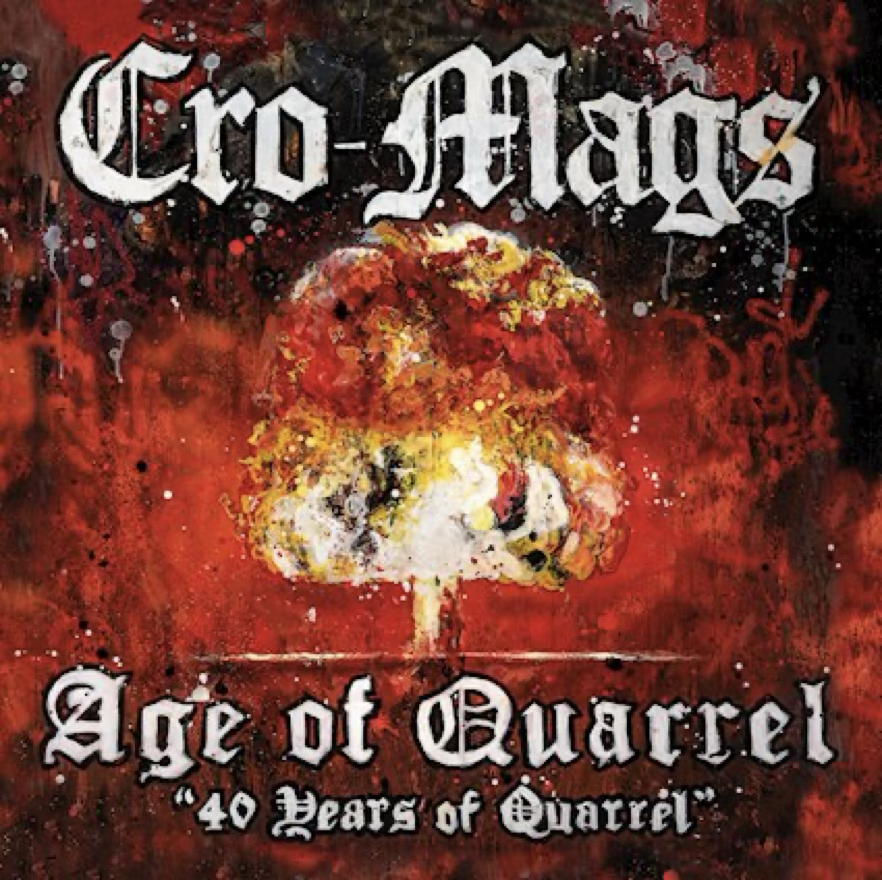
Age Of Quarrel – 40 Years Of Quarrel – Track listing:
1. We Gotta Know (feat. Dave Sharpe & Doug Holland)
2. World Peace
3. Show You No Mercy
4. Malfunction
5. Street Justice
6. Survival Of The Streets
7. Seekers Of The Truth (feat. Arthur Rizk & Rocky George)
8. It’s The Limit (feat. Meg Mills)
9. Hard Times
10. By Myself
11. Don’t Tread On Me (feat. Zach Blair)
12. Face The Facts
13. Do Unto Others
14. Life Of My Own
15. Signs Of The Times
16. Everybody’s Gonna Die (Bonus Track)
Line-up
Harley Flanagan – Vocals, Bass
Doug Holland – Guitars
Rocky George – Guitars
Greyson Nekrutman – Drums
Website:
Spotify:
Instagram:
https://www.instagram.com/realcromags
Facebook:
https://www.facebook.com/realcromags
7/10