Review by Rick Eaglestone
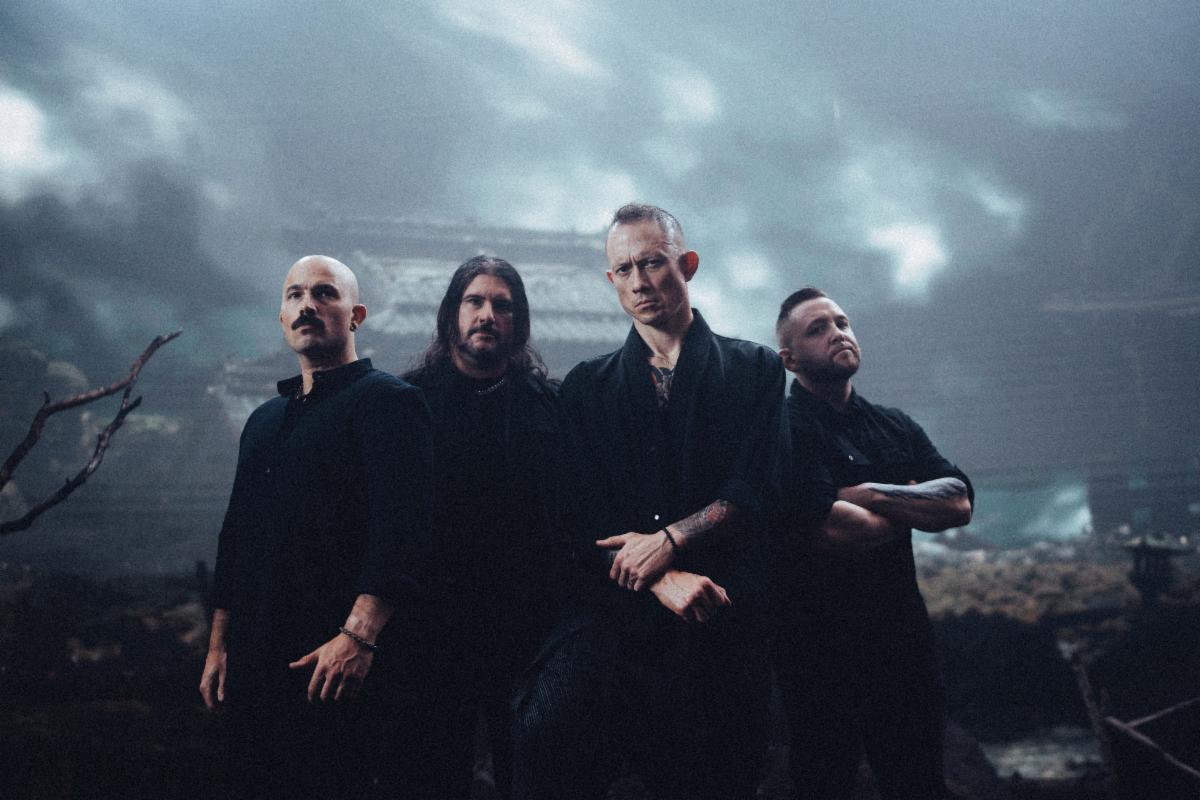
Eleven albums into a career, most bands have settled into one of two modes. Either they coast, serving up a slightly reshuffled version of the record that made their name, or they reinvent themselves purely for the sake of it and leave half their fanbase scratching their heads. Trivium have spent more than two decades refusing to do either, lurching from metalcore to thrash to melodic heavy metal and back again and taking plenty of opposition for it along the way. Crown In The Grave lands on 20 November via Roadrunner Records, and it arrives five years after In The Court Of The Dragon, the longest gap between full lengths the band have ever left. A lot has happened in that time: a new drummer, a new studio, a frontman who has been open about going through the hardest period of his life, and a concept drawn from Japanese cinema and folklore. Bassist Paolo Gregoletto has said that when you hear it, it will “somehow feel both new and like a return.” That is a big promise, and the question is whether the album can deliver on it.
To understand where Trivium are now, it is worth remembering where they came from. Formed in Orlando at the tail end of the nineties, Matt Heafy joined while still a young teenager and soon took over as frontman. Ember To Inferno arrived in 2003, but it was 2005’s Ascendancy that changed everything, a record that fused the melodic precision of Swedish metal with American metalcore aggression and was named Kerrang!’s Album Of The Year. What followed was a career of sharp turns. The Crusade went full thrash, Shogun went epic and progressive, and Silence In The Snow stripped away the screams entirely in favour of classic heavy metal. Then came the modern renaissance, with The Sin And The Sentence, What The Dead Men Say and In The Court Of The Dragon forming a trilogy that many fans regard as the band’s finest run, and Betrayer earning a Grammy nomination for Best Metal Performance. Heafy, born in Iwakuni, Japan, has woven his heritage into the band’s music before, most notably on Shogun, so the Japanese thread running through this new album is a homecoming of sorts rather than a costume.
The road to Crown In The Grave has not been a smooth one. In 2025 the band celebrated twenty years of Ascendancy, and while rehearsing those old songs they found themselves writing new material, which grew into the three-track Struck Dead EP, released on 31 October 2025. It was recorded at The Hangar, the studio and rehearsal base the band built for themselves in Orlando, and it also turned out to be the last to feature drummer Alex Bent. After nine years and three albums, Bent and the band parted ways in October 2025, with all sides stressing that the split was amicable. Bent has spoken about recording the EP during an extraordinarily challenging time in his personal life, and his playing on it stands as a fitting farewell. Sepultura’s Greyson Nekrutman stepped in for the band’s Aftershock appearance, before Trivium confirmed that Alex Rüdinger, formerly of Whitechapel, would take the stool. In a twist of fate, the band had asked him to join almost a decade earlier, but the timing had not worked out.
That EP deserves a mention because it now looks like the bridge between two eras. Bury Me With My Screams premiered on Heafy’s own SiriusXM show before being played live for the first time at Bloodstock Open Air in August 2025, while the title track and the sprawling Six Walls showed a band happy to stretch out, with songs pushing well past the five-minute mark. Produced by the band themselves, recorded with Mark Lewis, and mixed and mastered by Wilbur, it was a statement of intent, and the band described it as “the first step into a bold new era.” In hindsight, it was the sound of Trivium clearing the decks.
Running alongside the line-up change was a more personal story. Heafy has spoken openly about going through what he described as a midlife crisis and mental breakdown in 2024, and the lyrics of Struck Dead were written at his lowest point. Since then, he has chosen therapy and changed his outlook, and he has summed up part of that shift with the line, “I made a decision to just sing.” He has also said that, with everything the band have been through, it feels “like a brand-new band.” That sense of renewal hangs over the whole album.
Gregoletto has been equally candid about the creative challenge. He has said that “when you get this far into a career, it’s easy to rest on what you’ve already done,” but the band were just as wary of reinventing themselves for the sake of it and instead set out to find the space between those two extremes. The aim, as he puts it, was to keep the core of what makes Trivium who they are while finding new ways to present it. Having their own studio was central to that. Without the clock ticking on an expensive hired room, the band could afford to experiment, write, tear songs apart and rebuild them, and take the time to work out exactly what an eleventh Trivium record should sound like. It is a luxury very few bands ever get, and it shows in the detail.
For the first time, a full Trivium album was written and recorded at The Hangar, and the band clearly used the freedom that comes with owning the room. Josh Wilbur, whose credits include Lamb Of God and Korn and who has been a key part of Trivium’s modern era, returns behind the desk, while Jacob Hansen, best known for his work with Volbeat and Amon Amarth, mixes a Trivium record for the first time. It is a smart pairing. Wilbur knows exactly how to capture this band at full tilt, and Hansen brings a fresh pair of ears and a knack for making huge-sounding records that still breathe. Corey Beaulieu has said the focus was on “big riffs and big hooks,” and he has quoted the late Soil guitarist Shaun Glass, who once said that Trivium “don’t cook the same meal.” Gregoletto, meanwhile, has pointed to nineties landmarks like Metallica’s Black Album, Megadeth’s Countdown To Extinction and Soundgarden’s Superunknown as reference points, records that married heaviness with choruses built for arenas. You can hear that ambition all over this album.
The concept began with the title track, and specifically with Akira Kurosawa’s Throne Of Blood, the 1957 film that transplants Macbeth to feudal Japan. Gregoletto has described it as a north star for the record, and from there the band went down a rabbit hole of Japanese horror and cinema from the fifties to the seventies, the era of ghost stories like Kwaidan and Onibaba. The influence of Noh theatre, so central to Kurosawa’s film, runs through the visuals too, with director Pavel Trebukhin setting the title track’s video in a smoke-filled dojo thick with tension. The band say they wanted the album to “exist within its own world,” and that spectral, shadowy mood colours everything from the songwriting to the sleeve. Neatly, the original Japanese title of Kurosawa’s film translates as Spider’s Web Castle, which makes the choice of opening track even more fitting.
It is also worth comparing this approach with In The Court Of The Dragon. That album had its own dark, fantasy-tinged mythology, but it was a looser collection of stories. Here everything grows from one starting point, Kurosawa’s film, and branches out into theatre and folklore with centuries of history behind them, and that gives the record a different kind of gravity. The ghosts and spirits of Japanese horror are rarely simple monsters. They are usually the products of grief, guilt, ambition, and betrayal, and that makes them a perfect vehicle for an album so concerned with the masks people wear and the cost of the choices they make.
Before getting into the songs, a word on the two biggest differences. The first is Rüdinger. Anyone who heard his work with Whitechapel, or his countless session and online performances, knew he had the technique, but what stands out here is his feel. Heafy has said that “Rüdi didn’t just kill it on the drums; his contributions as a writer made a huge difference,” and that comes through in the way the rhythms serve the songs rather than simply showing off. The second is Heafy’s voice. His cleans are the strongest they have ever been, warm and controlled with real power behind them, and his screams sound fresher than they have in years. The title track has been billed as having three-tiered vocals, layering harsh and clean parts on top of each other, and that approach gives the record a richness that rewards headphone listening. Gregoletto has talked about harsh and clean vocals blending until it’s hard to tell where one ends and the other begins, and that is exactly how it plays out. Rather than the familiar pattern of screamed verse and sung chorus, the vocals bleed into each other, and the songs are all the more dramatic for it.
Jorōgumo opens proceedings, named after the spider-woman of Japanese folklore, a shape-shifting creature who lures men into her web. As an opener, it does exactly what it needs to, building an atmosphere of creeping dread and setting the album’s tone of beauty and menace intertwined, with that spider imagery linking straight back to the film that inspired the whole project. Opening an album with a creature defined by seduction and deception is a clever move, too, setting up the themes of temptation and hidden faces that run through everything that follows.
Crown In The Grave was the second single and the moment the album’s identity snapped into focus. It starts by stacking riff upon riff before detonating into something enormous, and it carries the Throne Of Blood story of ambition, prophecy, and downfall at its heart. The chorus is enormous, the solos are razor-sharp, and the galloping sections are vintage Trivium. Its video, which follows one man’s slide from temptation to ruin, is well worth your time. Putting the title track second, rather than as the opener, also proves a wise decision, letting it land with full force once the scene has been set.
Dead Inside Of Me was the first taste of the album back in September, and it remains one of the strongest songs here. Gregoletto has explained that it grew from a riff he had been carrying around for five or six years, nicknamed Slam, and that the idea was to play a death metal riff like a stadium rock song. Lyrically, it draws on the Japanese concepts of honne and tatemae, the gap between your true feelings and the face you show the world, and given Heafy’s recent journey, it lands with real weight. It is heavy, catchy, and impossible to shake.
The Terror ramps the aggression right up. This is the band at their most savage, with Rüdinger’s footwork driving a relentless assault and Heafy’s screams cutting through the chaos. It is the kind of song that will tear venues apart, and a reminder that for all the album’s atmosphere, Trivium have lost none of their bite.
The Haunting Never Ends leans fully into the ghost story side of the concept. There is a brooding, almost cinematic quality here, with the guitars creating a sense of unease before the song erupts. It is one of the album’s most atmospheric moments, and it shows how well the band have absorbed the influence of those classic Japanese horror films without ever sacrificing the heaviness.
Lie Of It All sits squarely in that nineties-inspired lane Gregoletto talked about. The groove is thick, the hook is huge, and the chorus is built to be sung back by thousands. It is the most immediate song on the album after the singles, and it will not surprise me if it ends up as a future single. It also shows how well the band have absorbed those nineties influences without ever sounding like a throwback, keeping the riffs modern while letting the song breathe.
Blackout The Dawn brings back the thrash. The riffing is fast and precise, Beaulieu and Heafy trade leads with the ease of a partnership that has lasted more than twenty years, and the whole thing moves at a furious pace. Fans of The Crusade and The Sin And The Sentence will find plenty to love here, and it is the kind of song that makes you want to dig out the air guitar, whatever your age.
Paradise Of Sinners is one of the album’s most dynamic songs, shifting between crushing verses and a soaring, melodic chorus. Heafy’s vocals are superb here, moving between registers with confidence, and Gregoletto’s bass gives the song a real swing. It is a showcase of how well-rounded this line-up has become.
Death Throes is pure weight. Slower and more punishing than much of what surrounds it, it grinds along on a monstrous riff, and Hansen’s mix gives the low end plenty of room to crush. It is a reminder that heaviness does not always come from speed, and Rüdinger proves just as adept at holding back as he is at unleashing hell, with every hit placed for maximum impact.
The Agony is the album’s most emotional moment, and in the context of everything Heafy has been through, it is hard not to hear it as deeply personal. It builds patiently, with the melodies doing the heavy lifting, and the payoff when it finally erupts is one of the most powerful moments on the record.
Devour Your Dreams pushes the pace back up for the home stretch. There is a hunger and urgency to it, with the band locked in tight and the solos flying, and it keeps the momentum of the final third from flagging.
Serpent In The Flame brings the album to a close, and it is an epic finale. Ambitious and packed with twists, it pulls together every thread the album has spun, the folklore, the heaviness, the melody, and the sense of a band reborn, and it ends the record in suitably grand fashion.
Taken as a whole, Crown In The Grave feels like the work of a band who have come through a storm and are stronger for it. It is not a reinvention, and it is not a retread. Gregoletto’s line about it feeling both new and like a return turns out to be an accurate summary. The riffs and the precision that defined Ascendancy are still here, the thrash of The Crusade and the ambition of Shogun are still here, and the polish of the modern era is still here, but they have been reshaped by the concept, by Rüdinger’s arrival and by Heafy’s renewed sense of purpose. Wilbur’s production is crisp and powerful, and Hansen’s mix gives everything room to breathe. If there is a criticism, it is that the concept occasionally feels like a coat of paint rather than something that runs through every song, but that is a minor point when the songs themselves are this strong. More importantly, this is an album that sounds like a band enjoying themselves again. After years of upheaval, there is a looseness and a confidence running through these songs that is genuinely infectious, and it is hard to imagine a better way to introduce Rüdinger to the wider world.
Strip away the line-up change, the five-year wait, and the personal struggles, and what remains is a band who still have something to prove and the talent to prove it. Eleven albums in, Trivium still refuse to cook the same meal, and Crown In The Grave is a feast. Get it loud, get it heard, and get ready to bow down to one of modern metal’s most enduring forces. The crown, it seems, is very much still in their hands.
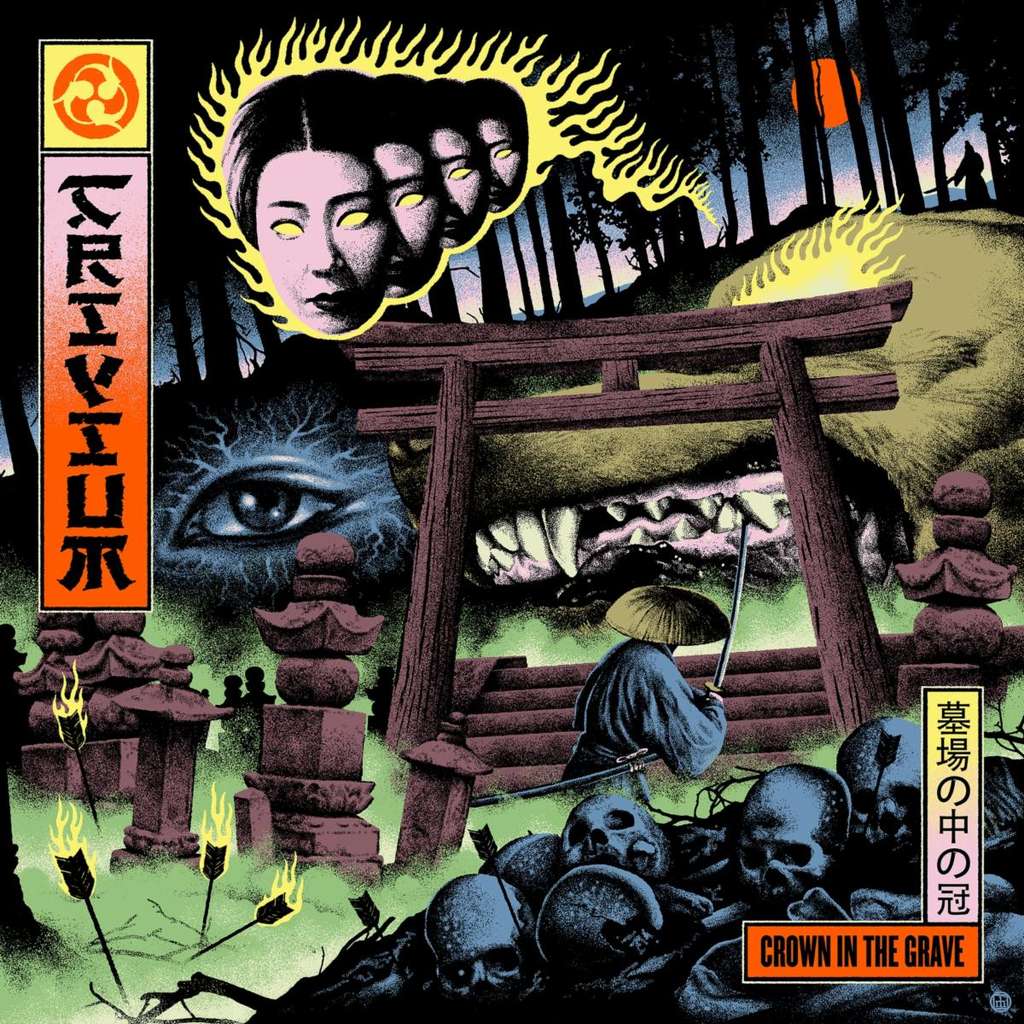
Crown In The Grave Track Listing:
1. Jorōgumo
2. Crown In The Grave
3. Dead Inside Of Me
4. The Terror
5. The Haunting Never Ends
6. Lie Of It All
7. Blackout The Dawn
8. Paradise Of Sinners
9. Death Throes
10. The Agony
11. Devour Your Dreams
12. Serpent In The Flame
Line-up:
Matt Heafy – Vocals, Guitar
Corey Beaulieu – Guitar
Paolo Gregoletto – Bass
Alex Rüdinger – Drums
Website: https://www.trivium.org/
Facebook: https://www.facebook.com/Trivium
Instagram: https://www.instagram.com/triviumband/
X: https://x.com/TriviumOfficial
YouTube: https://www.youtube.com/trivium
9/10