
Review & Photography by Manny Manson for MPM
There’s something about The Bodega in Nottingham that just lends itself to nights like this. It’s gritty, it’s loud, and it doesn’t pretend to be anything other than a dark little room made for music and sweat and connection.
And what a connection it was. A co-headline night that could’ve easily played out in a venue three times the size, but instead gave us something intimate and unforgettable, the kind of show you leave buzzing, thinking you might’ve just seen two bands on the edge of something bigger.
Parker Barrow were first up. Now, I’d only heard the name in passing a few weeks before. Someone said, “They’re like if Janis Joplin fronted a southern rock band with the swagger of early Black Crowes and a bit of Blackberry Smoke thrown in.” Fair enough, I thought. But nothing prepared me for what actually hit that stage. They’re from the southern US, Alabama and Georgia I believe, and you can hear it in every ounce of their sound, from the drawl in the vocals to the swampy swagger of the guitars and the way the songs just seem to spill out like stories told round a fire. The band is built around Megan Kane and Dylan Turner, she’s the singer, and he’s the drummer, and they’ve been doing the rounds in the States for a few years now, gigging hard, putting the miles in, building their reputation one bar and club at a time. It’s proper grassroots stuff, not an overnight sensation, but something much more honest.

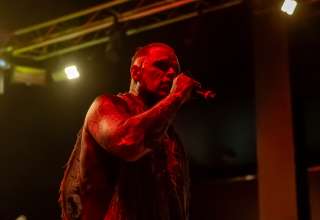
Their name ‘Parker Barrow’ is a nod to Bonnie and Clyde’s real surnames. That tells you something straight away: there’s danger, there’s rebellion, and there’s romance in what they do. Megan’s voice is like a blowtorch dipped in honey. She doesn’t just sing; she howls, she pleads, she screams, she wails. One minute it’s all breathy and intimate like she’s whispering in your ear, the next it’s a full-body, visceral explosion. She sings like someone with demons to exorcise and a point to prove. And live, she’s a whirlwind, dancing like she’s in some backwoods tent revival, hair flying, laughing mid-line and then suddenly, eyes closed and gripping the mic stand like it’s the only thing keeping her upright. There’s something wild and unfiltered about her, nothing fake, nothing calculated. She means every damn word.

They kicked off the set with “Make It,” a recent single, and within twenty seconds, it was clear we were dealing with something serious. The groove hit like a sledgehammer, swampy, bluesy, a little dirty, the kind of riff that grabs you by the shirt and pulls you in close. Dylan Turner laid down this punchy, confident beat that made the whole thing swing, while the guitars snarled and shimmered in equal measure. Megan’s voice cut straight through, somewhere between Melissa Etheridge at full roar and Grace Slick in a bad mood. That opener didn’t just set the tone — it ripped it wide open.

“Glass Eyes Crying” came next and flipped the energy on its head. Slower, darker, drenched in emotion. It started with a mournful guitar that sounded like it came straight out of a Delta graveyard, and Megan wrapped her vocals around it like smoke. It was a song full of regret, full of pain, but it never wallowed. It carried its sadness with pride, and the band never overplayed it, just let it simmer, let it speak. By the end of it, the room had gone quiet in that reverent way, like everyone knew they were witnessing something that wasn’t just music but experience.

Then they shifted gears into “Good Times Gone Away,” which had this barroom strut, like the Stones if they were raised on molasses and fried chicken. The groove was tight, the rhythm infectious, and Megan’s vocals loosened up a little, playful, teasing, even cheeky in spots. It was the kind of song that makes you want to raise a glass and shout along, and the audience started to move more freely now, nodding and swaying and grinning. You could feel the energy in the room starting to catch fire.

“Don’t Tell Mama (What mama Don’t Know)” was a slow burner. A kind of bluesy confessional that feels like it’s coming from a dark corner of a soul someone’s tried to keep hidden. Megan poured herself into it, eyes closed, voice cracking in just the right places, telling a story of secrets and silence. Then, like a cheeky wink, sass turned up to eleven, tempo pushed faster, guitars throwing elbows. It was flirty and fiery, and Megan turned into a full-on southern preacher’s daughter with a bad streak, belting out lines with that devilish grin. The contrast between heartbreak to hellfire was pure theatre and absolutely electric.
“Throwing Stones” was heavier, nastier. Big fuzzy riff, low-end grit, vocals spat out like venom. It had this angry blues-rock stomp to it, almost like Soundgarden-meets-Lynyrd Skynyrd. The guitars locked in with Dylan’s drumming, building this relentless wall of sound that Megan just tore right through. You could see her stamping her feet, hair sticking to her face, completely locked in. It felt cathartic — for them and for us.

Then came a moment of total stillness with “Back to Birmingham.” Megan told of us where she was from and that another Birmingham existed outside of the West Midlands. Slower, tender, aching, this was a southern ballad full of longing for home and heartache and time gone by. This is where Megan stopped being a firebrand and turned into a storyteller. Her voice softened, cracked slightly on the high notes, and you could feel the emotion right in your chest. The band pulled everything back, letting each chord ring out with purpose. It was a total shift, and it worked beautifully, a reminder that behind the ferocity there’s a deep well of soul.
They picked it back up with a cover of “My Morning Song” by The Black Crowes, and they absolutely tore it to shreds. Not a copy, not karaoke, they reimagined it, rebuilt it with their own muscle and heart. The original’s got swagger, sure, but Parker Barrow’s version had this gritty urgency. It was looser, louder, dirtier, if that’s at all possible, and that made it all the better. Megan took those vocals to another place entirely, screaming and growling in parts, then pulling back to a soft croon before letting rip again.

Then we got a real treat, their brand-new single “Novocaine,” which had literally just dropped. It was massive. From the first beat, you could tell this was the future of Parker Barrow, a bigger sound, a touch more polished maybe, but still rooted in that raw southern backbone. The riff was sharp and modern, the drums thundered, and the chorus had that kind of soaring hook that you can already imagine blaring out of a festival PA system. Megan’s vocal on this one was unreal, she somehow balanced intensity with control, like she was singing right on the edge but never falling off. I don’t know if this song is going to break them big, but it should.
“Blinded” was next, thick, sludgy, heavy as hell. A song full of fury, hurt, and something just under the surface ready to blow. Megan spat the verses like venom and wailed the chorus like someone casting out demons. They closed with “Peace, Love, Rock and Roll,” the opening track of 2023’s Jukebox Gypsies album, and I don’t think I’ve ever heard a more fitting final song. It was an anthem, plain and simple, a love letter to the road, to the fans, to the music itself. The kind of song that isn’t trying to be clever, just true. Everyone in the room was singing by the end, hands in the air, bodies moving, sweat dripping. Megan stretched her hand out to the crowd, glowing, like she was trying to give something back to everyone who gave them their energy. It was pure, it was joyful, and it sent a bolt of electricity straight through the heart.
By the time they left the stage, there was that shared look of, “Did we just witness something special?” The answer was yes. Parker Barrow may have only just set foot on UK soil, but if there’s any justice in this world, they’ll be back, and they’ll be playing bigger rooms soon. And we’ll all be saying, “We saw them here, that night, when they blew the bloody doors off.”
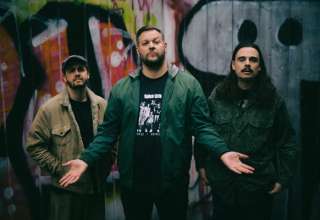
Parker Barrow are: – Megan Kane – Vocals, Dylan Turner – Drums, Will Tipton & Alex Bender – Guitars, Bo Howard – Bass and Eric Safka – Keys.
Then it was time for Xander and the Peace Pirates, and while I’ve seen them more times than I can count, it never gets old. They’re a different kind of beast, more polished, more spiritual in a way, but no less intense. They didn’t just walk onstage they casually arrived. There’s a presence about them that doesn’t need hype or fanfare. They just are. They’re not trying to sound like anyone else. They’re not chasing trends. What they do is theirs alone, that potent mix of soul, blues, funk, rock, and spiritual uplift that hits like a sermon and grooves like a late-night jam session. They’ve been through enough to carry the weight of the world in their songs, and somehow, they always make it sound hopeful.
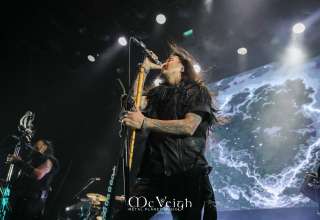
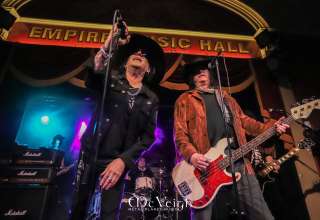
Keith Xander is the soul of it all. Guitarist, vocalist, guiding light. Watching him play, with that prosthetic hook where his right hand should be, isn’t just impressive, it’s transformative. He’s not a gimmick. He’s not a novelty. He’s one of the most feeling and inspiring guitar players I’ve ever seen. His tone is ridiculous, pure and expressive, and he pours so much feeling into every single note it’s like watching someone speak a second language with their guitar. He doesn’t play like someone overcoming an obstacle, he plays like someone channelling something bigger than himself.
It’s like hearing someone cry and laugh at the same time through six strings. His phrasing, his bends, the little flutters of vibrato, they’re not just technique. They’re emotion made audible. And that voice, my god, coming from a quiet, gentle soul, It’s like warm velvet laced with pain. You hear Otis Redding, you hear Paul Rodgers, you hear a man who’s been through some things.

They opened with “Fire”, and it was exactly that. Immediate, burning, alive. The riff was tight and greasy, sliding in under your skin while the rhythm section, new boy Rich Wolf on drums and dep bassist, my old buddy, Adam ‘Danger’ Lewis, that locked in so deep you’d swear they had a telepathic link held it all down with cool precision. It wasn’t flashy. It was just right, in the pocket as they say. Every beat, every stab of the guitar, every soulful wail from Keith, it just fits. There’s a grace to how they play, even when the song is burning with urgency.
Then came “We Cry,” and the vibe shifted, deeper, slower, heavier. It’s a song full of yearning, and Keith’s vocals cracked in just the right places, despite his teasing faces to the crowd, giving the whole thing this desperate beauty. The guitar solo at the end felt less like someone trying to explain heartbreak without words. It soared and swirled, then came back down soft and bruised.

“Rain” came washing in like a stormfront. That track is pure Xander meditative, expansive, rich with space. It builds slowly, patiently, never rushing the emotion. The guitars shimmered, the drums pulsed like thunder far off in the distance, and Keith sang like he was pulling the clouds down from the sky. There’s something about this song that just takes you out of yourself. It’s cinematic but human. Earthy, but cosmic.
And then “Mindscape” flipped the whole thing inside out. A psychedelic journey. That’s the only way to describe it. It starts out smooth, then folds into these long, exploratory guitar passages that don’t really feel like solos — more like conversations between the strings and the stars. Keith was smiling through it, eyes closed, neck craned back like he was seeing something the rest of us couldn’t. The whole band settled into a groove that was loose but never messy, the kind of telepathic jamming that only happens when musicians trust each other completely.

“Dance With the Devil” brought out the funk. Dirty, slippery, dark and sultry. The bassline moved like hips in a smoky bar, and the guitar had this wah-drenched menace to it that made the whole thing slither. Keith sang with a sneer, pushing his voice into that edge-of-danger territory. It had bite, it had attitude, and it reminded everyone that this band doesn’t just do soul, they have the ability to bite back whenever they want to.
And then, without warning, they dropped into “Sign o’ the Times”, yes, that “Sign o’ the Times.” The Prince one. And holy hell, what a choice. It was unexpected and perfect. They didn’t try to out-Prince Prince (you can’t), but they channelled the spirit of the song through their own filter. It was tighter, a little dirtier, groovier in a human way, with that syncopated funk rhythm still intact but layered with bluesy grit. Keith’s vocal had that aching quality, and the guitar parts were reworked to reflect his style, still slick, still minimal, but rawer. It was a risk, and they nailed it. The crowd, predictably, loved it.

“Searching for the Light” followed and this may be the purest expression of what this band is all about, it’s a philosophical in its thinking. It starts soft, Keith practically whispering over gently plucked chords, then grows, slowly, carefully, into this majestic crescendo of hope and pain and transcendence. It’s a prayer in the form of a rock song. It feels like standing on a mountaintop in a thunderstorm with your arms wide open. The solo, man, that solo. It wasn’t about shredding. It was about speaking. Each note slamming home like a revelation. You could feel the crowd holding their breath, only because I was too.
But as is the way with venues and curfews and real-world nonsense, time was against them. A couple of songs, ‘Red House’ and ‘Crosscut Saw’, got lost to the clock, but they didn’t let it dampen anything. Instead, they cut to the chase and dropped “Let Go”, a fan favourite that brims with vulnerability and release. Keith leaned into the mic and sang like he was letting go of everything he’d ever carried. The rhythm section pulsed gently behind him, not overpowering, just steady, like a heartbeat. The whole thing felt like closure. Like veracity.

And then, of course, they closed with that song. “Dancing in the Light.” The one that’s become something of an anthem now. It’s impossible not to move when it kicks in. It’s funky as hell, it’s got that joyous bounce to it, and it feels like pure freedom. The guitar riff pops and spins like it’s grinning, the drums swing with abandon, and Keith delivers every line like he’s giving you permission to feel good again. Everyone in the crowd was moving, like, ok dad dancing. Bouncing or nodding without actually letting go. Smiles, arms in the air, some of us singing along. It was like church, but louder and groovier.
As the words to the final chorus rang out “we’ll be dancing in the light!” the protracted, drawn-out guitar riffage, foreshadowing the winding down of the song, you could feel this collective lift in the room. Like we were all weightless for a second, like a form of lament. All the noise and heaviness of the world just… gone. That’s what Xander and the Peace Pirates do. They play music that has an ability to magically heal. They fill you up. They remind you that music isn’t just a mercantile product, it’s a language, a lifeline, a light in the dark.

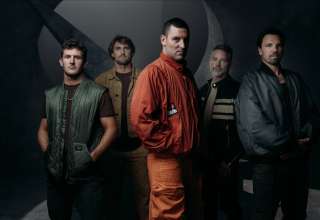
Xander and the Peace Pirates (tonight) are: – Keith Xander, Vocals & Guitar, Stuart Xander – Guitar, Myke ‘G’ – Guitar, Will Brown – Drums and Adam ‘Danger’ Lewis – Bass.
Walking out of The Bodega into the warm Nottingham night, sweat still drying on my back and the bass still thudding in my chest, I just kept thinking: we’re lucky. Lucky to have nights like this. Lucky to witness bands like this. Lucky that music, when it’s this real, this felt, still exists. Parker Barrow came crashing in like a storm from the Deep South and set the night on fire. Xander and the Peace Pirates picked up the embers and turned them into light. Two worlds, one stage, one unforgettable night. Simples! It doesn’t get any better than this: Live Music, the saviour of despondent souls.