
Review & Photography by Manny Manson for MPM
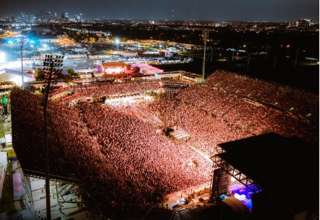
The clock strikes 11:00, Director and Military man, Neil Stone raises his customary glass to the sky and salutes the fallen. This has been the opening ritual from the very first Stonedead festival and one I’m happy has continued. It would appear that the toast may have to be from the stage next year as the numbers have grown considerably over the years. “Thank You For Your Service Boys and Girls.”
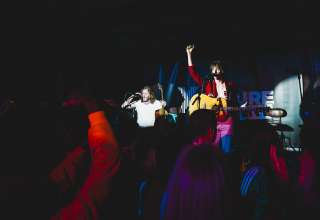
It’s now 11:10 and the sky over Newark darkens with anticipation as Krusher Joule ‘storms’ on stage, his booming voice and wild gestures firing the crowd into a frenzy. “Are you ready, Stonedead?! Then give it up for the mighty, the monstrous… KING KRAKEN!” His words still rolling like thunder despite his years, and with that, the field was drowned in a blaze of fire and smoke as Cardiff’s heaviest sons unleashed their apocalyptic set, one that felt less like a gig and more like being pulled into some mythic saga of war, beasts, and glory.

They roared into life with Scream from their 2025 sophomore album March of The Gods, a track built on slabs of groove-soaked riffing and shouted refrains that made the whole crowd feel like part of the war-cry. Its stop-start rhythms and guttural delivery hit like a war hammer, smoke bombs belching from either side of the stage while frontman Mark Donoghue stalked the risers like a general marshalling his troops. The band’s sound has that perfect balance between doom weight and modern thrash bite, and live, Scream hit like a cannon shot across the festival ground, an opening salvo that set the bar sky-high.
They barely let the dust settle before diving into El Giganto, also from March of The Gods. With its grinding riffs and monstrous groove, the song feels like the aural equivalent of some ancient titan striding across the earth, and live it was amplified further by the monstrous smoke plumes that shot skyward in time with the chorus. Guitarist Adam Healey dragged riffs from his strings like chains across stone, while bassist Karl Meyers’ low end shook the sodden ground, his lines rolling and swaying like tectonic plates shifting.

The battle intensified with Berserker, and here the theatrics took centre stage. As the double-kick thundered from drummer Richard Lee Mears, a pair of warriors clad in armour and wielding swords stormed onto the stage in a carefully choreographed fight. The clang of steel rang out under the crushing riffs, sending the crowd into delirium. The song itself, another heavy hitter from March of The Gods, was delivered with vicious intent, its anthemic chorus rising over the clashing blades until one warrior fell dramatically to the floor, leaving Donoghue to deliver the final verse like a battle chant over a conquered field.

Without pause, the darkness descended into Green Terror, its swampy, sludgy tone filling the air with something darker, meaner. Donoghue’s vocal, a mix of roar and sneer, carried the menace, and the stage bathed in sickly green lights to match the song’s monstrous theme. Again, the pyro punctuated the choruses, bursts of flame licking at the night like dragon’s breath.

The monstrous centrepiece of the set came with Magnum Opus, a sprawling epic from March of The Gods. With its towering riff and soaring sections, it’s a track that perfectly encapsulates the band’s sound: heavy, groove-drenched, and cinematic. The live delivery leaned into that cinematic feel, lights pulsing, smoke rolling low, and the band driving the track forward like a juggernaut. Each section bled seamlessly into the next, from pummelling verses to a chorus that had the crowd chanting “Mag-Num! Op-us!” like it was a rallying cry.
As if the heaviness weren’t enough, the real theatrics arrived with Man Made Monster. The stage went dark, a low hum filling the air, before a spark of light revealed a Frankenstein-like figure strapped to a gurney. As the first crushing riff landed, stagehands in lab coats wheeled the monster forward, throwing fake sparks and jolts of electricity across its chest. By the time the chorus hit, the creature convulsed and rose, lurching towards the crowd as if awakened by the sheer force of Kraken’s riffs. It was pure theatre, brilliantly over-the-top, and exactly what you want from a band whose songs feel like monsters made flesh.

The pace dropped slightly with Hero, a song that leans more melodic on record, but live it carried the same crushing weight beneath its more uplifting chorus. Donoghue’s vocals soared higher here, backed by an almost mournful solo from Healey that cut through the night like a cry of defiance. The crowd swayed and roared the refrain, fists aloft, caught between the song’s darker verses and its soaring, almost hopeful chorus.
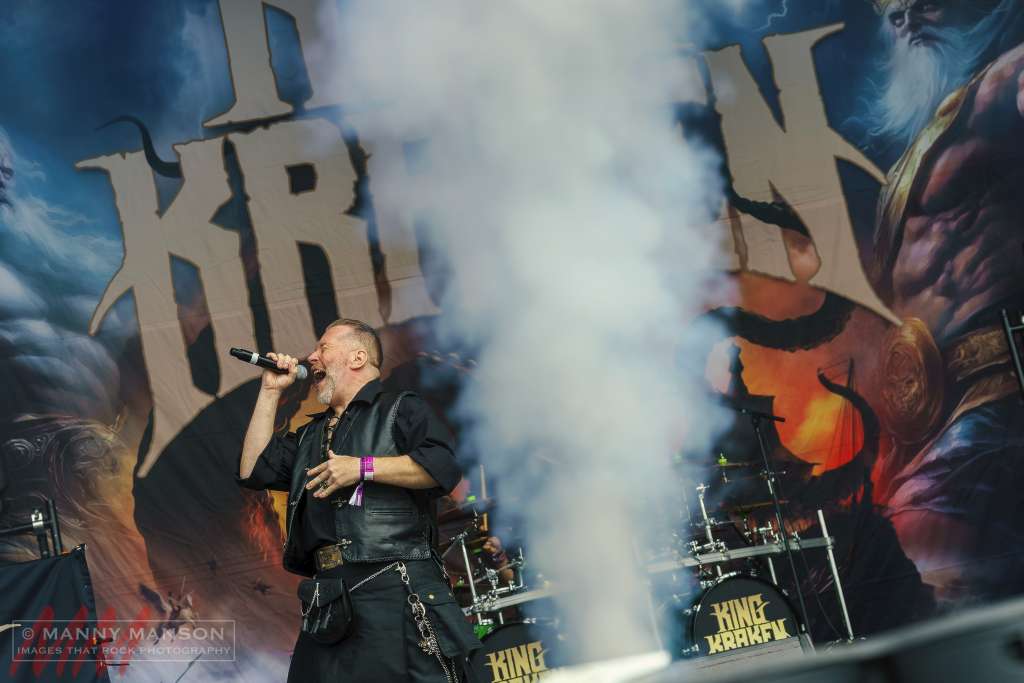
Then came Chainsaw Saviour, its title alone enough to make heads bang instinctively. A chugging riff built the tension before the full weight of the band crashed down, every note grinding like machinery on overload. Flames shot high from the stage again, and Donoghue swung his mic stand like a weapon, his guttural cries landing in perfect sync with Mears’ pounding drums.
They closed with the almighty March of the Gods; a towering finale that felt like the whole field was being led into battle. With its chanting chorus and epic build, it was the perfect closer, swelling bigger and bigger until it felt like the entire crowd was a choir, carried on smoke, fire, and light. As the final notes rang out, fireballs erupted skyward, leaving the audience drenched in heat and ecstasy. King Kraken had staked their claim on Stonedead with a set that wasn’t just music, it was myth made manifest.

The dust barely had time to settle before the atmosphere shifted. Chris Sumby took the mic, after thanking everyone who managed to get one of the Early Bird tickets for next year, his voice rising above the din, he introduce the next act: “Ladies and gentlemen, a very special tribute, to the one and only Ozzy Fucking osbourne . The applause swelled into a roar as the guitarist, no stranger to the Stonedead crowd, walked out alone, guitar slung low, bathed in sun light.

Gray opened with a solo instrumental rendition of Mr Crowley, the classic from Ozzy Osbourne’s 1980 debut Blizzard of Ozz. Without vocals, the focus fell entirely on Gray’s guitar, and he delivered with a master’s touch, every lick of Randy Rhoads’ immortal lines played with reverence but also with his own fluid flair. The crowd watched in hushed awe, the iconic solo rising like a prayer into the summer night, a reminder of how deeply these songs are woven into rock and metal’s very DNA.
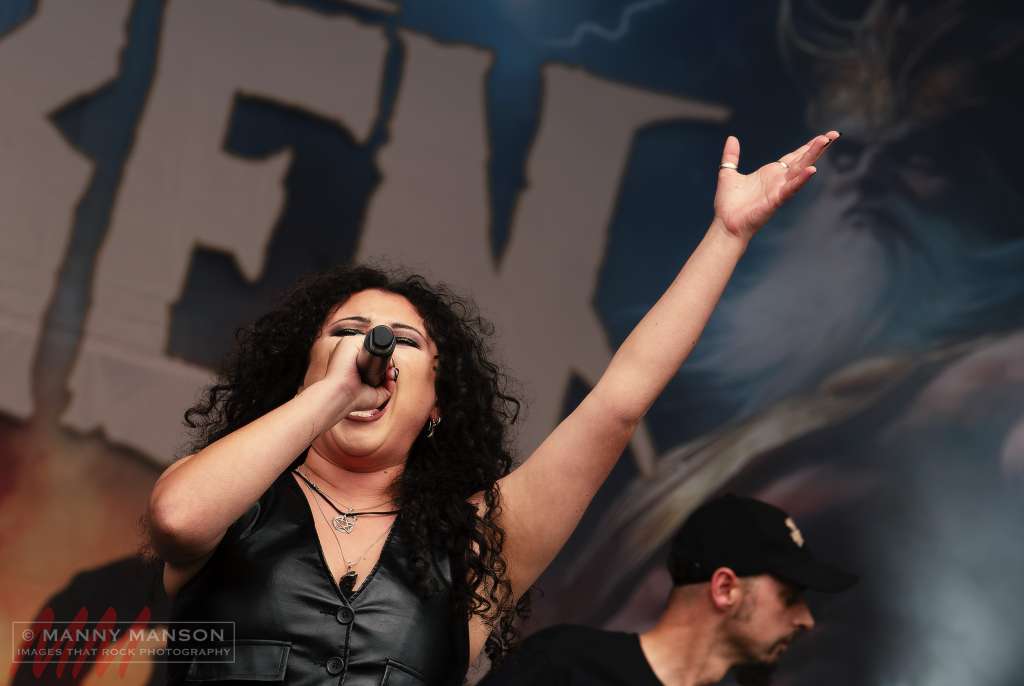
But this wasn’t just about one man and his guitar. As the last note hung in the air, the stage lights shifted and King Kraken’s backline returned, joined by Lidya Balaban of Crowley on vocals. Together they launched into Sabbath Bloody Sabbath, the 1973 title track from Black Sabbath’s fifth studio album. Lidya’s voice was raw and powerful, cutting through the dense, twisting riffs that had the crowd banging as one. It was both a celebration and a reinvention, her delivery fierce and commanding, the Kraken’s rhythm section providing crushing weight beneath Gray’s searing leads.

Then came the handover. Lidya left the stage to a roar of approval, replaced by Florence Black, stripped back to a simple power trio with Tristan Thomas stepping up on vocals. With Gray still anchoring the guitar, they tore into Children of the Grave from Sabbath’s 1971 masterpiece Master of Reality. The riff, one of Iommi’s all-time juggernauts, was played with venom and groove, Tristan’s vocals raw and passionate, dragging the audience into the darkness of its apocalyptic march. They barely paused before dropping into Supernaut, another Vol. 4 (1972) classic, all swagger and riff-driven momentum. The crowd erupted at its opening bars, a sea of bodies moving in unison, the groove infectious and undeniable. Gray’s guitar howled, bending and sustaining notes with a bluesy edge that made the song his own while keeping the spirit intact.

To close, there could be only one. The unmistakable riff of Paranoid (from Sabbath’s 1970 sophomore album of the same name) shot out like a flare, and the field detonated into chaos. Every voice in the crowd sang along with Tristan’s, a tidal wave of sound as the festival became one throbbing, joyous mass. Short, sharp, and eternal, Paranoid still cuts like a knife fifty-plus years after it was first unleashed, and under the Newark sky it became a hymn of celebration, the perfect exclamation mark to Gray’s tribute.
The night could’ve ended there and the crowd would have been satisfied, but Stonedead had more aces up its sleeve. Krusher Joule bounded out once more, hyping the crowd into a frenzy before introducing Denmark’s Black Oak County. They kicked into Watch Your Back from their 2019 Theatre of the Mind album, its raw, dirty riffing the perfect soundtrack to the sight overhead. The band’s blend of hard rock grit and southern swagger came alive on stage, every note crunching with precision. The follow-up Save Your Breath, from the 2024 release III, tightened the grip with its hooky chorus, the band hammering every downstroke with venom. Their cover of Paranoid, a cheeky double hit for Sabbath fans already spoiled earlier, was snarling and ferocious, delivered with that looser, dirtier edge that made it feel less reverent and more like a gang of outlaws tearing it up in their own style.

Their song began just as the sound of a distant engine roared in the skies, because right on cue, at 1pm sharp, the annual flypast tradition arrived. Overhead, slicing through the sky in graceful arcs, came the Battle of Britain Memorial Flight’s Spitfire Mk IIa P7350, resplendent in its KL-B markings. The roar of its Rolls-Royce Merlin engine silenced even the loudest cheers, every head craning upward to watch the only surviving airworthy Spitfire to have actually fought in the Battle of Britain. Built in August 1940, flown by 603 and 54 Squadrons, shot down and saved, restored for the 1969 Battle of Britain film, and now maintained as a flying memorial, this year painted to represent Squadron Leader Al Deere’s aircraft, a Kiwi painted under the cockpit apt as its nicknamed “Kiwi III”. its presence carried a weight of history. As it rolled and banked above the festival, dipping a wing in salute, the crowd erupted into cheers that mingled with the metallic fury starting to pour from the stage.
Then came Back for Blood the 2023 single, its riffs thick and groove-laden, dragging the crowd into headbanging abandon. Someone Else followed, one of their more melodic moments from Black Oak County, the debut album, its choruses soaring above the grit, the band proving they could go for the heart as well as the throat. Then, also from the debut, came Laughing with the Crows, introduced with teasing snippets of Sabbath’s Iron Man and War Pigs, drawing roars of recognition before slipping into their own dark groove. The track pulsed with menace, its southern-tinged riffing and growling vocal delivery giving it a swagger that had the crowd moving with them, fists and pints aloft.
They closed with Theatre of the Mind itself, the title track of their 2019 record, and here they went full tilt into anthemic territory, stretching the song into a sprawling finale complete with a snippet of Black Stone Cherry’s Blame It on the Boom Boom. It was cheeky, heavy, and brilliantly judged, the perfect sign-off for a set that proved Black Oak County were more than worthy of a slot on this monster of a bill.
The stage crews worked like pit mechanics at Le Mans, tearing down Black Oak County’s gear and setting the scene for the next onslaught. Krusher Joule stomped back into the lights, booming into the mic about leather, steel, and “true fuckin’ heavy metal”, and right on cue, Sweden’s Enforcer tore into the afternoon with all the velocity of a jet breaking the sound barrier.

They opened with Destroyer, the lead track from their 2015 album From Beyond. The riff hit like an axe across the back of the skull, pure NWOBHM worship filtered through modern speed, guitars locked in tight with the double-kick artillery beneath. Olof Wikstrand spat the vocals with a manic energy, his voice a banshee wail that reached the far hedges of the field. The crowd, many clad in denim vests patched with Saxon, Priest, and Accept logos, were in heaven, the kind of metalhead congregation that lives for that blend of gallop, melody, and sheer speed.

They kept the throttle pinned with Undying Evil, also from, From Beyond. That song has a chorus that soars, a battle hymn that demands fists aloft, and live it became exactly that, hundreds of voices screaming the refrain back at Olof like a defiance against death itself. The lights strobed so hard it felt like the stage itself was pulsing with the heartbeat of heavy metal. Without pause came Unshackle Me from their 2023 record Nostalgia. It carried a looser, slightly more hard rock swing than their early work, but live, the band delivered it with extra crunch, making it sit comfortably among the speed-metal bruisers. Wikstrand’s guitar tone was sharp, slicing through the humid air, while bassist Garth Condit thundered beneath with a low-end growl that made every note rumble through ribcages.

The title track From Beyond followed, their love letter to Mercyful Fate and the old gods of speed. Its jagged riffing and hell-bound chorus came alive with the band’s stage antics, hair flying, fretboards raised to the sky, every movement drenched in conviction. The guitar screams punctuated the chorus, each blast like a cannon firing over a battlefield. Then came Live for the Night from 2010’s Diamonds, a track that practically defines Enforcer’s ethos. It’s fast, loose, and full of that beer-soaked abandon that made early Exciter and Riot so addictive. The crowd sang it back like a declaration, we live for the night, we live for this, we live for heavy metal.

The mood shifted slightly for Nostalgia, the title track of their 2023 album. A more melodic, wistful piece, it came across live as a kind of torch song for the metal faithful, a reminder of why these riffs, this community, still matter decades on. Olof’s delivery was impassioned, almost theatrical, and the crowd swayed, horns still raised but softer, a sea of raised arms waving across the field. But sentiment never lasts long with Enforcer. They snapped straight into Die for the Devil from Zenith, an unrepentant slice of Judas Priest-meets-Scorpions swagger. The chorus, absurd, cheesy, perfect, had the whole field roaring “Die! For the Devil!” like they’d signed some collective infernal pact.

The penultimate cut, Mesmerized by Fire (from Death By Fire (2013), blended their melodic side with their headlong speed, a clever mix that kept the energy boiling but never repetitive. And then, inevitably, came the closing blow: Midnight Vice the opening track from their 2010 record Diamonds. Pure speed, pure abandon, pure Enforcer. Every riff a dagger, every scream a rallying cry, it left the stage scorched and the field battered.
As they exited, Krusher howled into the mic, “That’s what I call fuckin’ metal!” and Newark roared its agreement.
Where Enforcer brought the speed, The New Roses brought something else, swagger, melody, and the sun-drenched spirit of classic hard rock with a modern European sheen. Hailing from Germany, they hit the stage all smiles and sweat, their opening number and the title track, Attracted to Danger from their 2024 album. coming across like AC/DC jamming with Bon Jovi, chunky riffs laced with anthemic choruses.

They rolled straight into The Bright the Thunder Bites. Its riff shimmered like late-summer asphalt, the chorus another earworm designed for fields like this, fists rising instinctively with each refrain.

First Time for Everything, a single release from 2022, carried that arena-ready polish, the kind of song that made you think of long drives and beer-soaked nights. Vocalist Timmy Rough sang it with every ounce of heart, his raspy delivery warm yet raw. Every Wild Heart lifted the energy higher, a straight-up rocker from One More From The Road (2017). The band’s chemistry was magnetic, trading smiles and guitar licks like a gang of lifers who knew they were in their element.
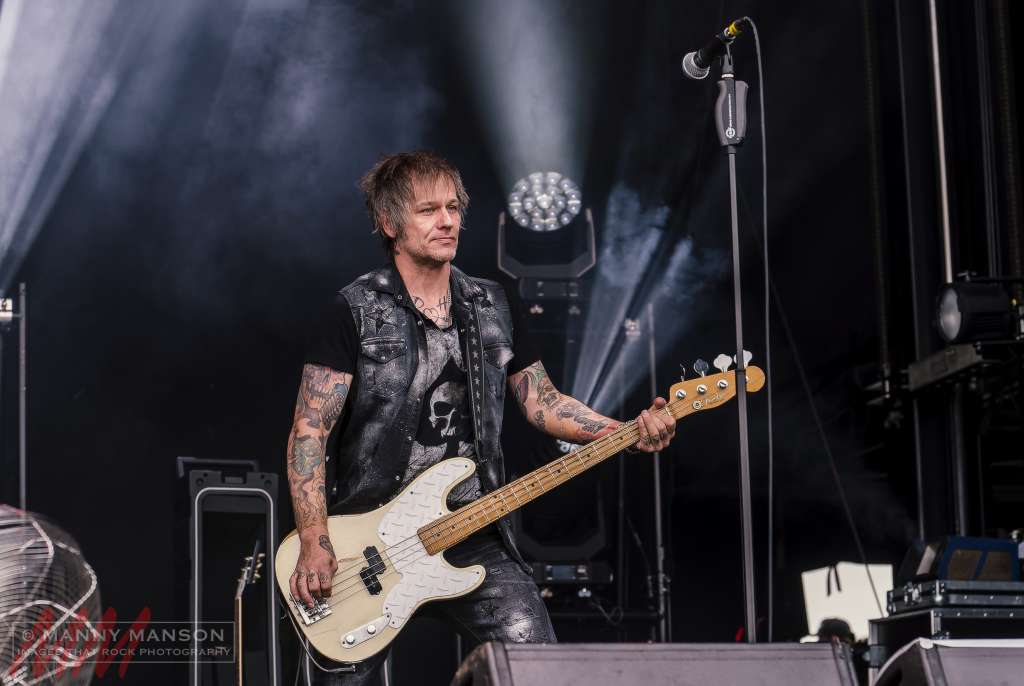
Glory Road kept the Americana feel flowing, another Nothing But Wild highlight, its chorus begging to be sung en masse. And sing they did, the field carried away on its easy warmth. Thirsty brought a grittier stomp, one of their early bangers.

The crowd stomped along, heads nodding to its bluesy undertone, before they shifted gears into The Usual Suspects, a cut from their 2019 record Sweet Poison. That one landed with swagger, all hooks and strut, a proper modern hard rock anthem.
They closed with Down by the River from 2019’s Nothing but Wild, a lighters-in-the-air moment that turned the field into a choir. Rough’s voice cracked in places but that only made it feel more honest, more alive. By the time they wrapped, The New Roses had charmed even the die-hards in battle jackets. Where they left sunshine, Primal Fear brought the storm. Germany’s metal veterans marched on with all the precision of a Panzer division, the stage bathed in red as the opening instrumental count-off 1,2,3 detonated into Final Embrace from their 1999 sophomore record Jaws of Death. Ralf Scheepers’ voice was a weapon, every scream piercing the air with laser-guided force.

They barrelled on with Nuclear Fire, the title track of their 2001 album, its chorus a nuclear detonation in itself. Flames leapt higher with each refrain, the band locking into that perfect Teutonic rhythm, tight, mechanical, brutal. Angel in Black, another Nuclear Fire cut, kept the pedal down, its Judas Priest DNA clear but delivered with Primal Fear’s own clenched-fist identity. Scheepers owned the stage, a colossus of leather and steel, his voice a banshee wail that could shatter glass.

The Hunter, a 2025 single release ahead of the new album Domination (Sept 2025), shifted the texture, its darker, more atmospheric tones carried by grinding riffs and soaring choruses. Then came King of Madness from 2018’s Apocalypse, proving the band hadn’t lost an ounce of relevance in later years. Its hooks were razor sharp, its riffage pummelling, the chorus made for festivals.

The End Is Near, from 2016’s Rulebreaker, landed like a prophecy, Scheepers leading the chant as if he were a preacher of doom. Then came the mighty Fighting the Darkness from New Religion (2007), its epic ballad structure swelling into crescendos that felt tailor-made for sunset stages. But Primal Fear are nothing if not relentless.

Chainbreaker from their 1998 debut hammered like an old-school speed-metal sermon, and by the time they closed with their eternal anthem Metal Is Forever (from Devil’s Ground, 2004), the entire crowd was in full voice, horns raised high, chanting it like gospel.
Then came a change in mood. D.A.D., Denmark’s cult heroes, arrived with their strange mix of humour, sleaze, and hard rock swagger. They began with Jihad from 1989’s No Fuel Left for the Pilgrims, As the opening chords blasted out a snarling, groove-heavy opener it that immediately set their tone, dirty, funny, and ferocious, the low end of Stig Pedersen’s 2-string bass thumping with visceral authority. Drums hit tight, crisp, and commanding, setting the pace for a galloping rhythm that propelled the song forward. Jesper’s vocals soared above the instrumentation, playful yet commanding, encouraging the audience to shout along.
I Won’t Cut My Hair (cheekily dubbed 1st, 2nd, 3rd by some setlists) followed, showcasing D.A.D.’s trademark fusion of punk energy and melodic hooks. A 1987, Draw A Circle classic that’s lost none of its impact. Stig once again was on form, his 2-string bass adding a raw, almost percussive counterpoint, bouncing off the drum kit in perfect synchronization. His stage presence was magnetic: swaying, spinning, flipping his bass over his shoulder at key moments, teasing the audience, yet never missing a beat. (there is a 1st, 2nd & 3rd on 2024’s Speed of Darkness album.) Jesper Binzer’s vocals sneering and strutting across the stage.

Then came Girl Nation another from No Fuel (1989), a funk-tinged sleazer that still sounded as fresh as the day it was cut followed, its riff swaggering with aggressive rhythm and catchy melodic hooks. The guitars were tight and crunchy, Drums locking into sync with Stig’s pulsing bass. His antics, mock bowing to the crowd, dramatic struts across the stage, became a visual spectacle that perfectly matched the musical chaos. Vocals alternated between melodic verses and shouted choruses, the crowd responding with fists in the air, seemingly singing every word.
They pulled deep with Everything Glows from their 2000 album of the same name, showing their more modern melodic side, it slowed the tempo slightly but increased the emotional weight. The opening chords were expansive, allowing the bass and drums to breathe while the guitars wove intricate harmonies over the top. Jesper’s vocals carried an expressive, almost teasing charm, drawing the audience in, while the 2-string bass added melodic counterpoint in unexpected places, each note bounding with warmth and authority. Drum fills punctuated the transitions like staccato gun fire, and the crowd responded almost instinctively, cheering and clapping along.

before hammering back into Grow or Pay from Riskin’ It All (1991). This brought back the high-energy gallop. The guitars raced across minor-key riffs, drums double-kick driving the momentum, and Stig’s 2-string bass danced between rhythm and lead, occasionally hitting high melodic runs that contrasted perfectly with the crunching rhythm guitars. Vocals were commanding, and the chorus had the entire festival field shouting back in perfect unison adding to this visual excitement of an already kinetic performance.
Jesper Binzer prowled the stage while his brother Jacob flung riffs from his guitar with reckless abandon. But the real show came, as ever, from bassist Stig Pedersen and his infamous two-string basses. One moment it was a clear plastic, the next it was glittering chrome, he played them with a mixture of virtuosity and comedy, climbing onto the drum kit, dressed in knee high boots and a plaid skort, continually throwing shapes that made the crowd roar.

They continued with Riding With Sue (1986) hit with its dirty cowpunk snarl, leaning into bluesy swagger, riffs bouncing with swing and attitude. Stig’s bass was ever prominent, the two strings resonating with weight, giving the song a chunky, percussive drive. Guitar solos soared above, harmonizing with vocals in call-and-response, while drums accentuated the groove with tom rolls and snare hits. The crowd responded immediately, fists punching the air, some jumping in unison, you couldn’t help being drawn into the infectious rhythmic momentum
Rim of Hell from 1995’s Good Clean Family Entertainment You Can Trust, kept the energy high, over loaded with aggressive riffs, the twin guitars trading rapid-fire licks over a foundation of thundering drums and the 2-string bass. Stig’s stage antics reached a peak here, spinning and twirling his bass, sliding across the stage floor, and teasing the audience without ever losing musical precision. Vocals were sharp and energetic, choruses shouted back by the crowd, creating a participatory chaos that did everything to embody the spirit of D.A.D. live.

and Bad Craziness (1991, Riskin’ it All) continued like a pack of frenzied hyenas worrying a lion. With its heavy but playful tone. The riffing was intricate, interlaced with percussive bass notes that punctuated the rhythm perfectly. Guitar solos twisted and bent, sliding across the scale with controlled aggression, while drums emphasized dynamic fills, heightening the tension and release. The audience, totally onboard by now, responded in kind, shouting, clapping, and stomping to every accent, their energy feeding back into the band’s performance.

They closed with Sleeping My Day Away (No Fuel Left for the Pilgrims, 1989), the band’s classic, was transformed into a festival anthem. The opening riff was instantly recognisable, crunchy yet melodic, guitars weaving over the pulsing 2-string bass. Jesper’s vocal delivery was playful yet commanding, encouraging the audience to sing every line back, fists raised high. The solos soared with expressive bends and harmonics, while drums punctuated the climactic moments with rolling fills. Smoke and subtle pyrotechnics highlighted the stage, adding to the cinematic feel of the performance. The chorus, an irresistible singalong, swept across the festival field, uniting every fan in a collective roar of joy as an ode to forgotten youth.
.
By now, the evening was upon us, the crowd buzzing, and it was time for Sweet.
By the time they strode onto the stage the field was thick with anticipation, because this wasn’t just another rock band rolling through their catalogue, this was British glam rock royalty, the very architects of the glitter-flecked, riff-heavy soundtrack to the seventies that bridged bubble-gum pop with crushing hard rock, and the crowd knew it. Krusher Joule did them justice in his booming introduction, milking every second, drawing out their legend with a wicked grin before finally bellowing: “Ladies and gentlemen, the one and only, SWEET!” and the air cracked as the first chords rang out.

They tore straight into Action, originally released in 1976 on Give Us A Wink, and the field erupted. Andy Scott, the last man standing from the original lineup, was a sight to behold, silver mane flashing in the lights, his Strat gleaming as he hit the chords that so many had air-guitared across decades. It was rawer live than on vinyl, less polished, more jagged, and all the better for it. Vocalist Paul Manzi gave the song a fiery edge, his voice straddling that fine line between faithful tribute and revitalised attack. The crowd bellowed the chorus back, fists pounding the night sky, as though half the Midlands had grown up with the single on 7”.

They moved on to Hell Raiser, the 1973 single penned by Chinn and Chapman, and you could feel the whole field lurch forward with the riff. Scott played it like he was wringing every last ounce of attitude out of his guitar.
From there came The Six Teens from 1974’s Desolation Boulevard. A glam-era ballad with teeth, its bittersweet verses painted pictures of seventies youth, while the chorus lifted into something both nostalgic and defiant. Manzi’s vocals carried every nuance, the band swelling behind him until the refrain took flight.
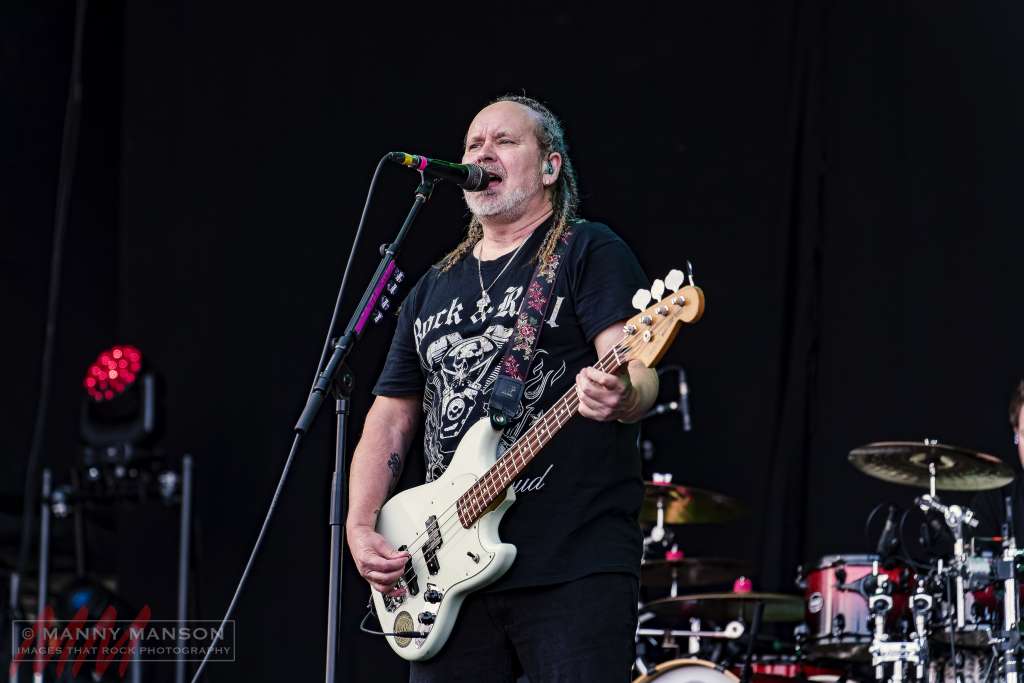
They shifted gears with Lost Angels, from 1977’s Off the Record. It’s a song that in its day showed Sweet could stand shoulder to shoulder with any hard rock band, all pounding rhythm and soaring melody, and today it still sounded sharp as ever. The crowd got rowdier when Set Me Free came in. Originally the opener to Sweet Fanny Adams (1974), it’s a proto-metal beast, a song that influenced everyone from Metallica to Anthrax in the years to come, and here at Newark it roared out with full conviction. Scott was grinning now, his riffs biting, the younger crowd headbanging as if discovering it anew.

Without a breath came Teenage Rampage, the 1974 single that once soundtracked Britain’s youth, its glam stomp infectious even fifty years on. The chants rolled across the field like a wave, thousands of voices screaming the hook, the perfect communion of band and crowd. Love is Like Oxygen followed, another classic Sweet song from 1978’s Level Headed album. It proved the band wasn’t just a nostalgia act, they still had fire to share. Its brooding pulse and atmospheric build sat beautifully alongside the classics, a bridge between eras.

The heavyweights were yet to come. Fox on the Run, their 1975 single from Desolation Boulevard, brought a huge swell of emotion. This was one of their global anthems, a song that cracked the American charts, and the field sang every word like gospel. Manzi’s vocals soared, Scott’s guitar wept, and the harmonies were spine-tingling. The stage then erupted with Blockbuster! their 1973 chart-topper, complete with sirens blasting across the speakers. The lights strobed red and white as the riff hit, that stomping glam beat shaking the ground, the song’s theatricality coming alive in the hands of a band who’d lived it, bled it, and survived it.
And finally, The Ballroom Blitz. The inevitable, the immortal. Released as a single in 1973, it had closed countless gigs and here it came alive in its most triumphant form. Manzi egged on the crowd as they screamed the famous opening line, “Are you ready Steve?”, and the roar that came back was deafening. Manzi hit it with feral power, Scott tore through the riffs, and for those few minutes Newark was no longer a festival site but a time machine back to the very birth of glam rock mayhem.

Sweet left the stage to adulation that felt like a co-headline moment, Andy Scott waving humbly, Manzi flashing devil horns, the band grinning wide. They had proved what needed no proving: that these songs weren’t museum pieces, they were living, breathing monsters of British rock history, and Stonedead had loved every minute of the set.

Krusher in his own imitable way drifts on the stage and waxes lyrically about his time with Ozzy, what follows is a massive choral rendition of Black Sabbaths ‘WAR PIGS’. Words and Ozzy appear on the screens as the showground erupts into this massive Ozzy anthem. Neil one of the Directors of the festival is hanging over the raised barrier to stage right, his eyes closed in reverence as you see the tears flowing down his cheeks, he’s giving it everything, just like the rest of us… RIP Ozzy, you ARE the man who gave us all this and much more!
And then came The Dead Daisies. If Sweet were the time machine, the Daisies were the unstoppable juggernaut, rolling forward with decades of hard rock pedigree in their DNA. The crowd knew that Doug Aldrich had been ill earlier in the year, some whispering doubts about whether he’d be at full strength tonight, but from the very first note it was clear he was playing out of his skin, bending strings like a man possessed, his Les Paul howling with the sort of fury that only comes when you’ve got something to prove. And fronting them once again, triumphant, was John Corabi, back in the fold after his brief absence, his voice rasping and soulful, commanding the stage like he’d never left, for me, Corabi is the voice of the Dead Daisies..

They kicked off with Long Way to Go from 2016’s Make Some Noise, and the festival grounds shook as Corabi belted the chorus, his gravelled delivery cutting through the night air. The rhythm section thundered behind him, Tommy Clufetos on drums, an absolute monster in perpetual motion, David Lowy anchoring everything with his steady riffage. Rise Up from Burn It Down (2018) followed, heavy as a wrecking ball, Aldrich and Lowy’s guitars snarling in tandem. Aldrich ripped a solo that spiralled skyward, every note dripping with fire. Dead and Gone, also from Burn It Down, brought a swampy, blues-heavy swagger. Corabi spat the verses with venom, the band thickening the groove until the crowd were swaying and stomping in unison. Light ’Em Up, from their 2024’s album Light ‘em Up, crackled with modern energy, its grinding riff feeling heavier live than on record, a metallic edge that showed the Daisies’ versatility.

Then came Bustle and Flow, one of Holy Ground’s finest moments. Clufetos exploded into a solo mid-song, his kit an extension of his body, sweat flying with every punishing strike. The crowd went berserk at the sheer spectacle, the field transformed into a drum clinic under the stars. They switched gears into I Wanna Be Your Bitch, a dirty, swaggering number 2024’s Light’em Up, delivered with tongue-in-cheek bite. Corabi oozed charisma, pacing the stage like a rock ’n’ roll pirate, Aldrich peeling off licks that swaggered right alongside him.
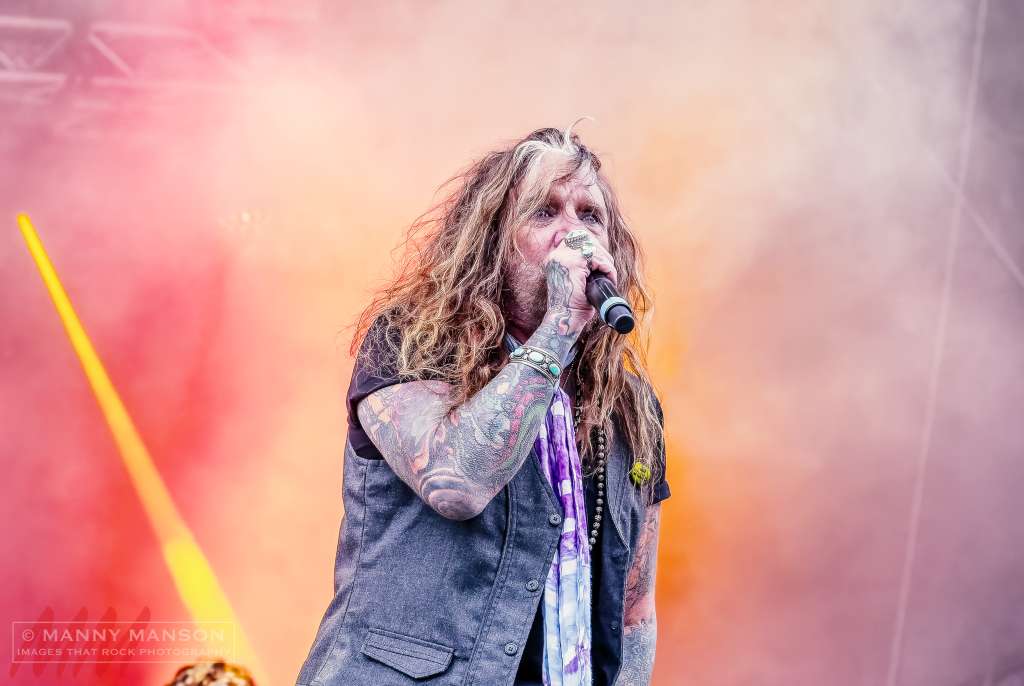
I’m Gonna Ride came next, another Light ‘em Up standout, its locomotive rhythm charging the field forward. Staying with the same album we had, Take a Long Line, their Angels cover from 2016, this was all snarling and raw, a nod to their Aussie connections via Lowy, who looked delighted playing it live. Their cover of Creedence Clearwater Revival’s Fortunate Son followed, (2016, Make Some Noise album) this is always a festival highlight. Corabi spat out the lyrics with grit and disdain, Aldrich tore into a solo drenched in Wah, and the field roared approval.

Mexico, from Revolución (2015), gave the set a playful, raucous lift, the chorus screamed back with fiesta spirit. Midnight Moses, their Alex Harvey cover from the same album, hit like a tribal ritual, the field chanting “Hallelujah!” with hands raised. Corabi’s vocal was made for this one. And then came Helter Skelter, the Beatles track they’ve made their own, (Locked and Loaded 2019). Here it became a finale of absolute chaos, Aldrich’s solo shredded everything in sight, Corabi howled into the night, the band a wall of sound at its most unhinged. Bloody awesome!

By the end, the Daisies had proved themselves not just survivors of lineup changes and illness, but champions of rock ’n’ roll in its purest, filthiest form. Aldrich raised his Les Paul high, Corabi saluted the crowd, and Newark roared approval for one of the most convincing sets of the weekend. The Dead Daisies had yet again stolen the show …. so far!
For now, finally, it was time for The Almighty. A band I last witnessed as they opened Monsters of Rock back on August 22nd 1992, some 33yrs and 1 day ago. (the line-up that day was ‘The Almighty’, ‘W.A.S.P.’ ‘Thunder’, ‘Slayer’, ‘Skid Row’ and the mighty ‘Iron Maiden’ headlining.) like many others, I’ve seen Ricky in his other projects, but this is the one I’d been waiting for, and although there has been a “Three and Easy” tour and a Steelhouse gig, I’d so far, not managed to catch up with them…

By now the showground, full of alcohol and angst throbbed with expectation, so by the time Krusher Joule came storming back onto the stage, lungs full of gravel and hellfire. The man had introduced every band of the day with his wicked irreverence, but this one felt different. He knew it, the band knew it, the crowd knew it. “You’ve waited long enough!” he bellowed, eyes blazing under the lights. “Give it up… for THE ALMIGHTY!” And with that the field exploded as Ricky Warwick strode into the glare, guitar slung low, black jacket hanging from his wiry frame, his grin the kind that comes from thirty-five years of unfinished business. This was no nostalgia trip. This was a pure resurrection of the devil and his band.

They launched with Power, the opening salvo from 1991’s Blood, Fire & Love. The riff came like a tank shell, Pete Friesen’s guitar snarling with the same teeth it had in the early nineties, only rawer, dirtier, angrier. Stumpy Monroe hammered the kit like he was trying to crack the earth open beneath Newark, Floyd London’s bass rumbling like artillery fire. Warwick’s voice, older now but richer, cut through like steel. This wasn’t a band tiptoeing back on stage after years away; it was a band stamping its flag into the soil, saying: we are still The Almighty, and we are still dangerous. The crowd, some who’d been kids when Soul Destruction first came out, some who’d only discovered the band later, surged as one, fists and horns in the air, bellowing that one-word chorus back: “POWER!”

Without hesitation they ripped into Destroyed from 1989’s debut Blood, Fire & Love. The guitars were sleazier here, a gnarly punk edge that reminded you of Warwick’s Belfast roots in The Choirboys and New Model Army, that tightrope walk between street-level punk and stadium metal that had always been The Almighty’s gift. The mosh at the front went feral, sweat and beer flying as if it was still the Marquee Club in ’89. Warwick roared into the mic, veins straining, the years melting away with every syllable.

Full Force Lovin’ Machine followed, another gem from that Blood, Fire & Love debut, the one that proved from the start that The Almighty weren’t afraid of melody alongside their brutality. It was filthy and fun, riff-driven sleaze-rock dragged through the mud, and Friesen played it like his strings were strung with barbed wire. Warwick swung his guitar into the groove, Stumpy driving the tempo like a sledgehammer, Floyd grinning as he bounced on that thundering bassline. The field was a single heaving animal by this point.

Then came Wrench from 1994’s Crank, a record that some at the time didn’t understand, released as grunge was already fading, too punk for the metal diehards, too metal for the punks. But here, tonight, it sounded colossal, a song ahead of its time, snarling with the cynicism of a band who never fit neatly into anyone’s box. Warwick spat the words with bile, pointing the mic stand at the crowd like a weapon, his guitar riffs sharp as shrapnel.
From there, Welcome to Defiance, another track off their underrated 1994 record. That album had marked a heavier turn, a more metallic edge, and the song tonight was drenched in venom. The chorus bellowed out like a war cry, defiant, unbowed, everything The Almighty had always stood for: grit, survival, the refusal to compromise. The band locked in like a machine, a wall of noise that rolled over the festival field like a storm. They drove into Addiction, the opening track from 1993’s Powertrippin’. That riff was filth incarnate, swampy, thick, dragging the crowd into a slow headbang that rolled through the masses like a wave. Warwick’s delivery was personal, pained, his face lit up in blue light as he poured out the kind of grit that can’t be faked. It was The Almighty at their darkest, and it stuck.
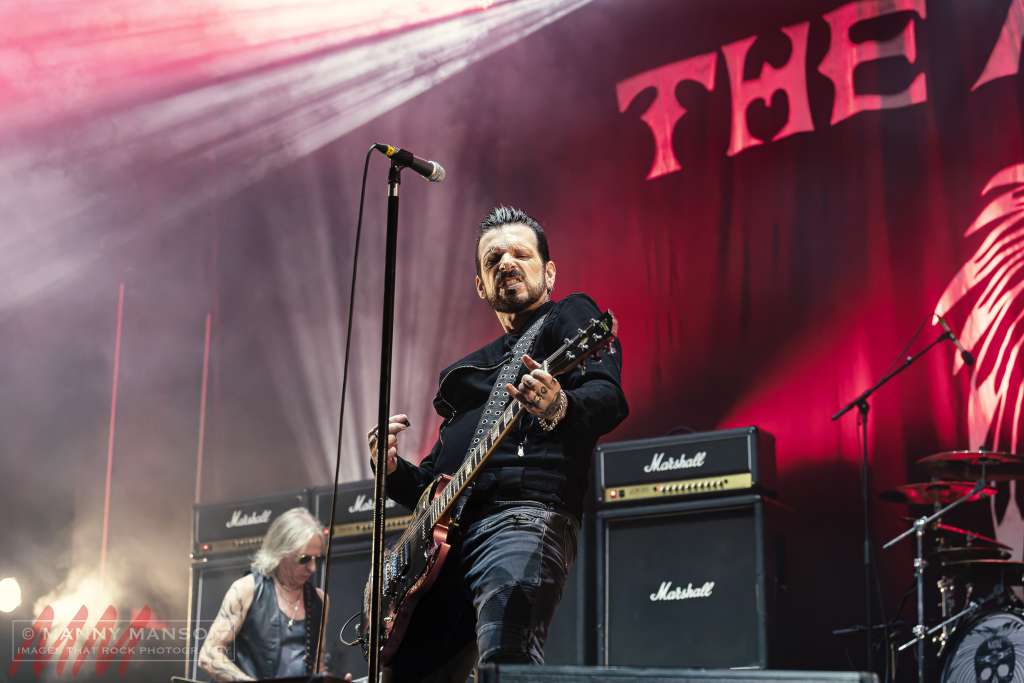
Then came a rare gem: Praying to the Red Lights from 1991’s sophomore album, Soul Destruction. That album had broken them onto a bigger stage, a top 5 UK record, a sign that the world was finally catching on. The song live was apocalyptic, huge walls of guitar and Warwick barking like a prophet at the gates. The crowd sang every word, a reminder that this wasn’t some forgotten footnote of the early nineties, it was a band with a catalogue people had carried in their hearts for three decades.
They slowed it briefly with Little Lost Sometimes, the melancholy track, again from Soul Destruction. The lights went moody, purple and red, smoke curling across the stage as Warwick sang with a rare tenderness, voice cracking in all the right places, acoustic guitar hanging low, dedicated to all that had lost someone too soon. It was the moment of breath before the storm, and the crowd swayed with it, thousands of arms raised. The breath didn’t last long. Crank and Deceit from Crank (1994) exploded next, pure punk-metal fury. Stumpy hammered out a relentless beat, Warwick’s rhythm guitar grinding like chainsaw teeth, Friesen letting loose wild runs that cut through the murk. It was nasty, sharp, the kind of song you could taste in the back of your throat.

Then came the dark heart of the set: Jonestown Mind, also from Crank. The bassline was thick and foreboding, Floyd locking in with Stumpy to create a groove that dragged like a funeral march. Warwick barked the words, half sung, half spat, conjuring the bleakness of the title, the crowd chanting the chorus like a mantra. It was heavy in the truest sense, not just in sound but in weight. Taking Hold came from Powertrippin’, all swagger and venom, Warwick slashing his guitar like he was carving the night open. Friesen’s lead was fire and fury, a reminder of why he’d been handpicked by Alice Cooper once upon a time. The Almighty had always been a band of killers, and here they showed it with teeth bared.

The stage was drenched in red as The Unreal Thing kicked in, one of the great deep cuts from Crank. The groove was monstrous, Warwick pacing the stage like a preacher, the words biting, bitter, and alive. And then, Devil’s Toy, another from Soul Destruction. That opening riff rang out and the field lost its mind. One of their most iconic tracks, a snarling anthem of temptation and rebellion, it sounded as vital in 2025 as it had in 1991. Warwick spat the chorus like it was written yesterday, the crowd screaming it back, an entire field in communion.

Over the Edge came next, the title track from 1993’s Powertrippin’, its sludgy weight rolling over the audience like thunderclouds. The sound was massive, the band tighter than ever, Warwick’s voice ragged but utterly commanding. Then a venomous blast of “Jesus Loves You… But I Don’t” again from Powertrippin’, one of their most notorious tracks. Warwick snarled every syllable with punk spite, the crowd gleefully yelling along. It was filthy, confrontational, everything The Almighty always were at their best.
And then Free ’n’ Easy, their calling card, from Soul Destruction. The field erupted. Every fist was in the air, every voice screaming the words, the song’s sleaze-soaked riff thundering out into the night. Friesen and Warwick locked into a glorious duel, Stumpy and Floyd pounding out the backbone, the chorus a tidal wave of defiance. This was what everyone had been waiting for, and The Almighty delivered it like their very lives depended on it.

They left the stage to deafening roars, but of course it wasn’t over. They returned for an encore that was nothing short of apocalyptic. Crucify (from Soul Destruction) hit like a hammer to the chest, Warwick’s voice filled with venom and conviction. Then came a furious cover of The Four Horsemen by Metallica, a nod to their peers and influences, played with fire and reverence, Warwick barking the lyrics with every ounce of his being. And finally, Wild and Wonderful from Blood, Fire & Love. A reminder of where it had all begun, the perfect closer, a song that bridged every era of The Almighty into one. The field sang every note, hands aloft, a communion between band and fans that felt like it might never end.
When the last chord rang out, Warwick stood centre stage, drenched in sweat, guitar raised. “We are The Almighty,” he roared, voice breaking with emotion. The roar that came back was deafening, rolling out into the Nottinghamshire night like thunder. For a band who had been quiet for so long, who had teased us with only a handful of comeback shows, this was more than a gig. It was a statement, a resurrection, and a victory. The Almighty weren’t just back, they were alive, dangerous, and once again utterly essential.

By the time everything had faded into the night, despite the field still trembling, the Stonedead faithful made their way back to tents and vans to continue partying. Today, every band, had contributed to make it one of epic proportions, but it was The Almighty who reminded everyone why they’d waited decades for moments like this. Stonedead 2025 wasn’t just another festival in an ocean, it was a monument, a living demonstration to the power, glory, and enduring spirit of rock ’n’ roll (and how good the original concept of One Day One Stage really was). Selling out the 2026 Early Bird tickets in 7 minutes and then the whole festival only hours later says the guys are doing something right, it works, long may it continue, See You At The Bar in 2026!