Review & Photography by Manny Manson for MPM
The streets outside Rock City were throbbing with expectation, a gathering storm of boots on concrete, muffled conversation, and the faint metallic tang of winter still resident in the air. Fans clustered, some leaning against the damp walls of Rock City’s blackened outer shell, trading stories of previous shows, rig specs, and favourite solos from Kotzen and Smith’s catalogues. Many had travelled from London, Manchester, and some even further afield, after all it was the opening night on the UK leg of their ‘Black Light/White Noise tour’. Fans eyes darting to the venue stage entrance with every echo of a tuning guitar inside as sound check finished and we waited. This wasn’t merely a gig, it was a convergence of decades of rock and blues mastery, distilled into one intimate Nottingham hall. Rock City, dripping in live music history, a venue were anyone that’s anything has played at least once in their career, it still has that must play hallowed calling amongst the muso’s travelling through-out the UK. It still possesses the must play appeal as the day it opened.
By 18:30, doors opened, and the crowd slowly flowed in like a river of anticipation. Inside, the venue’s warmth was immediate, the wooden floors, less sticky due to a relaying during the covid years, absorbing every stomp, and every thud, the vaulted ceiling channelling sound so that even the quietest hum of an amp seemed to vibrate in the chest. Fans pressed forward, craning their necks, eyes flicking between the drum riser, the amps warming up, and the space on stage where legends were about to appear, trying to catch sight of that elusive set list. First up tonight we have The Kris Barras Band
I’ve seen Kris a lot over the years, with various band line ups and in various venues, but I have to say the current band kicks some serious ass. He always puts on an exceptional show, in fact last time I saw him play Rock City, he sprayed the crowd in champagne due to the success of his latest single of the time! And the sad truth that it was also the anniversary of his dads passing, not a dry eye in the house! Ok so now we have the first wave of excitement as the Kris Barras Band takes to the stage. Barras himself, tattoo’d arms bare, his Seth Barras custom guitar slung low, exuding the quiet confidence of someone who knew the terrain intimately. Billy Hammett on drums, taut and expressive, adjusted his kit with the careful precision of a master sculptor. Frazer Kerslake’s bass leaned into the room, ready to underpin the harmonic chaos that would inevitably unfold, while long time band member, Josiah J. Manning was there to add his subtle harmonic sheen on guitar and keys, barely noticeable but absolutely critical to the sound’s depth.

The opening chords of “Who Needs Enemies” (Light It Up, 2018) struck like a lightning bolt. Barras’ Stratocaster sang with clarity and grit; each bend, each hammer-on, each subtle slide threaded a narrative. Hybrid picking combined with expressive vibrato created textures that were almost vocal in quality. Hammett’s drums punctuated and accentuated, never overpowering, always shaping the narrative arc. Kerslake’s bass ran melodic counterpoints beneath Barras’ guitar, weaving through ghost notes and slides. The partisan crowd needed no invite, they erupted immediately, hands launched over heads, and the crowd’s energy rippled, feeding back into the music, creating a closed loop of shared sonic intensity.

“Dead Horses” (Light It Up, 2018) followed seamlessly, with Barras exploiting dynamic shifts between palm-muted verses and soaring chorus lines. Manning’s riffs provided harmonic tension, underscoring Barras’ slides and micro-bends. Hammetts’s ghost snare rolls accentuated the phrasing, while Kerslake’s bass wove subtle countermelodies that foreshadowed the guitar solos. The fans moved as a single organism, bodies spinning, surging, reacting instinctively to harmonic tension rather than the mere beat, and Barras responded by bending and sliding in perfect synchronicity with the fans’s movement.

By the time “These Voices” (Light It Up, 2018) came in, Barras was fully immersed, every note deliberate. His phrasing created narrative arcs that Valverde-like precision could only aspire to, actually, sorry, I need to stay consistent, Hammett’s drumming seemed to dance around the phrasing, ghost notes emphasising harmonic peaks and valleys. Henson’s bass floated beneath, responding to every nuance, while Manning’s licks layered soft harmonic tension. The fans swayed, bodies and heads mirroring phrasing rather than beat, a physical manifestation of the musical story unfolding.

How ever before it started the next song, he tried to get the crowd involved in a sing along as way of an intro, It failed so we get the ever faithful “Ignite (Light It Up)” sing a long which ultimately led into an unscripted full version of the song, When “All Falls Down” (single, 2020) finally hit, the room leaned in. Co-written with Blair Daly in 2020, this song carried freshness and tension. Barras’ fingerstyle hybrid picking created shimmering textures during verses, building to a chorus that exploded into full vibrato-laden bends. Hammett’s drumming accentuated solo motifs without overshadowing them, and Kerslake’s bass interwove countermelodies that expanded the harmonic landscape. The crowd mirrored the dynamics, swelling with tension, then releasing as the chorus landed like a musical tidal wave. This wasn’t a song; it was an event, felt in the chest and spine.

“Devil You Know” (Light It Up, 2017) listed on the set was now dropped due to time constraints and the impromptu inclusion of “Ignite (Light it Up)”. As “Monsters We Made” (Light It Up, 2017) roared through, Barras thickened his tone, employing harmonic overtones and subtle feedback control. Johnson accentuated every harmonic twist, Henson mirrored melodic motifs, and Manning’s flashing licks added a shimmering undercurrent. The crowd threw their fists above their heads as energy waves pulsed through the fans, responding directly to Barras’ phrasing arcs. The band wasn’t just performing, they were conversing with the fans, translating technique into visceral shared experience.
“Hail Mary” (Light It Up, 2017) offered cinematic intensity. Barras’ legato lines, micro-bends, and vibrato communicated emotion without words. Hammett’s ghosted fills and cymbal work shaped phrasing, Kerslake’s bass followed melodic contour, and Manning’s again provided lines that swelled subtly beneath the surface. The fans shifted between motion and stillness, caught in anticipation of each note, responding physically to musical tension and release. By the final chorus, energy had reached a fever fansch.

The set closed with “My Parade” (Light It Up, 2018), a finale that fused all previous techniques into a single coherent statement. Barras’ soloing reached an expressive peak, hybrid picking, slides, legato runs, all executed with perfect phrasing. Hammett accentuated every harmonic twist with powerful fills, Kerslake mirrored motifs with melodic flourishes, and Manning’s guitar provided lush harmonic support. The fans reacted in total unison, fists pumping, entire bodies moving as one with the music. It was a warm-up, a prelude, and a statement, with a new album and tour promised for later in the year, Kris and the bands work was done: the crowd were now primed for Smith/Kotzen.
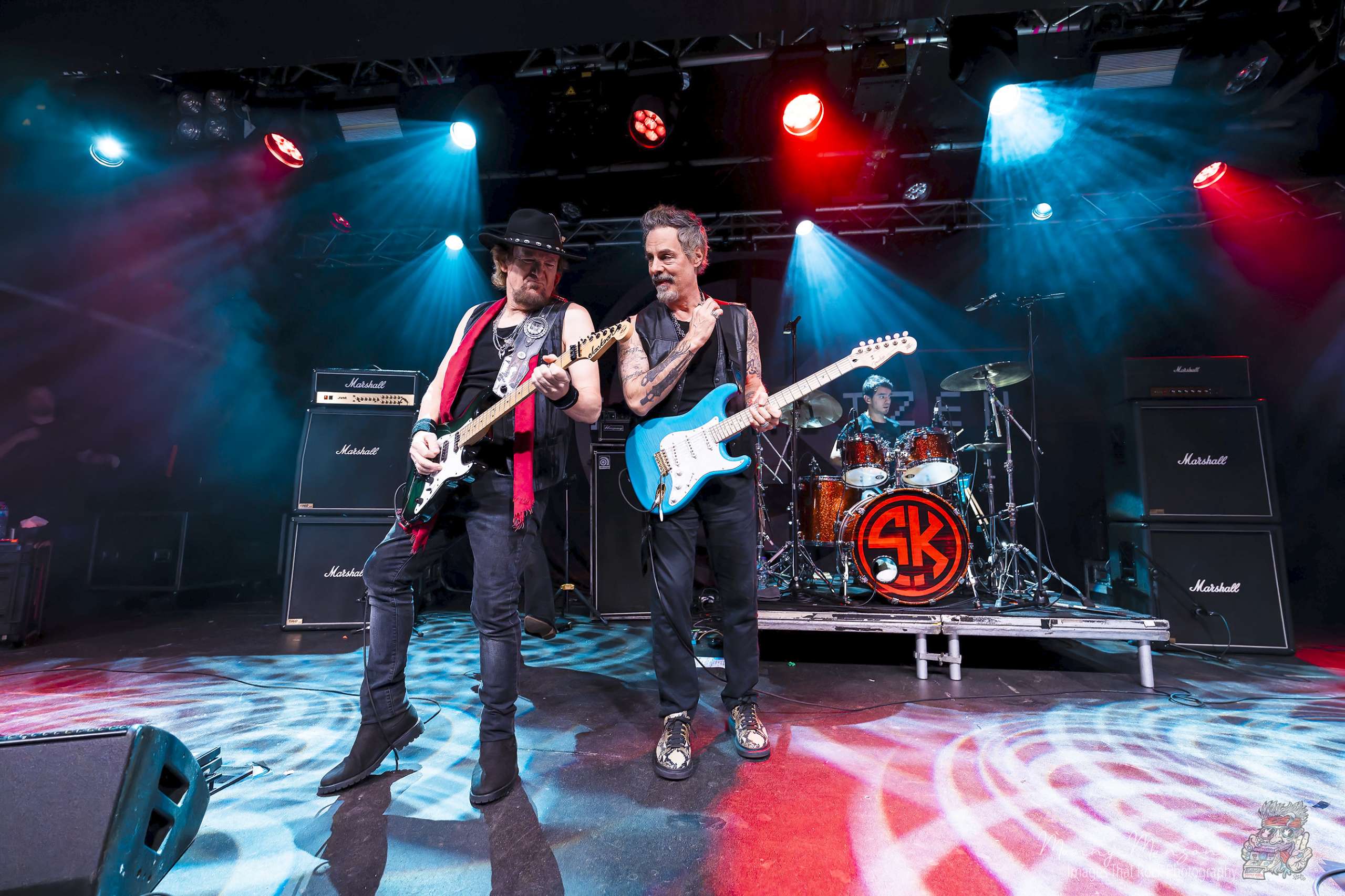
After a quick stage reset, provided by the hands of the ever present and hard-working Hells Angels crew, the lights dimmed once again, a thin haze of smoke curling along the floor. A single amber spotlight cut through the mist, and there they were: Adrian Smith, White Jackson guitar gleaming, stance low and commanding, and Richie Kotzen, Fender cradled, fingers already twitching in anticipation. The room exhaled as Bruno Valverde on drums and Julia Lage, on bass got into position, their presence quietly anchoring the sonic storm about to erupt. The energy was palpable, almost tactile, as if every attendee was holding their breath waiting for that first note. (As a side note, I hope Julia managed to get a coffee, this morning, from somewhere that didn’t use the coffee machine to wash their smalls!).

“Life Unchained” (Black Light/White Noise, 2025), opened with Smith’s signature Jackson tone: rich, thick sustain with midrange warmth that sang under his fingers. The intro riff struck like a jolt, every chord pulsing through the wooden floors, the cymbals of Valverde’s kit shimmering above it all. Kotzen answered immediately with fluid Fender Strat runs, fingers tracing hybrid-picked lines, subtle hammer-ons and pull-offs dancing above Smith’s rhythm foundation. Valverde accentuated the riff with precise snare pops and cymbal swells, while Lage’s bass threaded melodic counterpoints, sometimes shadowing Kotzen’s runs, sometimes harmonically conversing with Smith. The fans reacted physically, bodies pulsing, heads nodding, fists pumping in perfect synchrony with every accent. Each solo, every phrase was felt, vibrating through the spines of everyone in the room.

Transitioning seamlessly, “Black Light” (Black Light/White Noise, 2025), opened with a palm-muted, chugging riff from Smith, the Jackson’s natural warmth cutting through the venue’s acoustics. Kotzen layered bright harmonic lines, hybrid-picked runs ascending the blue signature Strat neck like spectral fireworks. Valverde’s drums danced around the riff, ghost snare hits and subtle tom accents highlighting harmonic tension points. Lage’s bass moved fluidly beneath the guitars, countering riffs with melodic motifs that hinted at jazz influences without ever losing the rock drive. The crowd was hypnotised, bodies moving to phrasing rather than beat, reacting as one organism to the interplay between the two guitarists. Kotzen introduced the next song; “Wraith” (Black Light/White Noise, 2025), this brought a more delicate, almost spectral texture. Kotzen began with fingerstyle arpeggios, each note resonating like a whispered secret, while Smith built a supporting wall of chordal tension. Valverde punctuated subtly, cymbal swells that accentuated harmonic peaks, ghost notes underlining rests in the phrasing, kicks following melodic cues. Lage’s bass slithered beneath, echoing Kotzen’s motifs with subtle bends and slides, adding richness to the harmonic conversation. The fans shifted instinctively, the crowd stilled during the more pensive moments, then erupted as each harmonic phrase climaxed. Kotzen’s soloing was meticulous, micro-bends, harmonic taps, and legato phrasing combining to create a voice-like expressiveness that matched Smith’s chordal punctuation perfectly. With “Glory Road” (Smith/Kotzen, 2021), the energy ratcheted up. Smith’s weapon of choice opened with chordal stabs, rhythmic accents hitting like cannon fire across the room. Kotzen’s lead lines shimmered above, moving between minor-scale runs, bluesy bends, and hybrid-picked flourishes. Valverde’s fills threaded through harmonic tension, the cymbals accenting peaks and valleys in perfect synergy with the guitars. Lage’s bass wove melodic counter lines under the guitar interplay, adding harmonic depth and drive. The fans moved as one, bodies surging, propelled in a kinetic response to the harmonic tension, a perfect mirror to the dual-guitar narrative unfolding above them.

The darker, emotive “Hate and Love” (Better Days E.P, 2021) followed, showcasing Kotzen’s phrasing with micro-bends, vibrato, and expressive legato. Smith’s chordal voicings were rich, slightly overdriven, laying the emotional foundation. Valverde’s drumming shifted subtly between minimalist cymbal work and accentuated fills, supporting without overpowering. Lage’s bass moved melodically beneath, shadowing Kotzen’s motifs, sometimes doubling the riff, sometimes creating counterpoint. The crowd were mesmerised, bodies suspended mid-motion as the harmonic arcs bent and resolved, reacting physically to phrasing rather than rhythm alone. With “Blindsided,” (Black Light/White Noise, 2025), the energy shifts. Here, both players dig into heavier timbre. Kotzen’s attack on his signature Telecaster is aggressive but precise; Smith’s bends and vibrato remain surgical. The tone itself is a study: likely a combination of tube amp warmth, minimal compression, and direct finger/pick attack shaping the note onset. The right-hand discipline is extraordinary: Smith’s wrist-driven alternate picking keeps articulation tight, preventing high-gain wash, while Kotzen’s fingerstyle allows independent note voices. Subtle string noise, pick attack friction, and hand placement all contribute to the raw energy. Palm-muted staccato bursts punctuate melodic runs.

Timing is elastic but never sloppy; dynamics flow organically. The crowd, again, feels the physical pull of tension-release, particularly in the fans. Subtle nods from guitarists echo across the room. “Taking My Chances” (Smith/Kotzen, 2021) allowed Kotzen to fully explore expressive runs. Hybrid picking, slides, hammer-ons, and micro-bends intertwined with Smith’s supportive chordal counterpoint. Valverde’s cymbal work highlighted every harmonic climax, while Lage’s bass mirrored solo motifs. The crowd responded like a single entity, every punch of Kotzen’s phrasing causing ripples through the room, a literal resonance between fans and performers. “Outlaw” (Black Light/White Noise, 2025), a new release, exploded with improvisational interplay. Kotzen’s harmonics, slides, hybrid picking, and bends danced above Smith’s chordal punches and harmonic textures. Valverde and Lage created a rhythm section that was simultaneously anchoring and conversational, accentuating phrasing while maintaining groove. The crowd physically mirroring every tension and release. Each harmonic peak was a visceral event, felt as much as heard, and Smith and Kotzen communicated wordlessly, improvising in perfect sync. With “Darkside” (Black Light/White Noise, 2025), the tone grew heavier, cinematic even. Kotzen’s hybrid picking and harmonic taps danced across the Fender neck, while Smith’s brooding Les Paul provides staccato counterpoint, each chord ringing with controlled sustain, as he takes lead vocal on this one. Valverde’s drums articulated subtle tension-release patterns, accenting harmonic movements. Lage’s bass followed harmonic shifts, at times shadowing solos, at times providing rhythmic propulsion.
The fans responded as one, a living, breathing entity mimicking the music’s emotional trajectory, a wall of motion moving with phrasing arcs rather than simple beats. “Got a Hold on Me” (Better Days E.P, 2021) opens with a groove that immediately asserts itself, Smith’s Jackson guitar provides a warm, thick chordal foundation with slightly overdriven tones, midrange-forward, rich sustain that fills the room. Kotzen’s Fender dances above with fluid hybrid-picked runs, combining melodic blues phrasing with modern rock expressiveness. The intro riff, punctuated with subtle slides and finger vibrato, immediately hooks the fans. Bruno Valverde’s drums accentuate every harmonic nuance rather than just keeping time, ghost snare hits and cymbal swells follow phrasing arcs, while Julia Lage’s bass is melodic yet anchoring, shadowing Kotzen’s motifs with subtle slides and fills. In the live performance, this track becomes a conversation between guitars, each responding and echoing the other, weaving melodic lines into a larger tapestry. The crowd floated during the soaring chorus, the energy rising as the guitar harmonies build tension and release in perfect synchronicity.

“White Noise” (Black Light/White Noise, 2025), leans into atmospheric dynamics. Kotzen opens with fingerstyle arpeggios on the Fender, harmonics chiming in like bells, while Smith supports with thick, spacious chord voicings back on the Les Paul. The interplay is exquisite: Smith punctuates Kotzen’s melodic arcs with staccato chordal accents, creating a push-and-pull dynamic. Valverde’s cymbals shimmer in the higher frequencies, and ghost tom rolls underscore tension points in the phrasing. Lage’s bass lines trace the melodic contour rather than just underpin the chords, giving the song a lush harmonic foundation. In the live show, the crowd was spellbound during these quieter sections, almost holding its collective breath, only to erupt in movement during the chorus, when both guitarists unleash soaring, harmonically rich solos that bend and resolve in perfect symmetry. Every subtle slide or legato phrase was felt, not just heard, with bodies in the fans responding almost like an extension of the guitar lines themselves.
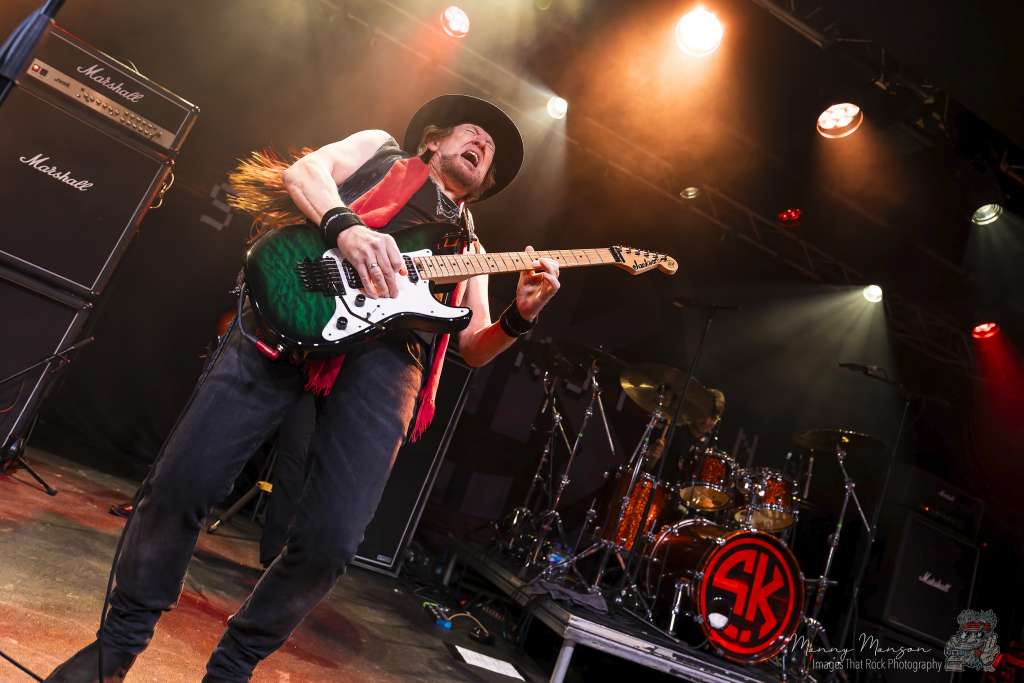
There was a bit of confusion whether the next song was the first or second song written by the pair,Smith seems certain it was the second,“Scars” (Smith/Kotzen, 2021) takes the energy to another level, a powerful, emotionally charged blues-rock number. Smith’s chord voicings are saturated but warm, with sustained notes ringing clearly, while Kotzen layers searing, lyrical lead lines full of hybrid picking and micro-bends. The rhythm section drives forward with authority: Valverde’s drums accentuate phrases with crisp snare hits and cymbal splashes, while Lage mirrors Kotzen’s bends with subtle melodic fills in the bass. The live performance highlighted their improvisational interplay, Kotzen and Smith responding to each other in real-time, solos morphing organically, phrasing echoing, countering, and resolving in the space of a single riff. The crowd moved in chaotic harmony, bodies reacting instinctively to the tension and release of phrasing rather than simple rhythm, creating a visceral, living wall of energy.

“Running” (Smith/Kotzen, 2021) was the first song the dynamic duo wrote together, we are informed, it carries a sense of motion and urgency. Smith lays down tight, staccato Les Paul chords with slight overdrive, giving a rhythmic propulsion that keeps the fans moving. Kotzen responds with fluid runs, harmonically adventurous, using legato phrasing, hammer-ons, and subtle bends that weave through Smith’s chordal architecture, Kotzen’s blue signature Strat is singing like a veritable angel under his light touch. Valverde’s drumming follows phrasing arcs, ghosting beats where necessary and accentuating harmonic climaxes with cymbal swells. Lage’s bass flows between rhythm and melody, occasionally doubling Kotzen’s line or adding counterpoint that creates a rich, interlocking texture. Live, the song’s tension builds toward the solo sections, where both guitarists improvise with subtle nods to each other, the crowd reacts with near-religious intensity, fists punching the air, the crowd riding waves of groove, feeding energy back into the band. “Solar Fire” (Smith/Kotzen, 2021) is an epic closer for the main set before the encore, a sprawling piece that showcases tonal contrast, improvisation, and harmonic sophistication. Smith’s Jackson provides a sustained, thick foundation with full-bodied overdrive, while Kotzen’s Fender Strat, once more, explores wide-ranging melodic textures, blending blues, rock, and fusion influences.
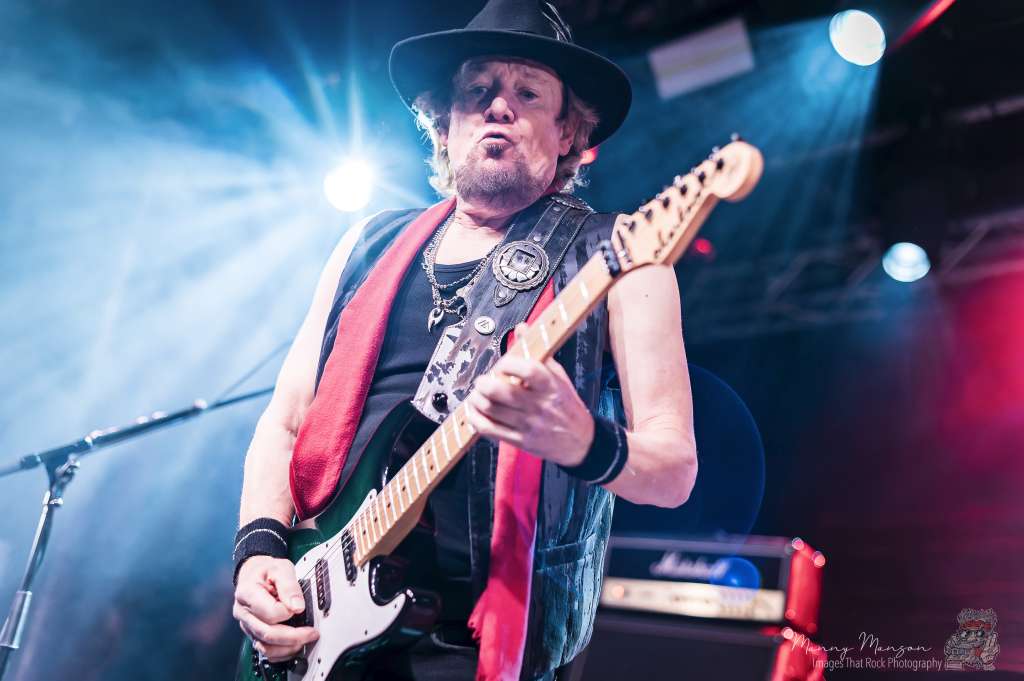
Valverde accentuates dynamic shifts with cymbal swells, tom rolls, and ghosted snare work, punctuating key harmonic moments. Lage’s bass interweaves melodic lines that shadow the solos or double motifs for added power. The live fans was utterly captivated: the fans moved in waves, bodies responding to phrasing arcs and harmonic tension rather than just beats. Solo sections saw both Smith and Kotzen trading licks, improvising fluidly, Kotzen’s hybrid picking and legato weaving through Smith’s chordal support, slides, and harmonic layering. The lighting added to the drama, amber spotlights, smoke catching the beams, every riff framed visually as well as sonically. By the final chord, the crowd was on its feet, unified in awe, hearts racing, adrenaline coursing through every nerve. And as the last echoes of “Solar Fire” shimmered into the smoky rafters of Rock City, the band didn’t pause, there was no breathing room, only momentum. The crowd still undulated like a living organism, bodies rising and falling, the crowd were being carried along in kinetic waves as if the venue itself were an extension of the dual guitars onstage. Adrian Smith’s white Jackson glowed under the amber light, strings vibrating in sympathetic resonance with Richie Kotzen’s Fender. This was a conversation in wood, steel, and electricity, a dialogue of decades of experience articulated note by note, and the crowd loved it.

This was the moment Smith said thank you and good night as they teasingly walk off the hallowed stage, leaving the crowd begging for more, the cheering, clapping and whistling continued until Richie walked back on stage followed by the rest of the band, strapping in he give the crowd a thumbs up and then we’re off once again.
The encore’s first piece, “You Can’t Save Me” (Richie Kotzen solo, 2009), began almost as a whisper. Kotzen’s fingers caressed the frets, hybrid-picked harmonics chiming delicately above a soft rhythm that Smith laid down, thick and warm, letting every note bloom. Kotzen’s phrasing was textbook expressive, micro-bends sliding into sustained vibrato, pull-offs that seemed to float into the air, hammer-ons cascading with vocal-like inflection.

Every subtle slide was accentuated by Smith’s chordal voicing; the Les Paul’s sustain creating a harmonic bed beneath Kotzen’s melodic narrative. Valverde’s drumming was soft but articulate: ghosted snare taps and cymbal swells highlighted Kotzen’s phrasing, while Lage’s bass traced the melodic contour, adding both weight and melodic counterpoint, at one point she encourages the crowd to cheer louder at the guitar virtuosity being displayed, the crowd oblige eagerly. The fans now leaned in, as if the very hall held its breath, a reverent hush broken only by the subtle crackle of amplifier hums and the occasional creak of the wooden stage. By the chorus, Kotzen unleashed the full power of the melody, cascading into rapid-fire legato runs, Smith punctuating with thick chord stabs, the interplay so tight it felt telepathic. Fists punched upward in unison, the room swaying in hypnotic synchrony with the guitar lines.

Then, Immediately, without pause, Smith launched into “Wasted Years” (Iron Maiden, 1986), a cover that transformed Rock City into a shrine of classic metal reverence. Smith’s trade mark Jackson handled the opening arpeggios with crystalline precision, every note ringing clean and true, it seemed like the amps had been boosted up to a Spinal Tap “11”, while Kotzen’s Strat added harmonic colour, sliding into minor runs and chromatic flourishes that both honoured the original and injected new life. Valverde’s drums were dynamic, paying homage to Nicko McBrain’s feel while subtly accenting the harmonic dialogue between the guitars. Lage’s bass provided that familiar, Harris, low-end drive, occasionally doubling melodic lines to give added punch. The crowd erupted instantly, fist-pumping and singing every line, bodies moving as one mass of energy, seemingly floating on the waves of enthusiasm. Smith and Kotzen traded lead lines mid-song, hybrid picking, bends, and hammer-ons blurring seamlessly into one another, solos twisting and turning in near-perfect counterpoint. The interplay was astonishing, the room didn’t just listen, it vibrated, alive with the power of two virtuosos in complete sync. Smith’s singing at this point was non-existent, he is still getting over a cold as he told us earlier in the set as he swigged back a red bull. This mattered not as the crowd, fists raised, took on the singing duties. The chorus lifted the roof as Kotzen joined in, grinning from behind the microphone.

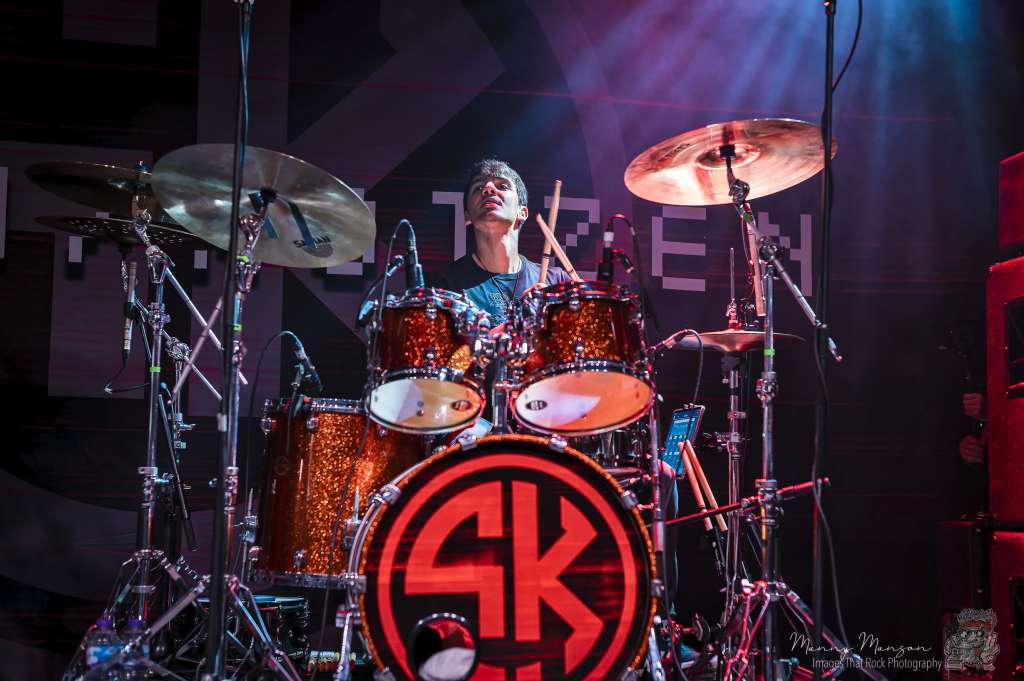
The lighting played a crucial role in this final segment, soft amber hues for introspective moments, sudden white spotlights cutting through the haze as Kotzen executed rapid pull-offs and legato sequences, creating visual punctuation for every technical flourish. Haze swirled around, catching the light in golden halos, framing each gesture, each expression, each guitar phrase. The crowd surged, bodies reacting not just to rhythm but to the harmonic tension and release, every subtle note articulated physically across the room. Smith’s phrasing in the bridge section was remarkable, smooth, deliberate, yet simultaneously full of bite, his Jackson slicing through Kotzen’s rapid scales with perfectly timed chordal accents. Kotzen responded with hybrid-picked flurries, hammer-ons, and taps that danced above Smith’s rhythm like fireflies in the night. Valverde punctuated peaks with sharp snare rolls, cymbal crashes echoing through the rafters, he was having his best life, a beaming smile from ear to ear shone from behind the flurry of sticks and smashed cymbals, while Lage’s Precision bass wove melodic threads beneath the guitars, creating a contrapuntal foundation that felt both grounding and fluid. The crowd, sensing these harmonic arcs, followed instinctively, bodies moving in waves, hair flying, fists punching the air, the energy a living extension of the music.

During the outro of “Wasted Years”, Kotzen hit a series of harmonics, bends, and slides that perfectly mirrored Smith’s chordal punctuations. Valverde used subtle tom rolls to accentuate phrasing, creating a dynamic ebb and flow that pushed the fans forward. Lage’s bass added melodic fills that seamlessly bridged sections, ensuring the improvisational interplay never lost its cohesion. The song concluded with a soaring final unison line between Smith and Kotzen, perfectly harmonised, leaving the room vibrating in awe. Fans erupted, cheers and applause cascading in waves, a cathartic release that seemed almost ritualistic after the intensity of the set.
But even in these final moments, the technical mastery never waned. Kotzen’s attention to phrasing, note articulation, and dynamic shifts was meticulous; every bend was precise, every slide deliberate, every vibrato expressive. Smith’s Jackson tones were equally articulate, thick sustain, warm midrange, perfectly balanced with Kotzen’s brighter Fender. Valverde and Lage provided the perfect rhythmic and harmonic canvas, responsive to every improvisational turn. The fans became part of the music itself, a living echo of every harmonic nuance.

When the lights finally bled out and the last note stopped hanging from the rafters, the whole place froze in this shared, holy hush. No one wanted to be the first to break it. It was that moment where you’re not just hearing what you’ve heard, you’re feeling it crawl under your skin and set up camp. The silence wasn’t empty; it was full of everything the band had just poured into the room. Then it hit. Applause detonated all at once, a wall of noise crashing forward, cheers, whistles, boots on the floor, palms stinging red. The kind of reaction you don’t fake and can’t script. The encore hadn’t just landed; it had branded itself onto everyone in that crowd. You could see it in the wide eyes, the dazed grins, the people turning to each other like, did that really just happen? Every solo still ringing in their heads, every lick and harmonic etched into memory for later attempts on six-strings at home.
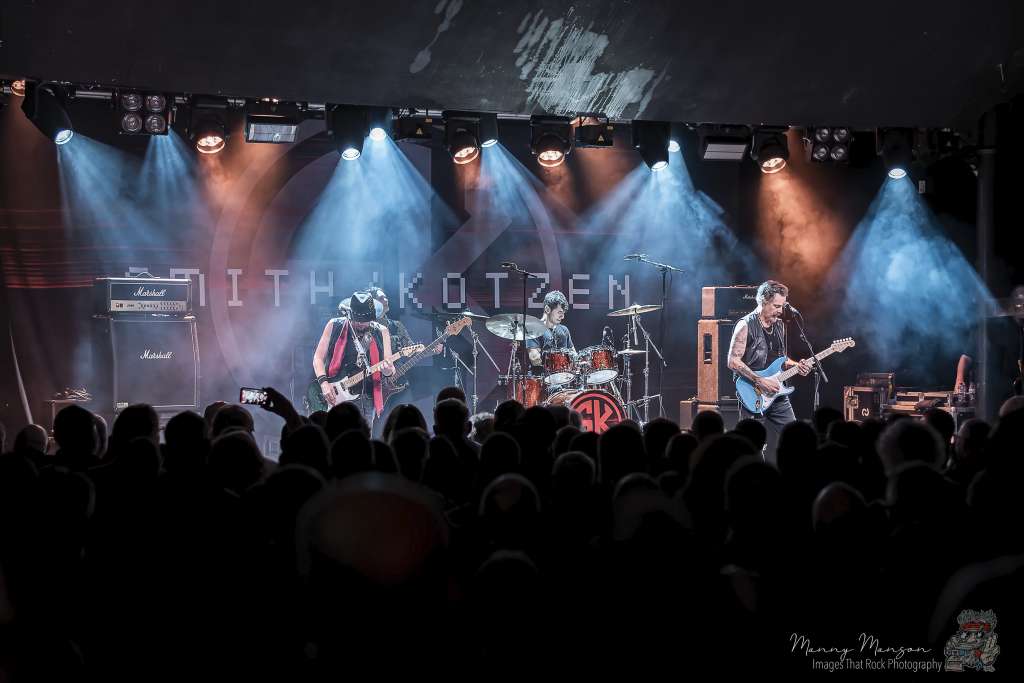
The band stepped forward, shoulder to shoulder, sweat-soaked and grinning, taking it in. Picks flicked out like souvenirs, drumsticks launched into hungry hands, setlists torn free and claimed like treasure. One last wave, one last look at the crowd that had given it right back to them. Then they disappeared through that smoke-choked doorway, the same exit trail worn by legends, lifers, and every band that ever meant something. Another night carved into the tally. Another reminder that when live music hits its peak, it’s not just entertainment, its communion, electricity, and a little bit of magic you carry long after the amps cool.The Kris Barras Band and Smith/Kotzen have just delivered the kind of night that reminds you why live music still matters, soul, fire, and fretwork to raise the roof. Catch them as soon as you can and grab the albums on whatever format you spin, stream, or treasure on your shelf, that’s how we keep real music alive.