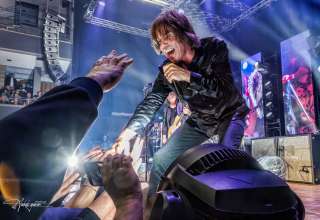

Review & Photography by Manny Manson for MPM
Once again, the rain lashed down against the pavements outside KK’s Steel Mill that evening, turning the approach into a blur of umbrellas bobbing like bright islands in a grey, wind-whipped sea. The smell of wet asphalt rose up from the ground, mixing with the lingering tang of oil and old metal that never quite leaves the bones of this former factory area, despite the small shopping mall. A few die-hards were already drenched through to the skin, laughing it off, while others huddled beneath dripping canopies as the queue snaked along the steel-and-brick exterior. Even in the downpour there was a buzz, that low, constant hum of anticipation that tells you this isn’t just another gig. The chatter was louder than usual, jackets heavier, back patches more worn and faded. People had turned up early, and that always means something.
The date, 27 February 2026, carried its own kind of charge. This wasn’t just a random three-band package thrown together to fill a tour schedule. This was a bill that made sense. Three acts whose DNA crossed over at different fault lines of hard rock history, sleazy punk-glam survivalism rubbing shoulders with modern muscle and full-tilt American groove rock. You could feel it in the air before you even reached the doors. The walk up had that crackle, that electric tension that only shows up when a night promises more than background noise and plastic pints. And as a side note up at the Molineux a local derby was about to be played. Wolverhampton Wanderers (Wolves) were playing arch enemies Aston Villa (The Viles), in musical terms it was Robert Plant vs Ozzy Osbourne.
Inside, the cavernous hall was already alive, breathing in slow, heavy pulses. KK’s Steel Mill has a way of holding sound, crinkled tin ceiling, exposed steel everywhere, no soft edges to swallow the noise. Even during changeover there was a low thrum bouncing off the walls, a restless murmur rolling across the floor as more bodies packed in. The air grew thick and humid, sweat and denim and anticipation blending into that peculiar electricity that only forms when a room knows something big is coming. People staked their ground early, pressed up toward the barrier or carving out space mid-floor, because this wasn’t the kind of night you half-watch from the back with folded arms. Not here. Not now. Not in 2026.
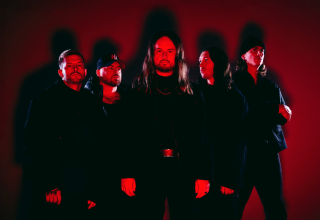
Rubikon have carved out that rare space a lot of modern hard rock bands aim for but never quite reach. They sound current without tipping into plastic production gloss, heavy without hiding behind down-tuned murk, melodic without chasing radio safety. By 2026 they’re no longer a band feeling their way forward, they’re locked in, confident, fully aware of how to use dynamics as a weapon. Not just loud and louder, but tension and release. Push and pull. Space and impact.
The lineup works because everyone knows their lane. The two-guitar attack is clearly defined: one anchoring everything with thick, palm-muted rhythm and groove-driven chord structures, the other weaving lead lines and hooks that elevate rather than dominate. The bass sits deep and rounded in the mix, punching through without clutter, reinforcing riffs instead of shadowing them. The drums are all control, tight snare crack, disciplined kick patterns, cymbals held back so when they open up in a chorus it actually means something. Vocally there’s grit, but clarity too, a voice that cuts clean through the room without studio smoke and mirrors.

They walked on to genuine recognition, not polite support-band applause, but a roar that said people were here early for a reason, and launched straight into a golden oldie, “Live That Lie” from Delta (2015). The opening riff landed thick and assured, mid-tempo and percussive, instantly locking the floor into its groove. Rhythm guitar was muscular and precise, bass doubling just enough to add weight without mud, drums sitting right in the pocket. When the vocal came in it rode the groove instead of fighting it, assertive without overplaying its hand. The chorus widened beautifully, cymbals opening, backing vocals lifting, and you could see heads nodding across the room. It was a statement opener without ego.
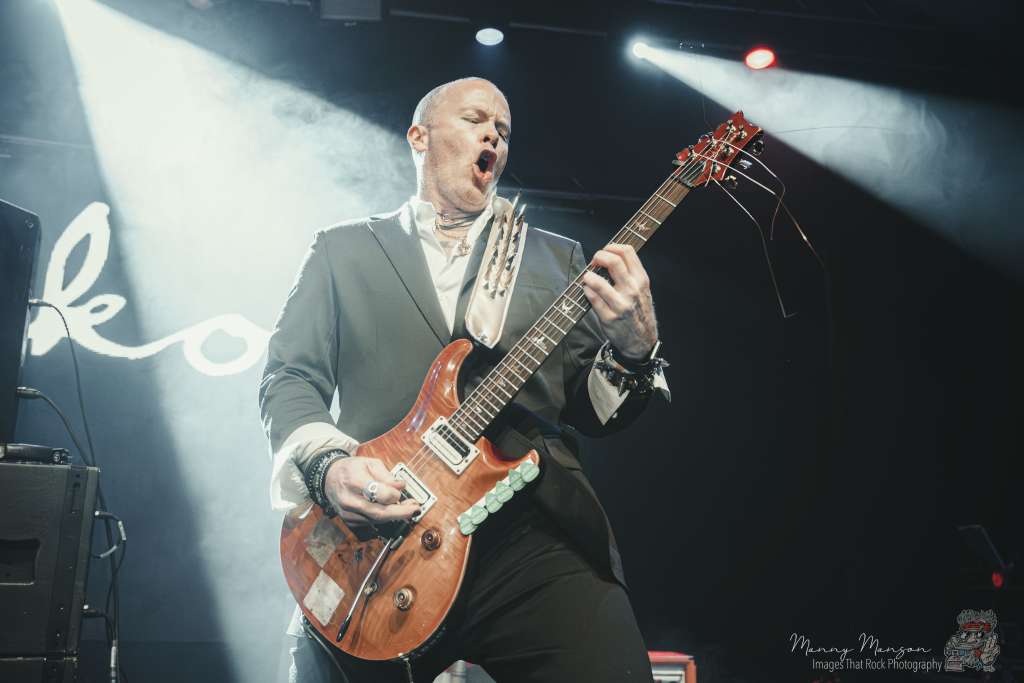
This is followed by a deeper dive back to 2004 and The Hollow Men album and “Chickfight” this shifted gears immediately. Faster, sharper, more bite. The riff had teeth, less groove and more forward attack. The drummer pushed hard but never rushed, bass darting between guitar stabs to keep it alive. Vocally there was more attitude in the delivery, and the solo, short, melodic, purposeful, earned the first real surge toward the barrier. Fists in the air. Proper reaction.

By the time they hit “Down,” from Wasteland (2026), the sound in KK’s had thickened into that chest-hitting wall the venue does so well. This one leaned into swagger, grinding low-end riff, bass sitting just beneath it like a second punch, drums emphasizing feel over flash. The verses pulled back slightly, darker in tone, before the chorus lifted the entire room in one controlled swell. You could feel the crowd syncing up now. Not watching. Feeling it. “Welcome Mat” another from the new album, kept the momentum but added a sharper melodic edge. The lead guitar began weaving subtle accents around the vocal lines instead of waiting for a solo spotlight. Snare snapped tight, hi-hat crisp, the chorus lifting without drifting into cliché. This felt like the tipping point for anyone unfamiliar, the moment you saw new faces properly buy in.

Then came “Stack and Jack,” introduced simply as a new song. New material can stall a set if it’s not ready. This was ready. The riff was immediate, chunky, blues-tinged hard rock with modern bite, and the groove locked in fast. Bass and drums were beautifully synced, the rhythm section giving it that rolling pulse while the guitars carved on top. The chorus landed hard first time out, no hesitation from the floor. The solo stretched longer here, the lead tone dirty and expressive, almost classic-rock in flavour but grounded in their heavier identity. The reaction said everything: this wasn’t polite curiosity. This was excitement.

“Lose It All” Wasteland (2026), darkened the mood. Slower, heavier, more brooding. The riff carried weight, bass filling the low end thick and warm while the drums used restraint to let the space breathe. Vocally this was more emotive, grit at the peaks, control in the verses, and the dynamics were handled with maturity. It was one of the strongest musical moments of the set, and you could feel the room lean in rather than explode. They closed with “Leave It Alone,” Wasteland (2026), and it was built to finish. Faster, harder, riff snapping tight, drums driving with urgency, bass punching through with authority. The final chorus went huge, cymbals crashing, vocals pushed right to the edge, and when the last note rang out the noise was earned. Rubikon hadn’t just warmed the room; they’d stamped it.

As amps were dragged back and mic stands shifted, conversations sparked instantly around the floor, about that new track, about how tight they sounded, about how they won’t be opening much longer. And before the energy had time to dip, amber light washed across the steel beams and a new presence took the stage.

The clatter of amps being dragged into place, mic stands clanked upright and cables stomped flat echoed around the steel belly of KK’s Steel Mill, but the energy in the room didn’t dip for a second. If anything, it grew denser. The concrete floor felt like it had a pulse of its own. Conversations about Rubikon’s punchy “Stack and Jack” were still ricocheting through the crowd, heads nodding, shoulders twitching in replay, yet every pair of eyes had shifted forward. Amber light bled across the exposed beams and corrugated ceiling, throwing long shadows against brick and steel, while the low electrical hum of warming amps rolled like distant thunder.
Then it happened in a flash.
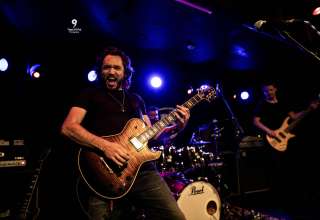
Michael Monroe didn’t walk onstage, he launched himself from the drum riser, arms spread wide, landing in a crouch like the stage was a springboard built purely for him. The roar was instant and visceral, not polite appreciation but a collective intake of breath exploding outward. This was Monroe in full flight: punk-glam incarnate, lean, kinetic, utterly fearless.

The first crack of guitar introduced “Dead, Jail or Rock ’n’ Roll” from Not Fakin’ It (1989), and it didn’t so much begin as detonate. The riff snapped tight and jagged, palm-muted aggression slicing over a bassline that throbbed deep enough to rattle ribs. The drums were coiled and precise, snare cracking like a starter pistol, kick locking in with the stomping crowd, cymbals cutting clean and sharp. Monroe’s voice tore through it all, low snarl in the verses, then rising into a full-throttle, ragged roar for the chorus. The floor responded instantly, fists pumping, boots hammering concrete, bodies surging in rhythm. Every movement Monroe made, a glance, a strut, a whip of the mic stand, felt magnetic, dragging the room toward him.

There was no pause. “Motorvatin’,” ripped from Oriental Beat (Hanoi Rocks 1982), exploded in next with pure Hanoi Rocks ferocity. The guitars slashed bright and reckless, chords cutting through the bass thrum and relentless kick drum drive. Monroe prowled, harmonica slung at the ready, darting in and out of the riff with short, sharp blasts that felt like sparks thrown into petrol. The call-and-response between stage and floor was immediate and electric. Every drum fill, every bass run, every slide of guitar became fuel. The steel beams above seemed to vibrate with the shared shout of it.

“Old King’s Road” from Blackout States (2015) shifted the tempo just enough to tease the room rather than flatten it. The riff slithered in with a blues-streaked jaggedness, the drums adopting a loose, swinging push-and-pull while the bass coiled underneath. Mid-riff, Monroe dropped into a full split, chest high, grin wide, arms out as if daring gravity to argue. The gasp from the crowd was as loud as the music. The solo bent and curled above the groove, melodic but biting, rising and falling in tandem with Monroe’s physical theatre. His vocals weren’t just sung; they rode the rhythm like another instrument, snarls sliding into wails, dynamics swelling and retreating with each shift in tempo. The room moved with him as one organism.

Then came the punchy snap of “Rockin’ Horse” from Outerstellar (2026), modern and tight, its syncopated riff crisp and muscular. The bass bounced beneath it, drums slicing in sharp fills without overcrowding the groove. Monroe teased the crowd with playful phrasing, harmonica bursts arriving unexpectedly like flashes of chrome in a dark alley. The solo cut clean and melodic, bending notes just far enough to sting, and the audience answered instinctively, stomping, shouting, driven forward by pure rhythm. “Last Train to Tokyo,” rooted in 2019, galloped in on a piston-like riff. The bass punched counter-rhythms against tight hi-hat work and snapping snare accents. Monroe stalked the stage, half-smiling, half-challenging, pulling the audience closer with each verse. Harmonica flared briefly between lines, slicing through the guitars, while the solo built tension in careful arcs before bursting into the chorus. The floor rolled with it, bodies pushed and pulled before thought even caught up.
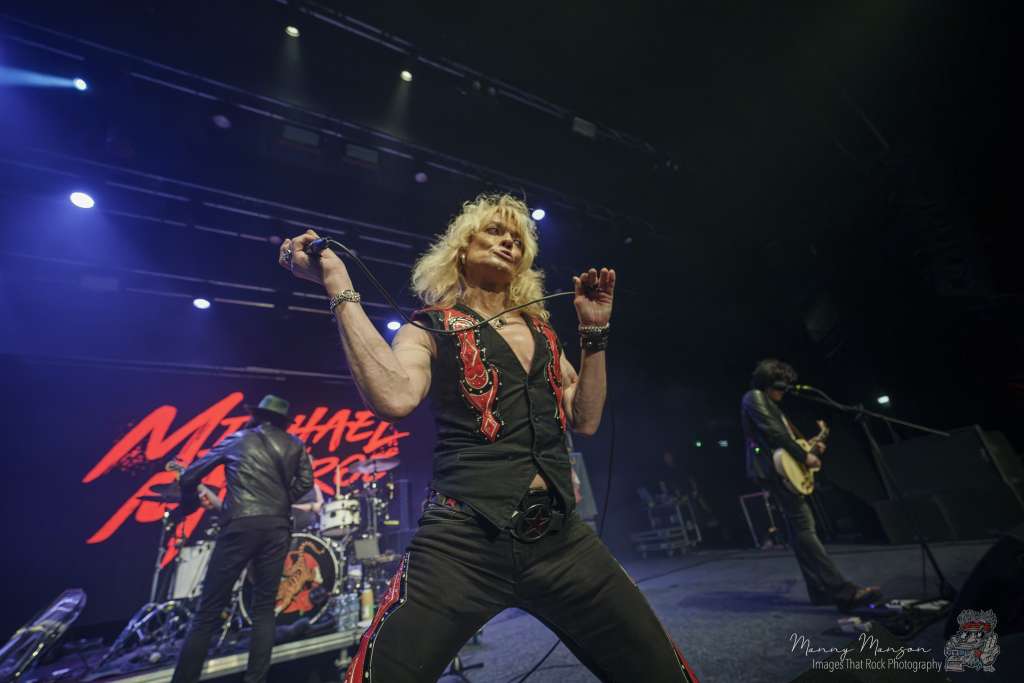
“Underwater World,” from the earlier Two Steps From The Move, (Hanoi Rocks, 1984), darkened the atmosphere. The riff hung heavier, more brooding, bass winding low and thick beneath drums that left space between strikes, allowing each note to resonate. Monroe prowled like a predator, vocals shifting from gritty growl to soaring wail within a single breath. The guitar solo twisted overhead like live wire, and the room leaned inward collectively, suspended in that elastic space between anticipation and release. “Shinola” from this year’s release, Outersteller (2026) snapped the tempo back up, bright, sharp riffs colliding over rolling bass and precise drum punches. Monroe’s voice danced around the melody, harmonica stabbing unpredictably between lines. The solo was wild yet controlled, bending tension before snapping back into the groove, and the crowd mirrored every move with raised fists and shouted lines.

“Hammersmith Palais” from the 1983, Demolition 23 era, a project that featured Michael and Hanoi Rocks bassist Sami Yaffa, created breathing room without losing charge. Clean guitar lines rang out over a rounded bass and brushed drums. Monroe leaned low into the mic, harmonica lifted, drawing the audience closer with subtle shifts in dynamics. The floor swayed in slow waves, anticipation simmering rather than boiling. “Disconnected” shattered that calm with sharp, cutting guitars and thundering bass, drums driving relentless snare and tom patterns. Monroe snarled and teased, and when the chorus struck it felt like a bolt of electricity through the building. The chemistry onstage was razor-tight, every glance between players feeding the frenzy.

“Don’t You Ever Leave Me,” from the debut Hanoi Rocks album, released back in 1981, Bangkok Shakes, Saigon Shakes, Hanoi Rocks a classic, softened the tone without losing spirit. Guitars chimed bright, bass slid fluidly beneath lighter drum touches, and harmonica floated between vocal lines like smoke. The crowd sang every word back, voices rising in messy, beautiful unison. From the same album, “Tragedy” reignited the fire, cutting riff, driving rhythm section, solos twisting with precision. Monroe prowled and howled, harmonica flaring, the crowd punching the air in time. When Michael Monroe hits “Ballad of the Lower East Side,” KK’s shifted from beer-soaked chaos to something almost sacred. The former Hanoi Rocks frontman doesn’t just sing it, he lives and breathesit, harmonica wailing like a New York siren, voice ragged but proud, every mile of the Lower East Side etched into the delivery. It’s punk poetry wrapped in sleaze and survival, the band holding a tight, streetwise groove while Monroe stalks the stage, grinning through the grit. Lighters up, arms around shoulders, Wolverhampton suddenly feels like Manhattan, 1979.

“Malibu Beach Nightmare”, another from the Hanoi Rocks back catalogue, featuring on 1983’s Back To Mystery City, landed thick and aggressive next, bass pushing hard, drums snapping sharp, guitar snarling while the solo bent and tore across the groove. The combined weight of sound and bodies made the concrete feel unstable. Finally, “Up Around the Bend,” forever reimagined in the Hanoi Rocks mould, (released on the 1984 album Two Steps From The Move), burst out bright and urgent. Drums and bass drove forward like a runaway locomotive. Monroe spun, leapt, blasted harmonica into the rafters, vocals playful yet commanding. The guitar solo ripped in wide, melodic arcs, notes bending and sliding with reckless joy. The entire room screamed every word, arms flailing, hair whipping, sweat flying under the amber lights. When Monroe landed centre stage for the final pose, arms spread wide, chest heaving, sweat glistening under steel-beam glare, the roar that hit him felt seismic. The sound didn’t fade, it exploded outward, ricocheting off brick and metal.
The set hadn’t simply ended. It had detonated.
KK’s was left vibrating, breathless, and completely consumed by raw, unfiltered rock ’n’ roll theatre at full tilt. As the last echoes of Michael Monroe’s “Up Around the Bend” dissolved into the steel rafters, the stage crew swept in with brisk, practiced efficiency, lowering mic stands, checking pedalboards, tightening cymbals, swapping drum heads, byet nothing about the room cooled.

If anything, the air thickened. Heat clung to the corrugated metal ceiling and hung over the crowd like a low cloud, dense with sweat, anticipation, and that restless electricity that only builds when everyone knows the real detonation is seconds away.
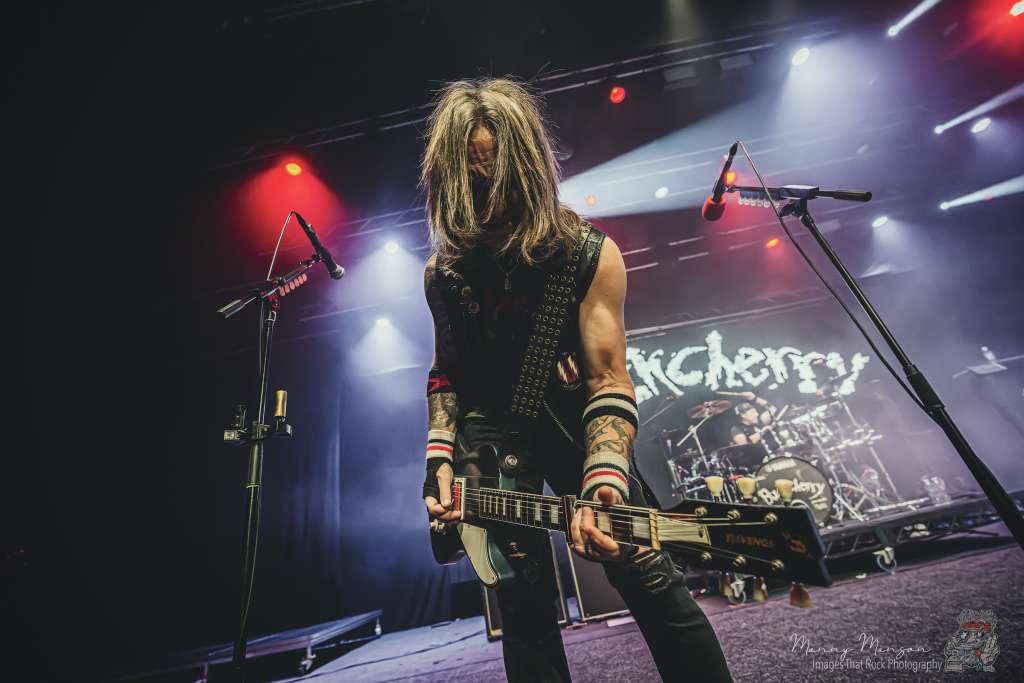
It came in the form of the opening riff to 1995’s “Lit Up,” album, Buckcherry, slicing through the speakers with razor clarity. Nick Oshiro’s drums crashed in with mechanical precision that somehow still felt feral, every snare crack and kick thud locking into the collective heartbeat of the room. The bass drove deep and taut beneath Keith Nelson’s guitar, adding muscle and grit, and then Josh Todd’s voice tore through it all, raw, sneering, utterly commanding. The floor didn’t simply react; it erupted. Bodies surged forward, fists punched the air, hair whipped in chaotic arcs, and the first rows were instantly swallowed by motion. Todd prowled the lip of the stage, pointing and taunting, locking eyes with fans as if daring them to keep up. Nelson’s solo bent and screamed over the relentless rhythm, each note snapping tight against the thunderous drums and bass. The crowd moved as one convulsing organism, feeding off every beat.

Without pause, they slammed into the title track from their latest flat spinner, 2025’s, “Roar Like Thunder,” the title track from their 2025 album. A jagged, tightly coiled riff snapped the pit into a spinning frenzy, while the chorus opened wide enough for the entire hall to join in. Todd shifted effortlessly from gritty sneer in the verses to full-throttle soar in the hook, conducting the room like a ringmaster. Nelson’s guitar cut with surgical precision, harmonics ringing against the steel-beam air, while the rhythm section drove forward with unyielding force. Fans screamed lyrics back at the stage, some locked arm in arm, others jumping in rhythm, raw physicality and communal devotion colliding in perfect balance.

“So Hott” followed like a fresh blast of heat from 2021’s Hellbound. Its bright, taut riff snapped sharply, drums punching through with crisp accents and playful fills that kept the groove elastic. Todd stalked the stage like a predator, leaning into the crowd, teasing and daring, before unleashing that high, gravelly chorus. The pit responded first, thrashing with feral delight, while further back fists rose and voices carried the melody in unison. Nelson’s solo swaggered, playful yet biting, each bend and slide delivered like a personal challenge to the writhing mass below.
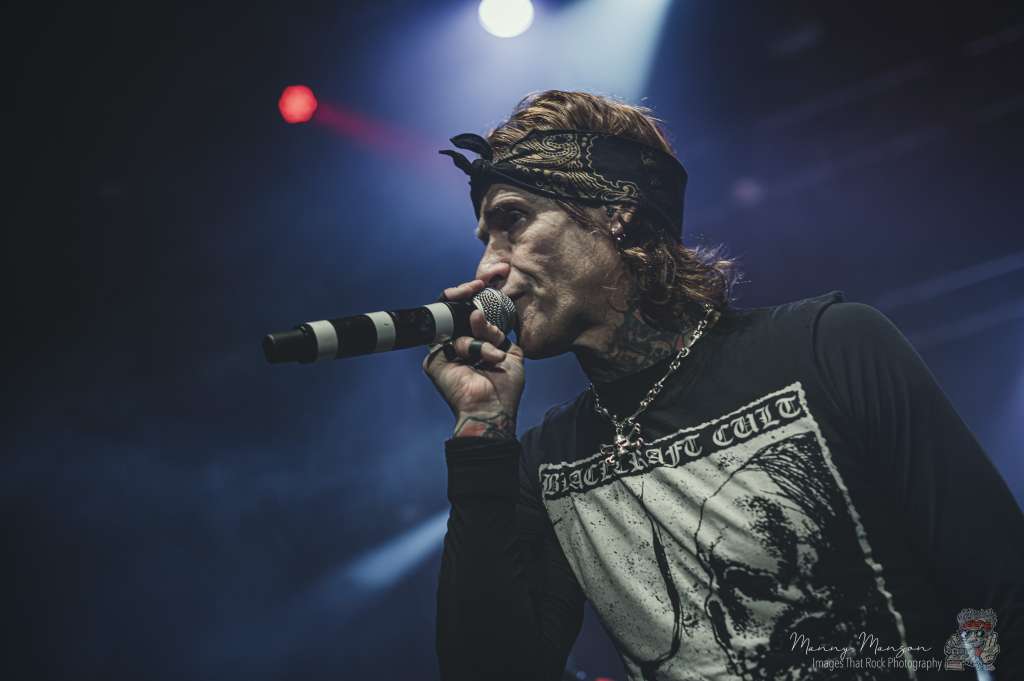
When “Ridin’” kicked in, this one’s from 2001’s Timebomb, the groove tightened to a coiled spring. The bass locked hard into the rhythm, drums punctuating with sharp hits and explosive fills that created a pulse of tension and release. Todd snarled through the verses before stretching skyward in the chorus, drawing a roar from every corner of the hall. Nelson’s solo struck like lightning, slicing through the groove with bends that shimmered before snapping back into place. Stage and floor blurred into one shared surge of adrenaline. “Let It Burn” from the latest release, drove the temperature even higher. Its brutal, cutting riff acted like a command, and the pit answered instantly, moving like a tide pulled by gravity. Todd spun and pointed, urging the crowd onward, while the guitar carved fierce lines over the pounding bass and drums. The solo soared, melodic yet aggressive, lifting the song into a collective roar that reached from the barricade to the back wall. Every clap, every shouted lyric, every harmonic flourish felt like a call-and-response between band and audience.

Then came the curveball: their riotous cover of Icona Pop’s “Say Fuck It.” From the first squeal of guitar, laughter and cheers burst from the pit. Todd wrapped punk swagger around the pop melody, playful and irreverent, daring anyone not to shout along. The drums bounced with cheeky syncopation, the bass tight but buoyant, and Nelson’s solo flirted gleefully with chaos. Arms shot skyward, voices collided in joyous unison, and the room transformed into one massive, grinning singalong. “Gluttony” landed like a hammer blow from 2013’s Confessions. Its muscular riff churned relentlessly, drums crashing in lockstep with a throbbing bassline. Todd delivered each line as both sneer and invitation, dragging the audience deeper into the frenzy. The solo twisted theatrically, aggressive bends slicing through the dense rhythm while the pit thrashed and the back rows kept time with raised fists. It was visceral, merciless, and utterly consuming.

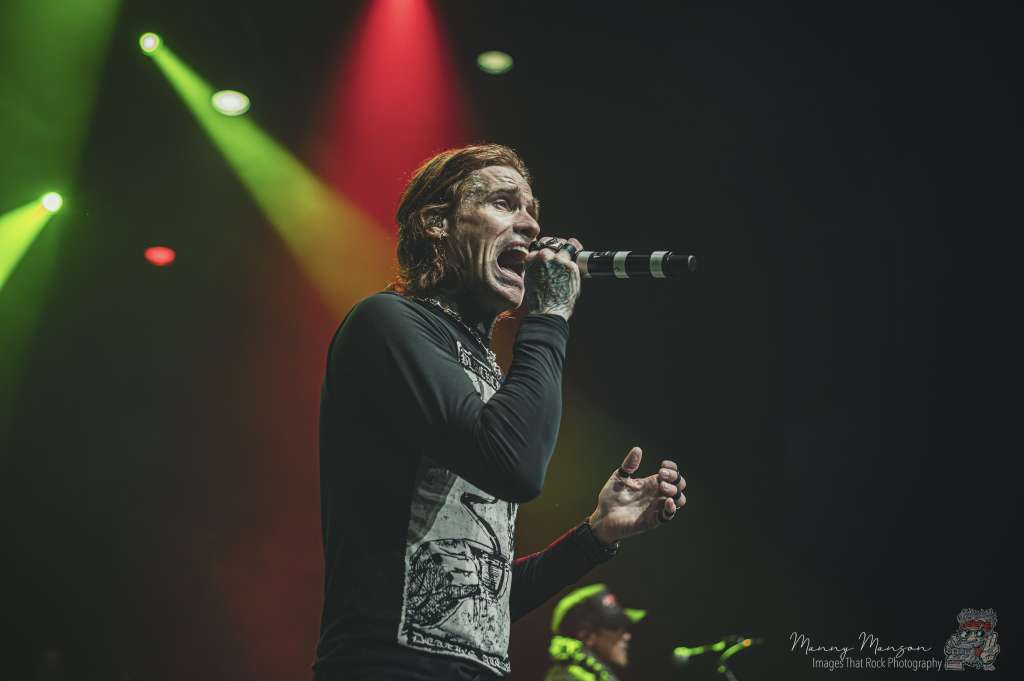
“Sorry” from 2005’s album simply entitled 15, shifted the tone without dimming the intensity. A darker, swaggering groove rolled out, bass pulling low and drums brushing with restrained menace. Todd’s voice carried raw emotion, coaxing the crowd into a cathartic chorus that echoed back in waves. Bodies swayed and jumped in controlled motion, the pit’s energy now a pulsing heartbeat rather than a riot. Nelson’s solo sang with bluesy expressiveness, bending notes that hovered before resolving, lifting the mood without losing its punch. Then Buckcherry tore into “Good Time,” from 2023’s Vol 10 it’s less a song and more a bar-room sermon delivered at full throttle. Josh Todd prowls the lip of the stage like a man wired to the mains, that rasped snarl cutting through the Friday-night sweat at KK’s Steel Mill, Wolverhampton. Stevie D and Billy Rowe lock into that sleazy, sunburnt riff like it’s 1977 on the Sunset Strip, while the rhythm section keeps it dirty and dangerous. The chorus doesn’t just land, it detonates, pints raised, voices shredded, the whole room living up to the title in real time.

As the set continued to barrel towards its climax, another from 2025’s Roar Like Thunder, “Blackout” struck with thunderclap immediacy. Bass and drums locked into a taut, punishing groove while Todd’s vocals snarled and soared with undiminished bravado. The solo stretched wide and fierce, and the pit answered with synchronized chaos, fists flying, hair spinning, bodies colliding in rhythmic abandon. Even the back rows were fully swept in, clapping and shouting as one unified storm. And then, inevitably, “Crazy Bitch.” The immortal riff hit from 2005, and the room detonated. Bass and drums hammered into a relentless groove as Todd tore across the stage like a man possessed, spinning, pointing, leaning deep into the front rows. Every lyric was screamed back at full volume. The pit churned violently; further back, arms waved and voices rose in a tidal wave of sound. Nelson’s solo screamed and twisted over the pounding rhythm, teasing tension before snapping into resolution. The final chorus crashed down like a breaking wave, bodies colliding, sweat flying, steel walls reflecting strobing lights, until the last note rang out and the entire hall erupted into a deafening, euphoric roar.

Cheers, laughter, and ragged breaths mingled in the aftermath, the air thick with spent energy and exhilaration. Buckcherry hadn’t just played a set, they had ignited the room, scorched it, and left it trembling in the wake of pure, unfiltered rock ’n’ roll. On paper, the bill made sense, three bands occupying different corners of hard rock’s family tree, but on a wet Friday night in Wolverhampton, it felt less like genre alignment and more like a study in how the same roots can grow in very different directions.

Rubikon played like a band fully aware that this was their room to win or lose. They leaned into the hard edges of their sound, modern, muscular, tightly wound, but never let it become clinical. The riffs had weight without feeling laboured, the rhythm section locked in without sounding mechanical. What stood out most was intent: every chorus pushed outward, every breakdown tightened the screws a little further. Rubikon aren’t an opener you half-watch. They’re a band people show up early for, and it showed.
Michael Monroe followed with the kind of set that refuses to age quietly. There’s history there, glam-punk chaos, street-level melody, hooks that have survived more than one era of rock reinvention, but none of it felt archival. The harmonica stabs, the ragged-but-right vocals, the flash of movement across the stage: it was less about nostalgia and more about momentum. “Up Around the Bend” closed his set not as a retro nod, but as a reminder that good songs don’t really retire. The crowd response wasn’t polite reverence either; it was loud, slightly messy appreciation from people who still want their rock music to feel a little dangerous around the edges.
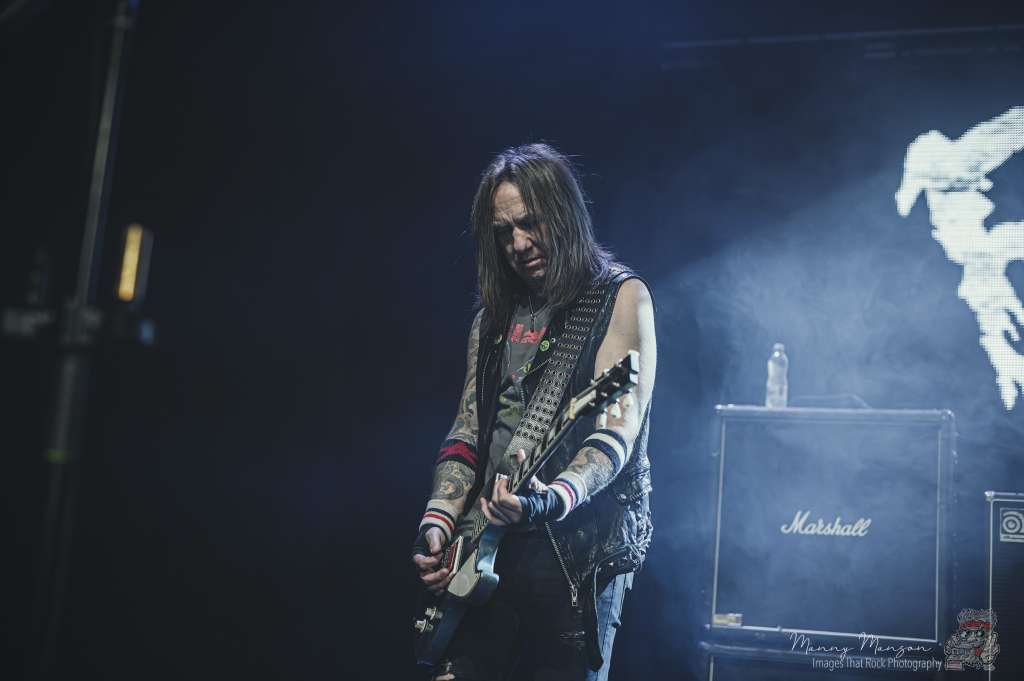
Buckcherry then took the temperature the rest of the way up and kept it there. If Monroe brought colour and swagger, Buckcherry brought density, groove-heavy, riff-forward, unapologetically direct. The newer material sat comfortably alongside the older staples, not because it mimicked them, but because the band understands its own mechanics. The drums hit hard without clutter, the bass stayed taut and driving, and the guitars cut rather than washed over the room. Josh Todd worked the stage with a sharp eye for when to push and when to pull back, letting choruses breathe just long enough for the crowd to take ownership before snapping the reins tight again.

What made their set land wasn’t excess, but control. The louder moments felt earned. The singalongs weren’t cued by obligation; they rose naturally from songs built to be shouted back. Even the curveball cover slotted in without derailing the flow, less a gimmick than a pressure valve.
By the time the house lights came up, the rain was still coming down outside, streaking the pavement and turning the parked cars into a patchwork of reflections. Inside, though, the mood was steady and satisfied rather than shell-shocked. Three bands, three distinct approaches to hard rock, modern grit, glam-punk resilience, and groove-laden swagger, all working within the same steel frame. No grand statements, no forced narratives. Just a wet Friday night made louder, hotter, and far more memorable than the forecast deserved. Oh and the football Rob beat Ozzy 2-0.