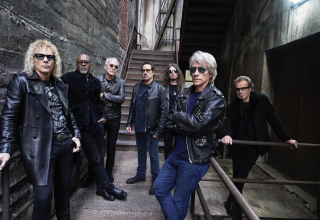

Review & Photography by Nathen Vestal for MPM
On Thursday night in Madison, the Majestic Theatre did not need much decoration. It barely had any. The room sat there stripped down and practical, an old theater with multiple viewing tiers and just enough light to keep the edges visible. No grand visual sermon. No elaborate stage dressing. No cathedral glow. Just a floor, a stage, a bar, and the slow human compression that happens when a cult band comes to town and every kind of lifer shows up wearing their own version of church clothes.
Some came in full rockabilly regalia, all cuffs, grease, posture, and polish. Some came in battle vests that looked like they had survived both touring and weather systems. Somebody came dressed as a clown, because Thursday nights in Madison apparently still have some teeth. Others arrived in jeans and T-shirts, casual enough to look like they had wandered in from work, though the shirts gave them away: punk, metal, blues, psychobilly, roots rock, and most prevalently, Reverend Horton Heat.
That was the real decoration. The crowd.
By the time the night found its full voltage, the Majestic felt less like a venue than a pressure chamber for several decades of American noise: border punk, Texas blues, slap-bass psychobilly, and that old unkillable urge to get loud in public with strangers.
Piñata Protest Lights the Fuse in Two Languages
Piñata Protest took the stage first and treated Madison like a city that had owed them a show for years. The San Antonio band was making its first appearance in town, but nothing about the set felt introductory. It felt more like somebody kicked open a kitchen door during a family fight and a punk band came flying out with an accordion.
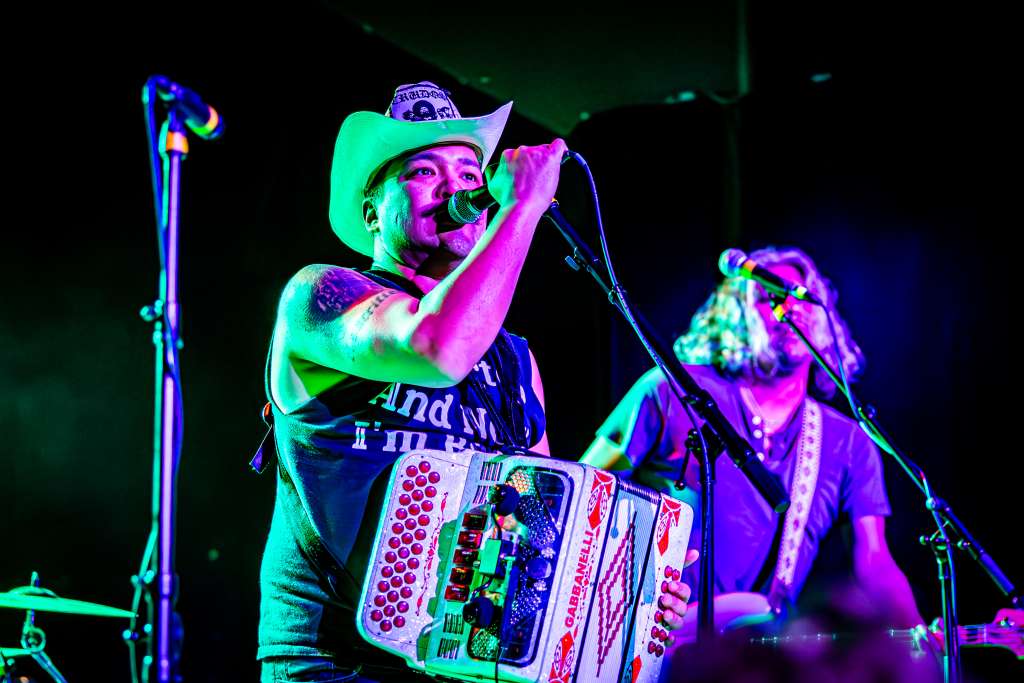
Their sound is Tex-Mex punk by blood and design, a collision of conjunto and norteño rhythms with ska speed, punk velocity, and the kind of bilingual bark that does not ask permission before entering the room. At the center stood Álvaro Del Norte, bandleader, singer, songwriter, accordionist, and live-wire instigator, spinning with his Gabbanelli accordion strapped to him like it was both engine and weapon.

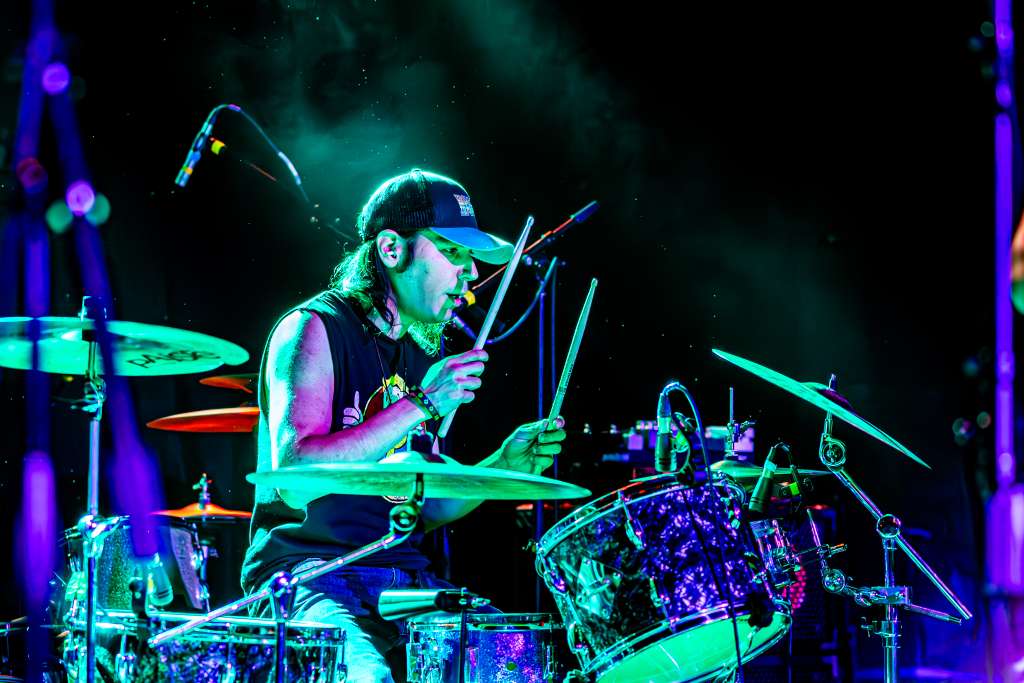
Regino “Reggie” Lopez on guitar helped keep the whole thing serrated, while Chris-Ruptive drove the set from behind the kit. On bass, Mike Aguilar locked into the low end with the blunt force needed to keep the whole border-punk machine from rattling itself off the rails.
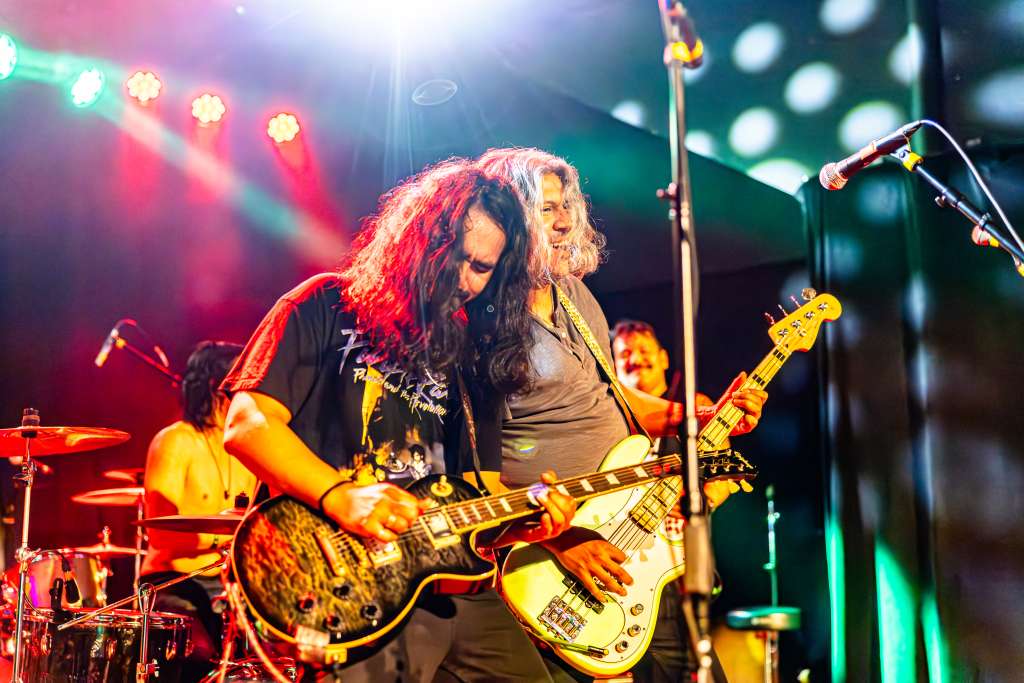
Madison answered almost immediately. People started skanking before the room fully understood what was happening. A mosh pit broke out, died down, then came back again, because Piñata Protest kept feeding it the right kind of sparks. When Del Norte pulled out the recent single “Chinga La Migra,” the song hit like a brick wrapped in melody, political without turning into homework, furious without losing its grin.
Then came the bag of tricks.
Del Norte kept reaching into it like some punk-rock carnival smuggler: trumpet, metal güiro, whatever else the set demanded. At one point, he handed the güiro into the crowd and, after the audience member scraped along with the band, declared them the best güiro player of the tour. It was ridiculous, generous, and perfect, the kind of moment that makes a room feel less like spectatorship and more like accidental membership.
Then the set swerved.
Del Norte paused and spoke seriously about division, free speech, and the right to say ugly or unpopular things. Then came the caveat, delivered with the moral clarity of a bar fight philosopher: if someone is being racist or an asshole, it is okay to kick their ass. Even the band, he admitted, was divided on some topics. Right on cue, Lopez gave the drummer the finger, and Del Norte produced one more prop from the bag: a sign reading “Salsa” in red on one side and “Salsa” in green on the other.
He split the room. Left side. Right side. Red salsa. Green salsa.
Then came the wall of death.
It was funny until it was physical, then it was both. Piñata Protest did not just warm up the room. They tenderized it.
Black Joe Lewis Lets the Blues Burn Low and Mean
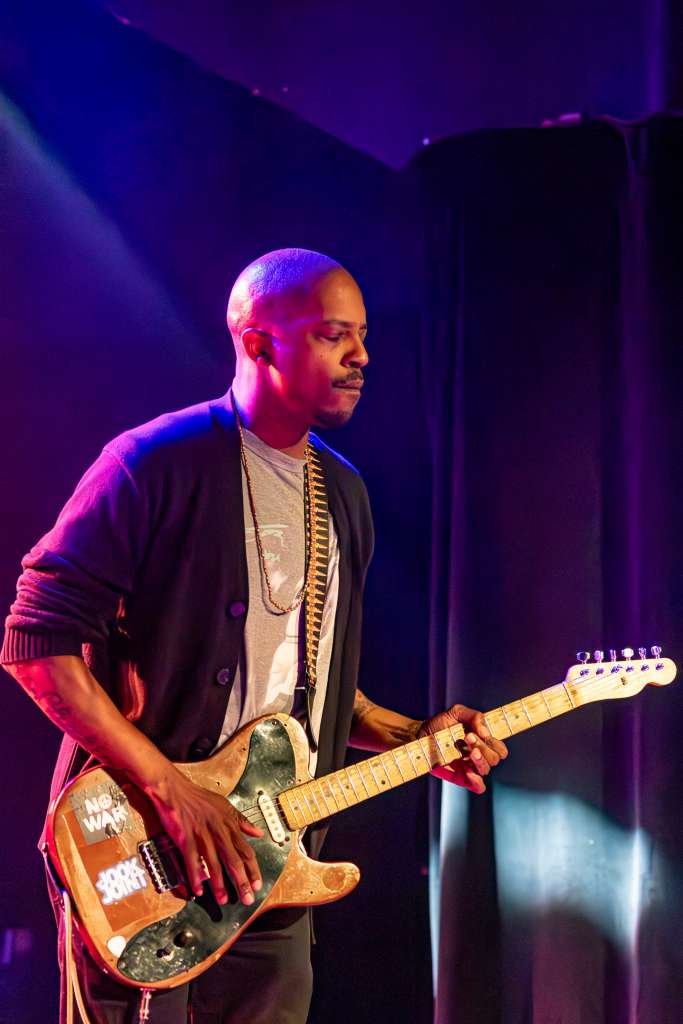
Black Joe Lewis and the Honeybears arrived from Austin with a very different temperature. After Piñata Protest’s accordion-fueled street riot, Lewis and company came on like a late-night power grid humming behind a closed storefront. No big speech. No prolonged courtship. No crowd-working campaign. Lewis stood off to the right side of the stage, far stage left, plugged in, and let the set speak in low blues voltage.

The Honeybears looked like they had walked out of a Texas backroom in cowboy hats and boots, while Lewis held his corner in a cardigan and a T-shirt with a basketball player on it, a visual mismatch that somehow made the set feel more grounded. This was not theater. This was business. Blues business. Sweat-stained, no-frills, cut-the-fat business.
For some in the crowd, that was exactly the medicine. A third of the room clearly knew Lewis’ work and leaned in with the quiet satisfaction of people hearing a player they already trusted. Another third seemed to be discovering him in real time, drawn in by his distinctive guitar style, the way he played without a pick, the way his voice could bend into the arrangement rather than simply sitting on top of it.
The final third, already smelling Reverend Horton Heat in the air, drifted toward the bar, the bathroom, their phones, or the unforgivable crime of mid-set conversation.
Their loss.

The set was more stripped and blues-forward than the big-band, brass-kicked recordings that first gave many listeners their way into Black Joe Lewis and the Honeybears. The horns were absent, but Lewis seemed to find ways to imply them anyway, squeezing brass-like stabs and greasy melodic bursts out of the guitar. Songs like “I’m Broke,” “Booty City,” “Sugarfoot,” and “Bitch, I Love You” carried enough recognizable grit to satisfy the faithful, but the live arrangement had a leaner, duskier pull.

It was not the wildest set of the night. It was not trying to be. Black Joe Lewis gave the room a heavy blues exhale between two storms, then ended cleanly and walked offstage without fuss. No grand exit. No need. The damage was subtler, the kind that settles into the floorboards.
Reverend Horton Heat Blows the Roof Off the Pedialyte Era
While the stage was reset for Reverend Horton Heat, the room changed shape. The crowd seemed to double, or maybe the air simply ran out. From the front row, pressed against the stage, the Majestic’s personal space economy collapsed inch by inch until every shoulder, elbow, boot, and breath became part of the same organism.
Then the three-piece walked out and reminded everyone why psychobilly, at its best, still feels like a car crash that learned stagecraft.

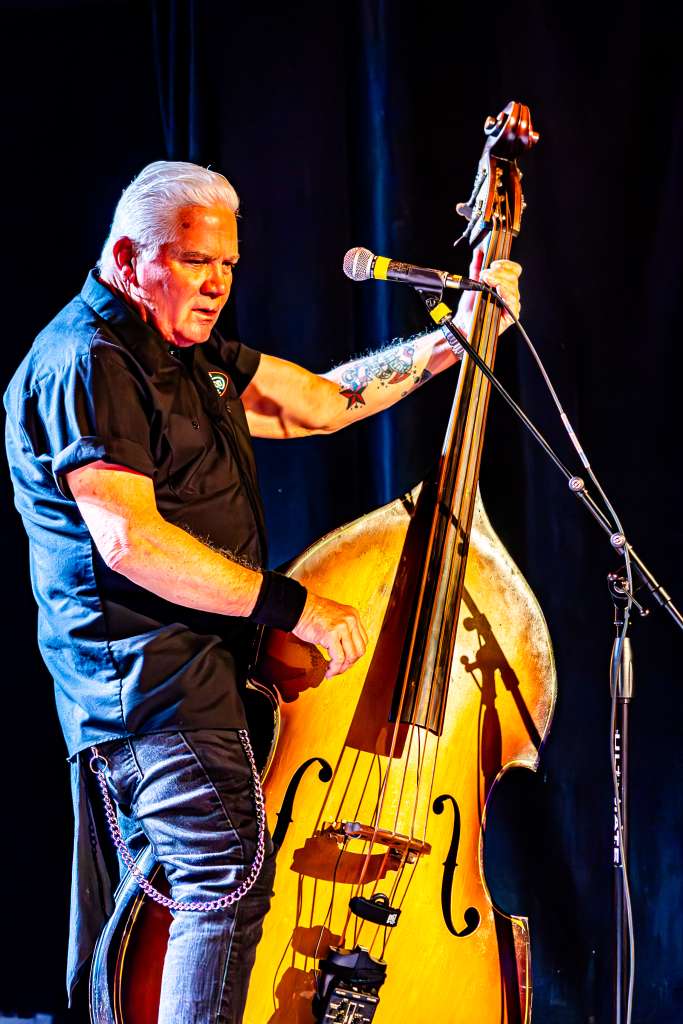
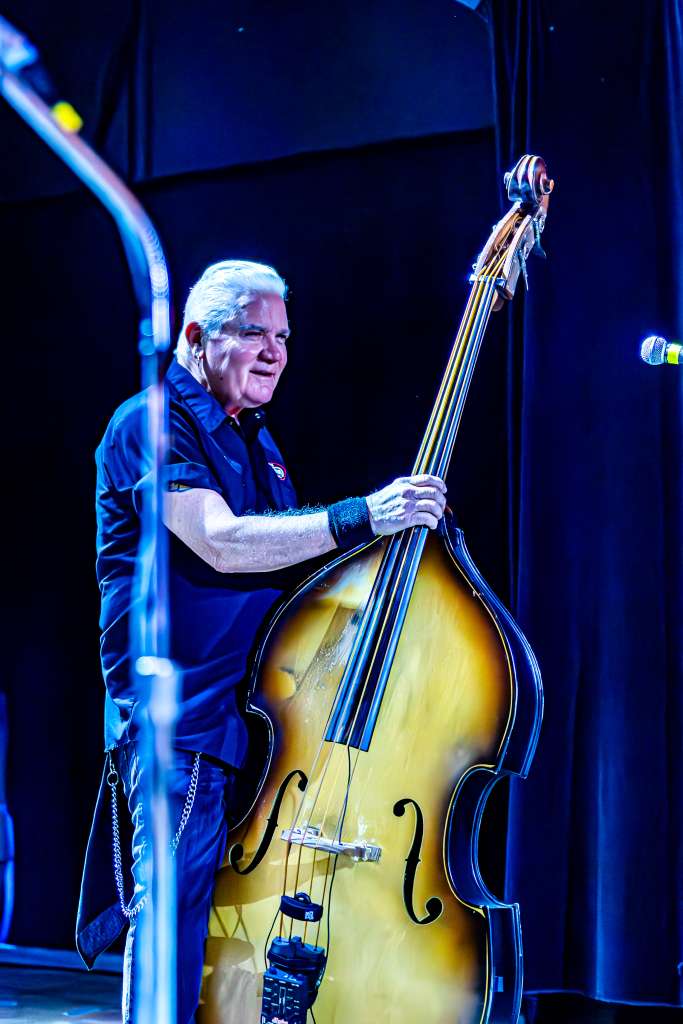
Jim Heath, the Reverend himself, stood at the center with that Dallas-born command, all dry wit, road miles, and razor wire control. In his hands, the guitar was not just a lead instrument. It was the ignition source: that Gretsch hollow body twang, the Reverend Horton Heat signature bite, snapping through the room with the clean violence of lacquer, wood, and live wire. Jimbo took his place with the upright bass, less backing musician than co-conspirator, slapping and hauling that thing around like it owed him money. Behind them, Jonathan Jeter drove the kit with the kind of precision that makes chaos feel licensed.
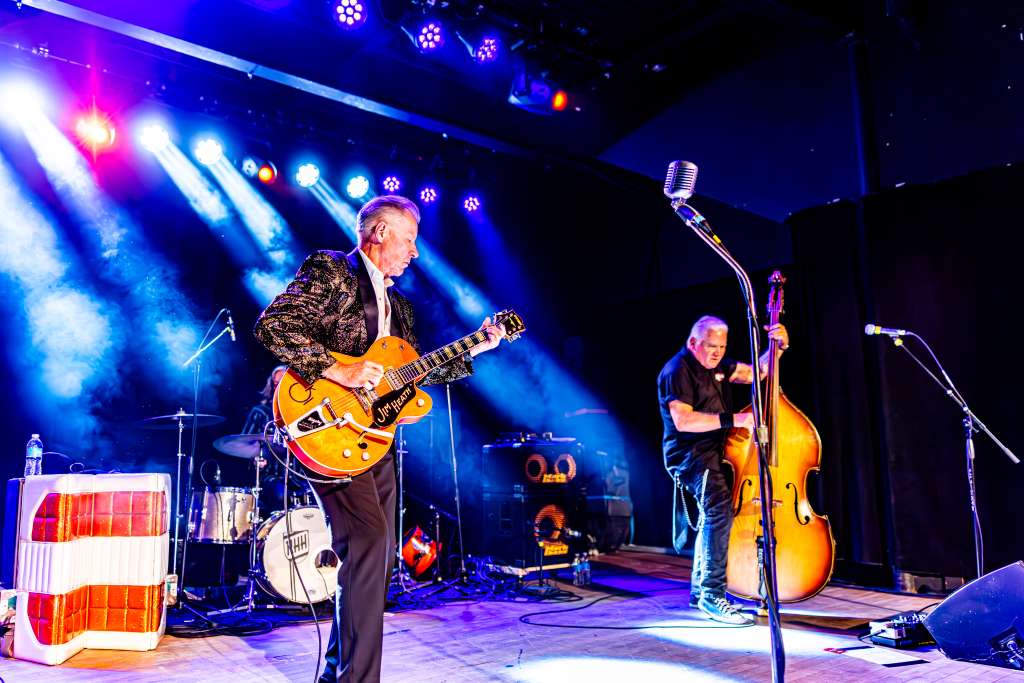
The opening stretch landed fast and mean. “Baddest of the Bad” did what it had to do. “Where in the Hell Did You Go With My Toothbrush” brought the band’s absurdist nerve into focus. “Let Me Teach You How to Eat” kept the night swinging somewhere between hot-rod sermon and greasy spoon hallucination.
But the real engine of the set was not just the songs. It was Heath’s command of pacing. He told stories. He cracked jokes. He interacted with the crowd like a man who has spent enough decades onstage to know exactly when to pull the leash and when to let the room run.
Several times, he referred to the night as Saturday. It was Thursday. Later, he twisted the mistake into a punchline: some people do not even know what day of the week it is. By then, nobody much cared. Reverend Horton Heat had already dragged Thursday into a fake Saturday by force.
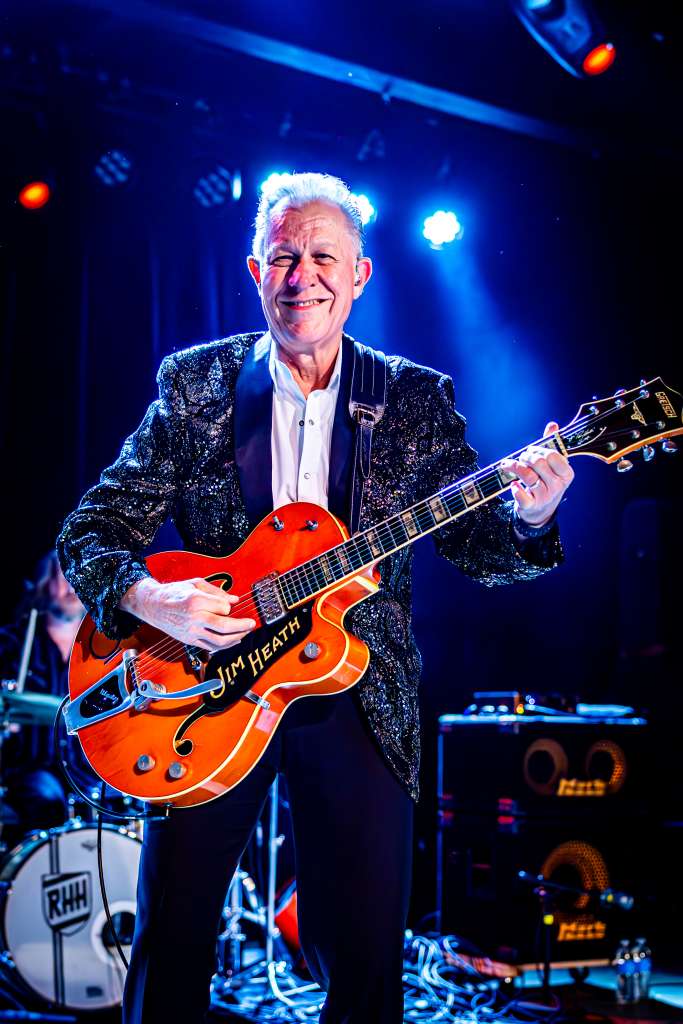
Heath used the new album Roots of the Rev, Volume One as a doorway into history rather than a sales pitch. He explained that the record is made up of cover songs, recorded with a lo-fi 1950s spirit and tied to the history of the band: songs by artists they knew, bands they had been in, musicians they had opened for, ghosts from the roadside wiring of American music. “Crazy Crazy Lovin’” by Johnny Carroll, came with a story about an underrated Nashville musician and songwriter Heath once played guitar for. In Heath’s hands, the song felt less like nostalgia than excavation. Dig up the bones, plug them in, make them dance.
Then came “Galaxy 500,” and the floor finally lost its manners. A mosh pit opened hard, proof that the room had been waiting for one last permission slip. The song tore through the Majestic with its usual busted-speedometer joy, and for a moment it looked like Heath might actually end the show right there.
What followed was strange enough to feel legendary before anyone had decoded it.
Heath left the stage, but Jimbo and Jeter stayed put. It was not immediately clear whether the moment was a bit, a real issue, or some volatile cocktail of both. Heath returned and negotiated with a stage manager over the lights, which had apparently been too blinding for him to see the crowd and navigate the stage. Earlier cues had gone unanswered, so he took a more drastic route. Once the lights were corrected, the band snapped right back into showman mode without wasting the tension.
Jimbo laid down the upright bass. Heath climbed on top of it. Then they launched into “Big Red Rocket of Love.”
That is the Reverend Horton Heat experience in miniature: a technical problem becomes theater, theater becomes a stunt, the stunt becomes a song, and the song becomes the reason the whole room leaves grinning like it got away with something.
The night kept opening into stories. Heath introduced Jeter not just as the drummer, but as a multi-instrumentalist, producer, and leader of his own band, Jonathan Jeter & the Revelators. He also identified Jeter’s hometown as Greenville, Texas, which Heath described with affectionate sarcasm as an enchanting town with an Applebee’s, apparently the only bar in town, and one Jeter had managed to get kicked out of twice in one day. Jeter’s survival tactic: sneak back in during the lunch-to-dinner staff changeover.
Then there was Jimbo.
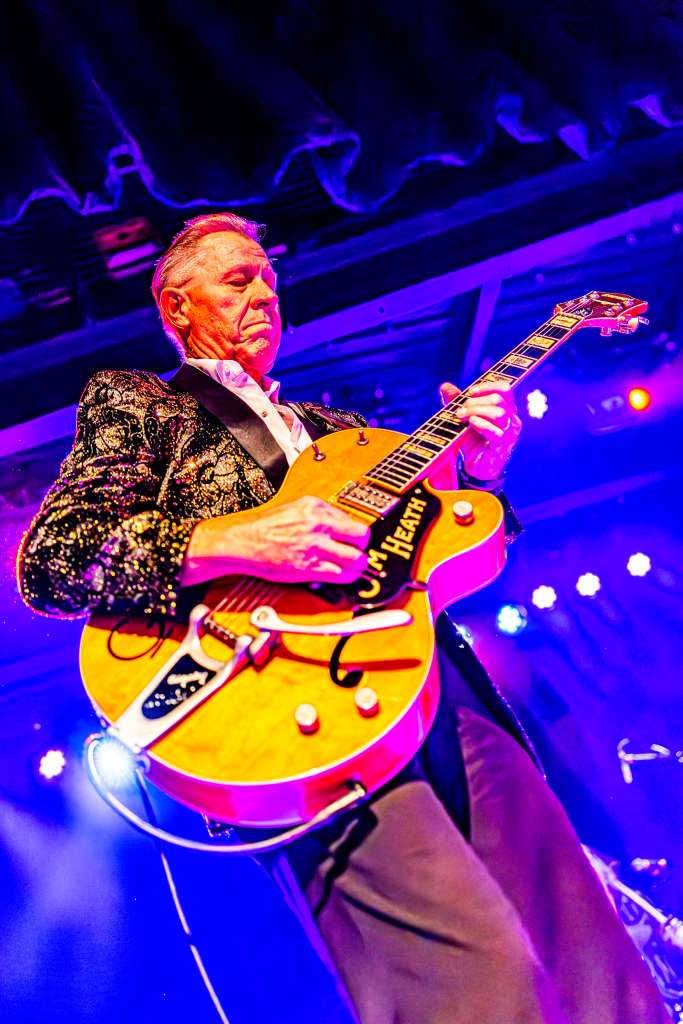
Heath and Jimbo have been together for 37 years, which in band years is less a partnership than a shared medical condition. Jimbo called Heath his BFF. Heath, in return, reminisced about the three fistfights they had across three distinct drinking eras: the Jack Daniel’s era, the Jägermeister era, and the Jameson era.
Now, Heath said, they have entered the Pedialyte era.
That line alone deserved its own merch table.
The teasing kept coming. Heath called “Jimbo Song” their worst song, then admitted they still play it because people seem to like it. He poked at Jimbo throughout the night, at one point comparing him to William Shatner, which landed somewhere between insult, tribute, and psychological diagnosis.
“I Found Blue” brought another curveball. Heath told the story of being contacted by actor Billy Bob Thornton to contribute to the soundtrack for the TV show Landman. Thornton wanted Heath’s signature style of “chaotic country,” a label Heath seemed amused by and mildly allergic to. Of course, “chaotic country” is not a bad description for what Reverend Horton Heat does when the machine is fully hot: country bones, punk nerves, rockabilly muscle, and a grin full of sparks.
By the encore, Heath announced they were getting “goofier.” He meant it.
Jeter picked up a clone of Heath’s guitar. Heath sat down at the drums and sang while playing, not as a throwaway gag but with real command. Before kicking into “Gravel Farmer,” Heath told a story from the COVID livestream era, when the band would invent fake song titles. “Gravel Farmer” had somehow escaped the joke lab, inspired a Facebook fan group, and eventually pushed Jimbo into writing lyrics.
Most bands would have ended there and called it generous.
Reverend Horton Heat still had one left.
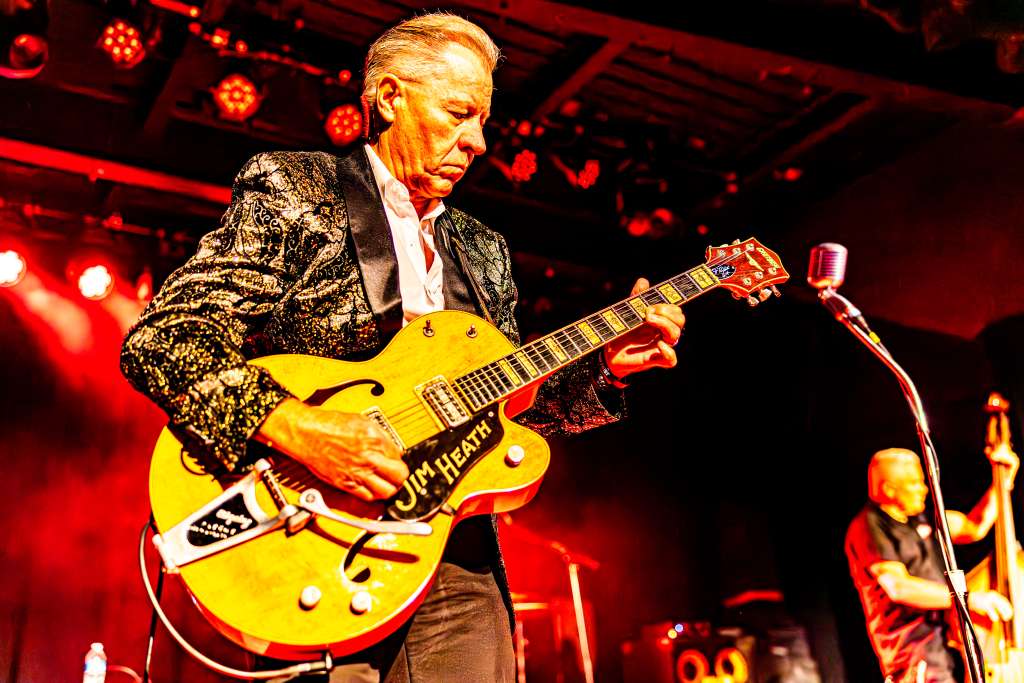
The final song was perfect because it was completely unexpected: “Ace of Spades.” Heath framed it with a story about opening for Hank III before Hank dropped off the tour. Heath called his friend Lemmy Kilmister of Motörhead, and to get Lemmy aboard, Reverend Horton Heat agreed to become his backing band. Lemmy was supposed to email the setlist. The email never came. So, the band learned the obvious song, the biggest one, the one every living organism with a pulse and a leather jacket would expect.
“Ace of Spades” was not on Lemmy’s setlist.
Heath slipped into a bad British accent for Lemmy’s response: no, they were not going to play that. Heath’s position was simple: give the people what they want. Lemmy, according to Heath, gave him the line he would never forget and never obey: never give them what they want, give them what they need!
Then Reverend Horton Heat gave Madison both.
The song hit like a blown engine finding one last gear. Not a novelty cover. Not a wink. A detonation. After a night of accordion punk, lean Texas blues, psychobilly history lessons, bass acrobatics, old friendships, fake Saturdays, and Pedialyte-era survival wisdom, “Ace of Spades” did not feel borrowed. It felt absorbed into the band’s bloodstream, another piece of road myth hammered into shape under the Majestic’s blunt little lights.
By the end, the room looked used in the best possible way. The tiers were full. The floor was wrung out. The clown, the rockabillies, the metalheads, the casual Thursday-night believers, all of them had been pulled through the same strange machine.
Reverend Horton Heat did not just headline the night. They explained it.
Not with a speech. Not with nostalgia. Not with some museum-piece version of roots music sealed behind glass. They did it by dragging every influence into the present tense and making the Majestic feel, for a couple hours, like American rock and roll was still a dangerous contraption held together by jokes, sweat, old grudges, upright bass, and the sacred stupidity of refusing to age quietly.