Review & Photography by Nathan Vestal for MPM
A night like March 20, 2026, at The Rave in Milwaukee reminds you why heavy music never really ages – it just hardens. This Sunday evening show from the Thrash of the Titans 2026 North America tour felt less like just another stops and more like a statement of intent. Three bands: Testament, Overkill, and Destruction each took the stage to represent a different branch of thrash’s global lineage. What followed proved to be an unforgettable show to a packed audience that thrives on grit, history, and just enough unpredictability to keep things honest.
The Rave has always been a peculiar beast. It’s not pristine, and that’s the point. The floors carry the residue of decades’ worth of shows, and the acoustics lean toward unruly. But for a lineup like this, that roughness becomes an asset. Sound doesn’t just fill the space – it swells, collides, and occasionally spills over itself, giving the night a kind of live-wire immediacy that cleaner venues can’t replicate.
Destruction: Precision as Violence
Destruction didn’t start so much the night as ripping it open. Their set didn’t waste time establishing momentum – it was assumed. From the first note, there was no easing in. The band launched straight into a barrage of tightly wound riffs that felt less like songs and more like controlled detonations. Marcel “Schmier” Schirmer took the stage with zero ceremony and immediately locked into that signature snarl. Still one of thrash’s most distinct voices, Schmier delivers a battle cry with a bark. It feels less performative and more declarative. And Schmier’s delivery hasn’t mellowed with time. If anything, it becomes more direct, stripped down to pure intent.
What stood out immediately was how locked-in the band felt. There’s a rigidity to Destruction’s sound, a precision that borders on mechanical, and live it translates into something surprisingly physical. The riffs land clean and fast, but they carry weight, too – less about groove, more about impact. The guitars didn’t blur together. They cut. Each riff had edges. Each transition snapped into place with mechanical precision. There’s very little swing in their sound; it’s rigid, driving, almost industrial in how it pushes forward.
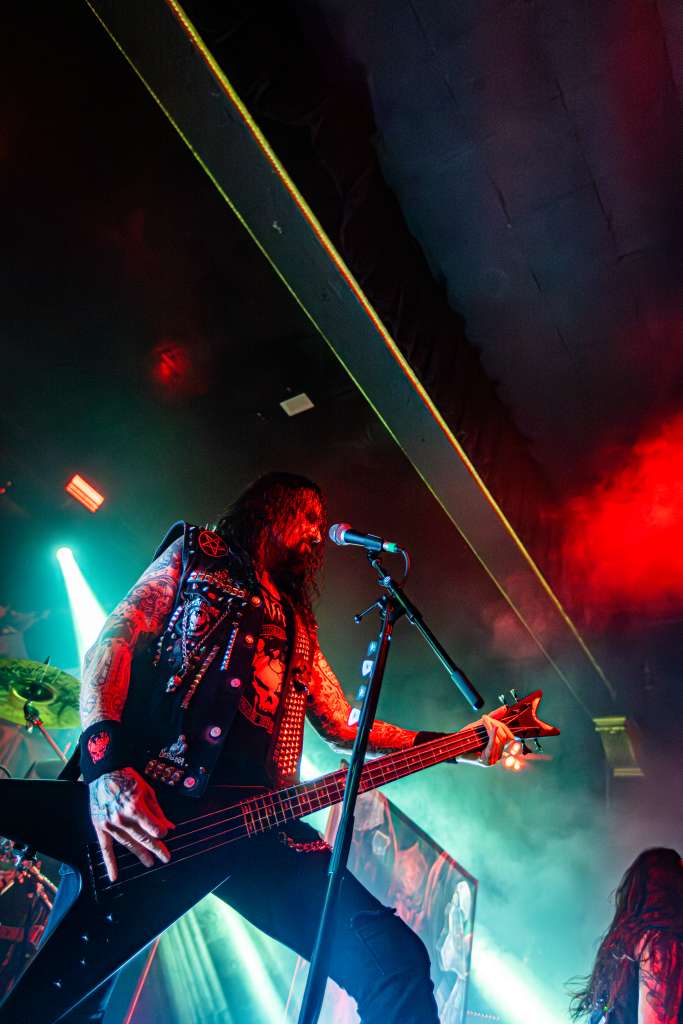
That rigidity is exactly what makes it hit so hard.
The rhythm section played like a piston engine, relentless and unforgiving. No wasted motion, no indulgence. Just forward momentum. It created a kind of tension in the room, like everything was being pulled tighter with each passing minute. When the band hit a break or a shift in tempo, it didn’t feel like a release – it felt like a coiled spring snapping.
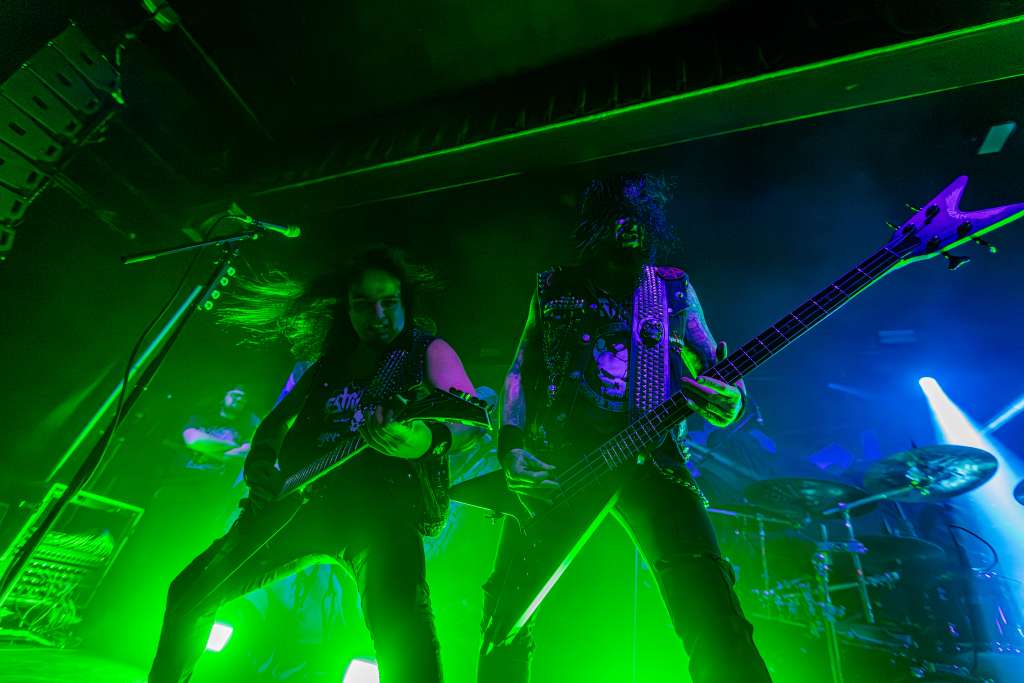
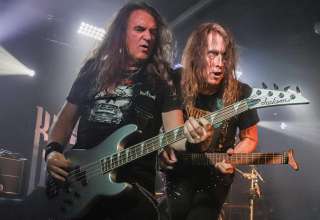
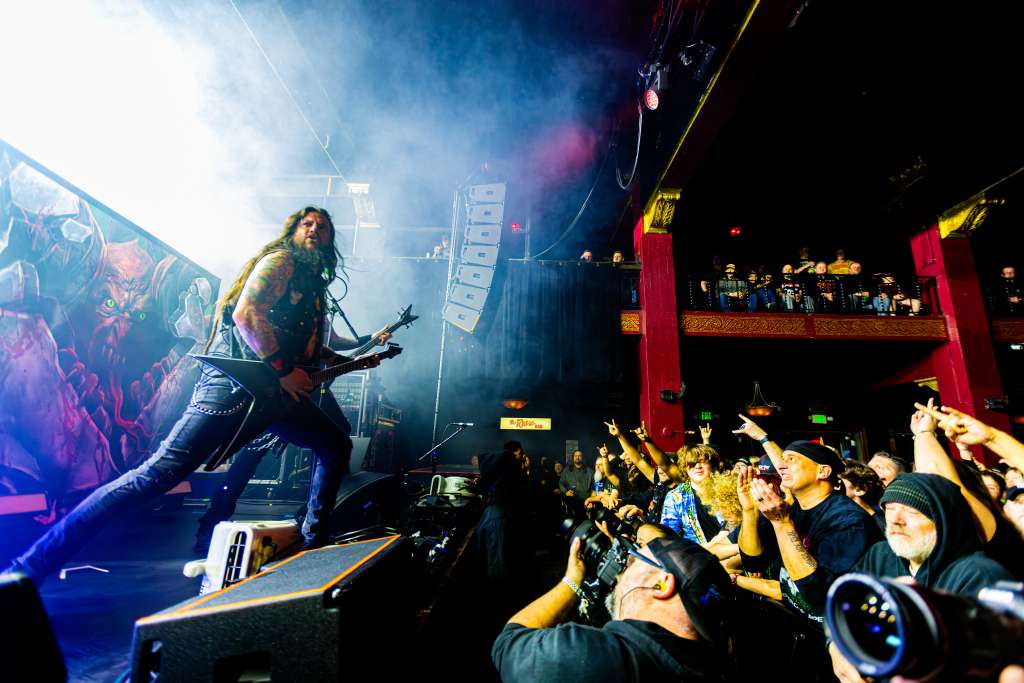
Schmier controlled the front with a mix of command and chaos, stalking the stage, leaning into the crowd, pulling them further into the set. There’s a no-frills honesty to his presence. No theatrics, no unnecessary movement. Just three V guitars swinging in unison and delivering exactly what the music demands.
The crowd reacted accordingly. The pit opened early and stayed active throughout the set that included career-spanning tracks such as “Bestial Invasion” from 1985’s Infernal Overkill and a couple singles from the latest 2025 release Birth of Malice. The constant churn of bodies mirrored the band’s precision and demonstrated the difference between a pit that reacts and one that locks in, and this was the latter. Every hit, every shove felt in time, like the audience had synced up with the band’s internal clock.
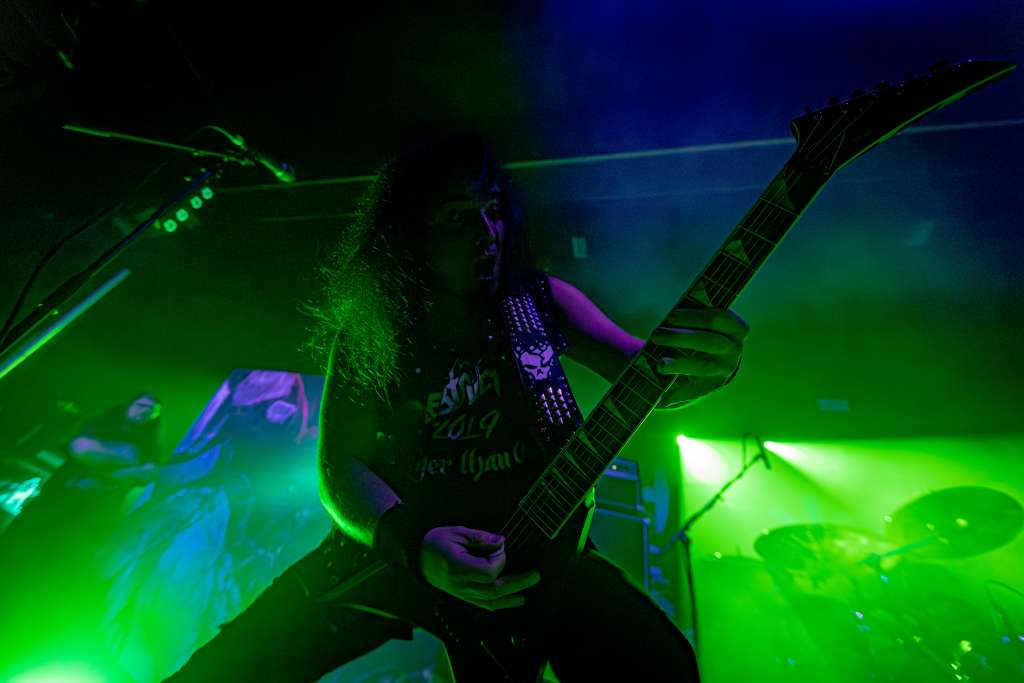
By the time Destruction closed their set, they hadn’t just warmed up the room – they had calibrated it. Tightened it. Set a standard that demanded the next band either match it or get swallowed by it.
Overkill: Density, Dynamics, and Street-Level Swagger
Overkill didn’t try to outpace Destruction. They didn’t need to. By the time they took the stage, the room was already primed.
A noticeable change in how the sound felt was apparent from the opening riffs of 2023 title track “Scorched”. Thicker. Heavier in the low end. Less about velocity, more about impact. Where Destruction cut with precision, Overkill pressed down with force, letting riffs breathe just enough to make them hit harder.
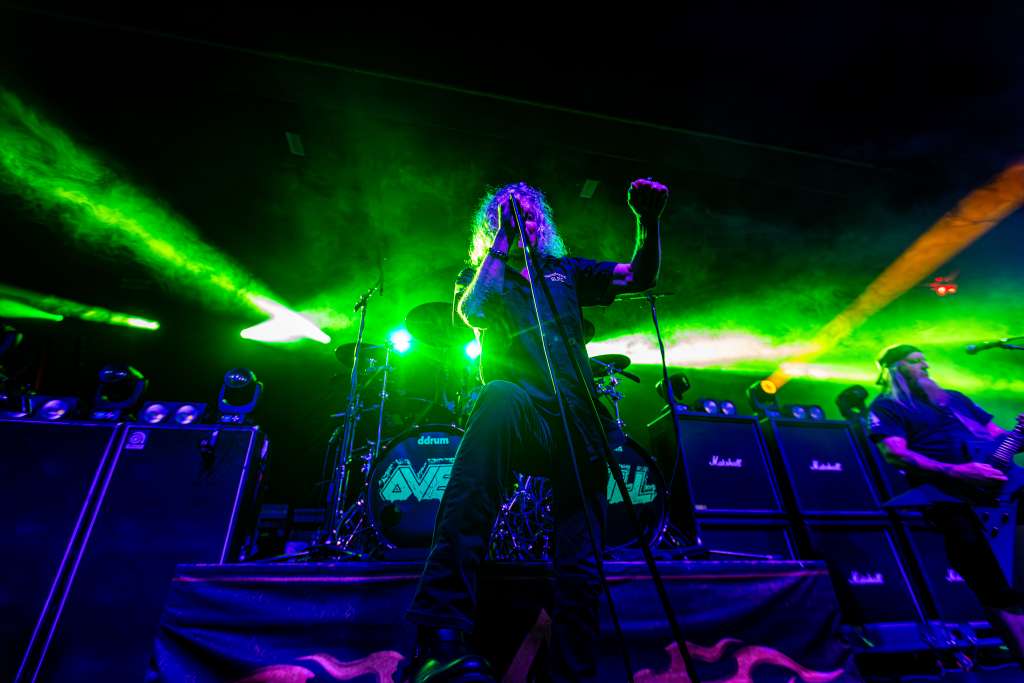
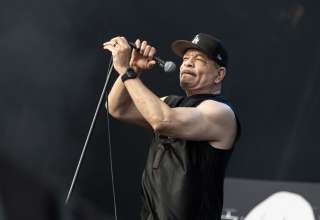
Bobby “Blitz” Ellsworth remains one of the most distinctive figures in thrash, not because he dominates the stage in a traditional sense, but because he animates it. He moves like a live wire – restless, unpredictable, constantly adjusting his position as if he’s chasing the music rather than leading it. And then he locks in, delivering lines with that unmistakable snarl that somehow sits above the chaos instead of getting buried in it.
His voice is a weapon, and he knows exactly how to use it.
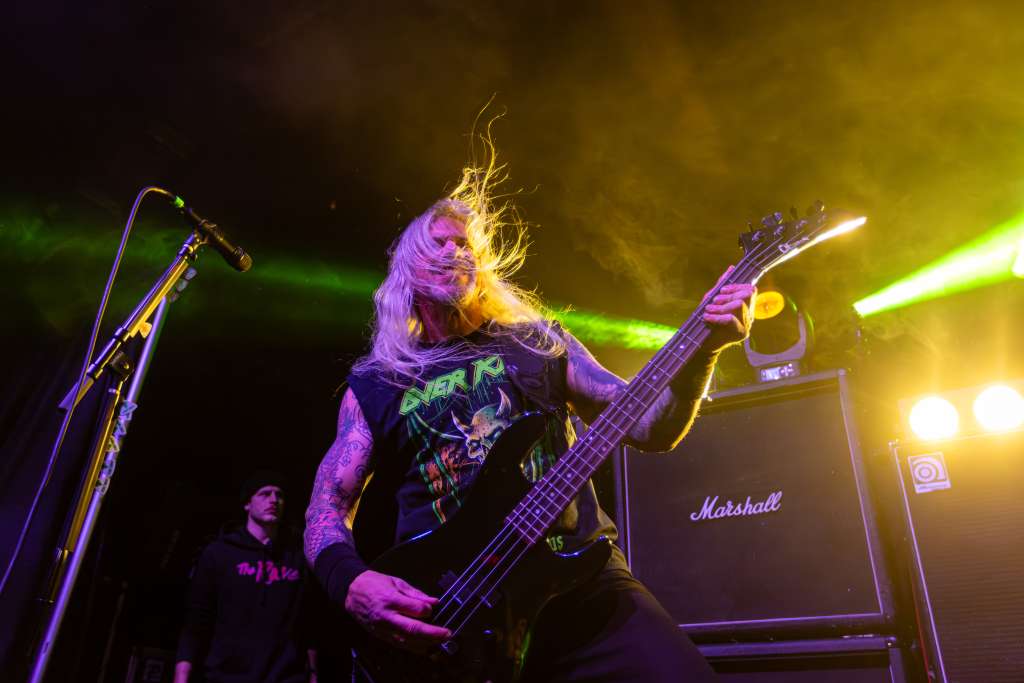
What elevated Overkill’s set was their sense of dynamics. They understand pacing in a way that many thrash bands overlook. Not every section was played at full throttle. After the pit reached maximum energy with 1985’s “Rotten to the Core”, they let grooves settle, let riffs dig in, then snapped back into speed when the moment called for it. That push and pull gave the set shape, turning it from a barrage into something more deliberate.
The guitars carried a gritty thickness, the kind that fills space without becoming muddy. The rhythm section, anchored by Christian Olde Wolbers (of Fear Factory and Cypress Hill), temporarily filling in on bass for original band member D.D. Verni, locked everything in. The groove almost felt oppressive at times, but in a good way. It pulled the crowd in, anchored them, and made every movement feel heavier.
And the crowd responded.
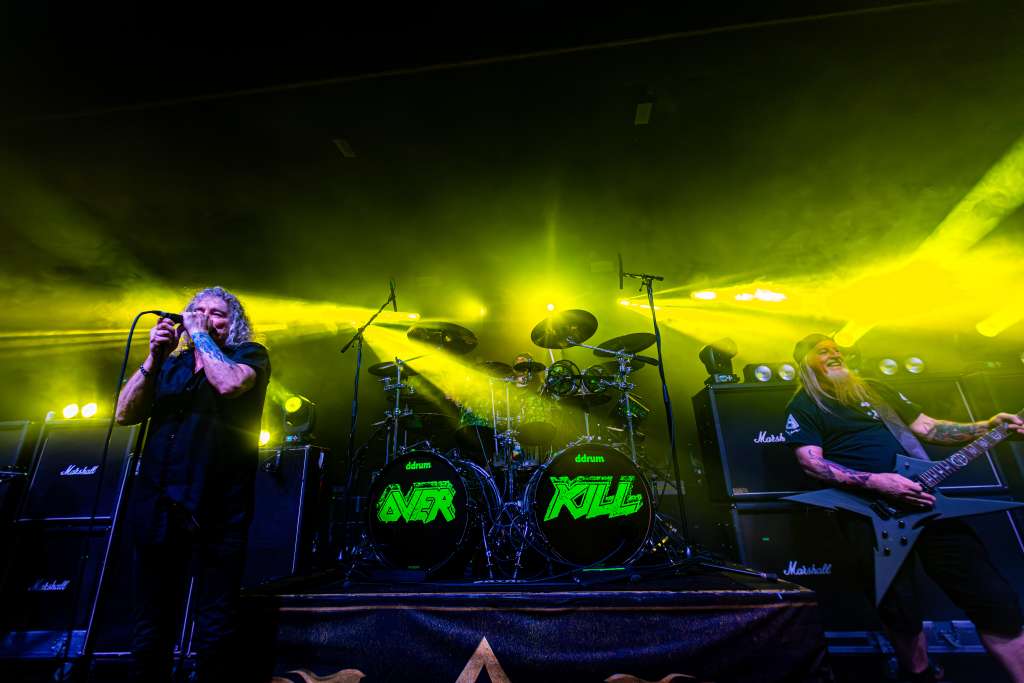
The pit changed form during Overkill’s set. It got tighter, more concentrated. Less sprawling chaos, more focused energy. You could see it in the way people moved with shorter bursts, harder hits, less drifting. It felt like the room had been compressed, the energy packed into a smaller, denser space.
Blitz fed off that shift, working the crowd with the instincts of someone who’s spent decades in rooms exactly like this. A gesture here, a pause there, letting the audience fill in the gaps before driving them forward again. It wasn’t just performance, it was interaction. Blitz ended the set expressing gratitude to the audience for their part in allowing him to be surrounded by people who love to let him do what he loves, essentially “letting him live like an asshole for the last 40 years.”
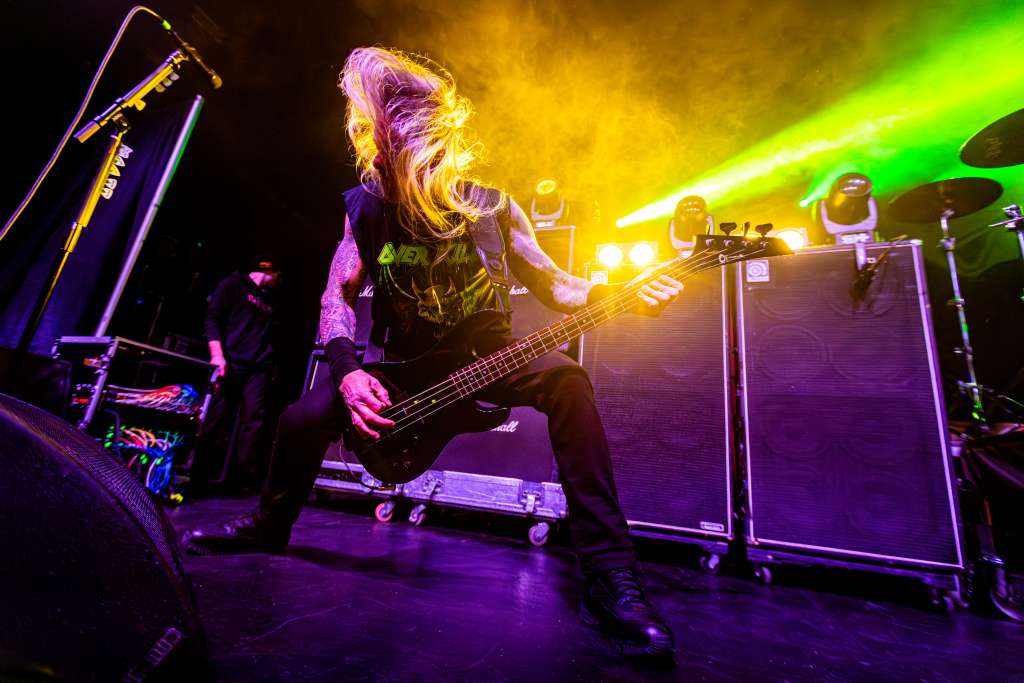
By the end of their set, Overkill had transformed the room. Not just louder or more energetic, but heavier. Grounded. Ready for something bigger to step in.
Testament: Authority Without Excess
Anticipation hung in the air, ready to snap the moment Testament took the stage. Charged to max capacity by a reverent tribute to Motorhead blasting through the house speakers, the crowd visibly and audibly swelled to maximum capacity with fans spilling out of the main room into every dark corner, bar, balcony, and nook of the venue. When Testament took the stage, they didn’t rush to match what came before them. They didn’t need to. They brought something different: control.
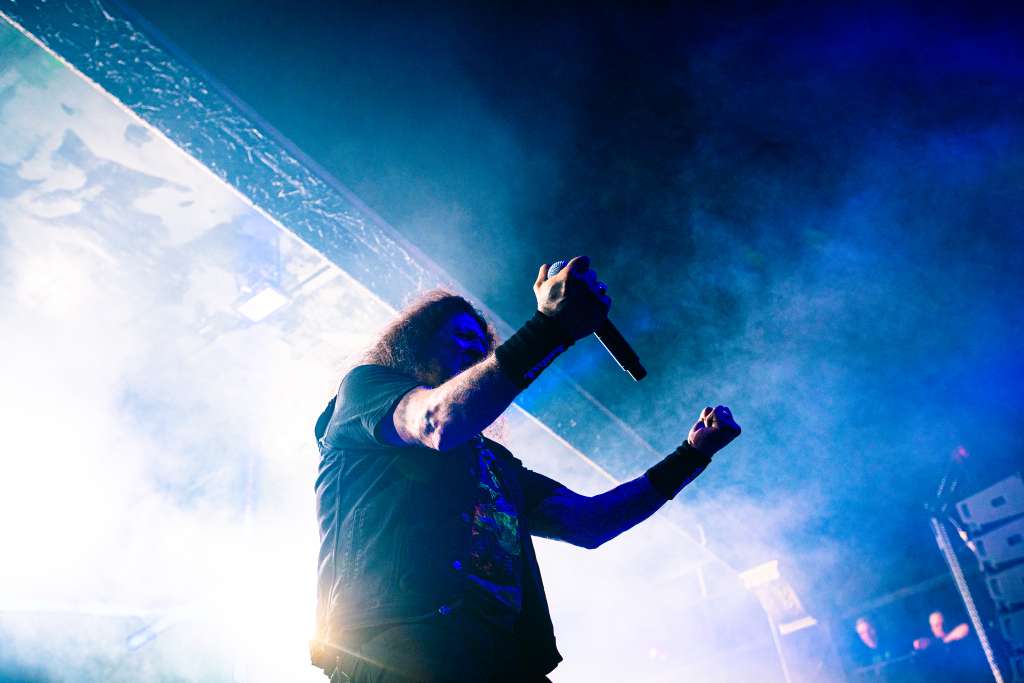
When Testament opened with “Into the Pit”, the response was immediate and unanimous: the pit swallowed the floor whole. Then came the first surfer: not a diehard fan, but a grinning, weightless blow-up doll drifting above the chaos.
There’s a balance to Testament that sets them apart. They carry the aggression of classic thrash, but it’s tempered by structure, by an almost architectural sense of how their songs are built and delivered. Live, that translates into a performance that feels both powerful and precise.
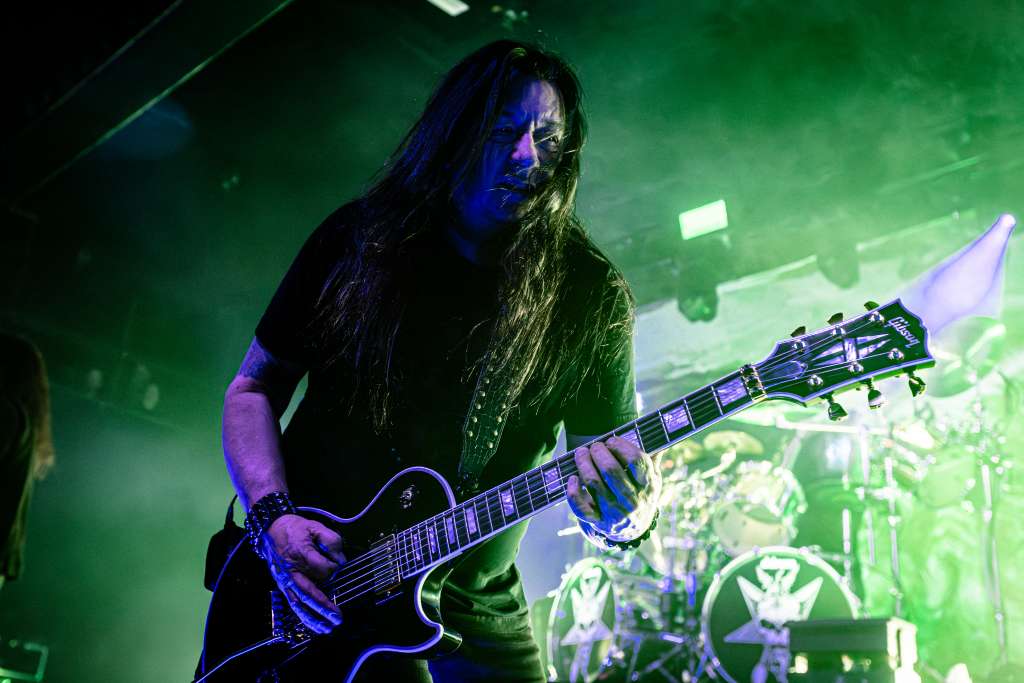
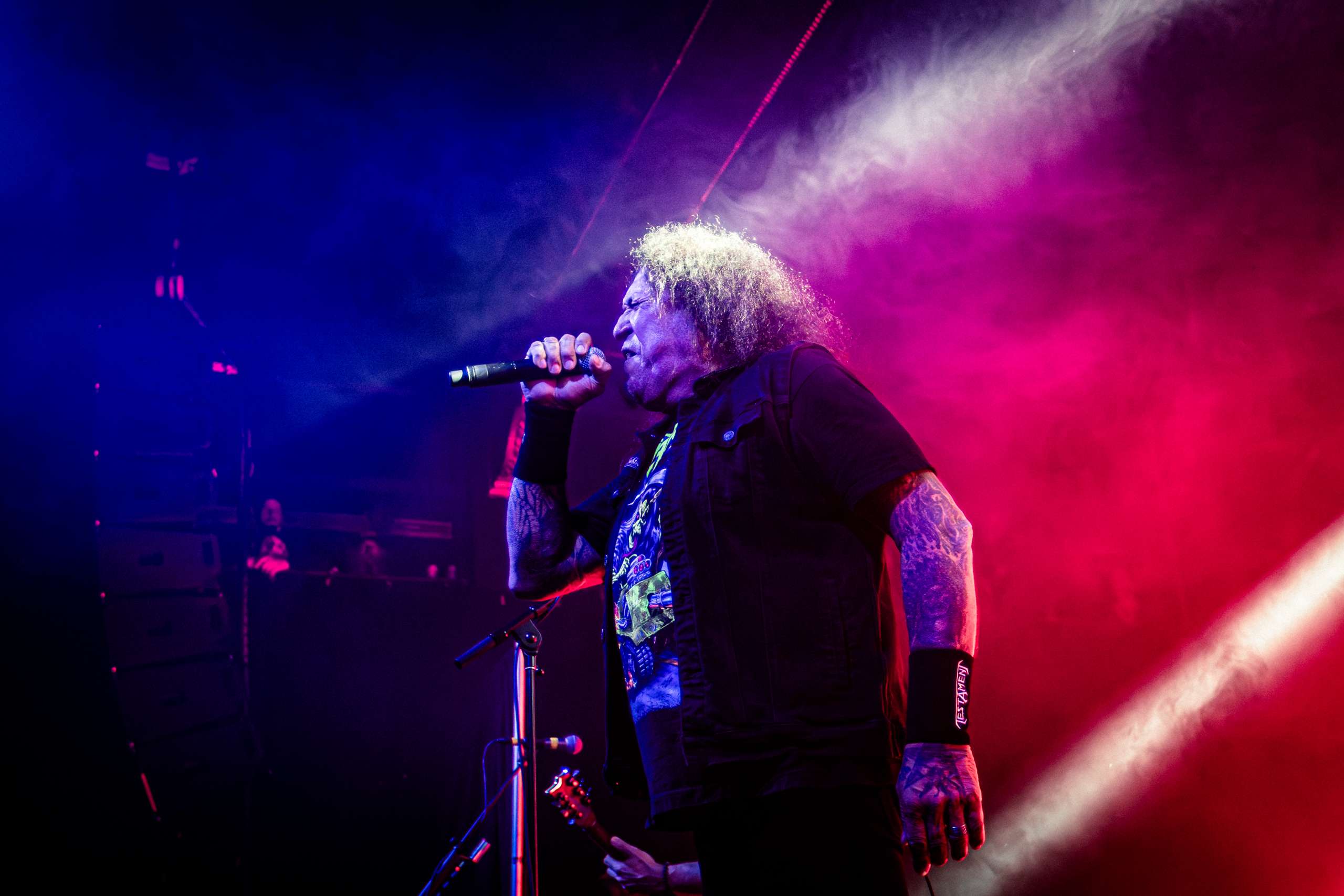
Chuck Billy stood at center stage, commanding attention without chasing it. He doesn’t rely on movement or spectacle. His presence is rooted, grounded, and that stability gives his performance weight. His voice remains a defining element – strong, clear, and controlled, able to push into harsher territory without losing definition.
Behind him, the band operated with near-perfect cohesion.
Eric Peterson’s rhythm work provided a thick, driving backbone, each riff locking into place with authority. Alex Skolnick’s leads added a layer of clarity and sophistication, cutting through the density without ever feeling excessive. His phrasing felt intentional, each note placed rather than thrown. What could’ve been buried low instead stood out: Steve Di Giorgio’s fretless bass rippled beneath the guitars, giving Testament’s sound a muscular but unexpectedly fluid backbone.
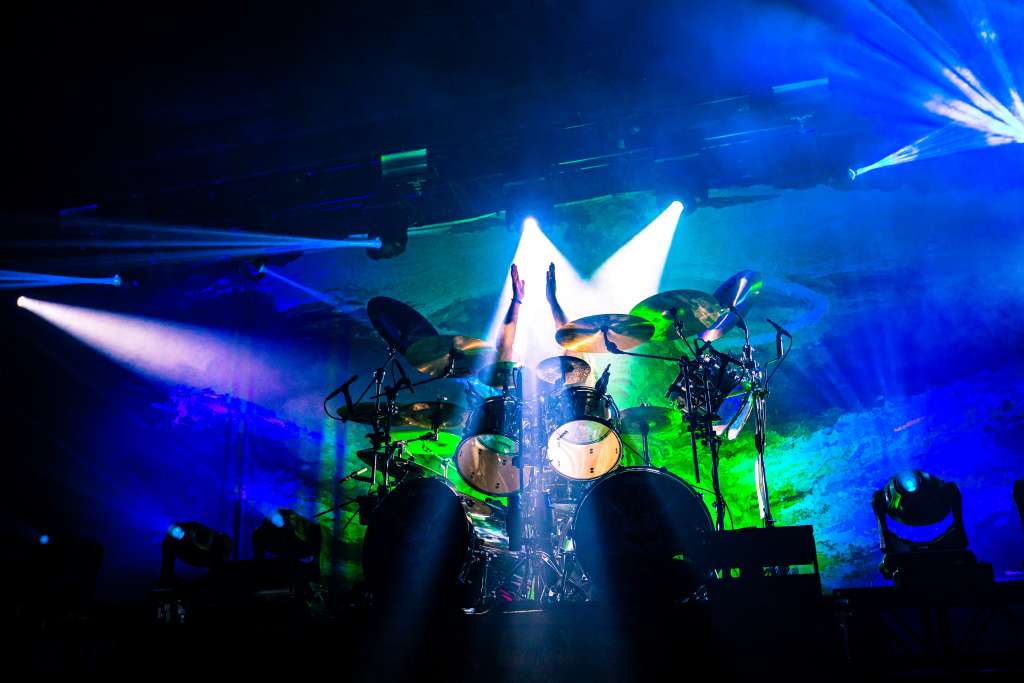
And then there’s Chris Dovas.
Watching Dovas play is less about speed and more about force management. He hits hard—hard enough to feel—but never loses control. Every strike lands with purpose, every transition is executed with precision. He doesn’t just keep time, he shapes the momentum of the set, dictating when things surge and when they pull back.
Testament’s setlist moved between eras without drawing attention to the shift. Older material hit with the weight of familiarity, but it didn’t feel like a callback. It felt current, alive. The newer songs didn’t break that flow. They reinforced it, proving that the band’s identity hasn’t splintered over time. Billy interacted with the audience, celebrating their 27th performance at the venue, and expressing gratitude for p What stood out most was how complete their set felt.
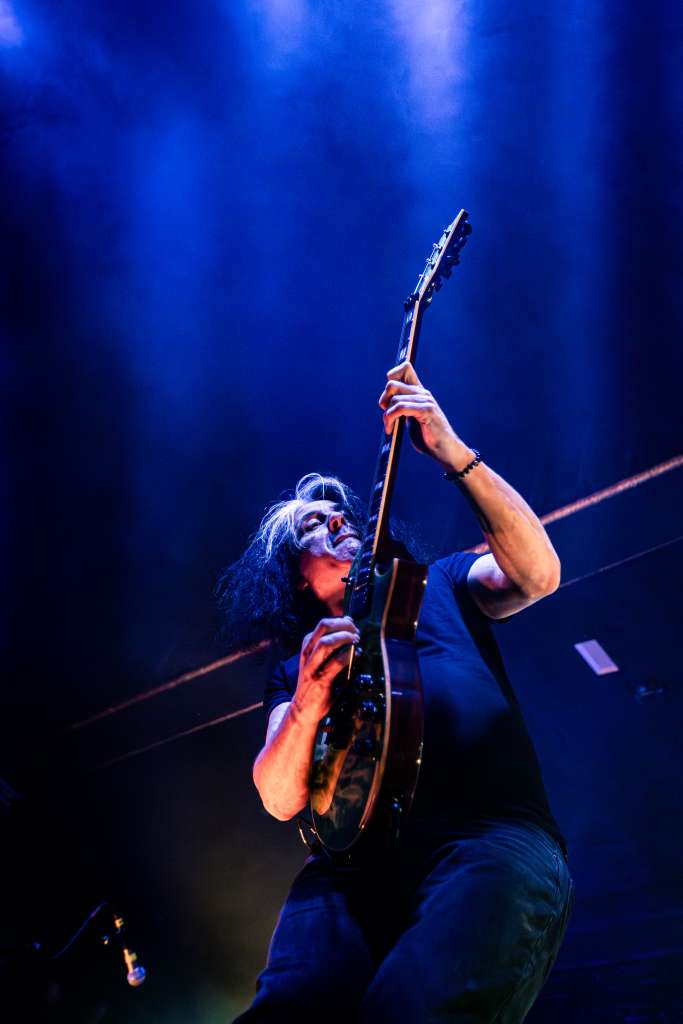
Where Destruction delivered intensity and Overkill delivered weight, Testament delivered cohesion. Rather than leaning on nostalgia alone, Testament delivered a fully rounded set, balancing staples, deep cuts like “John Doe”, and a couple of newer songs that proved just as potent live. Every element – vocals, guitars, rhythm – fit together in a way that felt deliberate and fully realized. Nothing extraneous, nothing lacking.
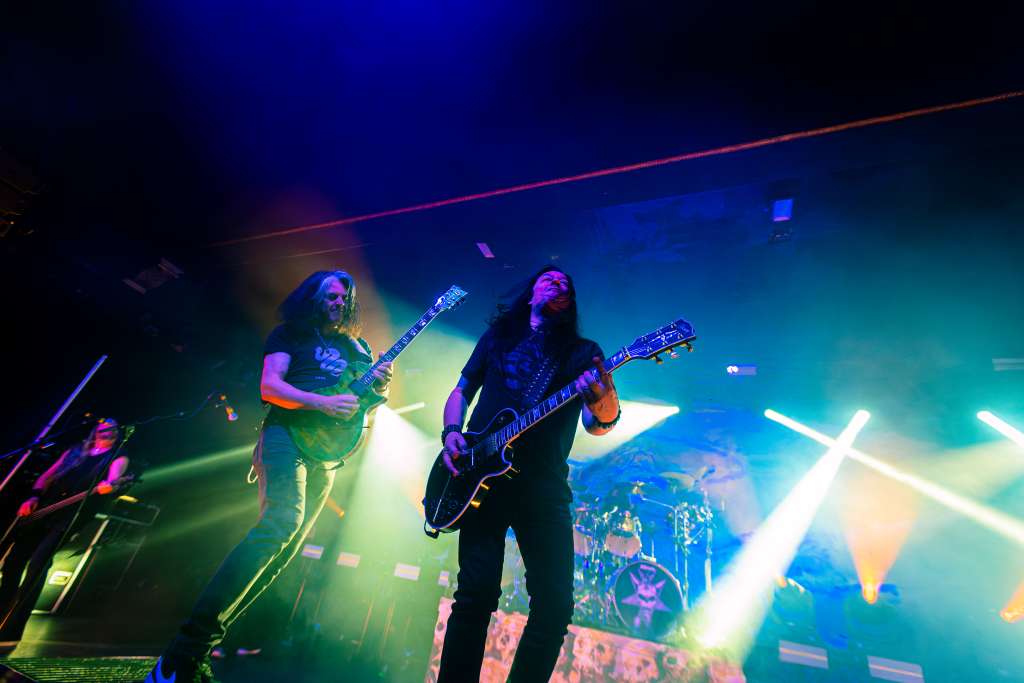
The crowd mirrored that sense of unity. By this point, the energy in the room had spread beyond the pit. Movement rippled outward, people locked into the same rhythm whether they were in the center of the floor or pressed against the back wall. Choruses came back louder, more unified, less like individual voices and more like a collective response.
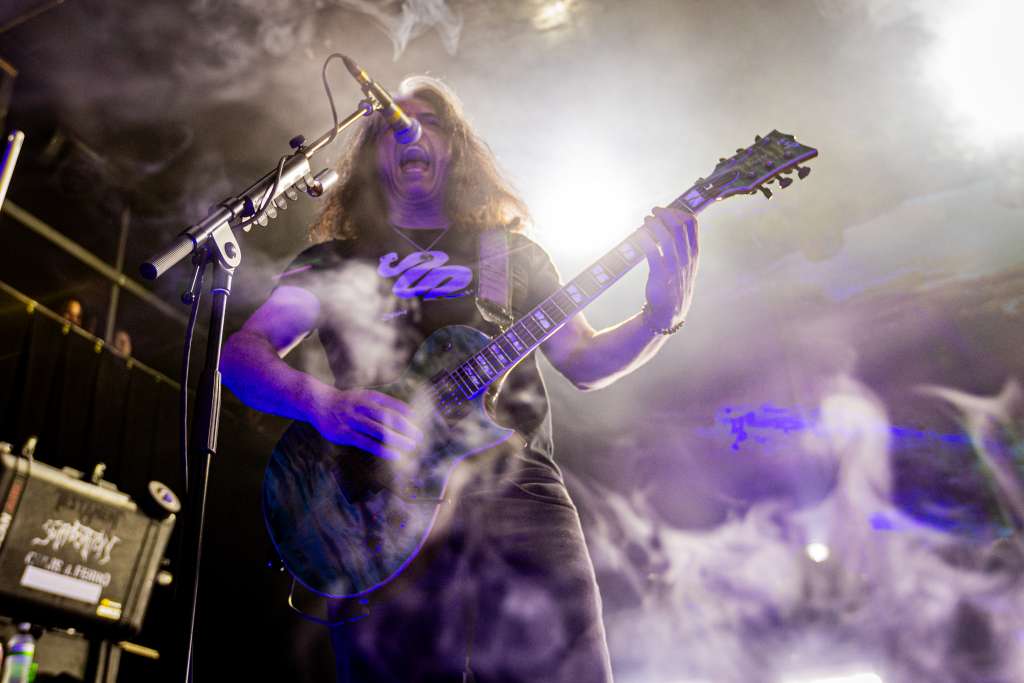
Testament didn’t just close the night. They consolidated it.
Three bands. Three distinct approaches. One continuous escalation.
Destruction brought the blade: sharp, fast, and unforgiving.
Overkill brought the weight: dense, deliberate, and grounded.
Testament brought the control: balanced, precise, and complete.
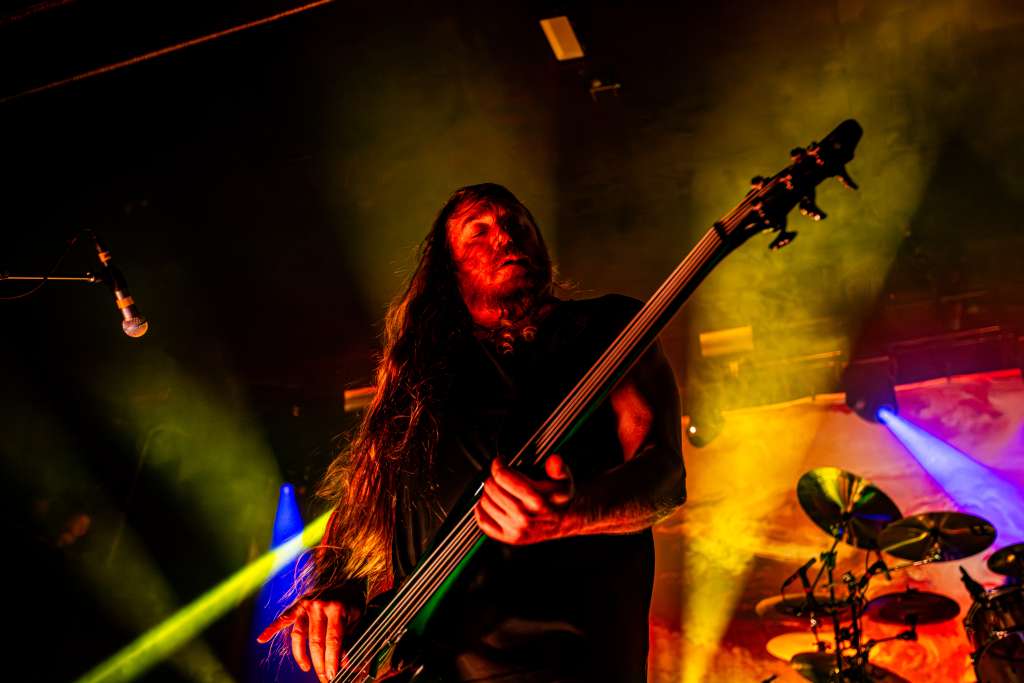
What made the night work wasn’t just the strength of each performance, but how clearly those identities came through. No overlap, no redundancy. Each band carved out its own space and filled it completely.
In a genre built on speed and aggression, it’s easy to forget how much nuance exists beneath the surface. This show didn’t just remind you, it demonstrated it, in real time, and at full volume.
And in a room like The Rave, that kind of clarity hits just as hard as any riff.