Review & Photography Nathan Vestal
Some nights, a venue feels less like a room and more like a pressure valve. Live Wire in Chicago had that Saturday-night charge on April 25, the kind that comes from black leather, cheap beer, old scene scars, new converts, and the low electrical hum of people who came to be rattled, not comforted.
This was not a night built for casual listening. Nobody wandered into Live Wire looking for a polite little rock show with tidy choruses and merch-table small talk. This was machinery with a pulse. Five acts, each orbiting some warped corner of industrial, EBM, noise, punk, and electronic abrasion, building toward En Esch, a performer whose history is stitched deep into the torn fabric of industrial music.
Before En Esch took the stage, the room had to be prepared. Not decorated. Prepared. Like an operating theater with bad wiring.
Morbid Circle Opens the Wound
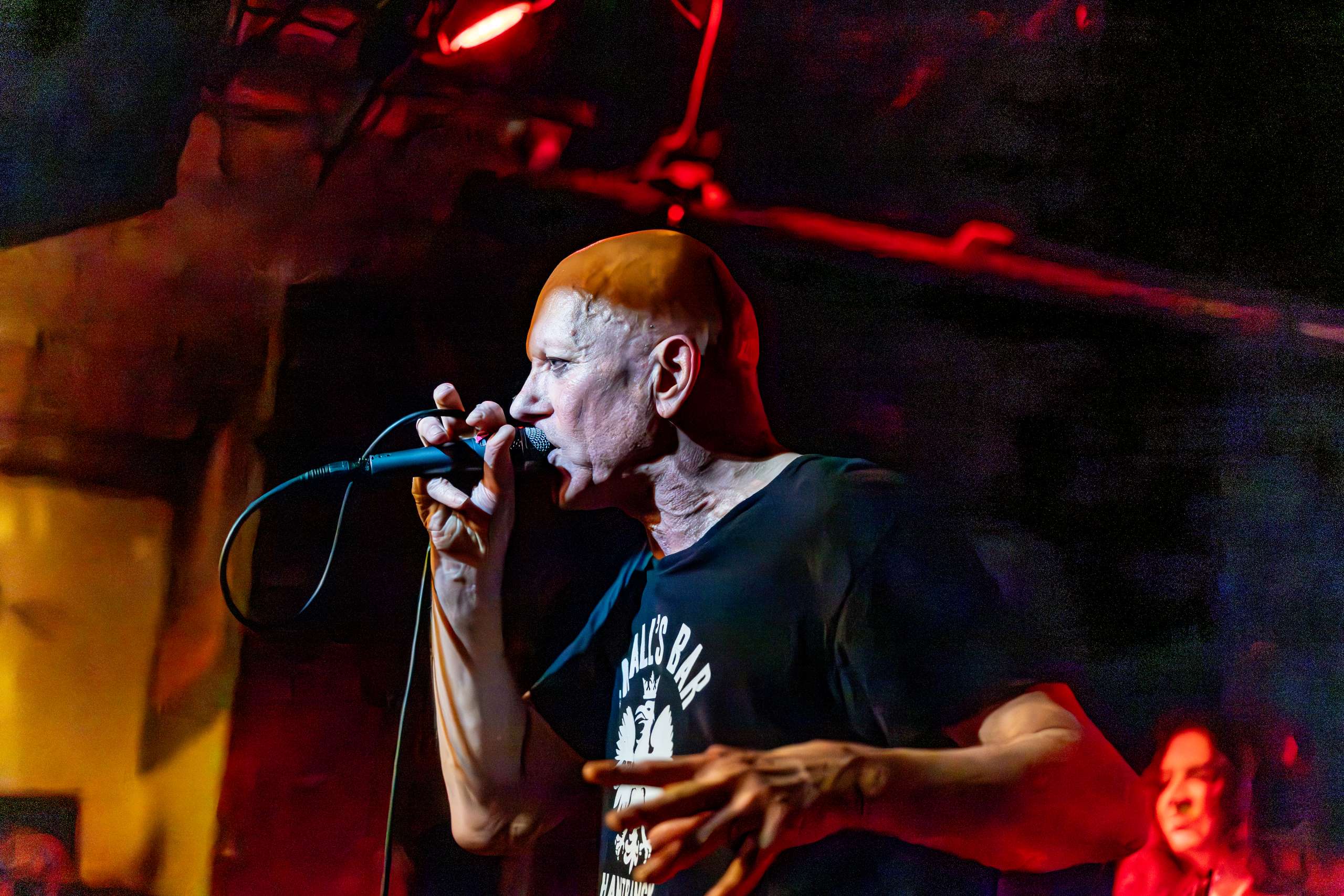
Solo act Morbid Circle had the unenviable job of lighting the first match and did it without fuss. The set worked less like an opener trying to win the room and more like a strange signal bleeding through a broken broadcast. There was a raw, basement-current energy to it, the kind that doesn’t ask for permission before making the PA sweat.
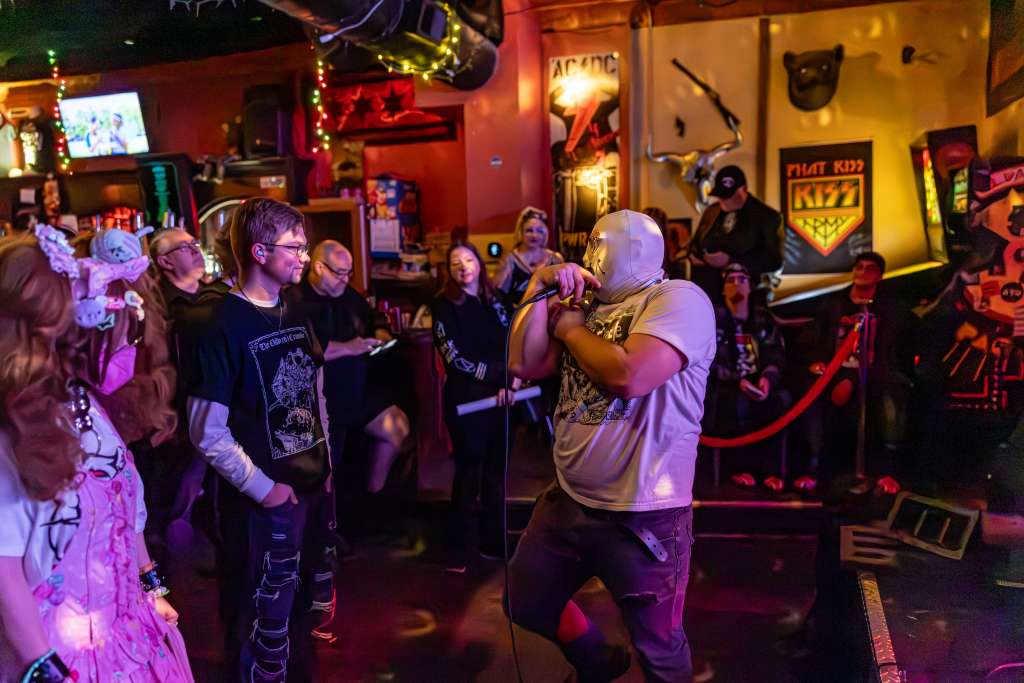
Not there to smooth anyone into the night, the masked performer leapt from the stage before the first song concluded and thrashed with the crowd for the rest of the set. Morbid Circle was there to scrape off the gloss. The emotional vocals contrasted with the ritualistic dance and backing tracks were like flickering fluorescent lights in an abandoned laundromat, as mechanical sounds subtly stirred in the background. It gave the early crowd something to lean into, something uneasy and alive.
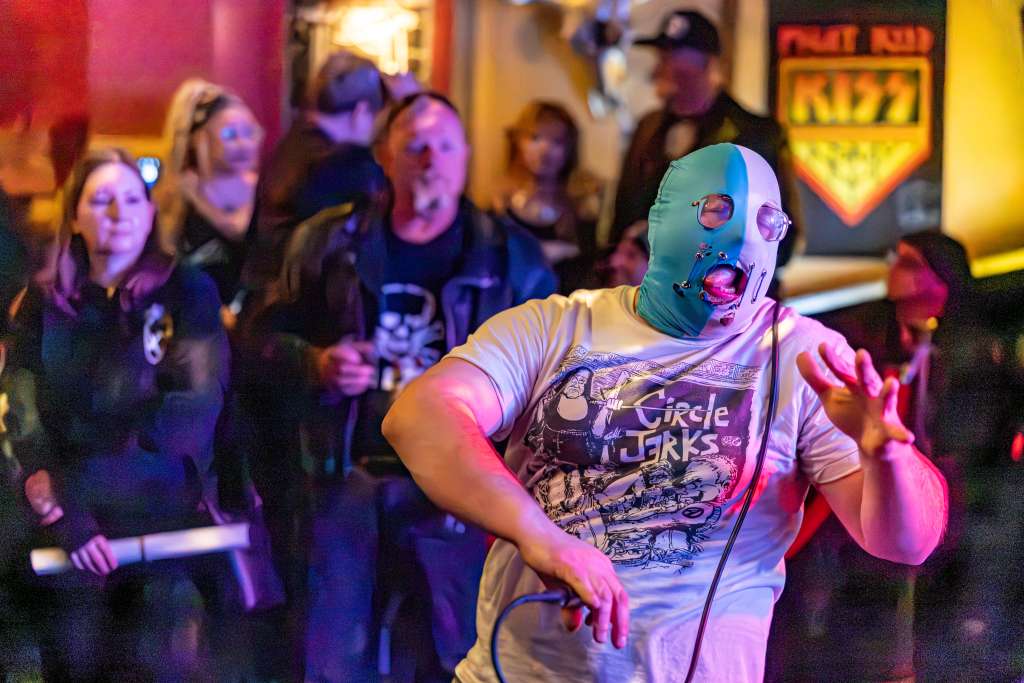
As first acts go, Morbid Circle did exactly what it needed to do: made the room feel less safe.
Biocarbon13 Deepens the Cut
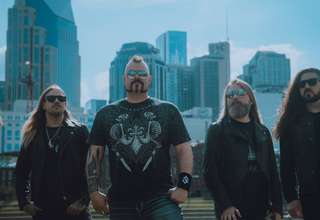
Biocarbon13 followed with a heavier, grimier presence, pushing the night deeper into the industrial bloodstream without leaning on gimmick or costume-shop menace. The band name may sound laboratory-born, but live, they were pure pressure: hard beats, serrated electronics, guitar grit, and enough low-end muscle to make Live Wire feel like its walls had started breathing.
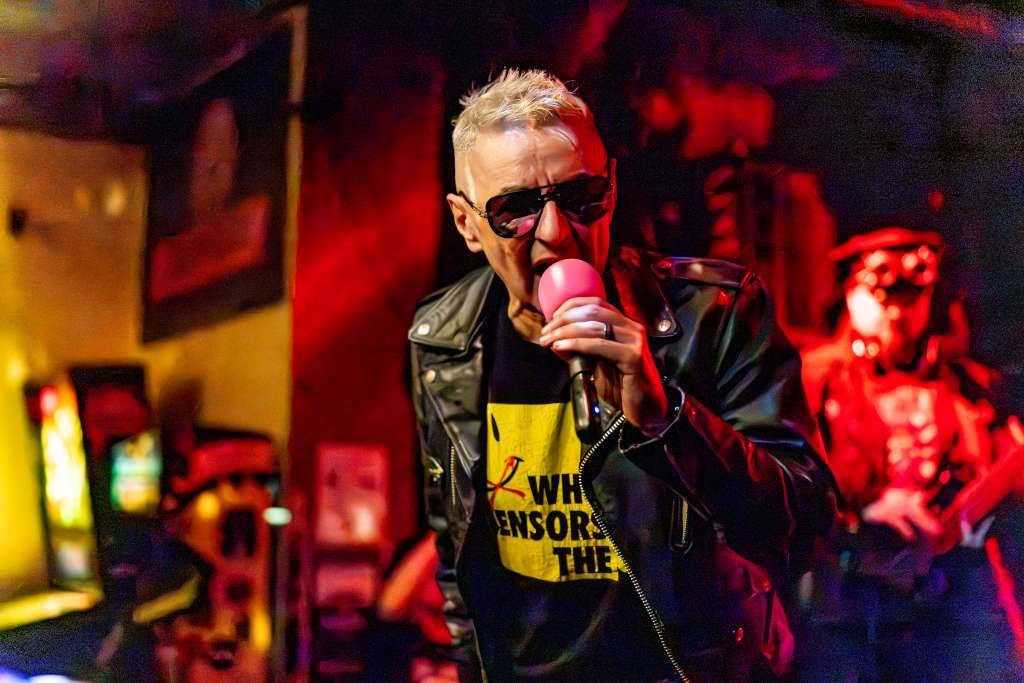
Frontman IGor Jefe worked the room with that restless, wired-in intensity that makes industrial music feel less performed than transmitted. Behind him, Claudia C. Claudia gave the set its electronic spine, locking the keyboards into a pulse that was cold, insistent, and built for bodies in motion.
This lineup hit with extra force at Live Wire, with Jeff Warfield on lead guitar adding sharp metallic teeth to the songs and Jonathan Ian’s chaotic drumming style characterized by large, dramatic strikes that amplified the disorder rather than contained it. The result was not just electronic darkness, but a full-band churn: part dance-floor voltage, part back-alley machinery, part clenched-jaw catharsis.
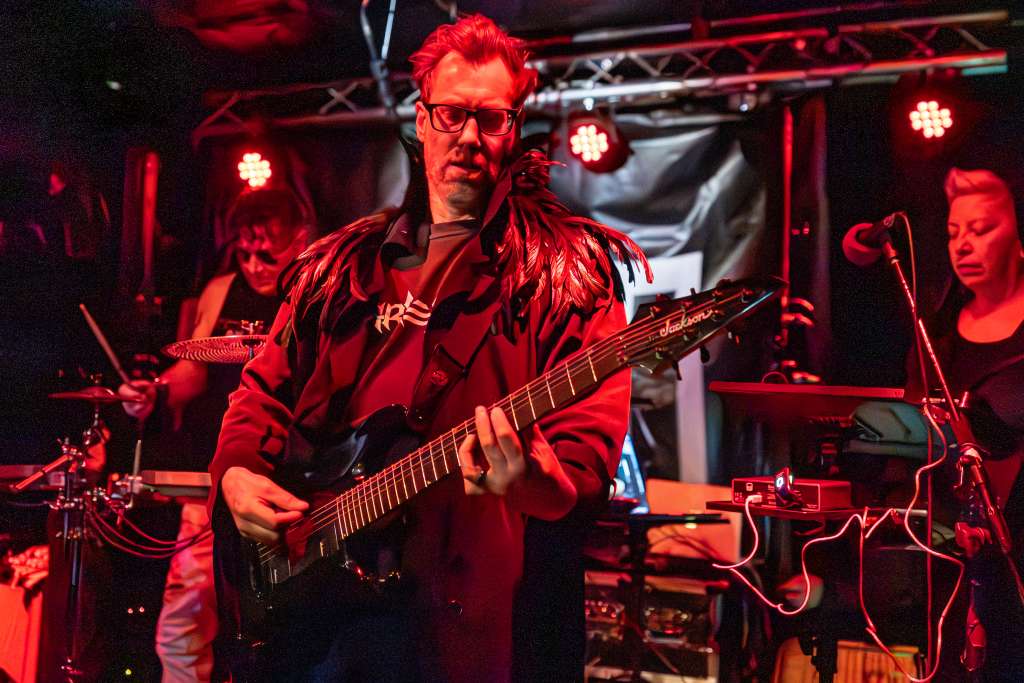
The standout moment came when Arzenik joined them onstage to play guitar for his remix of “Wrong Shade of Black”. The guest gave the set a jolt of electricity without turning into a novelty cameo. The song widened in real time, guitar cutting through the electronics like sparks across wet pavement, while the room leaned in and let the whole thing hit.
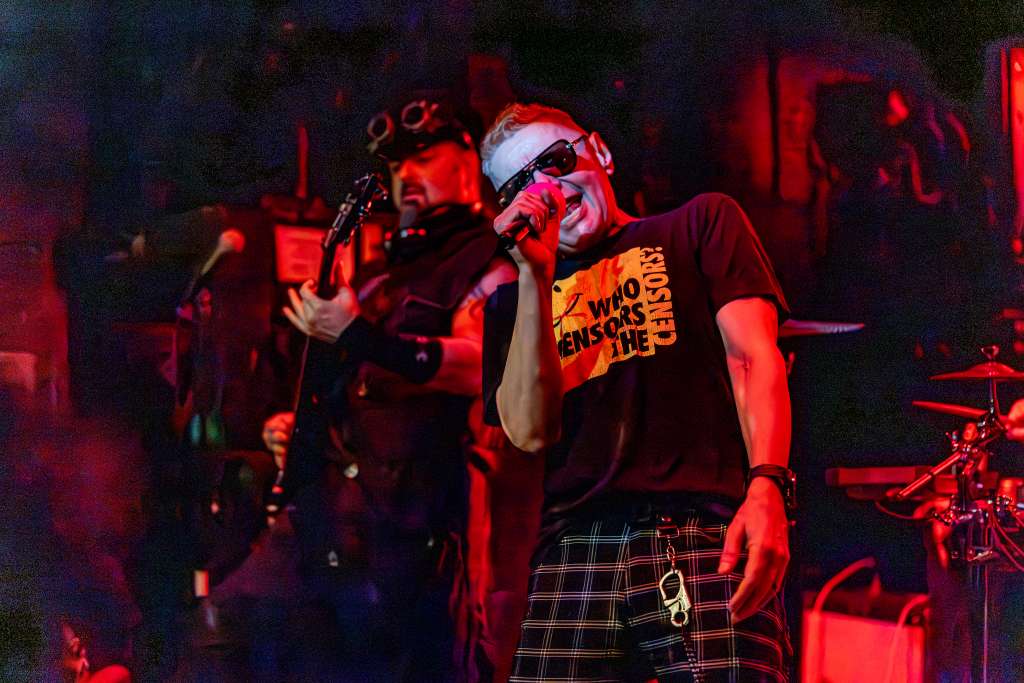
Biocarbon13 didn’t just warm up the crowd. They tightened the screws. By the end of their set, Live Wire had shifted from gathering-place temperature to furnace glow, the night’s engine now properly awake and growling.
Project .44 Pours the Salt In
Then came project .44, and the night took on a more disciplined menace.
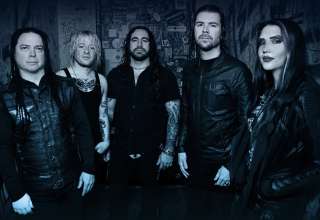
Where some industrial acts let chaos sprawl, project .44 brought structure, tension, and control. Their set had bite, but it was a measured bite, the kind that understands restraint can make impact heavier. With Chris Harris on vocals, Bob Pedroza on bass, Eric McWhorter on guitar, Michael Carrasquillo on drums and John Meadows rounding out percussion and backing vocals, and Michael Carrasquillo on drums, the band sounded less like a nostalgia machine and more like a street-level industrial crew kicking open a steel door.
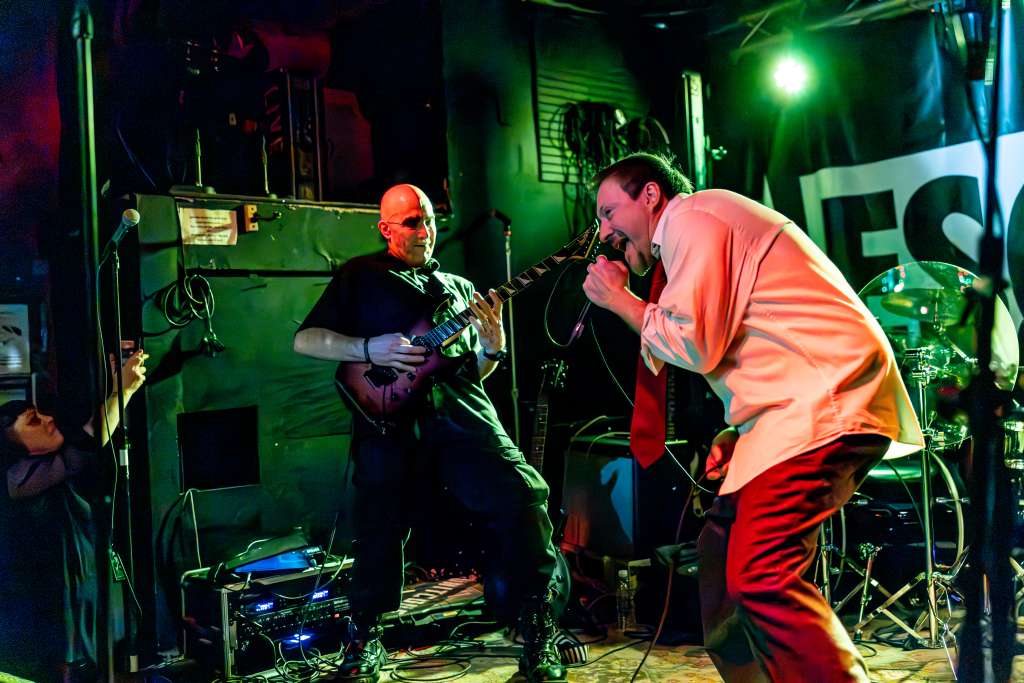
They opened with “Never Nothing,” setting the tone immediately: hard angles, clenched rhythm, and that cold-blooded Chicago pulse running under the surface. Harris commanded the front with a clipped intensity, while Pedroza and Carrasquillo locked the low end and drums into something heavy enough to bruise. Meadows brought percussive violence, that trash-can drum giving the set a raw scrapyard heartbeat, while McWhorter’s guitar added serrated edges without overplaying the room.
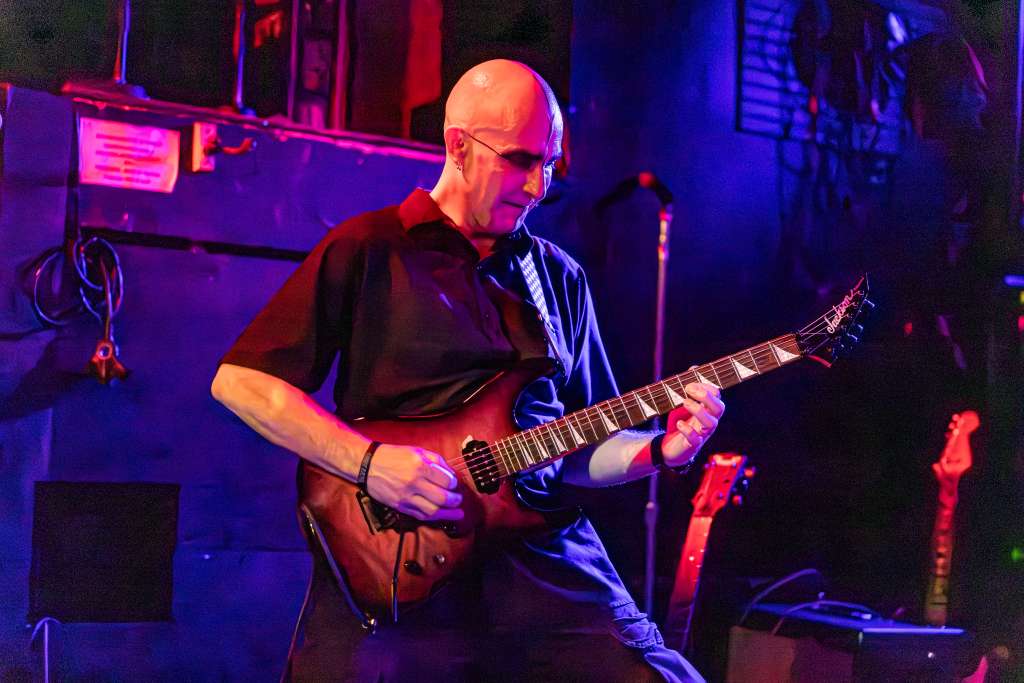
There was a Chicago weight to it, too. Not in some postcard sense, but in the bruised-city way: steel beams, late trains, wet pavement, and people who learned early that beauty usually arrives with dents in it. That came through especially when they played “Chicago” from the 2021 release Reform (The Storm Before), a song that landed with hometown gravity inside Live Wire. It didn’t feel like a geographic name-drop. It felt like a location stamped into the bones.
The one absence worth noting came during “Murder Weapon,” their collaboration with En Esch. Given the bill, the room might have expected Esch to appear, but he did not join them onstage. Strangely, that absence didn’t drain the moment. It sharpened it. The band carried the song themselves, letting it stand as its own weapon rather than turning it into an easy cameo.
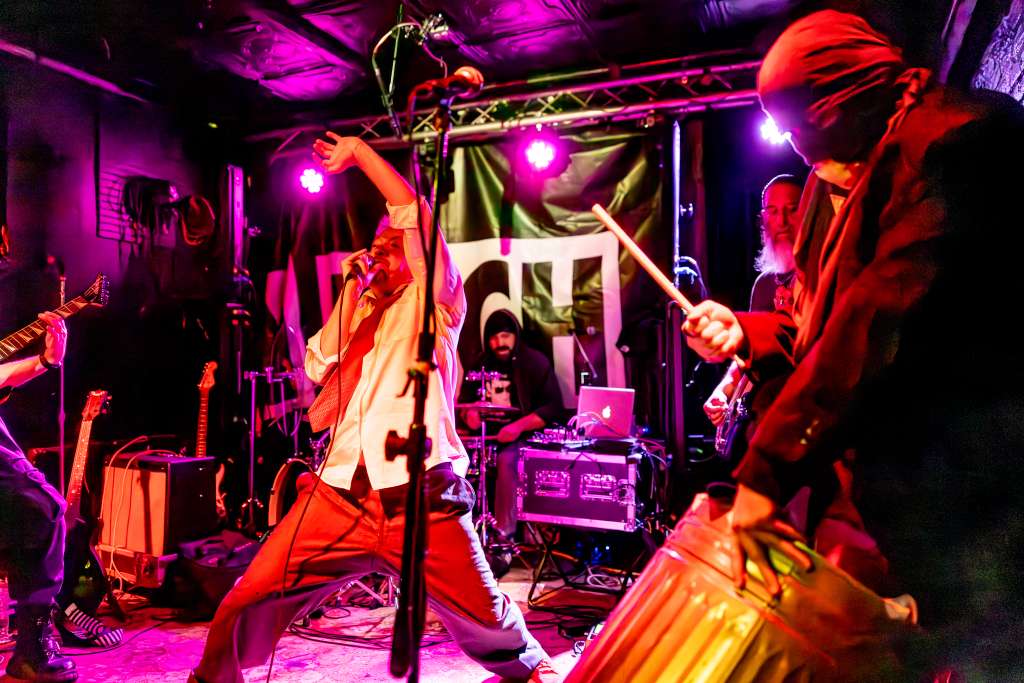
But the set’s real detonation point was “Warpath,” from the 2005 album The System Doesn’t Work. That one hit extra hard because McWhorter, an original band member who recorded the album with them, was back onstage playing it with project .44 for the first time. There are reunion moments that feel ceremonial, and then there are moments that feel like somebody reopened a sealed case file and found it still humming.
McWhorter’s guitar carried its own ghost story. He was playing a 1997 Jackson guitar for the first time in 27 years, an instrument stolen in 1999 shortly after he bought it. He never stopped looking for it. Six days before the Live Wire show, he finally found it and re-acquired it. That kind of detail could sound too perfect if it weren’t so strange and stubbornly real: a stolen guitar returning from the dead just in time to snarl through old project .44 material in Chicago. Rock and industrial music are built on noise, but sometimes the mythology writes itself in cracked lacquer and old strings.
That history gave the performance a deeper voltage. “Warpath” wasn’t just another deep cut dragged out for the faithful. It became the sound of unfinished business walking back into the room with a guitar case in its hand.
project .44 didn’t chase the crowd. They locked it in place. Their set had muscle, memory, and enough rusted Chicago authority to remind everyone that this strain of industrial music still has teeth, and sometimes those teeth come back sharper after decades in the dark.
Unitcode:Machine Lets the Wound Breathe
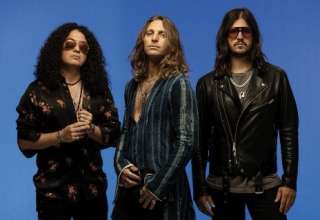
By the time Unitcode:Machine took over, the crowd was packed tight and fully primed, but the night shifted from blunt-force grit into something sleeker, colder, and more wired.
Their set was vocal-forward, with Eric Kristoffer standing at the center of it all, singing directly into the room rather than hiding behind the electronics. That choice gave the performance a human charge, a pulse under the circuitry. After the harder physical impact of the earlier bands, Unitcode:Machine gave the packed house a chance to cool off before the headliner, but not in the sense of slowing the night down. It was more like stepping from a furnace into a room full of blue light and humming machines.
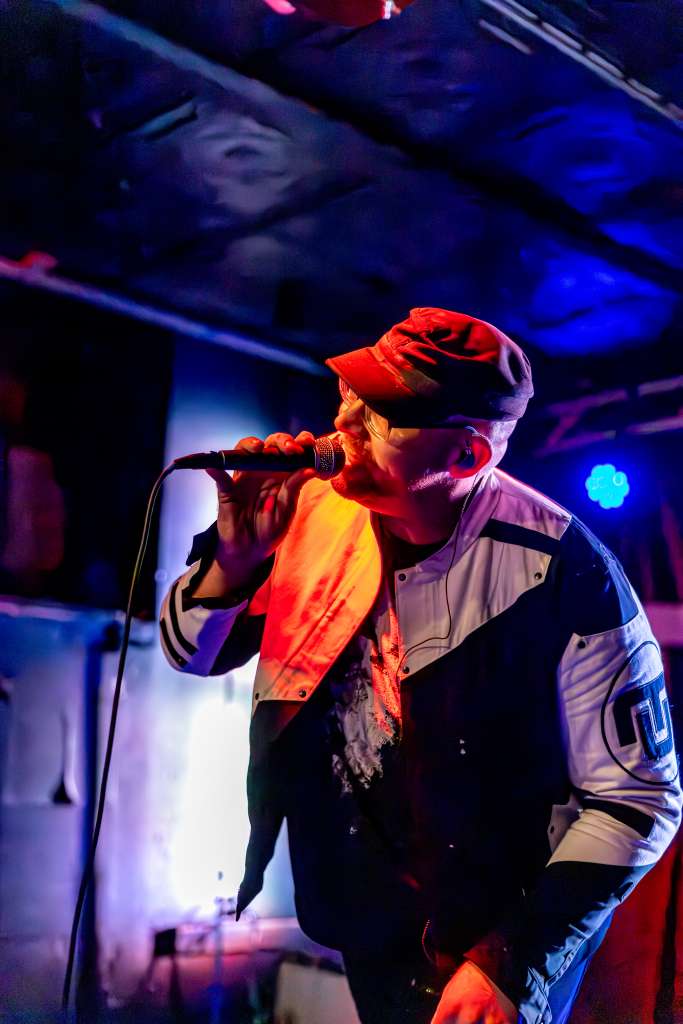
The synth backing tracks carried the songs with dark, polished momentum, all clean lines and shadowed corners, while the strobe lights assaulted the senses in sharp white bursts. That contrast worked beautifully: the music moved with icy control, but the lighting came at the crowd like a malfunctioning warning system. Every flash carved the room into fragments: faces, hands, cables, then darkness again.
Unitcode:Machine brought a sharper electronic sheen, the kind of sleek propulsion that makes industrial music feel both human and synthetic at once. Their set had the momentum of machines arguing with ghosts. The beats were clean enough to move bodies, but the emotional temperature stayed cold, bruised, and cinematic.
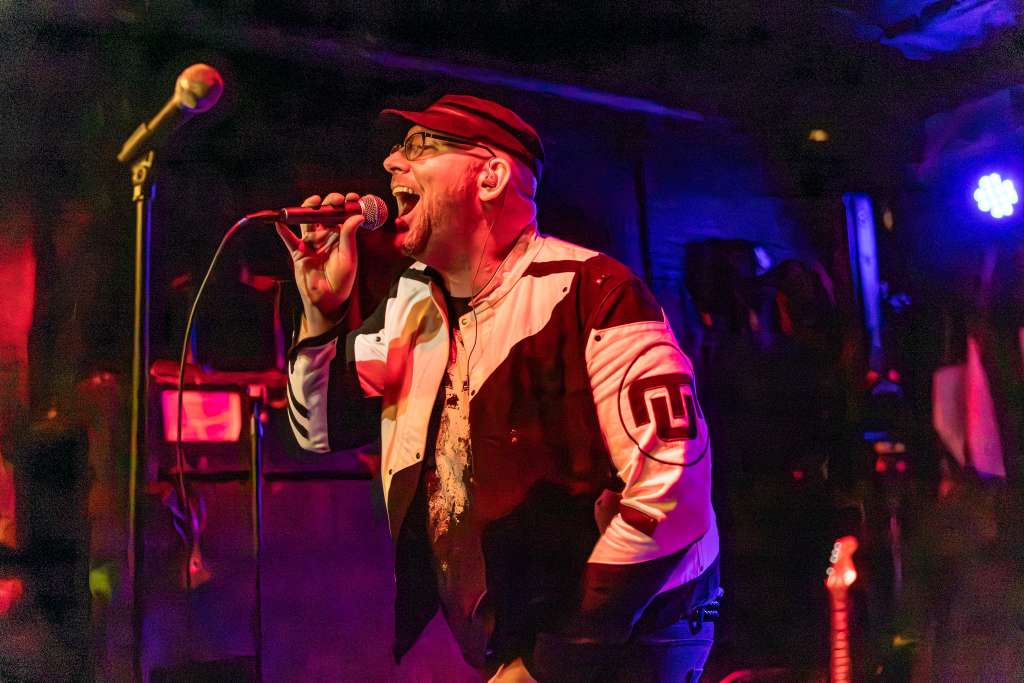
What stood out was the balance. Unitcode:Machine didn’t bury the songs beneath atmosphere, and they didn’t sand down the darker edges for accessibility. Kristoffer kept the vocals up front, giving the set a clear emotional spine while the electronics pushed underneath like current through steel. It was music for people who dance like they’re trying to outrun bad memories.
As direct support, they served the night well. They lowered the room’s body temperature just enough to keep everyone alive, then raised the voltage again until the air felt charged for En Esch.
En Esch in the Flesh
Then En Esch arrived, and the room changed.
There are performers who simply take the stage, and then there are performers who alter the air pressure. En Esch belongs to the second category. His presence carries history, but not museum history. Not the polished plaque version. It’s the kind that still has cigarette burns in it. The kind that sweats.
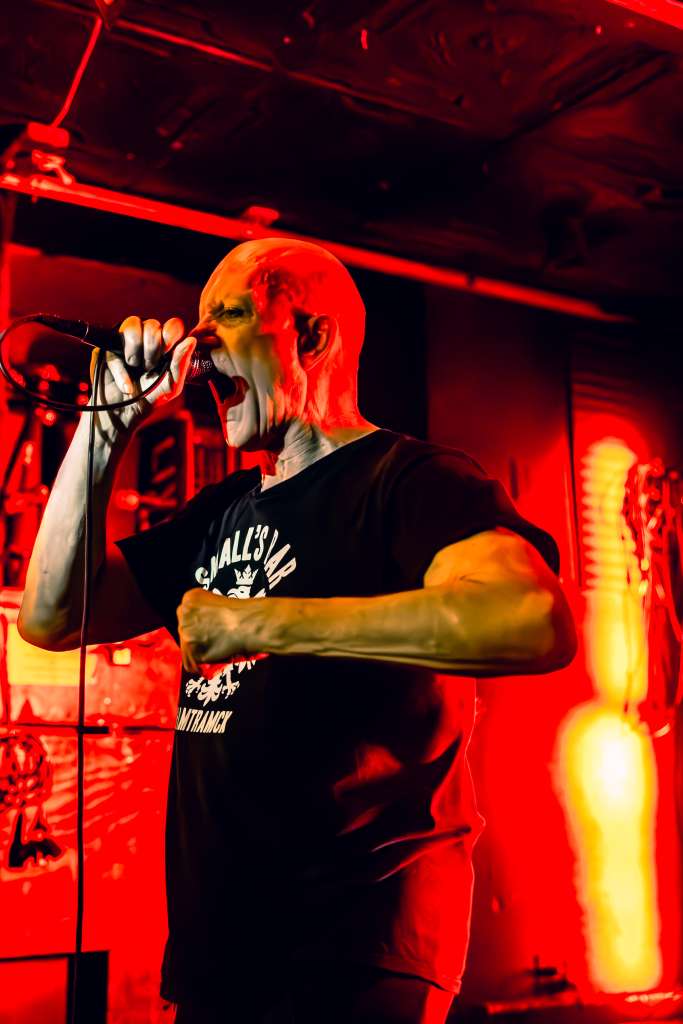
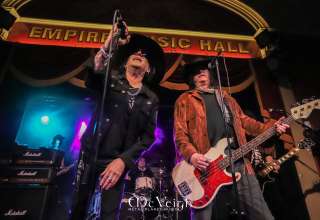
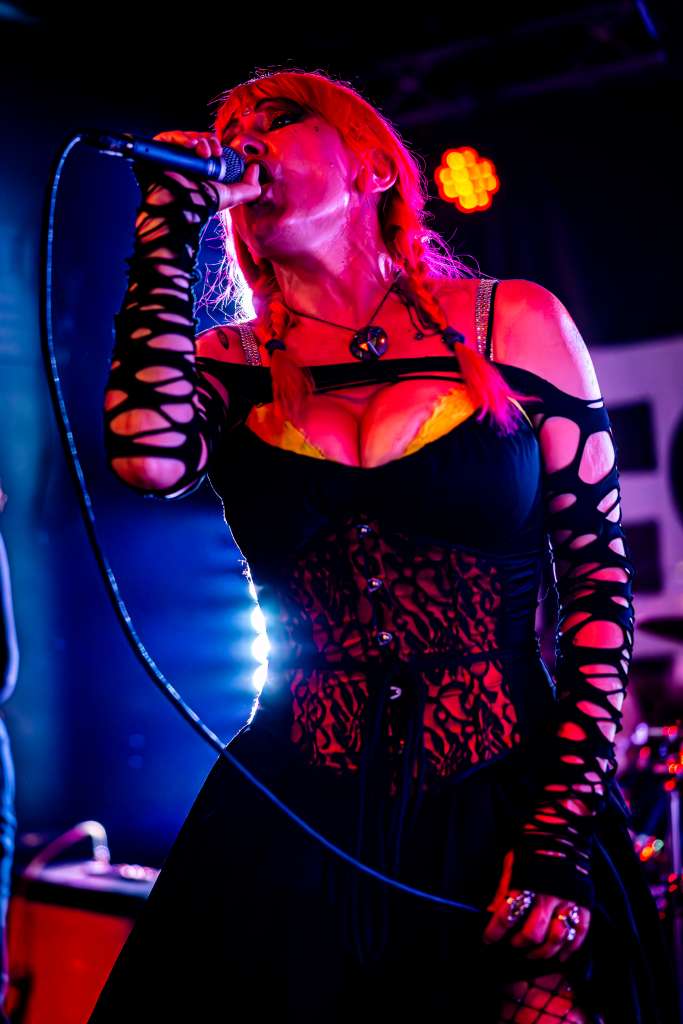
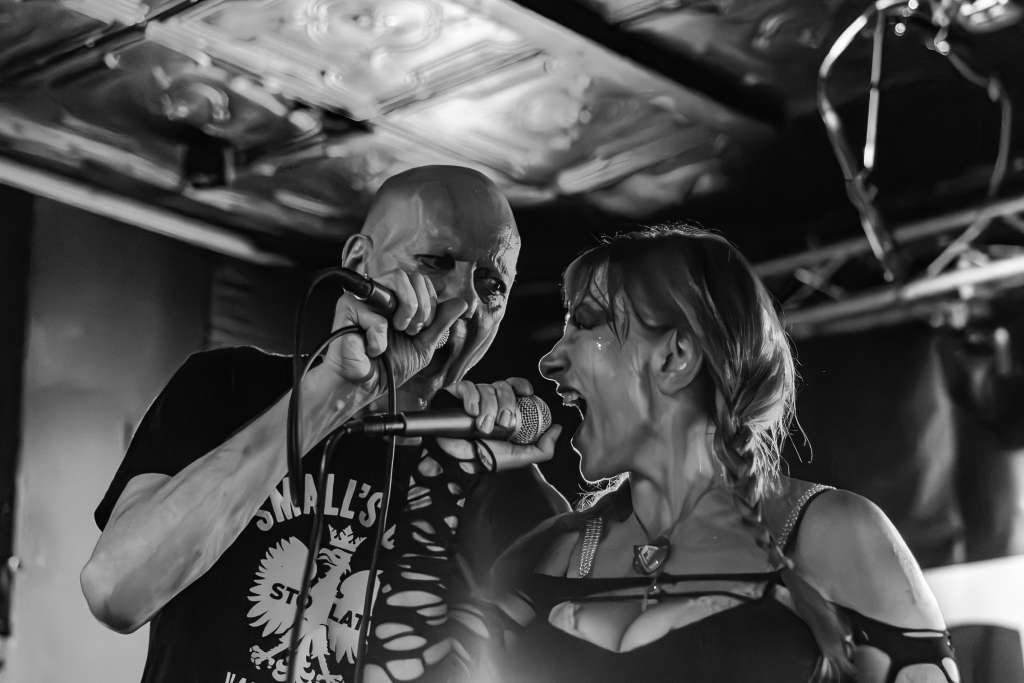
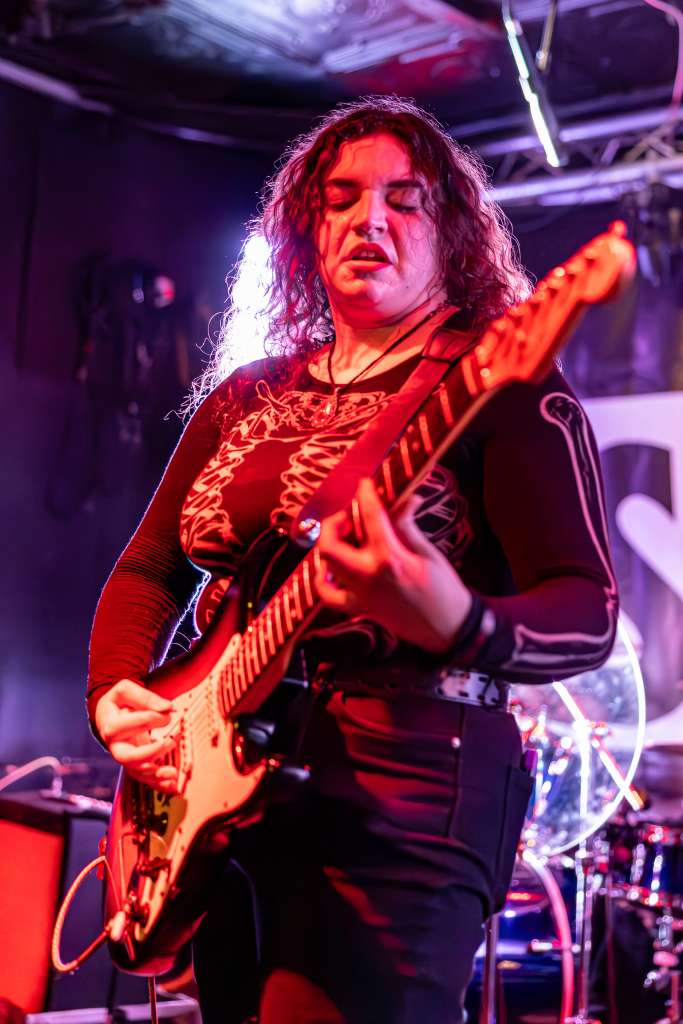
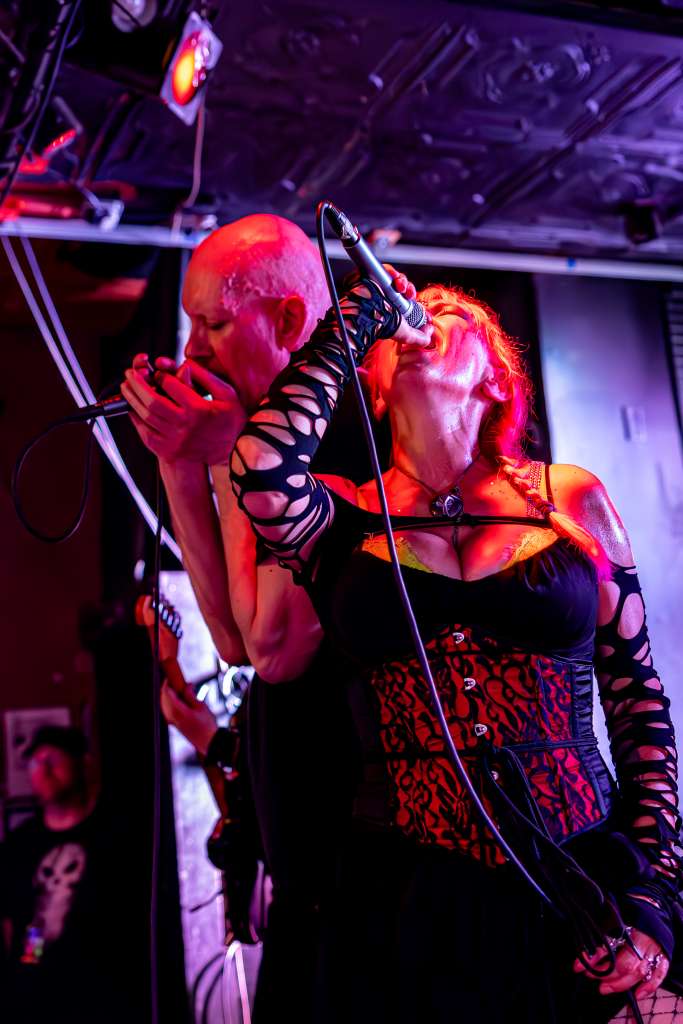
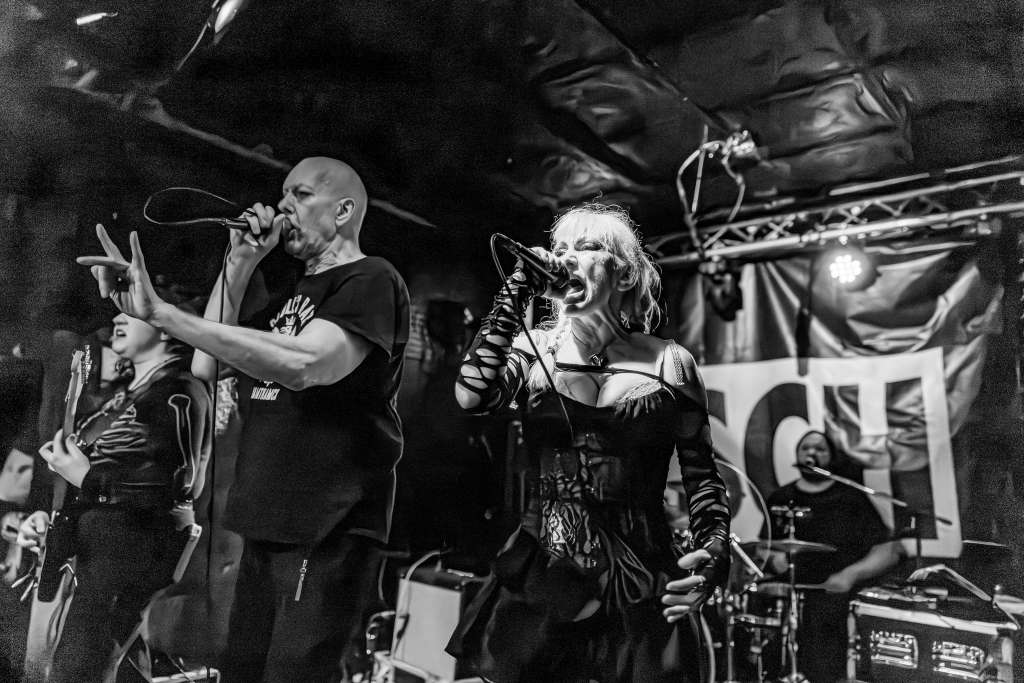
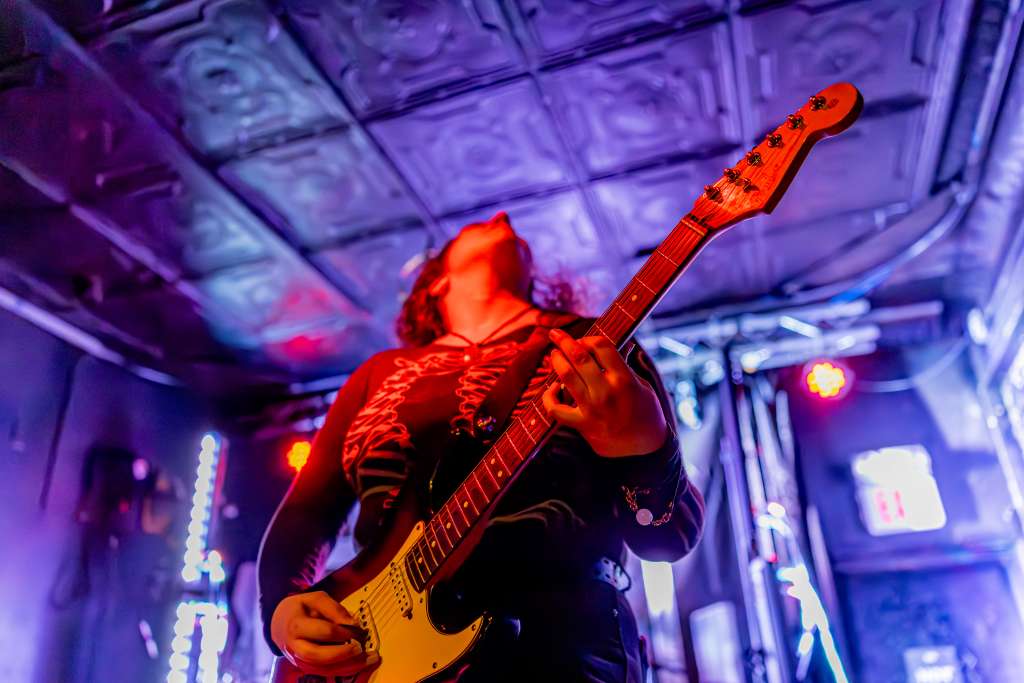
At Live Wire, he stood at the center of a sharp, dangerous live unit: Stephanie Perez on guitar, Jacqueline Van Bierk on vocals, Michael J. Carrasquillo on drums and vocals, and En Esch himself on lead vocals, prowling the whole thing like the master conductor of a beautifully unstable machine.
And he really was conducting. Not in some exaggerated rock-star way, but in small, precise flashes: a cue to bring the drums in, a motion to cut the guitar solo before it bled too long, a subtle signal for Van Bierk to move forward so the videographer could catch her dancing in the right light. It was theater, command, and battlefield awareness all at once. En Esch wasn’t just fronting the band. This was a man who still understands how to weaponize charisma.
For anyone with even a passing knowledge of industrial music’s uglier, sexier, more confrontational bloodstream, En Esch is not just another name on a flyer. He is part of the architecture. His work helped shape a world where rock, electronics, performance art, sleaze, satire, and sonic violence could all be welded together into something dangerous enough to leave marks.
At Live Wire, that legacy didn’t feel like a victory lap. It felt active. Restless. Hungry.
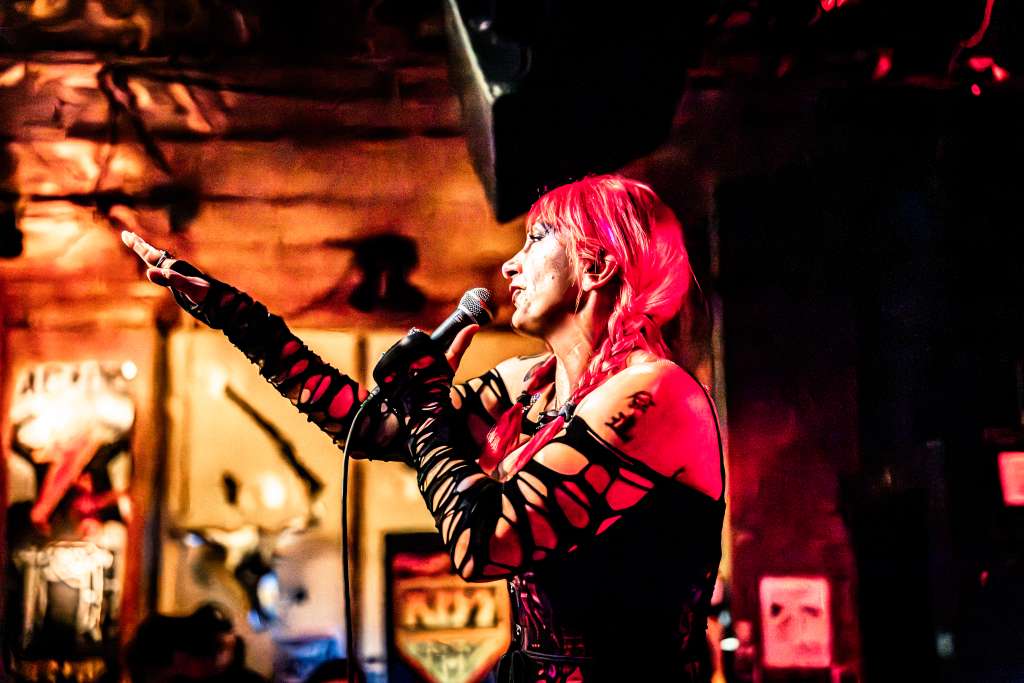
The set stretched across his history, pulling from the KMFDM bloodstream with “Juke Joint Jezebel” and “Godlike,” folding in material from the newest En Esch album Dance Hall Putsch, and letting the songs grind against each other like different eras of the same beautiful machine. It was a wide net, but not a scattered one. The older material didn’t feel embalmed, and the newer songs didn’t feel like polite interruptions. It all belonged to the same rotten cathedral.
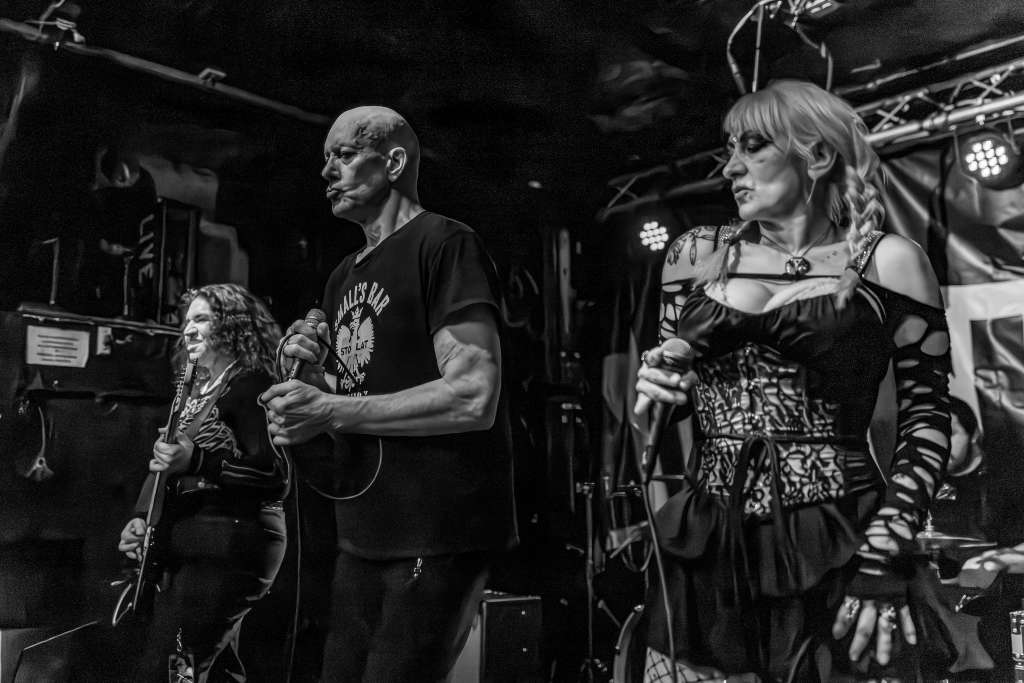
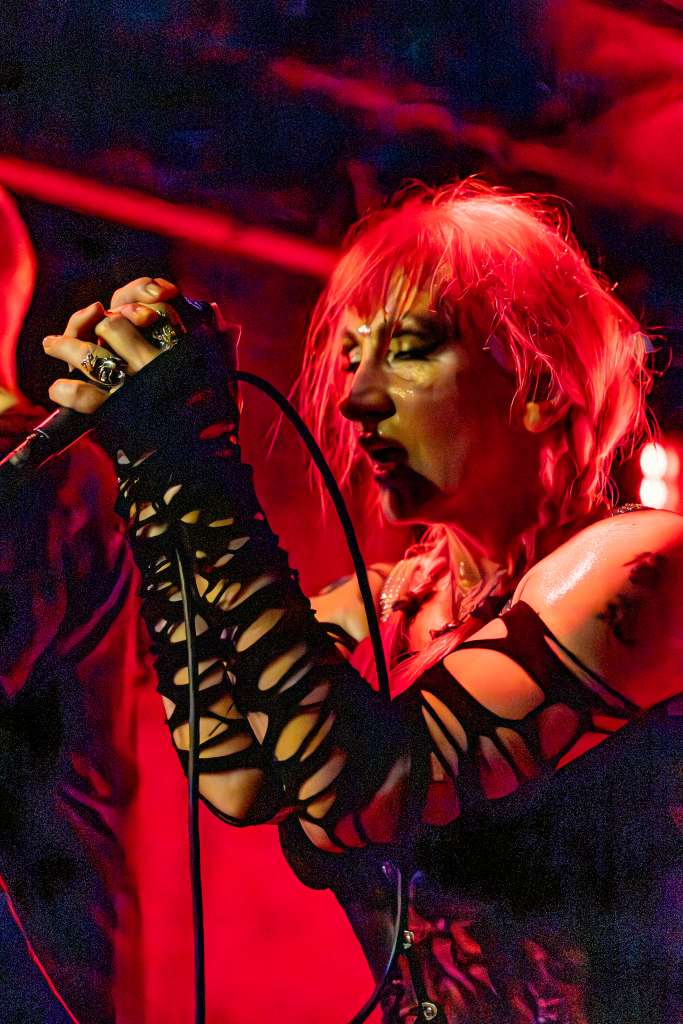
The performance had that glorious industrial contradiction: mechanical and feral at the same time. The rhythms punched with factory-floor insistence, but En Esch moved through them like a live wire stripped of insulation. Perez’s guitar gave the set teeth. Carrasquillo drove the drums with force and precision. Van Bierk added voice, movement, and a visual charge that cut through the darkness like a blade catching strobes. And En Esch, grinning and sneering and commanding from the center, made the room feel less like an audience and more like a congregation that knew exactly which dark sermon it had come to hear.
Then, about fifteen minutes in, with the energy peaking and the band and crowd fully locked together, everything stopped.
Silence.
Darkness.
Earlier in the night, the room had felt like a theater with bad wiring. This time, it wasn’t atmosphere. It was the fire department. Power had been cut to the entire block because of a nearby emergency, and Live Wire was suddenly plunged into the kind of blackout that makes a concert feel like it has slipped out of reality for a few minutes.
Cell phone flashlights came out. People drifted onto the sidewalk for a smoke break. Some of the less die-hard fans took the outage as their exit cue and disappeared into the Chicago night. But the faithful stayed close, buzzing in the dark, while band members made it clear the show would go on.
And it did.
Roughly ten minutes later, the power returned, and En Esch and company picked up with the very next song on the setlist. No restart panic. No limp apology. Just the machine kicking back to life, angrier for having been interrupted. The blackout didn’t kill the momentum. It gave the night a scar.
Live Wire was the right setting for it. Not too clean. Not too distant. No sterile big room disconnect. The crowd was close enough to feel implicated. That matters with En Esch. His music doesn’t belong behind glass. It belongs in a room where sweat hits the floor, where the bass makes the walls flex, where the front row looks half-hypnotized and half-ready to confess something.
The encore brought its own piece of Chicago industrial mythology when Martin Atkins appeared as a surprise guest on drums. With Atkins behind the kit, En Esch performed “War Ich Nicht”, the Pigface song tied directly to his early work with the collective. Pigface itself grew out of the orbit of Ministry’s late-’80s/early-’90s touring world, and En Esch is credited with vocals on that track from the 1991 Pigface album Gub.
That moment landed with history in its boots. Not nostalgia. Something better. Recognition. A reminder that this Chicago industrial web was never just a genre map. It was people crossing stages, joining bands, burning bridges, rebuilding them, disappearing, reappearing, and dragging the noise forward by the throat.
What made the set land was not just volume or legacy or cult-figure electricity. It was the sense of theater without artificial polish. En Esch has always understood that industrial music is not merely sound. It is attitude, posture, provocation, costume, flesh, machinery, and timing, all grinding against one another. At Live Wire, he leaned into that lineage without becoming trapped by it.
The set felt decadent, but not lazy. Dirty, but not sloppy. It had the confidence of someone who helped build the house and still knows where the bodies are hidden.
And after all of that, after the blackout, the restart, the encore, the guest appearance, and the late-night industrial revival energy, nobody seemed in a hurry to leave. The show pushed well past 1 a.m., and the crowd lingered anyway, talking with band members, trading stories, smoking outside, and letting the night cool slowly instead of cutting it off clean.
En Esch didn’t simply headline the night. He gave it a pulse, killed the lights, brought it back from the dead, and left the room glowing with the weird afterlife of a show that refused to behave.
The beauty of this bill was how well it moved. Morbid Circle opened the portal. Biocarbon13 poisoned the bloodstream. project .44 gave the night muscle and menace. Unitcode:Machine added voltage and emotional frost. Then En Esch stepped in like the patron saint of the blown speaker, turning the whole thing into a sermon for the beautifully corrupted.
It would be easy to call the evening a throwback, but that would miss the point. This wasn’t nostalgia. Nostalgia is clean. Nostalgia puts old chaos in a frame and sells it back to you with a commemorative laminate. This show felt dirtier than that, and better for it.
Industrial music has always survived by refusing to behave. It mutates. It limps forward. It scavenges parts from punk, metal, synthpop, performance art, fetish clubs, horror films, political disgust, personal collapse, and the sound of cities eating themselves alive. At Live Wire, that lineage felt less like history and more like a living organism with bad intentions.
En Esch didn’t simply headline the night. He gave it a rotten crown.
By the end, Live Wire felt properly used up, the way a room should feel after a show like this: ears ringing, floor sticky, bodies half-drained, the air still carrying the burnt-metal aftertaste of amplifier heat, spilled beer, old wiring, and human devotion.
Some concerts entertain you. Some concerts impress you.
This one left fingerprints on the throat.