Review by Rick Eaglestone for MPM
DevilDriver deserve better! I still have a huge spot for their debut which frankly was met with what I still consider a lot of negative resistance and I feel they’ve been on an uphill battle ever since but now we arrive at latest album Strike And Kill and well, this isn’t the sound of a band coasting on muscle memory – it’s the sound of a band that has spent the last five years being taken apart piece by piece and has emerged from the wreckage hungrier, sharper and more dangerous than it has any right to be. I’ll spoil the ending now: it is the best thing they have done in years.
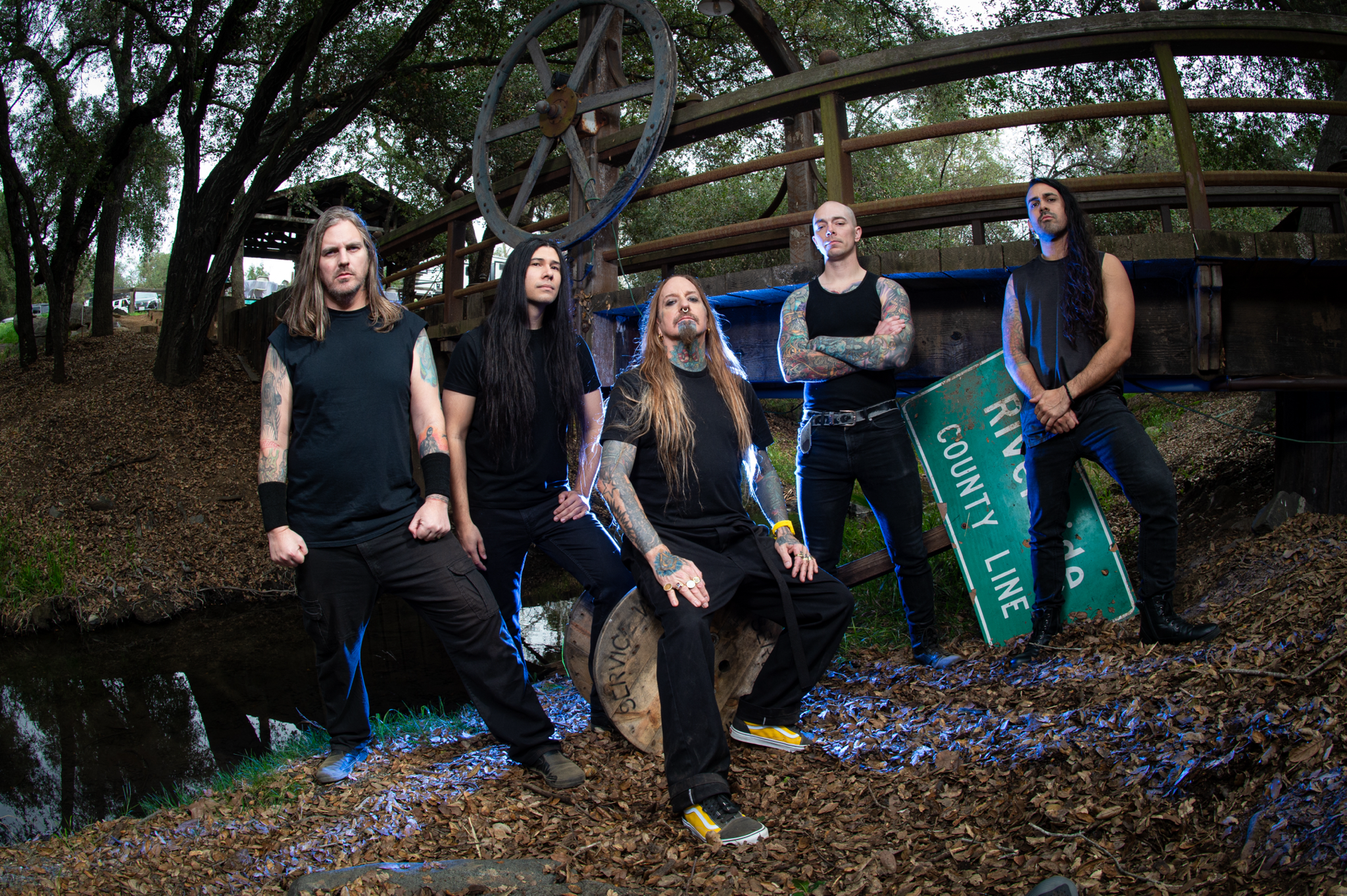
Let’s take stock of just how much upheaval preceded this record because the context matters. Neal Tiemann departed in late 2021. The following summer brought a double swing, Diego Ibarra out, founding bassist Jon Miller back in the fold for the first time since 2011’s Beast, and Holy Grail’s Alex Lee arriving on guitar. Drummer Austin D’Amond made way for Davier Pérez at the end of 2022, and then in September 2024 came the big one: Mike Spreitzer, twenty years deep and the architect of so much of the band’s sonic identity, called time on his tenure. His replacement, Enterprise Earth’s Gabe Mangold, wasn’t even announced until October 2025. That’s a near-total rebuild around Dez Fafara – the one thread running unbroken through every era of this band and rock history is littered with the corpses of bands that attempted far less surgery and never recovered.
What strikes you first about Strike And Kill appropriately enough is how utterly assured it sounds. This is the follow-up to the sprawling, career-spanning Dealing With Demons double set, a project that closed a chapter both creatively and, with Vol. 1 spending a mighty fifteen weeks at the top of the metal radio charts, commercially. A lesser band would have played it safe. Instead, DevilDriver have handed the keys to the new blood. Mangold hasn’t just filled Spreitzer’s considerable shoes – he has produced the record alongside Pérez, recorded it, mixed it, and mastered it at Studio Nessa, with the drum sessions captured by the ever-reliable Jason Suecoff at Audiohammer and additional drum engineering from Mike Low. Keeping it in the family has paid off handsomely: the production is absolutely enormous without ever tipping into sterile modern gloss, every kick drum landing like a wrecking ball, Miller’s bass given genuine presence in the mix, and the twin guitars afforded room to actually breathe.
Thirteen tracks. Fifty-one minutes. No filler, no ballads, no apologies and absolutely no mercy.
The lead single Dig Your Own Grave is absolutely a statement of intent. Premiered on SiriusXM’s Liquid Metal back in April, it immediately put to bed any lingering worry that the new-look DevilDriver might arrive undercooked. Pérez opens hostilities with kick drum work that borders on the obscene – rapid, mechanical, utterly relentless – while the riffs stack up in tight, punishing formations that close in from every side before dragging the whole thing under. Fafara, meanwhile, spits pure venom at those who engineer their own downfall; his own explanation of the lyric being that one bad decision, one wrong move, can flip your entire world upside down, and that the wreckage rarely stays contained to the person who caused it. There’s a directness to the writing here that recalls the band’s earliest, nastiest material, but the execution is all 2026 – surgical, weaponised, and mixed to flatten buildings. As curtain-raisers go, it is a masterclass in first impressions, and precisely the right way to open this chapter of the band’s story.
The second single Dead in the Water keeps the pace punishing but immediately reveals the record’s secret weapon: the Lee and Mangold guitar partnership. Where the opener bludgeons, this one weaves vividly, melodic lead lines threading through the aggression with genuine elegance, the pair trading phrases like they’ve been playing together for a decade rather than a matter of months. It’s the strongest melodeath showing on the record’s front half, all sweeping harmonies and razor-wire picking, and it points to just how much fresh ammunition this lineup has brought with it.
The first real curveball, Sanctified In Scars and one that this reviewer a lifelong sucker for anything with an industrial pulse was always going to adore. A cold, mechanical throb underpins the track, menacing and metronomic, while eerie sonic textures drift across the top like fog rolling off a factory floor. When the tremolo-picked guitars arrive, they bring a distinctly blackened chill with them, all frost and fury, and Fafara adjusts his attack accordingly, less bark, more ritual incantation, his voice practically consecrated by the swirling darkness around it. It is the kind of atmospheric detour that the Dealing With Demons albums flirted with but never fully committed to, executed here with total conviction and not a hint of gimmickry. The blend of pulsing electronics, blackened tremolo work and that unmistakable voice shouldn’t work on paper, and yet it is one of the finest moments on the entire album.
Title tracks carry expectations, and this one meets them head-on with interest. Built on riffing of genuinely dizzying technicality. Lee and Mangold locking into serpentine patterns that twist, coil and snap back on themselves – it’s driven relentlessly forward by Pérez at his most frantic, the drumming so swift in places it threatens to outrun the song entirely, but beneath all the violence there’s real substance: Fafara has framed the track as a reconciliation with hardship and the hard lessons it leaves behind, a stocktake of scars accumulated and survived, and that lends the aggression a weight and purpose that pure belligerence never manages. The chorus is a beast, too, one of those simple, declarative DevilDriver hooks that will have several thousand people bellowing the album title back at the stage before the year is out.
One of the album’s more expansive cuts, In The Moonlight is one that most generously displays its emotional range. Gorgeous, harmonised guitar work is proper lighters-aloft stuff, or whatever the circle-pit equivalent of that gesture might be, it wraps itself around the brutality, elevating rather than diluting it, and there’s a melancholy running through the whole piece that recalls the band’s melodeath leanings at their most affecting. Fafara’s roar softens at the edges just enough to let the sorrow bleed through, and the interplay between his rasp and those soaring twin leads produces some of the album’s most quietly devastating moments.
Ride or Die is just under three minutes of pure, uncut forward motion. No frills, no detours, no atmospheric preamble – just momentum, the sort of track that exists solely to turn a venue floor into a rolling boil and goes about its business with ruthless, grinning efficiency. The groove here is vintage DevilDriver, that loping, neck-wrecking swing the band patented more than two decades ago, delivered by a rhythm section that sounds positively gleeful about the damage it’s causing.
Headed For The Fall is where the new blood really bares its teeth. The rhythmic patterns here are deliberately, delightfully disorienting riffs that land a half-step from where your head expects them, time signatures that lurch sideways and then correct themselves with a smirk – and yet the song never once loses its hook. That balancing act between technicality and memorability is fiendishly difficult to pull off; too far one way and you’re writing homework, too far the other and the cleverness evaporates. DevilDriver, make it sound almost casual. Fafara rides the chaos rather than fighting it, his phrasing bending around the angular grooves with the instinct of a man who has spent thirty-plus years fronting heavy bands of one stripe or another. Lee and Mangold, meanwhile, seem to be having the time of their lives, stacking lopsided, wrong-footing patterns like structural engineers with a grudge. The result is one of the most quietly clever songs in the band’s entire catalogue, and repeated listens keep surrendering new details. A grower with immediate impact which is both a rare and precious thing.
And now for the thrash. Shut The Silence On strips out the atmospherics entirely and goes straight for the throat – swaggering, old-school riffage colliding head-on with blastbeats that Pérez dispatches like a man being paid handsomely per hit. There’s a gleeful nastiness to the whole affair, a palpable sense of a band thoroughly enjoying its own capacity for violence, and Fafara sounds utterly unhinged in the best possible way, his delivery fraying at the edges as the tempo climbs.
Following this is certainly a showcase for the guitar partnership, and arguably the record’s most immediately accessible song Never Coming Home is emotive without ever being soft, melodic without sacrificing an ounce of weight, and there’s a widescreen, panoramic quality to the arrangement that suggests it was written with festival fields in mind. This is the track that will sound absolutely enormous drifting over a crowd at dusk, ten thousand voices carrying the refrain. Fafara’s lyric, wounded and defiant in equal measure, gives the melody its teeth.
The album’s deep breath, and a beautifully judged one, Summoning Shadows sees delicate acoustic figures accumulate slowly, deliberately, layer folding over layer, the pressure rising with every bar – this is the longest stretch of respite the record allows itself across its entire runtime, and the band wrings every drop of atmosphere from it. There’s an almost cinematic quality to the arrangement, all gathering dusk and distant thunder, and just when the quiet has settled fully into your bones, the full band detonates back through the walls in genuinely victorious fashion, the release hitting all the harder for the restraint that preceded it. At under three minutes it functions essentially as a bridge between the album’s two halves but dismissing it as an interlude would do it a disservice.
The technical streak resurfaces on You’re Just A Ghost where all angular riff patterns and rhythmic sleight of hand designed to keep the listener permanently, pleasurably off balance. But where lesser bands would let the cleverness become the whole point. DevilDriver anchor the complexity to a vocal performance of pure, concentrated spite. Fafara dismisses his subject with a contempt you can practically taste; the title delivered less as an insult than as an erasure: you don’t matter, you never did, you’re barely even here. It’s chilling stuff, and it gives the song’s twisting architecture an emotional spine. The interplay between Lee and Mangold reaches its most intricate point on the record here, phrases folding into and out of one another with surgical precision, harmonies appearing and dissolving before you can fully grab hold of them. Dense, demanding and hugely rewarding, it’s the track most likely to divide casual listeners from the devoted and the one the devoted will still be unpicking months from now.
The second of the album’s full-bore thrashers, Oath Of Iron might even outpace the first. The riffs here are filthy – muscular, ballistic things that seem to have been forged rather than written and Pérez peppers the whole track with blast beats seemingly for the sheer joy of it, his footwork by this point in the album having long since transcended reasonable human limits. There’s a swagger to the performance, the unmistakable strut of a band that knows exactly how good it sounds and has stopped pretending otherwise, and Fafara matches the music’s brute confidence with a vocal that’s all clenched fists and gritted teeth. If Shut The Silence On was the pit igniting, this is the pit achieving structural collapse.
And so, to the end, a slow-burning colossus that trades velocity for sheer, planetary mass. After twelve tracks of largely relentless assault, the closer takes its time, building patiently, layer upon layer, the groove thickening into something continental in scale before erupting into a crescendo that feels genuinely cataclysmic. Everything the album has been building towards is compressed into these final minutes, the melody, the menace, the sheer physical weight – and as final statements go it’s a mighty one, the sound of every thread the record has been spinning pulled suddenly, violently taut. The album doesn’t so much finish as collapse under its own gravity, leaving a ringing silence that feels earned rather than merely arrived at. Closers are hard; closers that recontextualise everything before them are rarer still. This is one of the latter, and when the last chord finally decays, you’ll do exactly what I did: start the whole thing again from the top. Magnificent.
Strike And Kill will not, in fairness, convert anyone who wrote DevilDriver off years ago as a one-trick groove machine, the band has no interest in reinvention for its own sake, and there are no jazz odysseys or synthwave detours lurking in the back half. But it will make that dismissive position considerably harder to defend, because what this record does, brilliantly, is take everything the band has learned across twenty-three years and hand it to a lineup with everything to prove and the tools to prove it. Lee and Mangold are, whisper it, the finest guitar pairing this band has ever fielded, equally fluent in soaring melodic finesse and blunt-force trauma. Pérez is a flat-out revelation, one of the most exciting drummers to join an established metal band in recent memory. And Miller’s return gives the low end a warmth and menace it has quietly missed since Beast, the prodigal bassist slotting back in as though the intervening decade never happened.
Above it all, of course, remains Fafara, the owner of one of heavy music’s most singular instruments, a corrosive rasp that no producer has ever managed to make sound like anybody else. In an era where so much extreme metal vocals blur into interchangeable competence, that kind of authenticity is worth more than any amount of technical polish, and at sixty he is delivering it with the fury of a man half his age nursing twice the grievance.
Relentless, ferocious, and unexpectedly emotional in its quieter corners, Strike And Kill is the sound of a band that refused to die when every circumstance politely invited it to. It honours the legacy without embalming it, and it announces this new incarnation of DevilDriver not as a patched-up survivor but as a genuine creative force with fuel left in the tank.
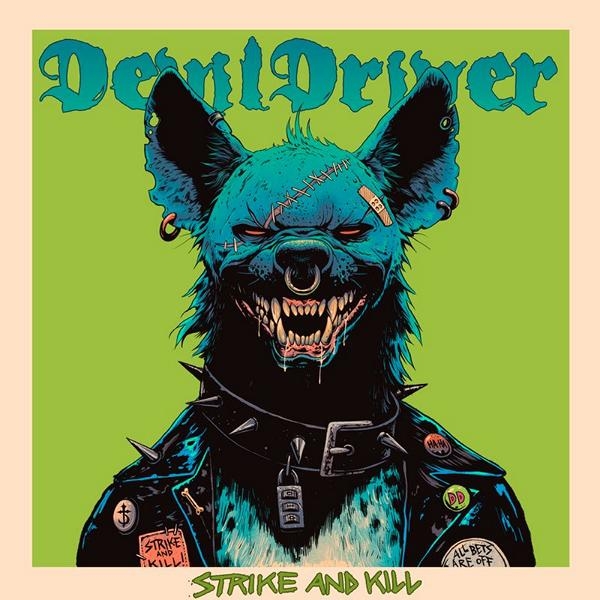
Strike And Kill Track listing:
01. Dig Your Own Grave
02. Dead In The Water
03. Sanctified In Scars
04. Strike And Kill
05. In The Moonlight
06. Ride Or Die
07. Headed For The Fall
08. Shut The Silence On
09. Never Coming Home
10. Summoning Shadows
11. You’re Just A Ghost
12. Oath Of Iron
13. All Bets Are Off
Line-up:
Dez Fafara – Vocals
Alex Lee – Guitar
Gabe Mangold – Guitar
Jon Miller – Bass
Davier Ortega Pérez – Drums
Website: https://devildriver.com
Facebook: https://www.facebook.com/devildriver
Instagram: https://www.instagram.com/devildriverofficial
Bandcamp: https://devildriver.bandcamp.com
8/10