Review & Photography by Nathan Vestal for MPM
There are nights when rock and roll feels like a carefully manufactured product, packaged for mass consumption and delivered with all the dangerous edges conveniently sanded away. Then there are nights when the entire operation feels like it should come with a warning label, a waiver, and possibly a visit to a priest afterward. Sunday evening at the WC Social Club fell spectacularly into the latter category.
With Halloween less than a week away, West Chicago played host to a particularly twisted gathering as Genitorturers brought their Live & Lewd Tour Part Deux into town, accompanied by industrial provocateur Nathan James, Chicago’s wonderfully unconventional Bellhead, and the dark theatricality of Black Season Witch. It was the kind of lineup that made perfect sense to anyone whose musical tastes lean toward the macabre, the abrasive, and the gloriously inappropriate.
The Part Deux designation was especially fitting. This wasn’t a reinvention of the Genitorturers experience but another chapter in the ongoing Live & Lewd assault, carrying the theatrical depravity of the earlier run forward rather than allowing the madness to disappear between touring stretches. Anyone expecting the second installment to be a more restrained affair had clearly wandered into the wrong building.
The crowd was an equally fascinating collection of humanity. Veteran industrial and gothic-rock devotees mingled with younger fans, creating a multigenerational congregation of leather, tattoos, black clothing, and questionable intentions. Some had undoubtedly been following Genitorturers for decades, while others represented a generation discovering that shock rock existed long before social media made controversy a competitive sport.
What united them was a willingness to embrace an evening that promised to get progressively stranger as the night unfolded.
And it most certainly did.
BLACK SEASON WITCH: DARK RITUALS AND STRINGS ATTACHED
Black Season Witch had the unenviable task of opening an evening destined to end in industrial debauchery. Rather than attempting to compete with the headliner’s reputation for outrageous excess, the group approached the stage with its own brand of darkness, one that emphasized musical atmosphere, visual presentation, and an intriguing assortment of instruments.
Frontman Robert and accompanying guitarist Jeff gave the opening performance a distinct personality. Their presentation was more involved than the traditional singer-and-guitarist configuration might suggest, with the large screen behind them providing a constantly evolving visual backdrop that helped establish the mood of the performance.
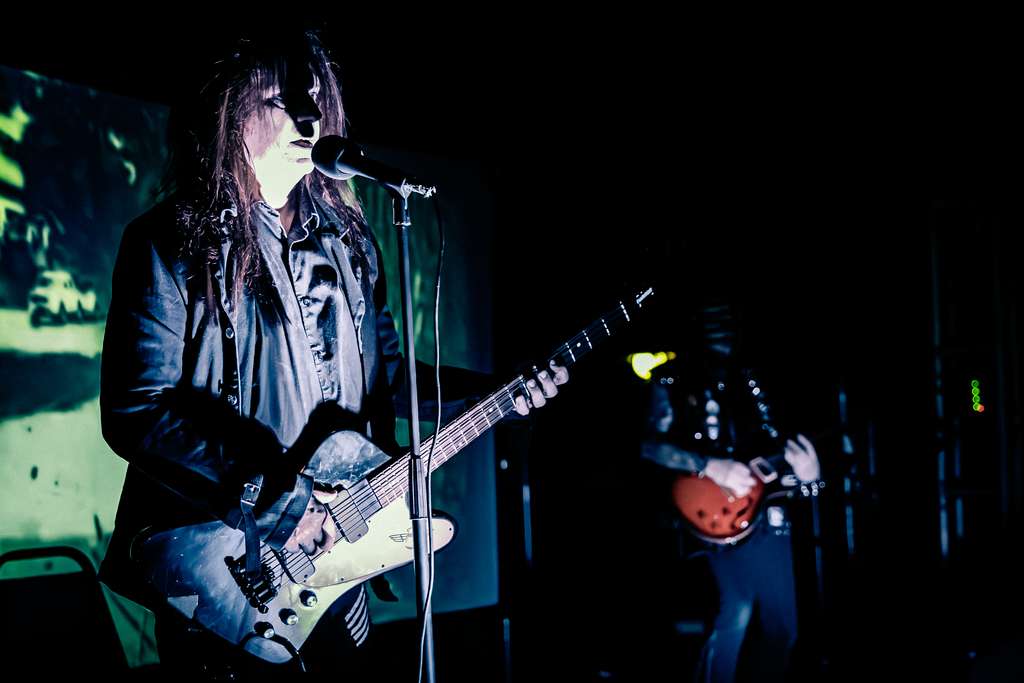
The graphics weren’t simply decoration filling otherwise empty space. They gave the stage a sense of depth and helped frame the music within a darker, more theatrical environment. For a smaller live production, that sort of attention to presentation can make an enormous difference. The audience wasn’t merely watching musicians perform songs; there was an accompanying visual atmosphere intended to draw them into the band’s peculiar world.
Robert provided much of the intrigue through his stage presence and willingness to move beyond conventional instrumentation. At one point, he picked up a cello, introducing an entirely different musical texture into the set. It was an unexpected and welcome addition that demonstrated the band’s interest in creating atmosphere through more than guitar distortion and familiar metal arrangements.
The cello is an instrument capable of remarkable emotional weight. Its lower registers can sound almost mournful, while its sharper passages can create an unsettling tension that fits naturally within gothic and dark alternative music. Seeing Robert incorporate one into the performance helped distinguish Black Season Witch from a crowded field of bands relying on the same predictable combinations of guitar, bass, and drums.
Jeff’s guitar work supplied a contrasting foundation, bringing the heavier side of the band’s identity into focus while Robert explored the different textures and personalities of the material. Together, the musicians created an opening set that favored variety over rigid adherence to a single sonic formula.
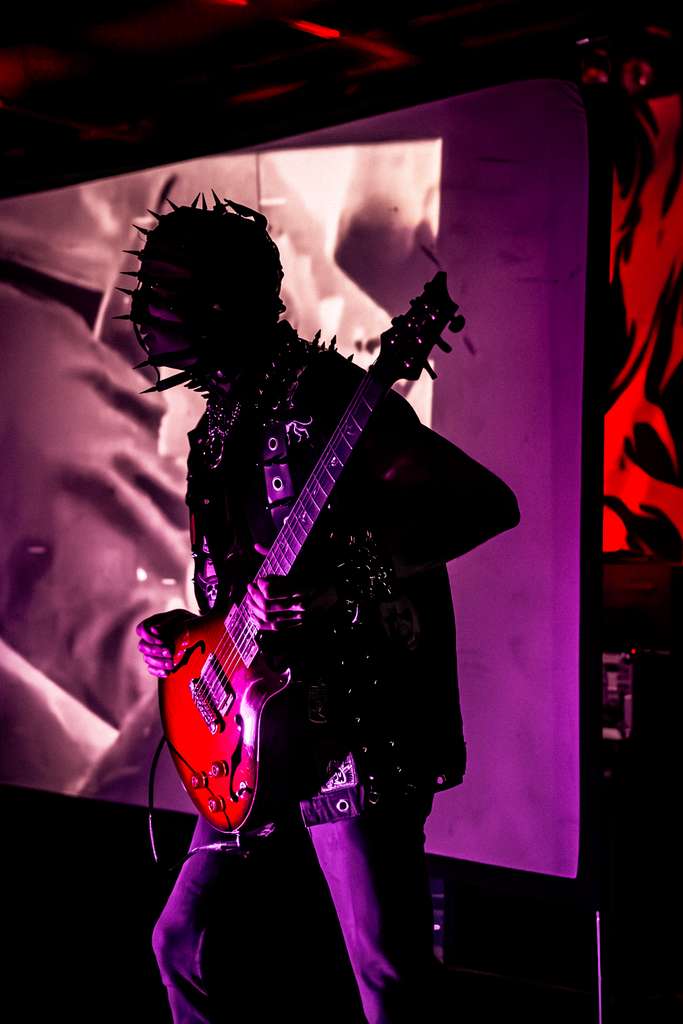
Among the evening’s selections was a cover of Black Sabbath’s “Children of the Grave,” a fitting nod to the band that practically wrote the instruction manual for sinister heavy music. The choice connected Black Season Witch’s darker inclinations to the roots of metal without becoming the defining feature of their appearance.
What made their performance interesting was the broader combination of elements. The shifting instrumentation, screen imagery, and interplay between Robert and Jeff suggested a group interested in developing a complete musical atmosphere rather than simply hammering away at the audience until the next band took over.
For a night that would ultimately become increasingly physical, confrontational, and deliberately outrageous, Black Season Witch offered an appropriately ominous beginning.
The doors to the asylum had been opened. There was still plenty of time for things to get worse.
BELLHEAD: TWO BASSES, ONE DRUM MACHINE, AND ABSOLUTELY NO NEED FOR A GUITAR
Chicago’s Bellhead has built an identity around an idea that sounds almost absurd until you experience what the duo can do with it: two bass guitars, a drum machine, and a complete disregard for the notion that a traditional rock band requires a guitarist.
Comprised of Ivan Russia on high bass and vocals and Karen Righeimer on low bass and vocals, Bellhead occupies a particularly interesting corner of the industrial and post-punk underground. Their music is built from deep, distorted frequencies, insistent electronic rhythms, and the contrast between their vocal personalities. The result is a sound that can be abrasive, hypnotic, and strangely infectious, sometimes within the same song.
At the WC Social Club, the duo provided a welcome shift from Black Season Witch’s atmospheric approach, replacing the ritualistic darkness with something more immediate and rhythmically aggressive.
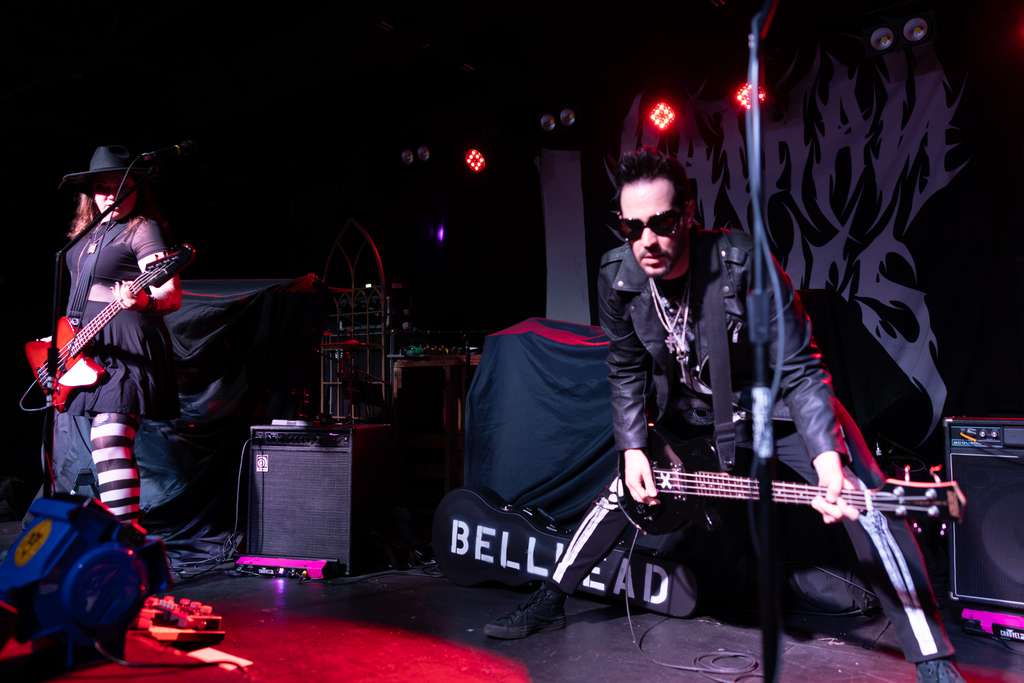
“Threats” was particularly appropriate material for a Bellhead performance. Even the title seems to capture the band’s attitude toward traditional musical expectations. Their arrangements have a stubborn, confrontational quality, driven by thick bass textures that leave surprisingly little room for anything else and somehow never seem to need it.
“Bad Taste” continued that mischievous, confrontational attitude. Bellhead has a knack for making dark music feel entertaining without softening its edges. There is an undercurrent of humor running through the project, though it is the kind that comes wearing black clothing and looking vaguely suspicious.
That balance between menace and personality is one of the things that makes the duo compelling. Industrial and gothic music can occasionally take itself so seriously that the entire experience begins to resemble a funeral conducted by an exceptionally humorless committee. Bellhead avoids that trap by giving its material enough character to breathe.
The interplay between Russia and Righeimer is central to the experience. The high and low bass configurations allow them to occupy different musical spaces while constructing an unusually dense rhythmic foundation. Add the relentless precision of the drum machine, and the sound becomes something closer to a stripped-down industrial engine than a conventional rock ensemble.
But Bellhead’s set wasn’t merely about the equipment or its clever musical philosophy. The duo also understood the importance of bringing the audience into the performance.
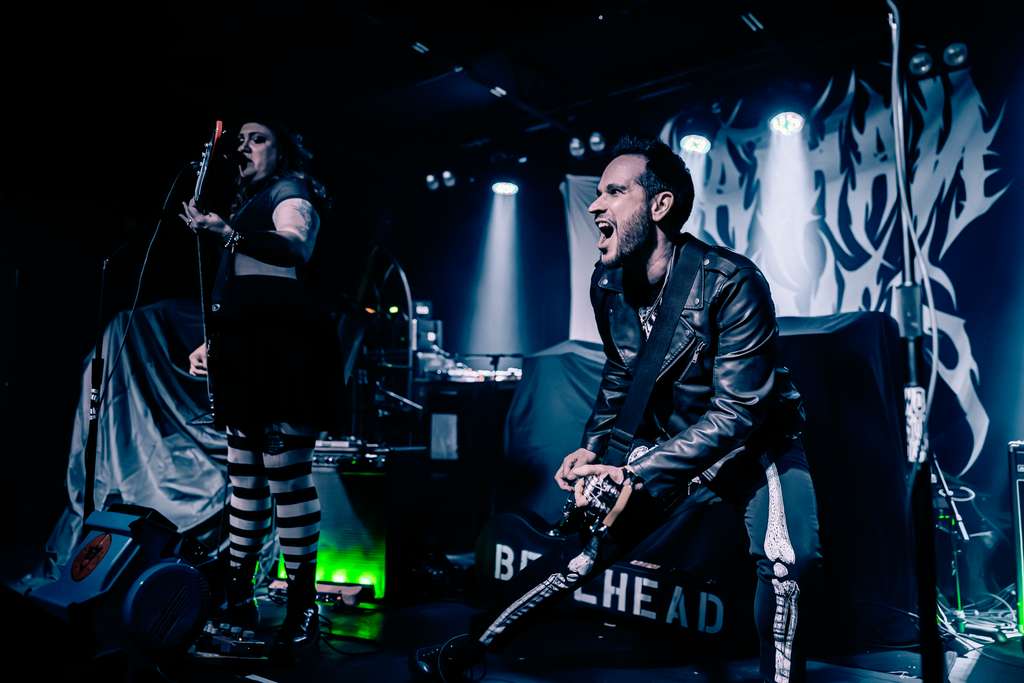
During “Nothing As It Seems,” crowd participation became part of the proceedings, breaking down the usual separation between the musicians and the people gathered in front of the stage. It was a reminder that the best underground performances aren’t simply delivered to an audience. They’re shared with one.
For a two-person act, that ability to engage a room matters enormously. There is nowhere to hide behind oversized arrangements, additional musicians, or elaborate production. Every movement and interaction becomes more apparent, and every successful connection feels a little more personal.
The set ultimately closed with “Unicorn Bones,” a fitting conclusion that encapsulated much of Bellhead’s appeal. Dark, unconventional, and brimming with attitude, it was the sort of closing statement that reinforced the band’s identity without resorting to the usual rock-and-roll theatrics.
Bellhead remains proof that musical originality doesn’t always require more equipment, more personnel, or a larger production budget. Sometimes the most effective approach is to throw out half the traditional ingredients and make something entirely your own.
And for the record, anyone who still believes bass players are supposed to remain politely in the background has clearly never encountered this particular duo.
NATHAN JAMES: INDUSTRIAL INSANITY WITH NO BRAKES AND NO MERCY
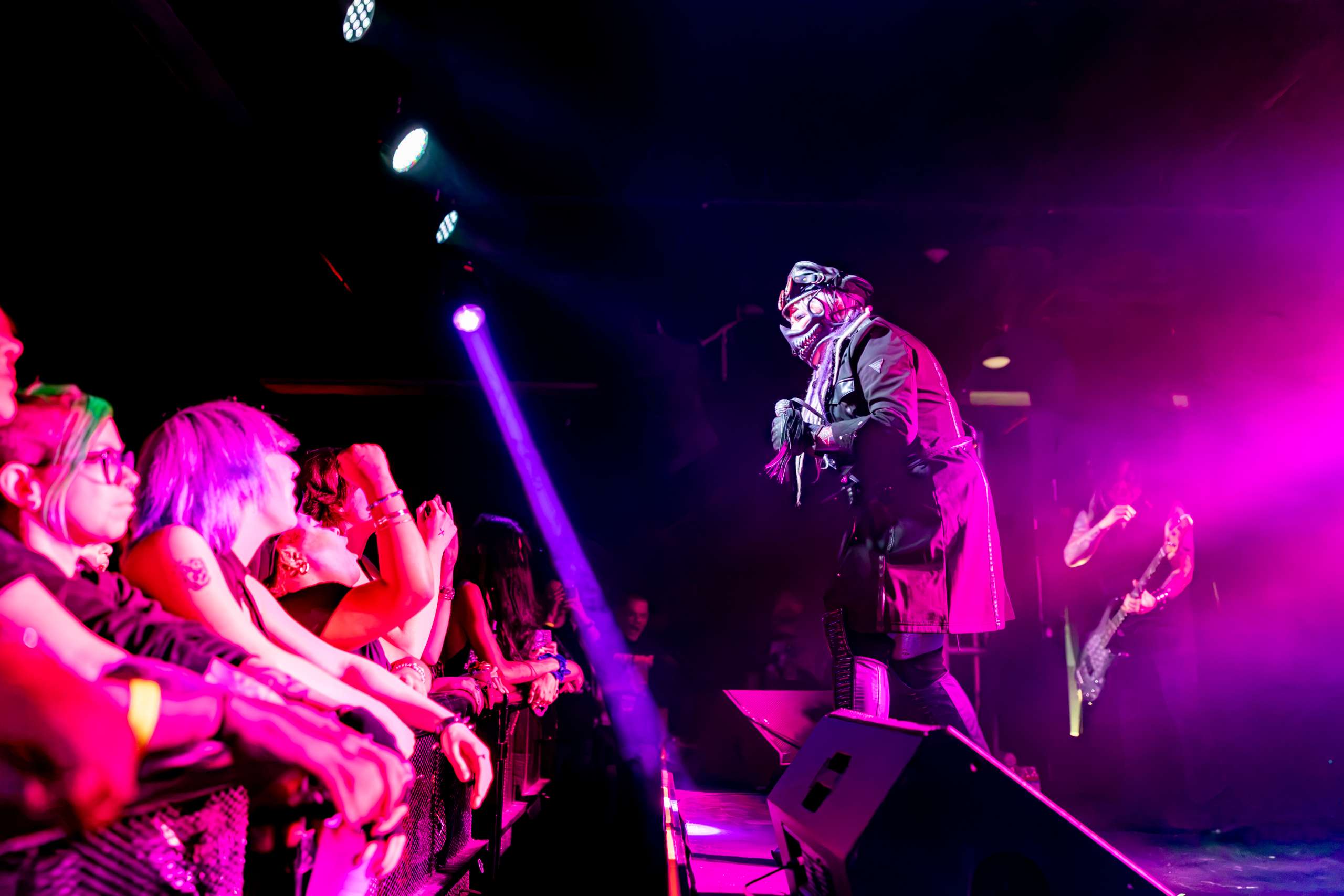
By the time Nathan James took the stage, the evening had already established itself as an exploration of heavy music’s darker personalities. James, however, wasn’t interested in subtlety. His appearance pushed the night into a more physically aggressive direction, combining industrial-metal hostility, horror-inspired imagery, and enough restless energy to make standing still look like a criminal offense.
James operates in a musical universe where industrial rhythms, heavily distorted guitars, and confrontational vocals collide with imagery borrowed from the darkest corners of popular culture. It is a sound that owes something to the mechanical violence of industrial metal but carries a distinctly contemporary sensibility, driven by the exaggerated aesthetics and relentless energy of modern alternative music.
Songs like “Sex Doll” and “Secrets of the Shadows” helped establish the sinister character of the set, offering material that fit neatly alongside the evening’s themes of obsession, darkness, and psychological unease.
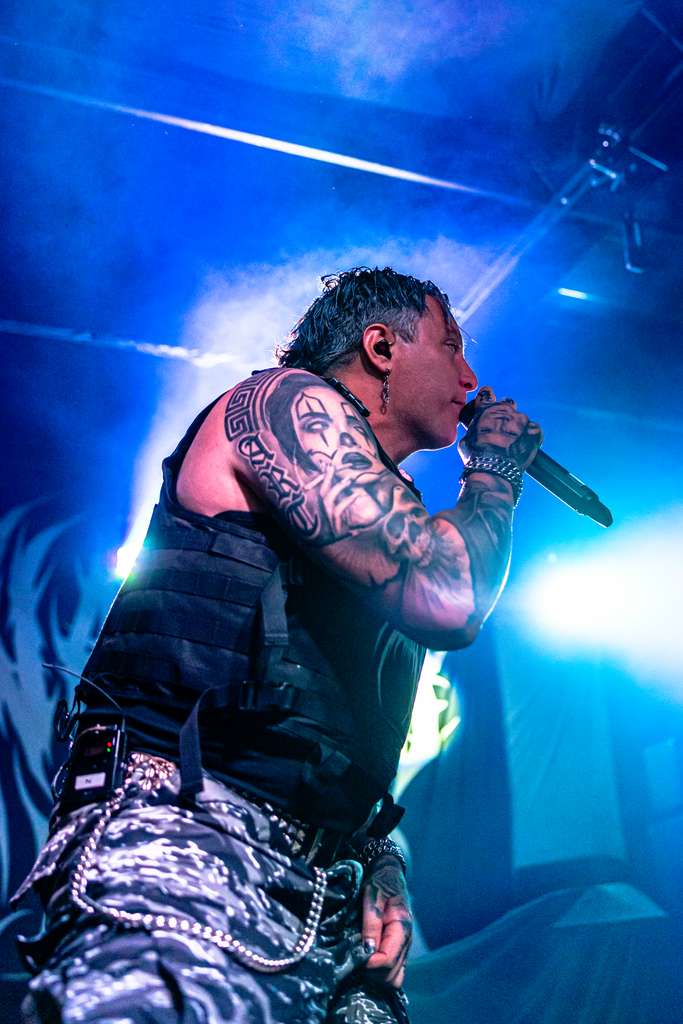
The aggressive “I AM THE WAR” was another reminder that James’s music is designed to hit with considerable force. The title alone suggests a declaration of hostility, and within the context of his industrial-metal approach, it fit the relentless character of the performance.
“The Hanged Man” and “Bloodhound” added further dimensions to the set, reinforcing the darker imagery that has become central to his artistic identity.
Yet what made this appearance especially memorable wasn’t simply the material. It was the sheer physical commitment of the musicians performing it.
James was joined by a drummer and a guitarist who helped transform the music into a genuinely animated stage experience. The drummer supplied the heavy rhythmic backbone, giving the industrial arrangements the physical impact that programmed sounds alone can struggle to reproduce.
The guitarist, meanwhile, appeared to have absolutely no interest in conserving energy for the remainder of the tour.
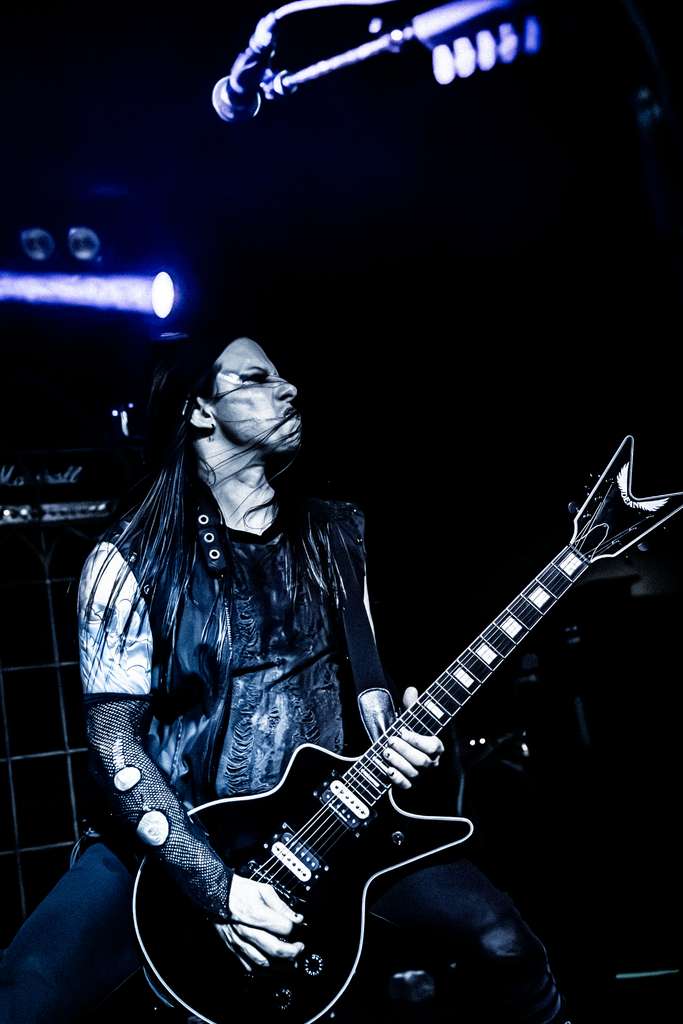
Spinning in circles, running across the stage, violently headbanging, and sending his hair flying in practically every direction, he was a spectacle in his own right. All of this happened while he continued playing, turning what could have been a straightforward supporting role into one of the most entertaining physical performances of the evening.
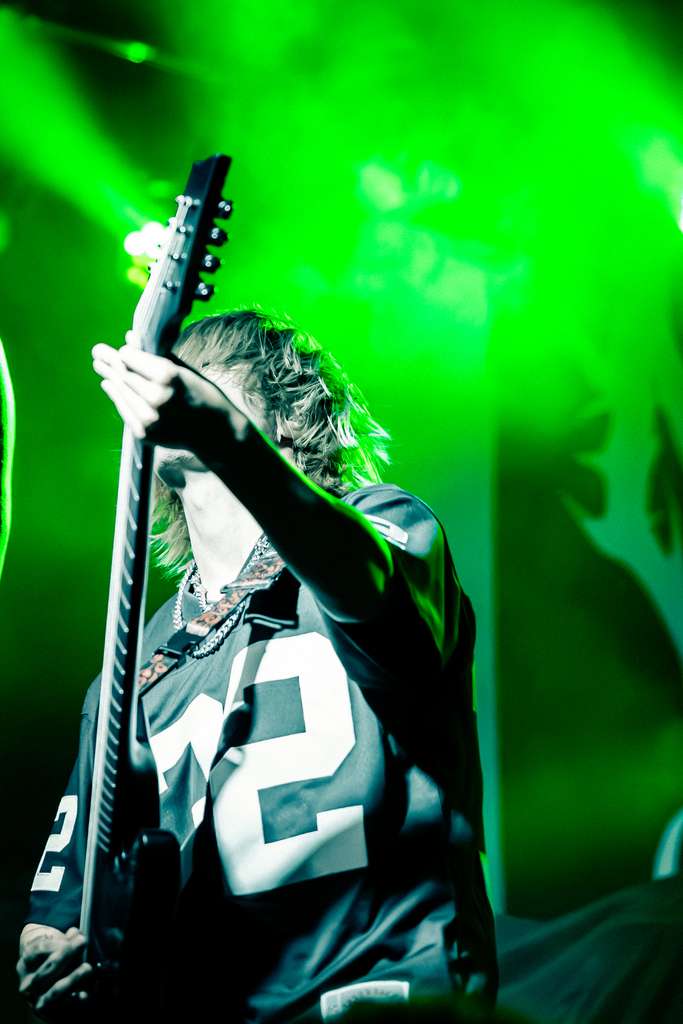
There is a particular kind of manic intensity that separates a guitarist merely playing aggressive music from someone who seems physically possessed by it. This was very much the latter. His constant movement gave the songs an extra dimension of chaos, reinforcing the feeling that the performance might come apart at any moment, even while the music remained firmly in control.
It is exactly the sort of thing live rock music needs more of.
Too many contemporary performances rely on carefully choreographed movements and musicians standing in predetermined positions while the backing tracks do much of the heavy lifting. Watching a guitarist throw himself around the stage with reckless enthusiasm while still attacking his instrument is a welcome reminder that live music should occasionally look like hard work.
And then there was “Pure Imagination.”
Yes, the Gene Wilder classic from Willy Wonka & the Chocolate Factory somehow found itself dragged into the industrial madhouse of Nathan James.

His version was completely insane, taking a composition forever associated with childhood wonder and running it through the distorted machinery of his musical imagination. The contrast was as entertaining as it was unsettling. What had once been an invitation into a magical candy-filled fantasy became something far more sinister, as though Willy Wonka had abandoned chocolate manufacturing in favor of running a questionable underground nightclub.
The brilliance of the choice lies in the contrast. James understands that the familiar can become especially disturbing when presented in an unexpected context, and his interpretation of “Pure Imagination” demonstrated just how far that idea can be pushed.
Nathan James brought the sort of relentless physicality and unsettling creativity that made him an excellent choice to precede Genitorturers.
By the end of the set, the evening had moved well beyond its atmospheric beginnings. The machinery was running hot, the crowd had been properly conditioned, and the stage was ready for a very different sort of nightmare.
GENITORTURERS: WHISKEY, WHIPS, AND THE CHURCH OF BEAUTIFUL BLASPHEMY
Gen turns the WC Social Club into her personal house of sin, mixing industrial-metal favorites with sacrilegious theatrics, willing victims, and enough whiskey to make the entire congregation confess.
There are performers who command a stage, and then there are performers who seem to regard the stage, the audience, and everyone else’s dignity as personal property.
Gen belongs firmly in the second category.
For decades, the Genitorturers frontwoman has occupied a unique position in the world of industrial metal and theatrical shock rock. While other artists occasionally borrow provocative imagery for album covers or music videos, Gen has built an entire artistic identity around the collision of sexuality, power, rebellion, and confrontational performance art.
The band’s history is intertwined with musicians such as David “Evil D” Vincent, whose contributions helped shape the Genitorturers sound, and the current lineup includes long-time guitarist Eric Griffin and drummer Kriz D.K. But whatever names appear in the band’s changing history, Gen remains its unmistakable center of gravity.
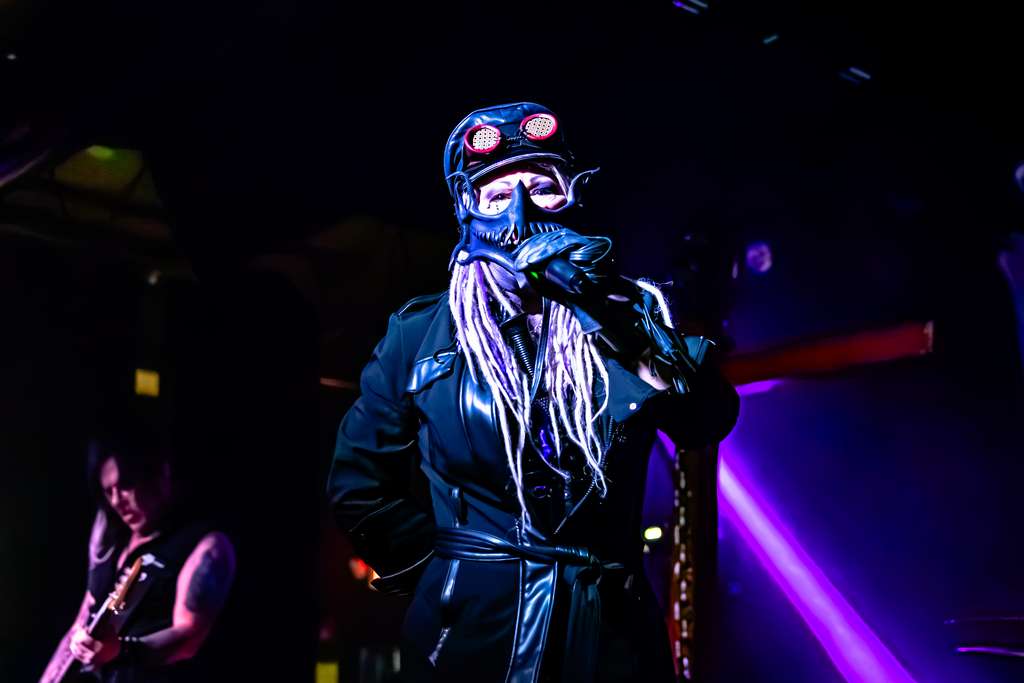
At the WC Social Club, the evening’s headlining performance was as much a carefully orchestrated theatrical experience as it was a concert, combining a catalog heavy with familiar favorites and the kind of outrageous stage imagery that has made Genitorturers notorious.
The transformation began with Gen’s entrance.
Rather than immediately revealing the familiar figure audiences had come to see, she emerged fully covered, concealing herself beneath layers that would be progressively removed as the performance unfolded. It was a simple but effective piece of theater, transforming the act of revealing her appearance into an ongoing part of the show.
As the night progressed, more skin appeared and the mystery gradually disappeared, each stage of the reveal adding another element to the audience’s anticipation. Gen wasn’t merely changing her appearance. She was manipulating the room’s attention, allowing the performance to unfold according to her own deliberately provocative timetable.
The production also featured a particularly memorable rhinestone-covered bloody knife, an absurdly glamorous piece of horror imagery that seemed to summarize the entire Genitorturers aesthetic.
It was grotesque, ridiculous, and completely appropriate.
There is something wonderfully excessive about taking an object associated with violence, covering it in glittering decoration, and incorporating it into a performance already overflowing with theatrical provocation. The mixture of horror and glamour is central to Genitorturers’ appeal. The band doesn’t merely embrace ugliness or beauty. It delights in forcing the two into the same uncomfortable space.
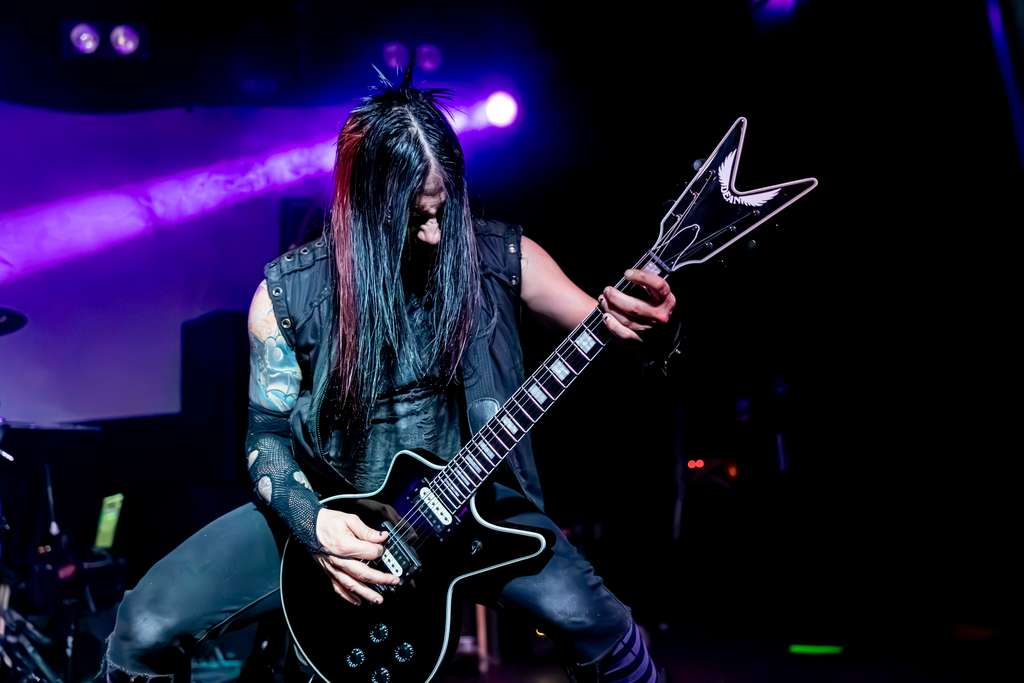
When Gen’s face was finally revealed, she was ready to indulge in another essential ingredient of rock-and-roll excess: whiskey.
Swigging from the bottle while also pouring drinks for members of the audience, Gen erased whatever remained of the boundary between performer and spectator.
Fans spanning multiple generations screamed lyrics back at her throughout the performance, creating the unmistakable atmosphere of a band playing to people who knew exactly what they had come to experience. These weren’t simply curious spectators watching an unfamiliar act. The room included devoted followers who had clearly spent considerable time with the Genitorturers catalog.
And the setlist rewarded them.
The songs were filthy. The crowd knew every word.
“Cum Junkie” delivered exactly the kind of confrontational industrial-metal aggression that helped establish Genitorturers’ reputation. There is nothing particularly subtle about the band’s lyrical approach, and the song remains a prime example of its determination to drag taboo subjects directly into the spotlight.
Hearing fans shout the material back toward the stage reinforced something important about the band’s longevity. The shock value may grab the headlines, but these songs have developed a lasting connection with the audience. Their appeal extends beyond the initial provocation into something closer to underground anthems.

“Lecher Bitch” was another essential inclusion, carrying the snarling attitude and sexual aggression that have long defined Genitorturers’ musical personality. Its grinding character and unmistakable title fit perfectly within the increasingly outrageous stage production.
Then came “Devil in a Bottle,” a song whose title seemed particularly appropriate given the amount of whiskey making its way around the front of the stage.
The bottle wasn’t merely a convenient prop. It became part of Gen’s interaction with the crowd, another way of maintaining the sense that this was less a conventional concert than a gathering of willing accomplices.
What elevated the performance beyond a simple parade of familiar songs was the constant theatrical activity surrounding them.
A cross, a congregation, and absolutely no salvation
Throughout the set, various figures serving as Gen’s onstage slaves appeared as part of the production, participating in the band’s elaborate world of submission, punishment, and exaggerated ritual.
The cross positioned stage right became a recurring focal point.
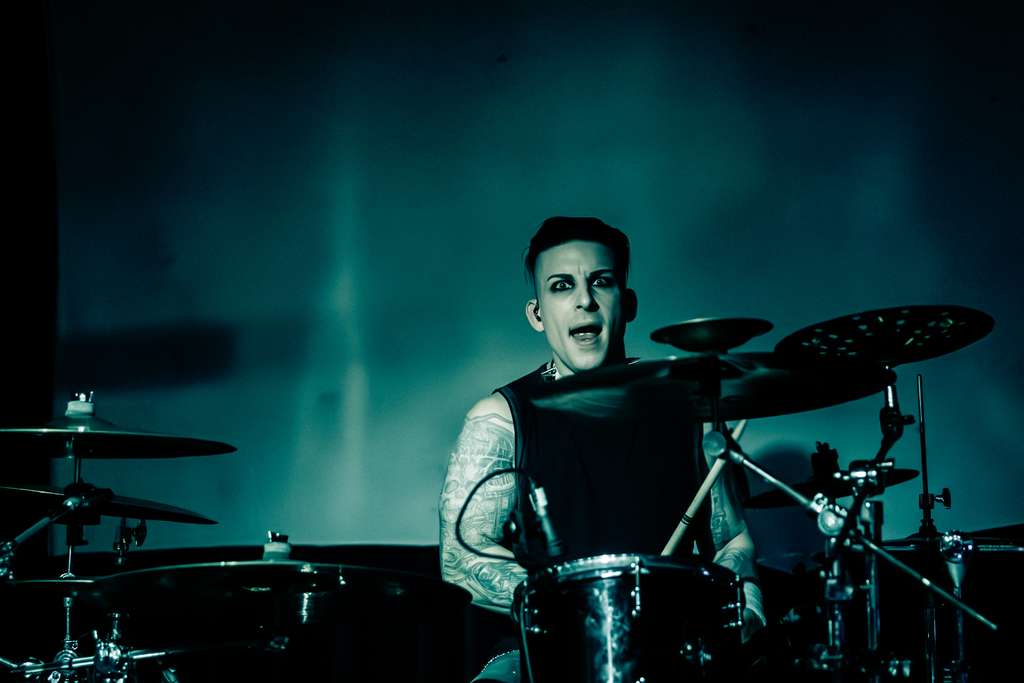
As participants joined the performance, they assumed positions against the imposing prop, turning it into an essential piece of the show’s provocative imagery. It served as a visual reminder of the band’s long-established fascination with the intersection of religious symbolism and sadomasochistic theater.
Genitorturers has never been particularly concerned about whether those combinations offend anyone. In fact, offending conventional sensibilities has always been part of the point.
The imagery grew even more outrageous with the appearance of a blasphemous priest and nun-inspired theatrics, twisting familiar religious iconography into something designed for an entirely different kind of congregation.
Where traditional religious ceremony revolves around reverence and redemption, this ritual was more interested in temptation, excess, and testing exactly how many boundaries could be crossed in a single performance.
It was sacrilege delivered with a knowing grin.
And Gen wasn’t finished intimidating her congregation.
At another point, she threatened the audience with a light-up whip, wielding the illuminated instrument of punishment as another extension of her stage persona. The glowing prop added a surreal quality to the performance, blending the familiar language of fetish theater with the exaggerated visual appeal of a horror-themed rock spectacle.
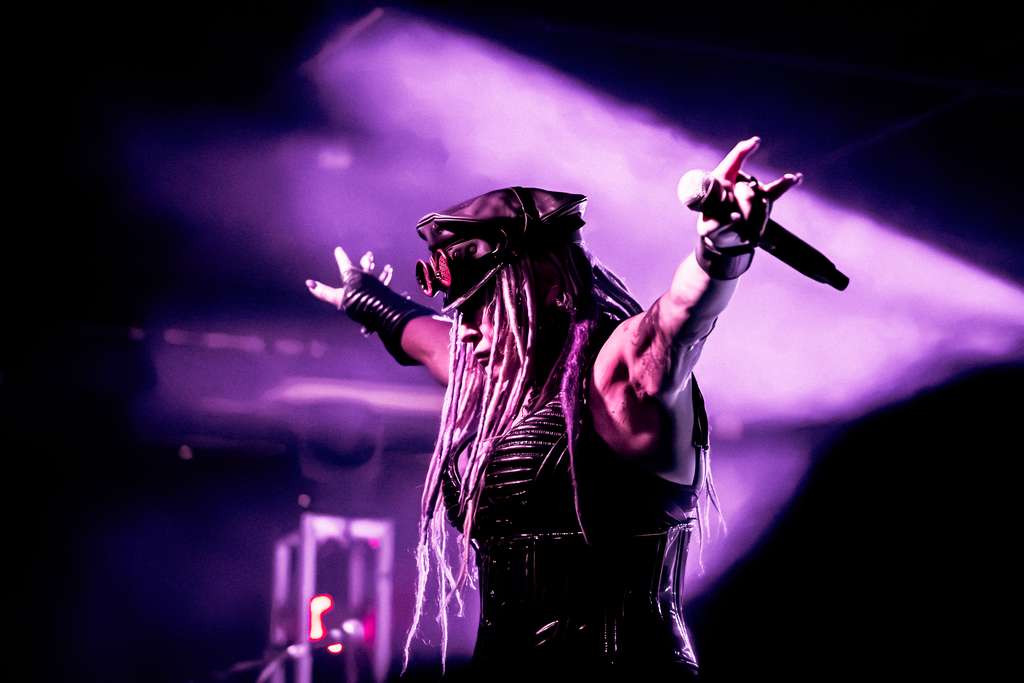
It was the sort of moment that would be difficult to explain to someone who had never experienced Genitorturers.
Then again, explaining it would probably ruin half the fun.
Old sins, fresh scars
While the evening leaned heavily on established favorites, the band also made room for more recent material with “Scars and Stripes Forever,” released in February 2025.
The song offered an important reminder that Genitorturers is not simply touring on the strength of its older catalog. The group continues to release material, and the inclusion of a more recent composition alongside decades-old favorites helped connect its history to the present.
Musically, the newer song belongs naturally within the band’s aggressive industrial-rock identity, carrying forward the confrontational personality that has always been its foundation.
Its presence also helped distinguish the current touring chapter from a straightforward nostalgia exercise.
There is nothing wrong with an established band giving its audience the songs it came to hear, particularly when the material has become so closely associated with the performers’ identity. But the inclusion of newer music demonstrates a continued interest in maintaining that identity rather than simply preserving it behind glass.
And for Genitorturers, the idea of being safely preserved behind anything seems fundamentally ridiculous.
The balance between established favorites and recent material gave the performance a sense of continuity. The songs may span different periods of the band’s history, but they remain connected by the same unapologetic commitment to aggression, provocation, and theatrical excess.
Sin City: one last trip into the gutter
Eventually, even the most outrageous ceremony has to come to an end.
For Genitorturers, that conclusion arrived with “Sin City,” the closing selection and a perfectly appropriate final statement for an evening that had spent hours enthusiastically disregarding good taste.
By that point, the stage had already hosted a parade of blasphemous imagery, willing participants, theatrical punishment, religious subversion, and more exposed skin than the band’s opening moments had suggested.
The audience had screamed its way through familiar favorites, accepted whiskey from the frontwoman, and embraced the spectacle with the kind of enthusiasm that explains why bands like Genitorturers continue to exist outside the boundaries of conventional music culture.
“Sin City” provided the final dose of industrialized sleaze, sending the night’s accumulated madness toward its inevitable conclusion.
And there was something fitting about ending with that particular title.
For a few hours, a venue in West Chicago had become a miniature kingdom of the bizarre, where age differences disappeared beneath shared musical obsession and the usual rules of polite society were left somewhere outside the entrance.
Gen had arrived concealed, gradually revealed herself, dispensed whiskey, wielded her illuminated whip, presided over a parade of theatrical sinners, and led a room full of devoted fans through some of the most unapologetically provocative music in the industrial underground.
By the time it was over, the most surprising thing wasn’t the outrageous nature of the performance.
It was how effortlessly she still commanded the entire production.