
Review & Photography by Manny Manson for MPM
The streets around Rock City are a mesh of damp, diesel from passing buses and spewing Uber’s, there’s the faint tang of kebabs drifting from the package lying in the gutter. Having just parked up, I take a quick look over the wall, down below, the queue snakes like a living organism, across the junction and up the road. The doors are not long opened and the crowd are shuffling in steadily, leather jackets stiff with cold, boots scuffing the pavement, hoods pulled low. You can imagine the conversations bounce between bands, setlists memorised on phone screens, and whispered debates over corpse paint authenticity and who’s bringing the strongest pit energy tonight. My car radio, tuned to Spotify, bleed riffs from Witch Club Satan’s 2024 self -titled debut, a hypnotic tremolo echoing faintly around the multi-story carpark I’ve chosen to park my ride.
The doors are open. The crowd has surged forward, carrying with them months of anticipation. Inside, the familiar bounce of Rock City’s floor meets the toes of hundreds of bodies. The air is a living mixture of perfume, beer, sweat, and stage haze. Blue pre-show lighting paints the walls, illuminating cables coiled like snakes across the stage. The PA hums, a low growl of promise, and the drum risers glint under the lights. Every detail suggests intensity, history, and volume, decades of live music compressed into a single room. Tonight, we have a trifecta of bands, Sweden’s very own Avatar are headlining, on their ”In The Airwaves” tour 2026, and with them they have brought New Zealand trio, Alien Weaponry, a band I’ve seen previously, and new to me, Witch Club Satan, a feminist Norwegian trio who have the privilege of opening the proceedings.

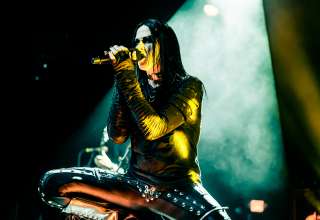
The stage falls into darkness. Minimalism dominates: three figures emerge, faces adorned with corpse paint, their expressions rigid, posture commanding. This is stark, occult black metal intensity. No robes, no theatrics, apart from this all the focus is on the music itself. The audience senses it immediately; Witch Club Satan have never been a typical black metal band. Hailing from Norway, the spiritual and geographical homeland of the genre, they’ve carved their own space in a scene long dominated by rigid orthodoxy. A trio who weaponize minimalism, ritual and confrontation, they strip black metal back to something primal and bodily. No gothic pageantry, no faux-satanic cosplay, just stark presence and challenge. That context hung heavy when the lights fell and three corpse-painted figures stepped forward, white skirts catching the dim glow like apparitions, complete with woven head attire, and woven tops full of holes! Witch Club Satan’s reputation as Norwegian challengers of traditional black metal precedes them.

“Intro – Witchcraft Techno” opens the set, this plays as the trio walk onstage with burning embers in their hands, this is passed into the crowd, I’ve seen similar done by The Death Cult with burning sage, with its lethargic bass drone wrapped around screeching picked lines that slices through the haze. The guitar tone is raw, mid-forward, likely a tube amp pushed to saturation, letting each note scream without muddiness. Drums enter with a tom-centric procession, snare tuned low, resonant, a heartbeat under the riff. Vocals are a shriek that carries real diaphragm force, cutting through both the reverb and the murmuring crowd. The pit is tentative at first, the room leaning in, absorbing the ritualistic energy. “Fresh Blood, Fresh Pussy” follows and escalates with percussive urgency. A harmonised chant introduces this one, the drums thunder in and the riffing is wrist-driven, controlled, relentless. Bass locks with the kick drum, thick and slightly overdriven. The song’s lyrical aggression lands physically, faces flicker between shock, awe, and release. Wiid facial gestures and much tongue sticking out of ensues. Guitar feedback is harnessed artfully; harmonics bloom intentionally, as though guiding the audience’s collective attention.

“Salvation” pulls back, creating space. A clean, chorus-tinged passage unfolds, letting the corpse-painted faces of the band loom like statues. Vocals shift to screams punctuated with half-spoken, half-snarled lyrics, intimate yet menacing. Then distortion crashes back, snapping the crowd to attention. This is black metal as ritualized tension and release, each note, each phrase, deliberate. “Mother Sea” moves slower, more doom-laden. Cymbals wash rather than crash; each decay resonates across the room. The phrasing breathes, notes hung and allowed to die naturally. Audience interaction is minimal but physical, screams and headbanging from those caught in the hypnotic pull of the music. Every guitar bend, every bass inflection, every drum hit builds on the previous, creating a tidal wave of sound. And then the stage empty’s, momentarily all is calm, the likes switch to red and with a scream we have what appears to be naked, long haired, and I mean floor length, harpies hitting the stage in flourish of noise, in seconds two of them are on the bouncer step on the barrier leaning themselves into the crowd

“I Was Made By Fire” is intense. The riffs are hypnotic in their simplicity, designed to entrain the listener, and the guitar tone’s mid-range bite gives them a presence that fills every corner of Rock City. Corpse paint glints under the red lighting as the band locks eyes with the audience, daring engagement. The long hair sparing their blushes, not that this trio would be embarrassed. There is a demonstrative cry out against the likes of Epstein and Benjamin Netanyahu, leaving you in no doubt to the bands political bent, rightly so this is met with huge cheers of solidarity from the crowd. “Black Metal Is Krig” continues the onslaught with a screamed spoken intro. Screaming voices and guitar pierces through the air, overdriven but articulate. The bass lines stay anchored, fingers sliding across frets to keep the low end molten. Vocals slice through with precision, a mix of shriek and chant. The song is a manifesto in sonic form, stark and unyielding. “Solace Sisters” closes the set. Rhythms weave between restraint and eruption. Notes hang, then crash. The audience is left raw, adrenaline and reverence mingling in the air. The band exits without a word, leaving the crowd to process the purge that just occurred.
Alien Weaponry could not have been a more different force and that contrast made it electric. Formed in New Zealand by brothers Lewis and Henry de Jong while they were barely teenagers, the band have spent the last decade carving out global recognition by fusing thrash metal with Māori language, history and cultural identity. Their rise from local shows to major festival stages hasn’t diluted their intensity; if anything, it’s sharpened it. The stage is stripped down, cables snaking like veins, as they step into the red haze of Rock City. The siblings Lewis and Henry de Jong, barely into their twenties, exude the confidence of musicians born to the stage, and Türanga Morgan Edwards, their bassist, moved with precise kinetic energy, rounds out a unit that’s been touring the globe, taking their Māori thrash to festivals from Hellfest to Tokyo. Türanga’s bass guitar gleams under the wash of light, its worn fretboard a indicates to hours of practice, fingerstyle flourishes, hybrid picking runs, and tight alternate picking that make the riffs snap.

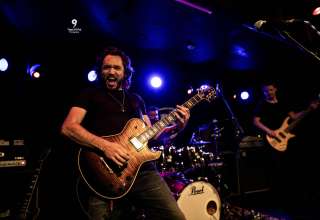
The opening thump of the taped “Haka” is immediate, primal. From behind the drums Henry takes us through this stylised Māori ritual, he is joined by Türanga as they intimidate the crowd. Lewis’ walks nonchantly across the front of the stage, his eyes scan the crowd as if gauging how ready Nottingham is for the cultural onslaught, he’s topless, in a pair of combat pants, his dreads flowing around his face. “Rū Ana Te Whenua” flows in, grooves dropping low in a syncopated bounce that shifts the pit into a controlled surge. The snare cracks like a whip, hi-hats shimmering over the double kick, bass punch cutting across the midrange. Guitar harmonics shimmer at the apex of each chord change, subtly threading through Lewis’ barked vocal lines. There’s a flourish where Türanga bends into a screaming note, fingers sliding across the high frets with a precise, almost classical vibrato, teasing the tension before releasing into a down-picked thrash section that sends the pit into chaos. Nottingham sings along, some yelling the Māori lyrics with unfamiliar syllables, others lost in the sheer energy of the riff. “Te Riri o Tāwhirimātea” follows seamlessly, the tonal shift noticeable but natural, slower bridges between thrash sections giving weight to the lyrical storytelling.

The drums move from tight syncopation to open tom rolls, cymbals shimmering across the room’s acoustic, creating an almost oceanic backdrop for the midsection where Henry lets loose a fingerstyle passage over the riff, hammer-on’s and pull-offs executed with surgical precision. Lewis’ vocal delivery grows more melodic in the pre-chorus, yet still biting, as though each word carries ancestral memory. The pit begins to swirl, circle-pits forming, then collapsing as bodies collide with the energy of the song. “Mau Moko” crashes in, bass thudding with an overdriven rumble, drums punctuating every riff with exacting authority. Henry alternates hybrid picking runs with power chord thrash, letting each note speak before diving into the next. Lewis gestures to the front row, inviting call-and-response, and the audience roars back, voices bouncing off the low ceiling. The corporeal effect of the sound combined with the lyrical history, tales of Māori tradition, transforms the room into a communal battlefield. The guitar tone cuts sharp but warm, amps dialled for midrange punch and harmonic clarity, letting the riffs stand out even amid chaos.

“Taniwha” shifts the set’s energy into a darker register. The riffs are tighter, more menacing, sliding between minor chords with half-step tension, the bass growling underneath. Lewis’s leads trace the top end, harmonic minor licks bending into microtonal ornamentation that gives the song an otherworldly feel. The drums alternate between double kick ferocity and tom-centric tribal fills, each hit resonating across the floor. The pit reflects the music’s intensity, bodies flying, landing in practiced collisions. Lewis’ voice cracks over the chorus, raw and commanding, punctuated by the echo of the crowd’s shouted Māori lines, creating an almost ritualistic call-and-response that connects stage and floor.

The set closes with “Kai Tangata”, a song that fuses thrash precision with cultural weight. The opening riff strikes instantly, palm-muted and tight, then bursts into an open chord progression where harmonic feedback is coaxed from the guitar, lingering briefly in the air. The drums keep a high-energy shuffle, while bass notes throb beneath, each player locked in perfect unison. Lewis’ vocal phrasing bends between aggressive shouts and melodic intonation, his articulation crisp over the distortion. As the final note reverberates, the pit explodes, bodies tossed in unison, crowd surfers sailing over the hands of the nearest fans, faces lit with exhilaration. Alien Weaponry leave the stage, sweat-soaked and grinning, their presence still felt in the trembling floorboards and ringing ears.
Avatar’s journey from Swedish death metal roots in the early 2000s to the fully realised, genre-blurring spectacle they are today has been one of constant evolution. They’ve built a reputation not just on musicianship, but on performance, part carnival, part apocalypse, part dark vaudeville. That history hummed in the low drone that rolled through the PA before they appeared. No pause, no reset. The lights dim further and a single hum, hangs, as the air grows dense, expectant. The audience senses the coming spectacle as shadows coalesce at the back of the stage.

AVATAR emerges, a wall of black and blue, faces painted like nightmarish carnival figures, clad in a blend of dark leather, rivets, and embroidered chaos, covered in a shroud and the dark ambient lighting. Johannes’ ringmaster presence commands attention; Jonas’ guitar gleams under the lights, every fret-hand movement precise, bending notes into vibrato-laden cries. John’s drums strike with deliberate fury, kicks and snares synced with the lighting, while the bass locks the rhythm section, thick and overdriven, anchoring the melodic mayhem. “Captain Goat” erupts with theatrical force, thunder and lightning crackle and flash.

The opening riff jumps from the speakers with crystalline distortion; the midrange carved for attack yet retaining warmth. Back lit and washed in blue light, the band and Johannes, head shrouded carrying a lantern, march onto the stage, Johannes, sweeping his arm toward the audience as they erupt in recognition. Jonas and Tim trade subtle call-and-response riffs, one taking the higher register with harmonics and slides, the other chunking rhythm with palm-muted aggression. The crowd surges instantly, a unified mass responding to every accent and bend. Without pause, “Silence in the Age of Apes” flows in, hooded shroud now removed.
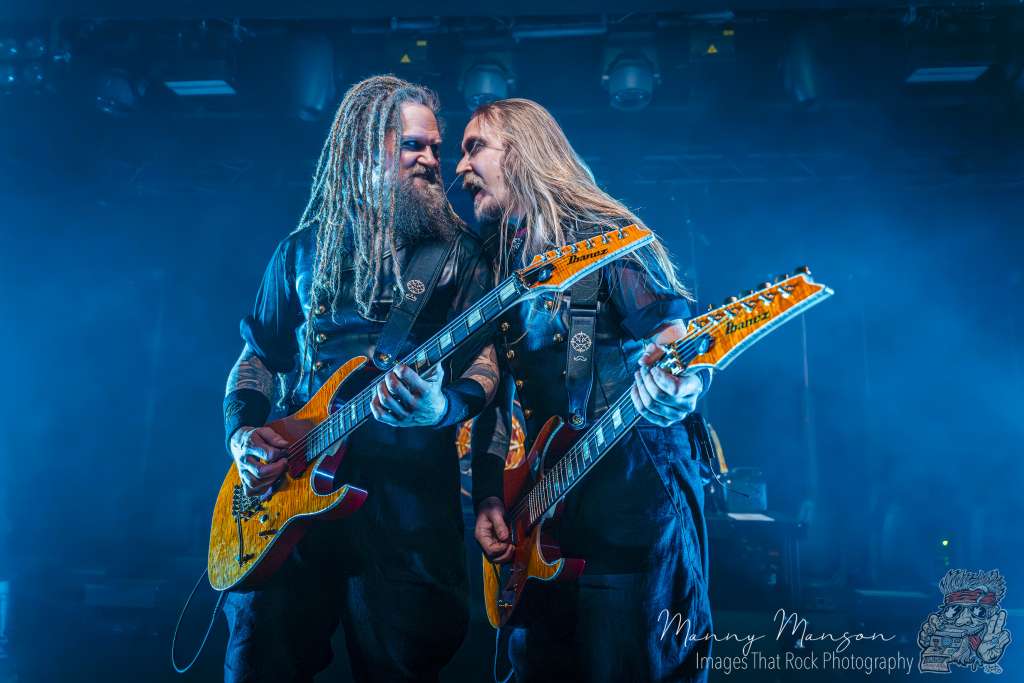
The taught guitar lines walking beneath twin guitar stabbed riffs, all bent over windmilling their hair as lead notes bending into vibrato-saturated wails trail across the room. Johannes’ voice shifts from croon to bite, lyrics articulated with drama and precision. Stage lights sweep the stage, catching the glint of sweat and paint, creating an immersive visual rhythm that mirrors the music. The pit reacts in wave after wave, bodies propelled by drum fills and chord stabs. “The Eagle Has Landed” shifts the set toward anthemics. Jonas’ lead riffs soar above the rhythm, tremolo-picked sections blending seamlessly with slides and harmonic pinch notes. Tim’ Öhrström’s microphone tips over and I reach to catch it, remembering to late that they purposely fall away, having a kick stand to upright them when needed, Tim’s noticed my lunge and laughs from behind his orange Ibanez.

The chorus is lifted by the crowd, who sing along, echoing Johannes’ tone in raw unison. Every stomp of John’s kick drum feels like it’s shaking the foundations, while the high-hat hisses articulate across the front rows. The energy is a living organism, each band member feeding off the other and the audience. The pulse of “In the Airwaves” rides straight from the anthemics of “The Eagle Has Landed,” bass notes locking with John’s precise double-kick flourishes, giving the song a forward drive that feels unstoppable. Jonas’ guitar cuts through with hybrid-picked runs, fingers hammering and pulling off in tight sequences that make every note scream while retaining melodic clarity. The wah pedal is subtly engaged, the signal chain clean enough to let overdrive bloom, letting vibrato linger at the apex of each phrase. Johannes prowls the stage like a predator, mic in hand, bending phrases with theatrical emphasis, letting consonants snap sharply at the crowd.

The pit mirrors the tension, a churning, pulsing body of energy moving in unison, with surges timed to drum fills and chorus peaks. Every light sweep syncs with the riff progression, red and violet washing across sweat-slicked faces, giving the song a sense of kinetic motion even in the audience’s eyes. “Bloody Angel” sees the stage adorned in a myriad of spots, lands next with a theatrical thump. Jonas and Tim’s minor-key riffs wind upward before dropping into utter filth. John accentuating each downbeat with crashing precision, the trash cymbal getting a good pasting.
The song breathes, stretching dynamics between chugging verses and open, melodic choruses. Johannes’, dressed in a red ringmaster coat, along with top hat and cane, voice drifts from snarled delivery to operatic heights, forcing the crowd to lean in, mouths open, singing along involuntarily, punching the sky as they do. The pit becomes an instrument itself, bodies bouncing rhythmically to the complex syncopation of drum and bass, occasionally colliding and rebounding, the energy infectious. Subtle flourishes of slap harmonics punctuate the rhythm guitar sections, creating tension that explodes when the chorus hits.

The stage energy rises and falls in time with the music, creating a visual tide that immerses the audience in the song’s dramatic narrative. As “Death and Glitz” begins, the sound shifts to darker, more cabaret-inspired textures. Jonas alternates between muted rhythm chugs and extended fingerstyle runs, letting dissonance echo for atmospheric depth. John switches from blast bursts to tom-centred rolls, emphasizing the theatrical swing of the song. The crowd reacts to the shifts instinctively, moving as one with the musical narrative. Johannes’ vocals weave a duality, spoken-word menace contrasted with soaring, melodic refrains, while subtle stage gestures reinforce the story without overshadowing the musical performance. The low-end warmth of the bass locks the sound together, letting the guitar’s top-end melodic runs cut with clarity through the mix. Each note seems premeditated, yet the performance feels spontaneous, the improvisation flowing naturally between the rigid structure of the composition. “Blod” strikes with primitive energy.

The riffing is aggressive, down-picked, and percussive, pushing the audience into immediate headbanging. Harmonic minor passages trace over the rhythm section, with Jonas’ lead phrasing bending notes into microtonal nuances that shimmer atop the distortion. John’s cymbal work becomes almost conversational, responding to guitar accents and vocal inflections with rapid, precise crashes and tight hi-hat flourishes. The pit reflects the intensity, bodies colliding and spinning, crowd surfers thrown skyward only to be caught in a practiced rhythm. Johannes prowls like a shadow, his painted face catching the lights at angles that make his expressions both grotesque and mesmerizing. Every moment feels sculpted yet organic, the chaos of the audience amplifying the performance rather than detracting. With “The Dirt I’m Buried In”, the floor trembles under low, chunky power chords, Jonas’ lead weaving melodic counterpoints that sing against the crushing rhythm.

Slides, bends, and hybrid-picked flourishes decorate every bar, with subtle vibrato sustaining tension before releasing into explosive passages. John’s drumming syncopates intricately with the bass, creating a polyrhythmic undercurrent that the pit reacts to physically, waves of bodies surging, crashing, and splintering with musical cues. The lights track the guitar lines, red and violet streaks cutting through the haze as if painting the sound. Johannes’ vocal phrasing alternates between whispering menace and open-throated barks, giving every lyric weight and texture. When “Colossus” begins, the room becomes monolithic.

The band are formed along the front of the stage; this includes a small, practice, drum kit for John Alfredsson. Jonas’ riffs are wide, majestic, hammering through a thick, overdriven midrange tone, each chord forced with precision. Yellow spotlights slice through the band. Harmonics shimmer above the rhythm section, timed to drum accents, creating a layered sonic architecture. John alternates between thunderous double-kick and intricate snare rolls, driving the song’s tension into waves. The pit becomes kinetic, a living expression of the music, crowd surfers appearing like airborne extensions of the riffs themselves. Johannes commands attention, bending vocal lines with dramatic inflections that pull every listener into the narrative. The song’s peaks are accentuated by feedback washes and subtle octave bends that make each guitar phrase feel larger than life. “Torn Apart” transitions seamlessly, dynamics pulling back before exploding again. Minor chord progressions underpin melodic lead lines, Jonas’ fingers sliding up the fretboard into screaming harmonics.

Subtle use of whammy bar bends adds tension, while John punctuates the spaces with crisp snare accents. Johannes’ vocal delivery emphasizes storytelling, each phrase carefully articulated to draw the audience into the song’s dark emotional core. The crowd leans forward, moving as one to every rhythmic shift, bodies forming temporary chains as they collide and rebound. With Johannes now sat at the piano, which has been man handled onto the stage, we are treated to closest thing to a ballad that Avatar play, “Howling at the Waves” this introduces a haunting atmosphere. Soft open chord voicings ring clean before distortion crashes in, fingers sliding across the frets with precision. The song’s bridge allows Jonas to deploy hybrid picking flourishes, blending rapid alternate picking with harmonics to create a cascading effect that drifts across the room. John’s, stood at the stage front on his ‘practice kit’, tom work becomes almost melodic, responding to lead lines with accents that echo the guitar’s phrasing. Johannes’ vocals layer threat and melody, drawing the crowd into controlled chaos, alternating between aggressive surges and introspective pauses. The subtle intro tape of “Glory to Our King” sets up theatrical grandeur complete with golden thrown, from where crown wearing Jonas plays, the crowd sensing the transition from story to his coronation.

As “Legend of the King” erupts, rhythm riffs stomp with near-punishing weight, Jonas’ leads carving melodically over the foundation, bends timed to the drums’ accents, harmonic flourishes ringing into the upper air. John’s drumming blends traditional rock power with technical flourishes, double-kick bursts accentuating lead phrases, snare rolls punctuating key moments. Johannes moves across the stage, gesturing like a conductor, pulling energy from the audience, who respond with synchronized shouts and hand motions “Let It Burn” keeps the momentum forward, open-string chugs underpinning fretboard runs, hybrid picking punctuating transitions. Jonas executes precise pull-offs and hammer-on’s, sustaining notes over the thick rhythm section. John uses cymbal swells to signal impending transitions, body shifting in anticipation, feet stomping to accentuate downbeats. The crowd reacts physically to every change in dynamics, surging and collapsing with the music, the crowd’s movement mirrored in the band’s stage energy. “Tonight, We Must Be Warriors” is a declaration. The guitar tones are bold, mid’s pronounced, distortion tight. Lead runs interlock with rhythm riffs, creating melodic interplay, subtle slides and pinch harmonics adding texture. John’s snare cracks like a whip, double-kick thundering as bodies collide below. Johannes’ vocals soar and bite, commanding attention, the crowd answering every line, hands raised in solidarity, chanting as if unified by battle. And then silence and darkness ensues…

The encore opens with “Don’t Go in the Forest”. The stage is smoggier than the streets of the Rippers, Whitechapel. After cries of more there’s an Owl hoot, and bird song. A drone builds the tension as the band return; bass riffs begins the onslaught. Lead lines cut jaggedly through distorted rhythm riffs, Jonas employing slides, microtonal bends, and subtle harmonics mid-phrase. Hybrid picking accentuates melodic fragments, the overdrive warm yet aggressive. John’s drum hits punctuate riffs with perfect timing; cymbals shimmer atop distortion. Johannes prowls, voice oscillating between shriek and controlled croon, mic angle manipulating natural reverb for dramatic effect. The pit erupts immediately, crowd-surfers lifted, bodies spinning in synchronization with riff and double-kick. Johannes takes a moment to address the crowd once more, he’s never short of words. “bodily fluids, maybe sweat”, he sucks his finger “maybe not”. He then gets Nottingham and Birmingham mixed up much to the crowd’s candour. “We are Avatar, We are from Sweden” eventually “Smells Like a Freakshow” is flung at the crowd with the subtly of a bouncing bomb., heads are windmilling.

Jonas’ leads snake over rhythm riffs, slides and pinch harmonics adding colour and depth. Amplifiers set with slight mid-scoop give rhythm chords bite while leaving room for melodic intricacies. Drums are dynamic, snare rolls, tom fills, cymbal accents, anticipating and responding to lead improvisation. Johannes manipulates audience energy with phrasing, breathing space, and theatrical pauses. The pit churns, bodies ricocheting in almost choreographed chaos, and among all that the crowd join in with the singing and the fist pumping. Johannes finishes the song on all fours before getting up and telling the crowd it’s their last chance to join them, raise those horns as the finale, “Hail the Apocalypse”, unleashes pure mayhem, and confetti from the rafter as the band wind themselves up with more head windmilling. Rhythm guitars hammer tight palm-muted riffs, Jonas’ leads twist with expressive bends, microtonal flares, and harmonic accents. Drums alternate between double-kick assault and fluid fills, cymbals slicing through. Bass locks in thunderously, accentuating lead phrasing. Johannes’ vocals soar, theatrical, commanding, manipulating room energy in real time. Improvised flourishes appear throughout: Jonas shifts to unanticipated arpeggios mid-solo, John accentuates with tom swells timed perfectly to harmonic resolution, the crowd echoing phrases and motion in a living, breathing extension of the performance. He then teases the crowd with a tom flourish to close the night out proper.

The last notes and confetti hang like a suspended heartbeat. Silence first, then eruption, cheers, chants, fist pumps, hair whipping in the red-violet haze. Sweat and smoke linger, corpse paint glistening, leather reflecting light. The energy of the three bands, Witch Club Satan’s ritual black metal, Alien Weaponry’s cultural thrash, AVATAR’s theatrical melodic apocalypse, converges into one unforgettable night. The floor quivers, walls have hummed, and every person present carries the imprint of this three-hour ritual: intensity, virtuosity, chaos, and awe wrapped in a visceral, human experience that transcends music. This is live music, this is what matters, support live music…. get out there and live a little, and don’t forget Johannes’s word of the night is “Solidarity”.