Review by Rick Eaglestone
Motörhead were always a band whose truest home was the stage, and for much of their career their studio albums felt like snapshots of a live assault rather than carefully sculpted statements.
Orgasmatron is the exception that proves the rule. Released in the summer of 1986, it arrived after three years without a studio album, a bruising legal war with their former label and a line-up upheaval that had torn up the classic power-trio blueprint. Lemmy was by then the last man standing from the band’s formative years, and on paper the odds were stacked heavily against him. Instead, he emerged with a record that was heavier, stranger and more menacing than anything Motörhead had put their name to, crowned by a title track that still sounds like the earth splitting open.
It was also, notoriously, the album its own makers grumbled about for decades, a set of fierce songs buried, in their view, beneath a production that never quite let them breathe. Forty years on, BMG is marking the anniversary on 6 November with an edition that tackles that argument head on, pairing a half-speed remaster of the original mix with a brand-new remix by the band’s longtime producer Cameron Webb, alongside rehearsals, outtakes and a full BBC session. It is, in effect, a chance to settle a forty-year-old row, and to ask whether the songs Lemmy and Phil Campbell were so proud of can finally be heard the way they intended.
It is worth remembering exactly where Motörhead stood in the mid-eighties. The band that had given the world Overkill, Bomber and Ace Of Spades, and had topped the UK album chart with No Sleep ‘Til Hammersmith in 1981, had lost its commercial footing. Another Perfect Day, the 1983 album made with former Thin Lizzy guitarist Brian Robertson, had won admirers among critics but few new buyers, and Robertson’s departure left Lemmy to rebuild yet again. Meanwhile, the new wave of thrash bands were openly naming Motörhead as their template, yet the band themselves could not land a record deal, the godfathers of speed turned away by the majors just as their offspring began shifting records by the bucketload.
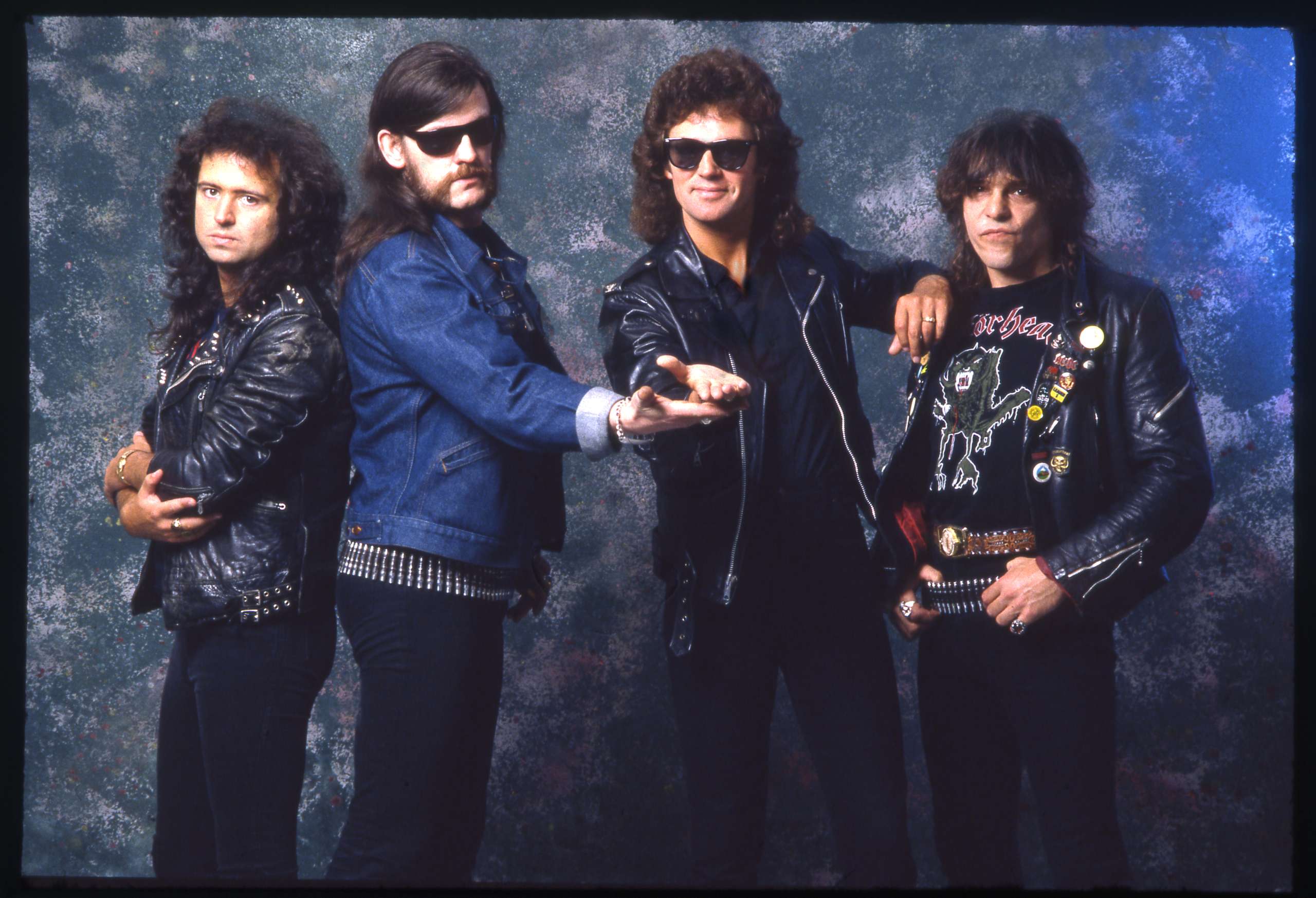
To understand Orgasmatron, you have to go back to 1984. With Robertson gone, Lemmy held a string of auditions for a replacement and, rather than choose between the two strongest candidates, kept both. Phil Campbell, a young Welshman from Pontypridd who had cut his teeth in Persian Risk, and Michael ‘Würzel’ Burston arrived together, turning Motörhead into a four-piece for the first time in their history. Drummer Phil ‘Philthy Animal’ Taylor then walked away, and former Saxon sticksman Pete Gill took over the stool. That line-up made its recorded debut on the handful of new songs cut for the No Remorse compilation, the much-loved Killed By Death among them, but Bronze Records was in financial trouble, relations had collapsed, and the band spent the best part of a year locked in a legal battle with the label, touring without a deal while money and momentum drained away. Once the dispute was settled in early 1986, the band’s management launched a label of their own, GWR, named after manager Doug Smith’s business address on Great Western Road. The album itself was cut in just eleven days at Master Rock Studios in London, with an unlikely figure in the producer’s chair: Bill Laswell, the New York bassist and studio maverick whose credits stretched from Herbie Hancock to Mick Jagger and Public Image Ltd. It was a bold, genuinely left-field choice.
Laswell was, by most accounts, excellent at capturing sounds, and the trouble came later. He took the tapes back to New York to mix, and what returned left the band cold. Lemmy never minced his words on the subject, and in his autobiography White Line Fever he dismissed the finished record with a famously blunt verdict: “Orgasmatron was mud.” Campbell was gentler but no less clear, later reflecting that the band had poured real effort into strong songs and that the production had let them down, with Laswell’s attempts to fold early hip-hop textures into Motörhead’s thunder simply failing to land. Critics were more divided, some hearing the treated, heavily layered sound as a blunting of the band’s edge, while the American writer Robert Christgau was a notable admirer of Laswell’s sharp, cutting approach. That tension has followed the record ever since, and it is precisely the itch this anniversary edition sets out to scratch.
Which brings us to the anniversary edition. BMG is offering the anniversary edition in three formats. The headline package is a deluxe 3LP bookpack, its first disc carrying the original album, remastered and cut at half speed from the original tapes, its second the new Cameron Webb remix, and its third gathering rehearsals and outtakes from the 1985 sessions alongside the complete BBC Radio 1 Friday Rock Show session from 1986. The 2CD edition holds the same content, with the remaster and the studio extras sharing the first disc and the remix and BBC session on the second. For those who simply want the album, there is a single LP on transparent violet vinyl featuring the half-speed remaster of the original mix. The bookpack also includes a 24-page booklet in which Neil Perry tells the story of the album, packed with rare photographs and archive material. Keeping the original mix front and centre is the right call; whatever its flaws, Laswell’s version is the one fans have lived with for four decades.
The remix is what will get people talking, and the story behind it is rather charming. According to the band’s camp, the idea took shape over drinks, a group of self-confessed old-school fans wondering aloud what Orgasmatron might sound like in the hands of the man who produced Motörhead’s final six studio albums, from Inferno in 2004 through to Bad Magic in 2015. They decided it would only be fair if the two versions sat side by side. Webb, for his part, has a deep personal bond with the record, recalling that his brother first played it to him when he was fourteen and that the title track seemed so alien he wondered whether it even counted as music. Working from the original 24-track tapes, he has spoken of admiring how inventive Laswell and engineer Jason Corsaro were with their sounds, particularly the drums, and of wanting to keep that character intact. His approach, he says, was to imagine Lemmy and Phil sitting at the desk beside him, drawing out what was buried on the tape without trying to erase the original. He describes the original as “wild and a little messy,” and he clearly means it as a compliment.
There is an inescapable poignancy to all of this, too. Of the four men who made Orgasmatron, three are no longer with us. Würzel died in 2011, Lemmy in December 2015, and Phil Campbell, the album’s other guitarist and the man who went on to serve longer in Motörhead than any other guitarist, passed away in March this year at the age of 64 following complications after major surgery. Orgasmatron was Campbell’s first full-length Motörhead album, and it is hard not to think of the two men who complained loudest about the original mix and are no longer here to hear the result. In that light, this edition feels less like a cash-in and more like an act of service, a chance to give the band, belatedly, the album they always believed they had made.
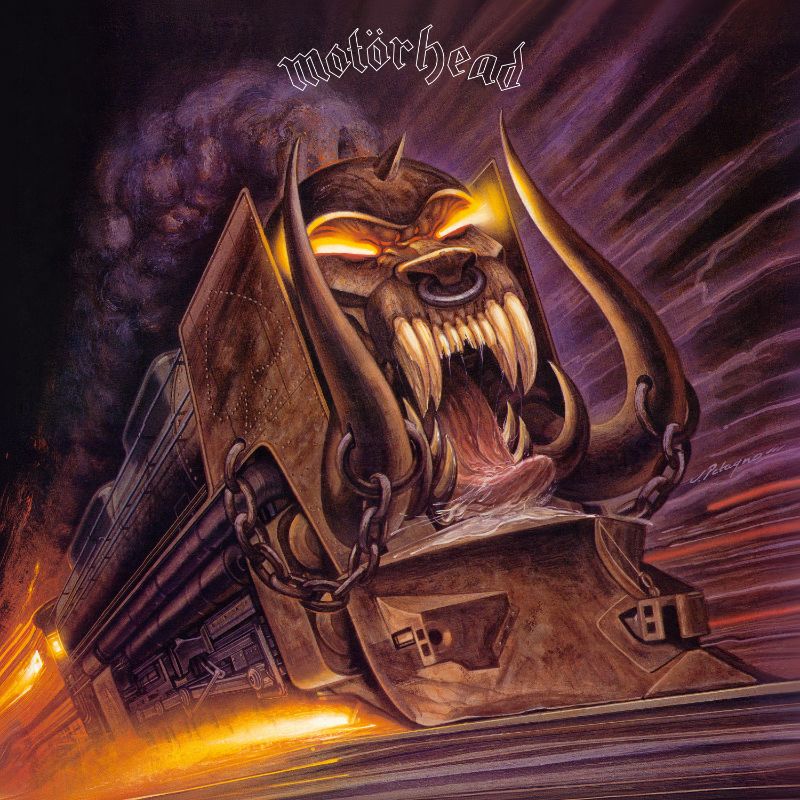
Lyrically, Orgasmatron finds Lemmy in a darker and angrier frame of mind than ever. He was always a sharper and better-read writer than his public image suggested, and here he takes aim at the biggest targets of all. The title track was, by his own account, about the three things he despised most, organised religion, politics and war, and his contempt for herd mentality and hypocrisy runs right through the record. The album was due to be called Ridin’ With The Driver, and when the name was switched at the last minute, Joe Petagno’s artwork was already finished, which is why the sleeve shows Snaggletooth fused to the front of a hurtling steam locomotive, cowcatcher and all. Lemmy, a model-railway enthusiast living on a houseboat at the time, had asked for a train in the first place. Lemmy also insisted the title had nothing to do with Woody Allen’s Sleeper, a film he claimed never to have seen.
Deaf Forever kicks the album off and wastes no time establishing that this is a different Motörhead. Rather than bursting from the traps at full gallop, it stomps, a martial, mid-paced battle march built on Gill’s thunderous tom work and a riff that rolls in like a storm front. Lemmy’s lyric is a grim battlefield anthem centred, rather brilliantly, on a dead warrior, and the title carries a wry wink at the band’s own reputation for volume. Released as a single in June 1986, it served notice that the time away had not softened them one bit, and it remains one of the great Motörhead album openers, a song that became a fixture of the live show for good reason.
Nothing Up My Sleeve takes the brakes off. Already familiar to fans who had caught the band on the road in 1984, it is classic Motörhead in spirit, a quick-fire blast of attitude and swagger with the twin guitars snapping at each other’s heels. This is where the benefits of the four-piece become obvious, Campbell and Würzel giving the band a width and weight that the trio line-ups, for all their glory, could never quite muster. It also turns up in its 1985 outtake form among the extras; a welcome glimpse of how the song took shape before it ever reached the mixing desk.
Ain’t My Crime may well be the most underrated song on the record. Built around a chugging, almost boogie-flavoured groove, it shows off Lemmy’s knack for a hook and his talent for sounding world-weary and utterly defiant in the same breath. It never enjoyed the live profile of some of its neighbours, which is a shame, because it is among the most immediately catchy songs here, and exactly the kind of track that should benefit from a fresh pair of ears at the desk.
Claw pulls things tighter and nastier. A compact, snarling song, it is one of the more straightforward pieces on the album, but it bites hard, the guitars serrated and Lemmy spitting out the words with obvious relish. An alternate version first surfaced as a bonus track on the mid-nineties Castle reissue, and its inclusion among the extras here offers another angle on a song that was clearly worked and reworked during the sessions.
Mean Machine closes the first side the way only Motörhead could ever do it, a sub-three-minute rush of pure, unfiltered speed. It is short, brutal, and straight to the point, and it does the job of reassuring anyone unsettled by the experiments elsewhere that this band could still flatten a room with the very best of them. The 1985 studio outtake among the bonus material is worth hearing in its own right, a reminder of the band in the raw before the studio sheen was applied.
Built For Speed opens the second side with one of the album’s signature moments. With a title that doubles as a wink at Lemmy’s stimulant of choice and a summary of the music he helped pioneer, it is a heavy, swaggering piece that plays with groove rather than simply flooring the accelerator, the title more a statement of identity than a description of tempo. Christgau singled it out in his review, it held its place in the set for a good while, and it has now been chosen as the second single to showcase the Webb remix, which says plenty about how central the band’s camp considers it to the album’s story.
Ridin’ With The Driver, the song that very nearly gave the album its name, is a rollicking, rock’n’roll-flavoured ride that harks back to the band’s roots. There is a looseness and a sense of fun about it that balances the heavier material around it, and it is easy to see why it once seemed a natural banner for the whole record. It also explains that sleeve: a locomotive bearing down out of the darkness is a fitting emblem for an album that so rarely lets up.
Doctor Rock is a riotous, tongue-in-cheek anthem that served for a time as the band’s set-opener, and it is not hard to hear why. It is pure adrenaline, a rallying cry for the faithful with a chorus built for a crowd to bellow straight back at the stage. It appears twice more among the extras, once in a 1985 rehearsal paired with Ridin’ With The Driver and once on the BBC session, which gives a real sense of how quickly it became part of the furniture.
Orgasmatron closes the album, and nothing Motörhead ever recorded sounds quite like it. Built on a single, grinding, hypnotic riff that refuses to resolve, it crawls forward like some vast war machine while Lemmy, delivering the lines in a cold, half-spoken growl, turns his fire on religion, politics and war in turn, each cast as a monstrous, all-consuming power. It is the darkest thing in the band’s catalogue and arguably the most influential, a song whose slow-burning menace pointed towards the extreme metal to come every bit as clearly as Overkill had pointed towards speed. Sepultura recognised as much when they covered it in 1991, and Motörhead themselves kept it in their live set for decades. Here, more than anywhere, Laswell’s production arguably earns its keep, the dense, smothering mix turning the song into a claustrophobic nightmare, and it will be fascinating to hear whether Webb’s cleaner definition sharpens that menace or dilutes it. Either way, it is one of the defining songs of British heavy metal.
The extras are where the real archaeology lies. The 1985 rehearsals and outtakes, including an early pairing of Orgasmatron with On The Road that runs to almost ten minutes, capture the four-piece hammering the material into shape, and they are the closest thing we have to hearing these songs before anyone laid a finger on the mix. The BBC Radio 1 Friday Rock Show session, meanwhile, finds the band tearing through Killed By Death, Orgasmatron, Doctor Rock and Deaf Forever, plus what is billed as a spoken word take on Orgasmatron, which should be a treat for anyone who has ever wanted to hear Lemmy’s lyric laid bare. Tommy Vance’s Friday Rock Show was an institution for British metal fans, so its presence carries a nostalgic weight of its own. The BBC tracks also act as something of a control experiment, letting listeners hear these songs live and largely unvarnished, well away from the debate over the studio mix.
Taken as a whole, Orgasmatron is striking for how varied and ambitious it is. At a little over thirty-five minutes, it is lean, but it covers an enormous amount of ground, from the battle-march stomp of Deaf Forever to the speed-freak blasts of Mean Machine and Nothing Up My Sleeve and the unholy crawl of the title track. The four-piece line-up gave the songs a heft the band had rarely had before, and Pete Gill, the former Saxon man so often reduced to a footnote in the Motörhead story, deserves real credit: his drumming has a power and precision that suits this material perfectly. Lemmy, meanwhile, sounds like a man with a point to prove, his voice raw and furious and his lyrics carrying more venom and purpose than at almost any other stage of his career. The album climbed to number 21 in the UK, a respectable return after three years away, and it opened a new chapter, with Taylor returning to the fold for Rock ‘N’ Roll the following year.
As for who this edition is for, the answer depends very much on which side of the argument you sit. Anyone who has always loved Laswell’s mix gets a freshly cut half-speed remaster on its own violet vinyl, and the original is treated with respect rather than shoved aside. Those who have always sided with Lemmy and Phil now have an alternative that, at least in intent, is the closest thing yet to what the band wanted, made by someone who knew them both and worked alongside them for more than a decade. And for completists, the rehearsals, outtakes, and BBC session make the 3LP and 2CD sets genuinely worthwhile rather than mere repackaging. Some will grumble about the absence of the 1984 live material that bulked out the 2006 Sanctuary deluxe set. But as a celebration of the album and the debate that has always surrounded it, it is hard to fault the thinking. Presenting the remix alongside the original, rather than in place of it, lets every listener make up their own mind.
The timing matters, too. This set lands in a year that has hit the Motörhead family hard, and it feels fitting that the album on which Campbell made his full-length debut, and whose sound he spent so long wishing he could put right, should be revisited so soon after his passing. For younger fans who know Motörhead primarily as the Ace Of Spades band, Orgasmatron is a timely reminder of just how much more there was to them, a record that reached towards the darker extremes of metal and left its mark on bands who would go on to define entire genres.
Strip away the arguments over the mix and the songs are beyond reproach. Orgasmatron was the album that dragged Motörhead out of the wilderness, introduced the twin-guitar attack of Campbell and Würzel that would carry them well into the nineties and gave the world one of the most menacing songs heavy metal has ever produced. Forty years on, it still sounds like nothing else in their catalogue, and whether you favour Laswell’s murky, otherworldly original or Webb’s long-awaited rethink, what matters is that both are now here, side by side, for anyone to compare. For long-term fans, this edition is a chance to finally hear the argument from both sides; for newcomers, it is an ideal way into one of the band’s boldest and most rewarding records. Turn it up, stand well back, and let the train run you down one more glorious time.
Orgasmatron (40th Anniversary Edition) – Track listing:
1. Deaf Forever
2. Nothing Up My Sleeve
3. Ain’t My Crime
4. Claw
5. Mean Machine
6. Built For Speed
7. Ridin’ With The Driver
8. Doctor Rock
9. Orgasmatron
Cameron Webb 40th Anniversary Remix (CD Two / LP2):
Full album remixed from the original multi-track tapes
Rehearsals and outtakes (2CD and 3LP):
Orgasmatron & On The Road (Studio Rehearsal – 1985)
Nothing Up My Sleeve (Studio Outtake – 1985)
Doctor Rock & Ridin’ With The Driver (Studio Rehearsal – 1985)
Claw (Alternate Version)
Mean Machine (Studio Outtake – 1985)
BBC Radio 1 Friday Rock Show (1986):
Killed By Death
Orgasmatron
Doctor Rock
Deaf Forever
Orgasmatron (Spoken Word)
Line-up
Lemmy – Bass, Vocals
Phil Campbell – Guitars
Würzel – Guitars
Pete Gill – Drums
Website:
Spotify:
Instagram:
https://www.instagram.com/officialmotorhead
Facebook:
https://www.facebook.com/OfficialMotorhead
X:
8/10