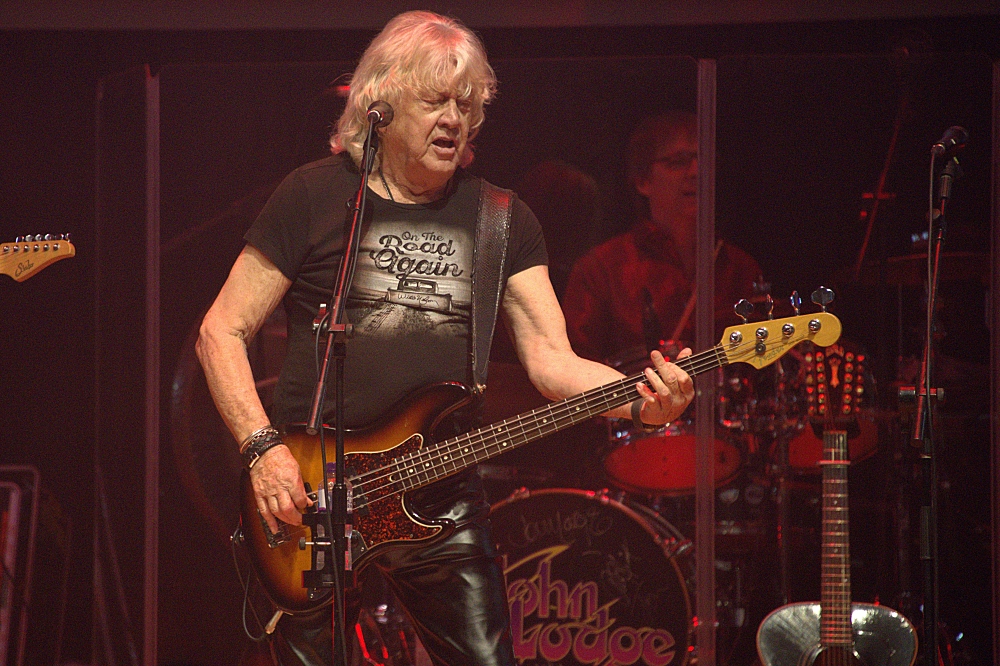
Review by Gary Spiller for MPM
Navigating the 80s as a teenager I couldn’t have imagined to listening to music from 60 years previous. That, however, is precisely, thanks to the longevity of Moody Blues’ bassist John Lodge, what we are engaged to do so this evening.
Walking up the, ever so, aptly named Hill Street we’re looking forwards to rolling back those years to explore the proto realms of progressive and conceptual rock that gave rise to the uber-classic ‘Nights In White Satin’.
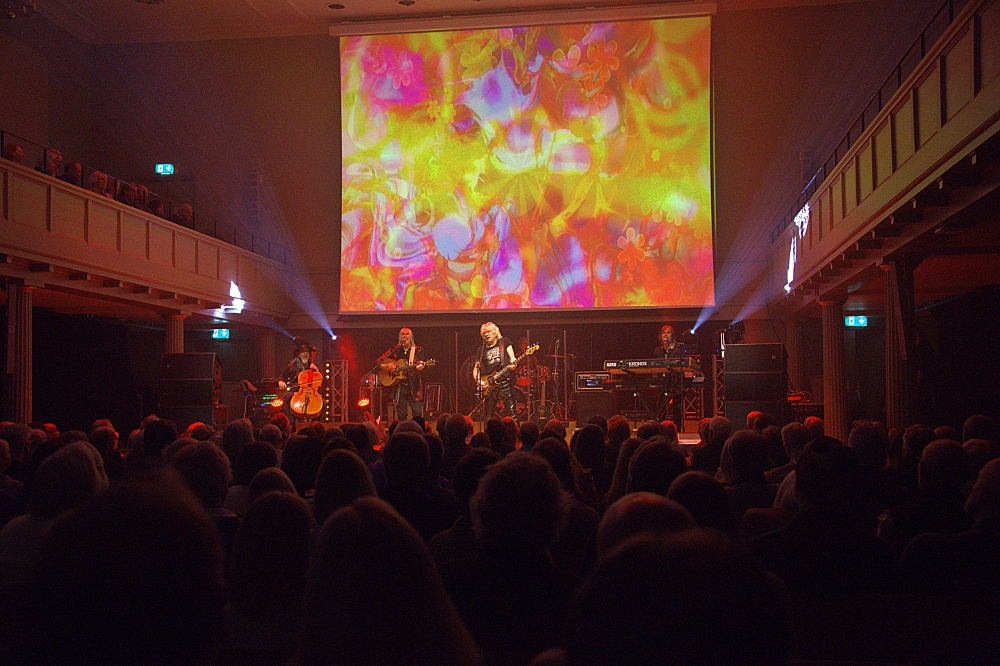
Whilst a new venue to us St. George’s, a converted Georgian church, has been hosting music events since the mid-70s. Renown British conductor Sir Simon Rattle issued high praise describing St. George’s as “the best acoustic for chamber music in Europe.” The former churches grandiose Greco-styled portico still greets one and all. However, rather than its once dominating presence above the harbourside and river below it has become somewhat tucked away surrounded by the Western fringes of Bristol city centre.
Immediately striking the well-appointed interior of this fine Grade II Listed building seems very much attuned to the genteel well-heeled nature of the evening. Split into two balanced sets Lodge and his cohorts take Bristol in their firm embrace for, firstly, a journey through the years either side of their mid-70s 5-year hiatus. Following this most tasty of aperitifs the main course arrives in the form of a play-through of 1967’s ‘Days of Future Passed’.
Forged in industrial Midland roots back in 1964 the Moody Blues began life surfing the British beat and R&B scenes gaining prominence with their chart-topping single ‘Go Now’ later that year. However, it wasn’t until the departure, in 1966, of original members Denny Laine (later in Wings) and Clint Warwick that their direction took a divergence. Catalysed by the introduction of Lodge and Justin Hayward the band immersed themselves in the psychedelic rock scene. The rest? Well, it formed the framework for a tasty, 21st century reflection.
A stirring, orchestral manoeuvre through outer space searches for the next dimension. Rays of energy pulsate drawing all gathered into its call. Kicking off the night with cantering Pink Floyd-infused 1978 single ‘Steppin’ In A Slide Zone’ Lodge and his clearly talented entourage are out of the traps in fine fettle. Penned by Lodge the track was the band’s first release following their hiatus and noted for being one of the first where synths replaced the Mellotron, of which more later.

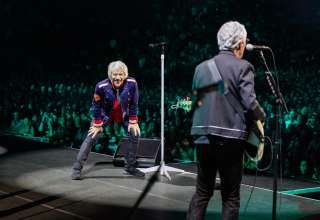
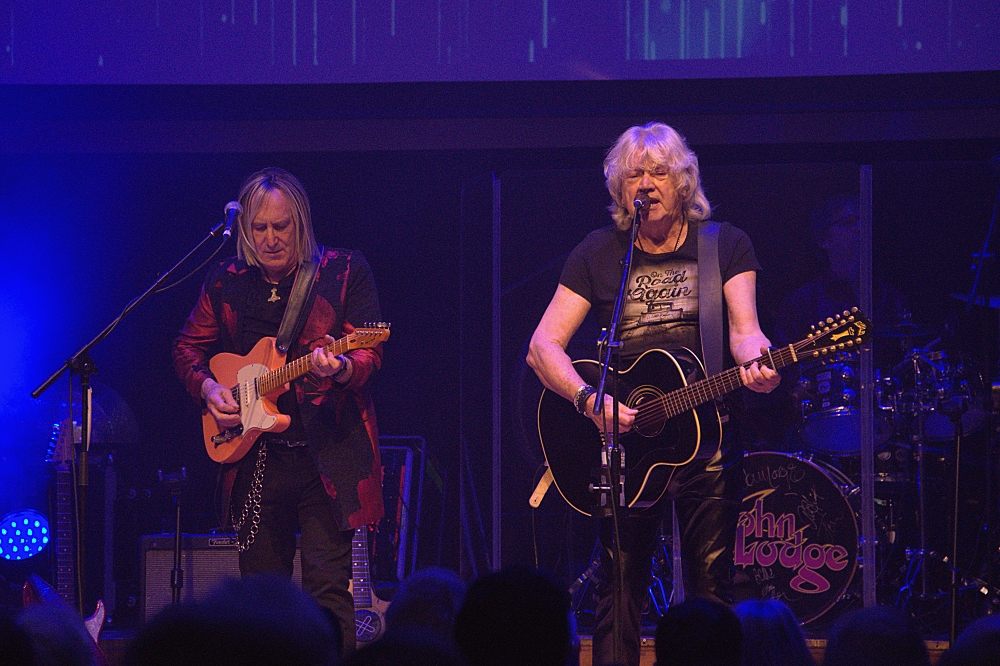
Relating to his serious stroke in 2023 Lodge wryly expresses “I’m pleased to be back Bristol; I’m pleased to be anywhere!” He switches to a 12-string acoustic whilst guitarist Duffy King shoulders a rather fetching salmon / white Telecaster. Reminiscent of The Move the uplifting ‘Talking Out of Turn’ powers gently whilst spots cast whimsical patterns upon the ceiling.
Lodge clearly enjoys a natter with his anecdotes enwrapping his music with a human warmth. Reminiscing upon forming El Riot & The Rebels in 1958 with Ray Thomas he quips “Do you know how difficult it was to buy sombreros in Birmingham?” Following the multi-hued ‘Legend Of A Mind’ – which was penned by Thomas whilst sharing a flat in Barnes with Lodge – takes it to the limit in an upbeat fuzzed-up manner. Lodge ‘mimes’ the flute solo that’s delivered by Alan Hewitt from behind his bank of keys.
Welcoming current Yes vocalist Jon Davison, to take on Justin Hayward’s vocals in the sci-fi fringed ‘The Voice’, Lodge smiles so very broadly. From a brooding melancholic intro ‘Isn’t Life Strange’ detonates serenely with the orchestral overtures filling the spacious regal interiors. The refreshing winds of this arty rocker chase the storm clouds beyond the horizon.
The tumbling drums belonging to Billy Ashbaugh herald the high energies of ‘I’m Just A Singer (In A Rock and Roll Band)’ with its searing solo despatched by King. The final single before embarking upon a half-decade break from all things Moody Blues it serves as the perfect bookend to the first set and brings down the house.

From dawn, via dusk, to the twilight hours the Moody Blues’ second album ‘Days of Future Passed’ is now considered a forerunner in both the progressive and conceptual eras. A fusion of orchestra and rock it has gone under the radar for so long but perhaps with this tour its groundbreaking contributions will garner further expanded note. At its beating heart was the Mellotron, a precursor to samplers, it was innovative tech in the 60s, The Beatles had used one on the ‘Revolver’ album in ’66 whilst The Rolling Stones had indulged on ‘Their Satanic Majesties Request’ recordings.
With a triumphant stellar Jarre-like vibrancy the shimmering instrumental ‘The Day Begins’ taped intro ushers in the second set. There’s a pre-NIWS ambience that strikes a glowing chord afore the opening recited poetry ‘Morning Glory’ adds to the build-up in refined fashion.
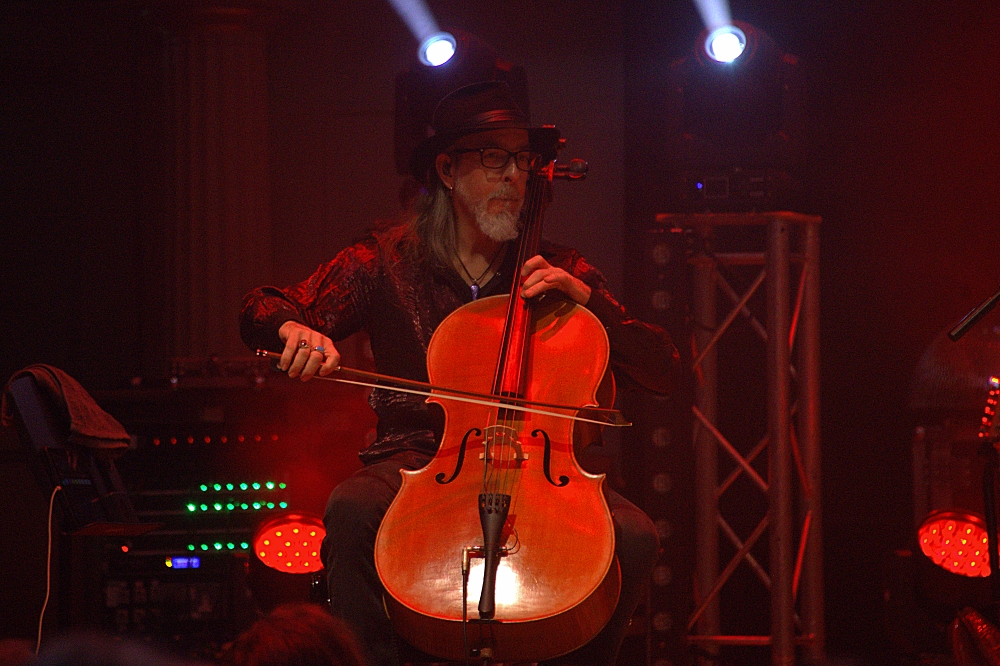
Faithful to the album’s running order ‘Dawn : Dawn Is A Feeling’ brings in the band with the rising sun chasing the darkness away from the awakening lands. Just a few moments in and it’s inspiring on so many levels, rising thermals eddying in the solar warmings. With a military-esque rat-a-tat ‘This Morning : Another Morning’ embarks upon a joyous 1960s march. King picks precise notes from his fret whilst cellist Jason Chaboneau stomps his right foot.
The manic scatterings of ‘Lunch Break : Peak Hour’ follow in the wake with a powered surge as Chaboneau, King and Lodge collectively press the accelerator. Serenity personified ‘Tuesday Afternoon’ with its orchestra-dominated intro resonates like crystalline clear glacial meltwaters. Davison’s vocals soar so effortlessly. Segueing gracefully into the acoustics of ‘(Evening) Time To Get Away’. Mellifluous delights for sure.
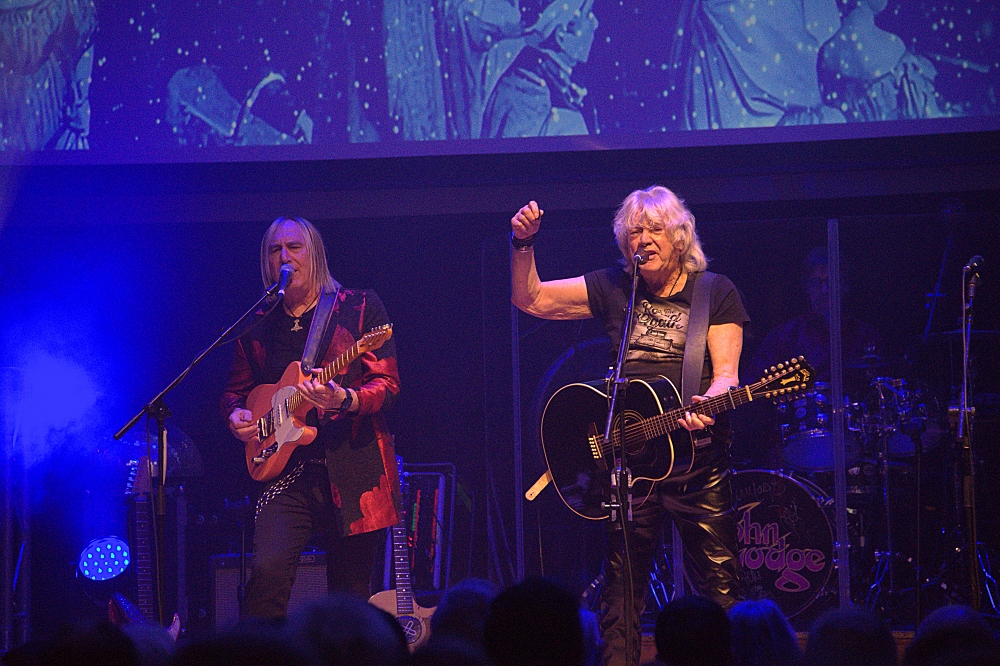
‘Evening’ which is gloriously presented in its natural pairing of ‘The Sunset’ and ‘Twilight Time’ enthrals. It’s hard to believe that this is the forerunner of so much and is a fraction shy of 60 years old. Graeme Edge’s poetry returns to the reverential spotlight for ‘Late Lament’ before the roof is blown with the gentlest of respectful explosions for the utter beauty of ‘Nights In White Satin’. Davison’s vocals are ebullient, a spinetingling dish is served. Chaboneau’s cello strides like a midnight mare in full flight as even the stoniest of hearts is melted. Empowering timeless harmonies cwtch.

Beneath the single star in the ceiling – which denotes the spot where a World War II bomb, that mercifully failed to explode, punched through into the building’s interior – the quintet takes a hugely deserved bow before providing a fine conclusion with the infectious late 60s groove that ‘Ride My See-Saw’ punches with aplomb. Check the dictionary entry for ‘timeless’ and evenings like this are right there!
Photography by Kelly Spiller for MPM