
Review & Photography by Manny Manson for MPM
Any night in Digbeth always carries a certain electricity, but tonight felt different and that was before a single note had even been struck.
The O2 Institute Birmingham stood out in a street full of kebab and euro style corner shops, its brickwork humming with anticipation as queues curled around the corner, leather jackets brushing against hoodies, band patches telling their own stories before the bands even did. You could smell it, beer already cracked open, cigarette and vape smoke clinging to the cold air, that faint metallic tang of expectation that only a heavy night promises. Conversations overlapped, people talking about previous tours, about how Butcher Babies have evolved since Goliath (2013), about Infected Rain’s rise from Moldova’s underground to international stages. Three bands, all female-fronted, all ferocious in completely different ways, and tonight wasn’t just a gig, it felt like a statement.

By the time the doors gave way and bodies poured into the Institute, the room filled fast, the low hum building into something restless.
Then lights drop without ceremony, and for a split second, the room holds its breath. Then comes the first удар, low, resonant, striking somewhere deeper than just the ear. It lands in the chest, a dull thud that echoes outward, bouncing off the walls of the Institute and returning heavier.
Another follows. Then another.
The spacing is deliberate, each hit given room to breathe, to settle, to draw the crowd inward. There’s no rush here. No urgency. Just control. The drummer isn’t showing off, they’re building something. The rhythm begins to evolve, patterns forming, splitting, recombining. It leans into something tribal, something instinctive, pulling from a place that feels older than the genre itself. You can see it happening across the room, heads starting to nod, slowly at first, then in time. Arms fold, then unfold, fists resting at sides before beginning to pulse gently with the beat. No chaos. No shouting. Just connection.

As the tempo subtly increases, the strikes become sharper, more insistent. The room responds in kind , not with wild movement, but with unity. A shared rhythm. A shared anticipation.
By the time the final sequence rolls out, a tight, rolling pattern that climbs and resolves with authority, the crowd is no longer waiting.
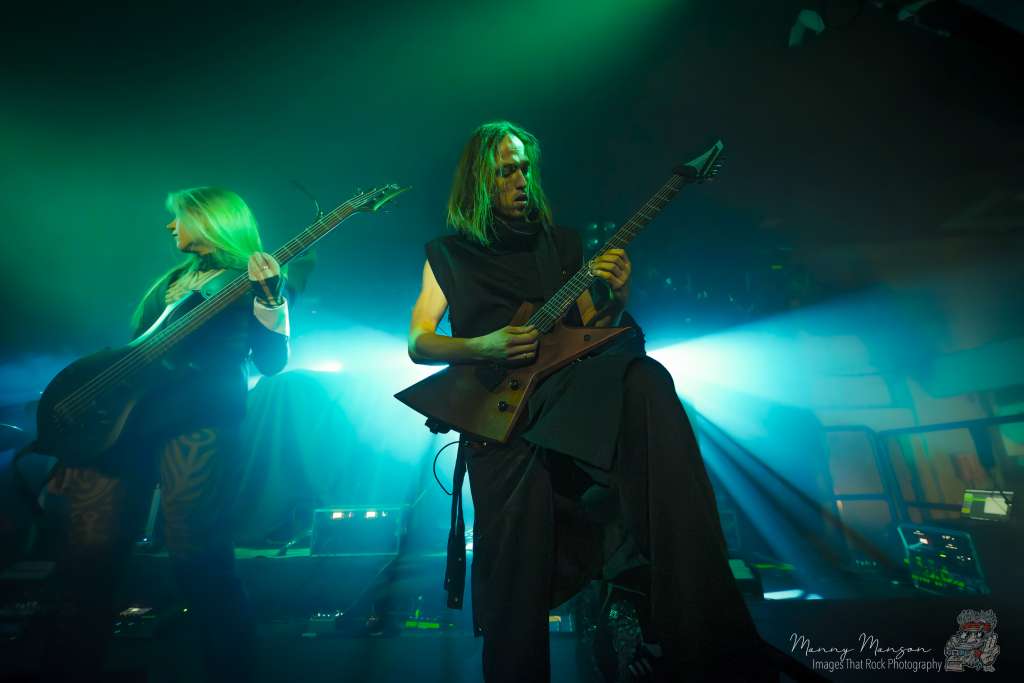
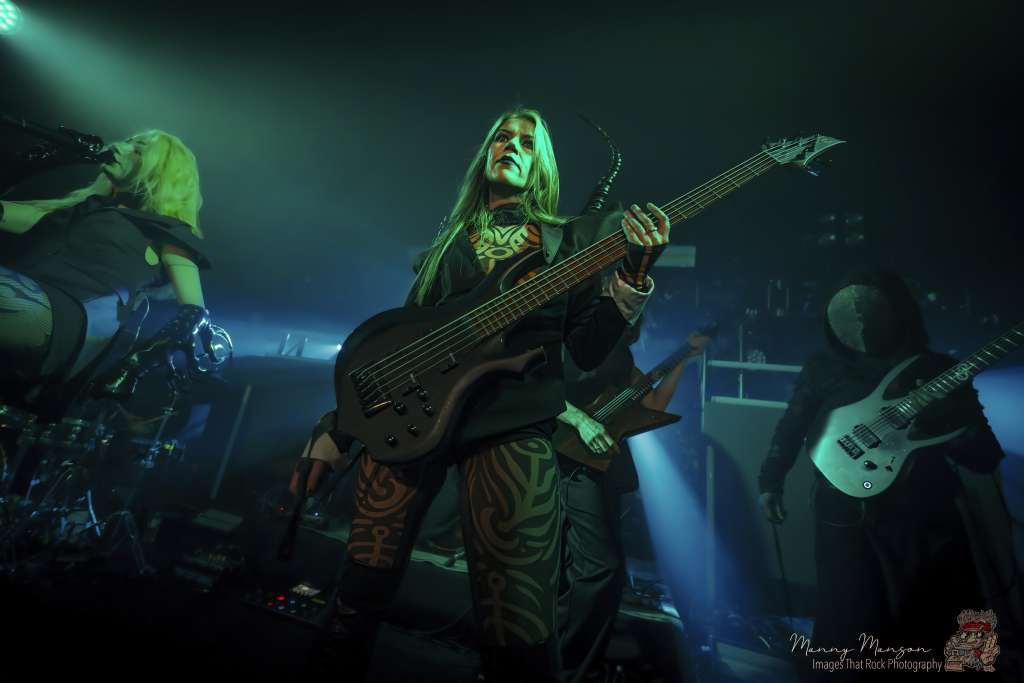
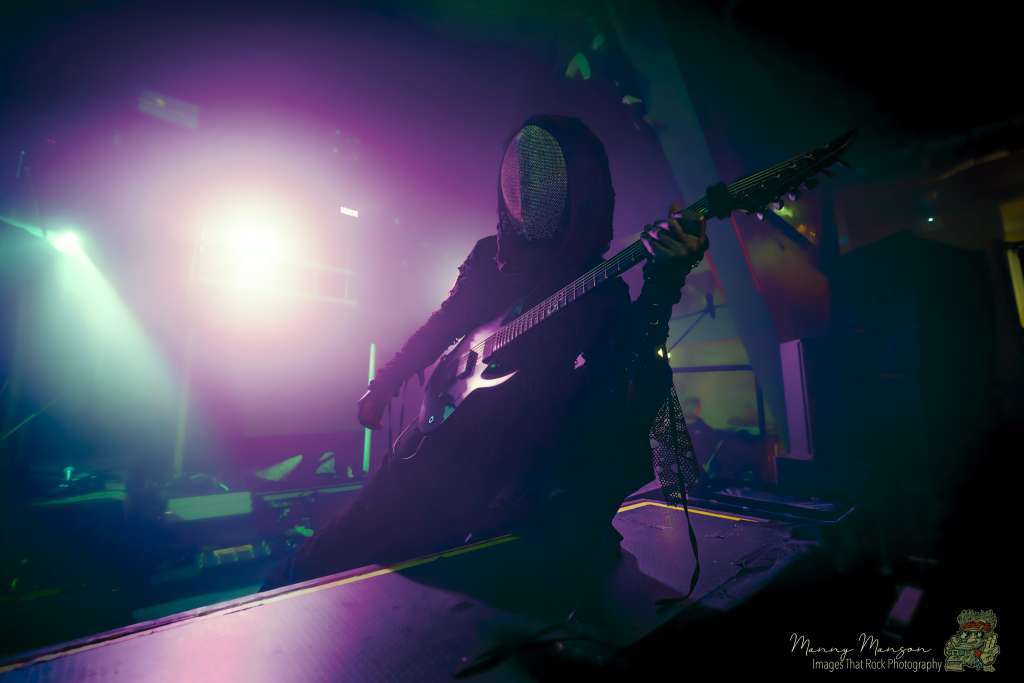
They’re ready. Black Spikes didn’t so much walk onstage their set didn’t suddenly explode into life, it crept in, tension building in the low end before the first track properly revealed itself, and from that moment Black Spikes weren’t just playing, they were constructing something in real time. Agni stood motionless at first, centre stage, her presence almost unnerving in its stillness, and when her voice finally cut through it wasn’t immediate power, it was control, measured and deliberate, drawing the room inward before unleashing something far more serrated. Yaga, to her right, already looked otherworldly, that hooded cape swallowing his frame while the fencing mask reflected fractured shards of light, turning every movement into something half-seen, half-imagined. His guitar tone followed suit, textured, cutting, but never clean in a conventional sense, while Mazvis on the opposite side grounded everything with a tighter, more direct attack, the two guitars working like opposing forces pulling the track in different directions without ever losing cohesion. Sime’s bass sat thick in the centre of it all, not flashy but absolutely essential, filling space and weight, while Titus drove the song from behind with a restrained but undeniable force, every kick drum landing like a controlled detonation.

And then the dancer appeared, (we’d been split into two groups in the pit as things were tight, so we got to watch her warming up side stage before each performance.)
At first barely noticeable, emerging from the shadows at the edge of the stage, movements slow, almost disjointed, before syncing with the rhythm as the track built. Draped in a dark, flowing costume that caught the low light, they moved between the band members without ever interrupting them, adding a visual echo to the music’s tension. As the song reached its peak, Agni’s vocals shifted, what began controlled now fractured into something sharper, more aggressive, her delivery cutting across the layered instrumentation while the dancer’s movements became more frantic, more urgent, mirroring that escalation. By the time the final notes rang out, there was no immediate eruption from the crowd, just a momentary stillness, like everyone needed a second to recalibrate after being pulled into something far deeper than a standard opener.
“Hipnotizė” didn’t just follow, it seduced. The first riff slid in like a shadow, Mazvis’ guitar ringing with crystalline clarity against Yaga’s darker, saturated textures, the two of them weaving a tension that was almost hypnotic, as the title promised. Agni’s voice rose slowly over the intro, almost whispered at first, each syllable deliberate, carried on a near-stationary presence at centre stage that commanded attention without the theatrics of movement. When she finally leaned into the chorus, it wasn’t just power, it was a razor-sharp edge, cutting into the room with precision. Sime’s bass hit under every guitar line, the vibrations pressing against the floor as if the building itself were part of the track. Titus matched the ebb and flow perfectly, shifting between subdued, tribal-like fills and sudden bursts that punctuated every tension point.
And then the dancer appeared again, this time in a different guise, a white, flowing ensemble that contrasted the dark, industrial stage. They moved like water, twisting and arching, limbs stretching into impossible shapes, weaving between the band members, interacting subtly with Yaga and Mazvis without ever breaking the music’s spell. The crowd responded, not chaos yet, but the slow, creeping sway of anticipation, nods building in unison as the riff cycled, minor and hypnotic, creating almost a trance-like collective consciousness. Agni shifted mid-verse, her vocals stretching from delicate murmurs into a full, urgent scream, riding the rhythm of the drums, every note accentuated by Titus’ cymbal crashes and floor-shaking kick drums. By the final chorus, the room had fully merged with the performance, the dancer spinning near the edge of the stage, Yaga’s masked face catching the flashes of light, Mazvis’ harmonics soaring over the melodic tension, Sime’s bass a deep, steady heartbeat, and Agni at the core, orchestrating the entire moment with an intensity that felt ritualistic and magnetic.
The final notes didn’t end, they lingered, a suspended vibration that left the audience locked in place, collectively exhaling in recognition that Black Spikes were far more than a band. They were an experience, ritual, and spectacle fused into one.
“All Is Taken,” from Black Spikes’ 2021 release, wasn’t just the next track, it was a surge, a pulse that turned the atmosphere from entranced to urgent. Agni opened with low, almost predatory vocals, her phrasing deliberate, each word carrying the weight of the band’s Baltic-infused intensity. The guitars, Yaga’s masked, hooded presence still dominating stage right, Mazvis countering on the left, created a jagged dialogue, riffs tight but interlaced with airy harmonic touches that floated above the rhythm section. Sime’s bass anchored the chaos with a solid, growling undercurrent, and Titus’ drums alternated between precise tribal fills and hammering grooves that felt both mechanical and organic at once.
The dancer returned, now wearing a black-and-red costume with flowing sleeves, moving like fire and shadow across the stage, interacting with the lighting and casting elongated, spectral shapes on the brick backdrop. Their movements mirrored the song’s shifting tension: moments of calm, then sudden jerks, spins, and contortions timed perfectly with drum hits or guitar swells.
The crowd responded in kind: not yet chaos, but a growing kinetic energy, shoulders bouncing, fists rhythmically punching the air. Agni’s delivery shifted mid-song, clean passages giving way to harsh screams, the voice stretching unnervingly across the minor-key melodies, commanding attention while teasing at the edge of control. Yaga punctuated these moments with high, sustained feedback that collided with Mazvis’ rhythmic precision, creating a tension that felt alive, almost sentient. Every note, every movement, every subtle shift of the dancer was part of a living organism, the band, the performer, and the audience fused into one. By the final crash, the song didn’t end; it bled into the next track, leaving the room both unsettled and electrified.
“Kitastu” hit like a storm breaking across the stage. From the first staccato riff, it was obvious this track wasn’t about slow seduction, it demanded attention, control, and precision. Yaga’s hooded cape and mesh mask reflected the fractured stage lights, every movement deliberate, his picking sharp and syncopated, while Mazvis’ guitar countered with jagged harmonics that cut across the low-end groove, teasing tension before the full riff landed. Agni’s vocals were electric, alternating between a tight, clipped delivery in the verses and bursts of raw, almost feral power in the choruses. Sime’s bass growled beneath it all, rounding out the lower register and giving every chord weight, while Titus’ drumming shifted seamlessly between driving double-kick patterns and sudden tribal-like fills that punctuated the jagged rhythms.
The dancer reappeared, I believe her name is Gabriele, now clad in a white ensemble, their movements razor-focused and angular, mirroring the sharp, almost fractured riffs. They moved fluidly between Yaga and Mazvis, weaving through the stage while keeping perfect timing with the song’s abrupt shifts, every spin, fall, and stretch accentuating the music rather than distracting from it. The choreography felt organic, almost like an extension of Agni’s voice, which soared over the band’s tightly wound aggression.
The track-built tension through subtle pauses, moments where the instrumentation hung suspended in the air, only to snap back with sudden force. The crowd responded instinctively: fists punched upwards, heads tilted forward, eyes glued to the stage. You could feel the technical discipline of the band, the precise timing, the interplay between guitars, bass, drums, and vocals, without a hint of showboating. Agni’s control was mesmerizing; even in moments of unrelenting aggression, her voice cut clearly over the mix, commanding the room’s undivided attention. By the end, “Kitastu” didn’t just finish, it exploded, leaving the crowd breathless and primed for what came next, as the subtle tension carried over seamlessly into “Užkalbėjimai.”
It unfolded like a ritual, a track that brought every element of Black Spikes’ identity into sharp focus. Opening with Mazvis’ layered, resonant chords that trembled beneath Yaga’s sharp, precise leads, the song immediately established tension. Agni’s voice entered like an invocation, part chant, part metallic growl, sliding effortlessly across minor-key phrasing, holding the room in suspense. Each line she delivered was punctuated with subtle inflections, almost theatrical, pulling the audience into the song’s shadowed narrative. Sime’s bass underpinned the melodies with a deep, earthy pulse, giving the track a grounding weight that contrasted beautifully with the high, fluttering guitar harmonics. Titus’ drums were tribal and deliberate, each kick and snare accentuated the chanting cadence, building a hypnotic framework that allowed the song to breathe even as the riffs cut sharply.

The dancer emerged again, now clad in a costume that seemed to flicker in the stage lights. Her movements were ritualistic, twisting and coiling, limbs arching and dropping in time with the percussion, their presence both mesmerizing and slightly unsettling. At one point, they moved across the front of the stage, interacting subtly with Yaga’s mask and cape, weaving the visual and musical tension together as the audience’s focus shifted seamlessly between the band and the performance.
As the song built, Agni stretched her vocals into soaring crescendos, alternately clean and harsh, hovering over the band’s layered textures while Sime’s bass and Titus’ percussive fills locked everything into a collective pulse. Mazvis and Yaga danced around each other musically, trading leads, harmonics, and feedback swells, their precision a perfect foil to the dancer’s organic unpredictability. The room itself seemed to react, the crowd’s hands rose in unison, subtle head-nods giving way to swaying bodies, a shared consciousness drawn tight by the ritualistic energy.
By the final chorus, the tension peaked: every drum hit, every guitar accent, every vocal inflection synchronized with the dancer’s final twists and spins, leaving the audience breathless and suspended in a moment that felt larger than the music itself. The track didn’t just end, it hung in the air, a charged, almost sacred energy that bled directly into the next song, “Jausmus Išašyt,” promising that the journey through Black Spikes’ world was only deepening.
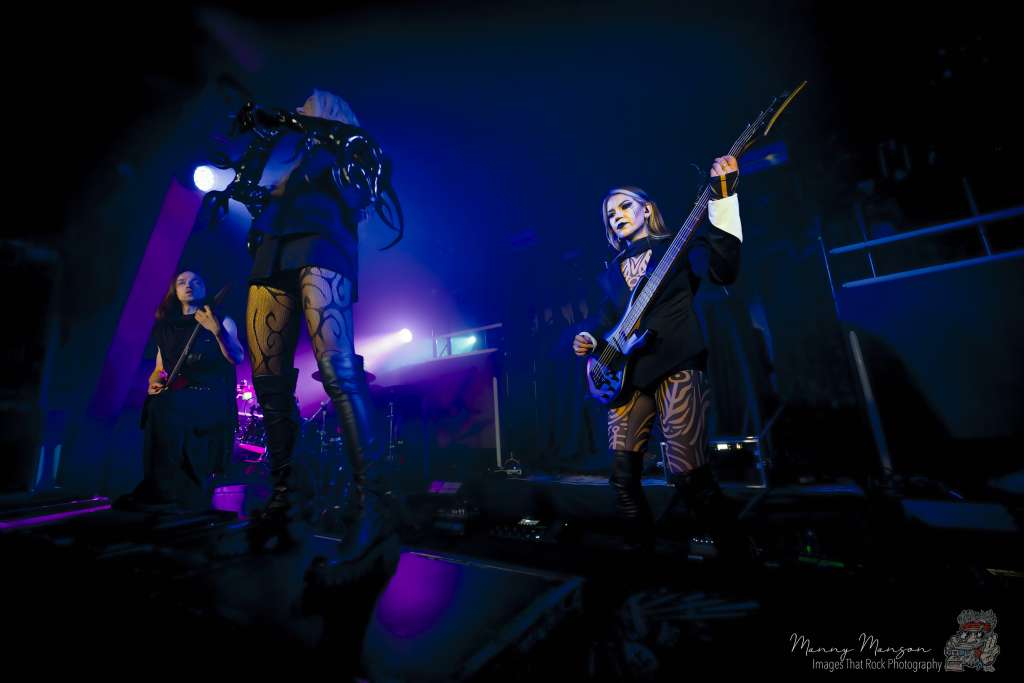
“Jausmus Išašyt” softened the jagged edges of the previous tracks, but only to deepen the emotional resonance of the set. Opening with a clean, ringing guitar passage from Mazvis, layered delicately over Yaga’s atmospheric swells, the song immediately established a contemplative mood. Agni’s vocals glided in, fluid and expressive, switching effortlessly between fragile, almost whispered lines and controlled bursts of intensity, her phrasing weaving in and out of the harmonic textures. Sime’s bass provided a gentle, resonant foundation, thumping subtly beneath the guitars, while Titus’ drumming balanced restraint with quiet power, brushes and mallets accentuating cymbal washes and tom rolls, giving the track breathing space while maintaining an undercurrent of tension.
The dancer returned in a muted costume, her movements slower, more fluid, echoing the song’s introspective nature. They flowed across the stage, spinning and extending limbs in ways that seemed almost weightless, bending and curling in tandem with the subtle swells of Agni’s vocal lines. At times, they moved behind the guitarist and bassist, casting shadows on the backdrop that made the stage feel larger, more dimensional, while also highlighting the interplay between each band member.
As the track progressed, Agni allowed her voice to soar over the swelling chorus, layered with subtle distortion that added weight without breaking the song’s delicate architecture. Yaga’s leads punctuated the peaks with long, sustained bends, while Mazvis interwove melodic counterpoints that gave the song an almost cinematic depth. Titus added quiet flurries of tom fills during the crescendos, perfectly timed to accentuate the dancer’s spins, while Sime’s bass held the groove, keeping the emotional tension taut. The audience responded instinctively, swaying gently in unison, eyes locked on the stage, absorbing the mood rather than reacting physically.

By the climax, the vocals and instruments merged into a seamless whole: Agni’s emotive delivery, the dual guitars weaving a tapestry of melody and texture, the rhythm section holding the line with unshakeable precision, and the dancer interpreting every rise and fall in movement. The song faded not abruptly but like a sigh, leaving a charged silence in the room, as if everyone was collectively exhaling after experiencing something intimate and profound. That quiet intensity then fed directly into “Sapnai” (2022), carrying the audience forward into the dreamlike expansiveness that would follow, ensuring the energy remained continuous, evolving, and utterly immersive.
“Sapnai” opened with a slow, almost ethereal wash of clean guitar from Mazvis, layered with shimmering harmonics that felt like sunlight filtering through mist. Yaga’s leads hovered above it, bending and trailing into delicate feedback swells, each note precise but fluid, carrying the sense that the song was stretching time itself. Agni’s vocals entered gently, almost a whisper at first, weaving between clean melodic lines and subtle growls that hinted at the tension simmering beneath the surface. Sime’s bass provided a warm, resonant counterweight, not driving the song aggressively but anchoring it with a soft, constant pulse, while Titus’ drumming was restrained yet expressive, soft cymbal rolls and tom flurries accentuating the ebb and flow rather than pushing it.
The dancer emerged inside a flowing, translucent costume, moving with liquid grace that mirroring the song’s dreamlike qualities, an energy inside a moving “bubble” face, arms, feet pushing the edges as she pulled contorted shape after eerie shape. Backlit with a red spot, she addressed the stage, spun and arched back, reaching toward the lights, every motion amplifying the music’s delicate tension. At points, they interacted with the band, leaning toward Yaga during a cascading guitar run, spinning behind Titus as he added gentle percussive flourishes, becoming an extension of the sonic landscape rather than a separate visual.

As the track built, Agni’s vocals grew in intensity, layering clean and harsh tones that intertwined with the guitar textures, giving the chorus a haunting, almost otherworldly resonance. Yaga and Mazvis played off each other masterfully, trading motifs and weaving harmonics that danced around Agni’s lines, filling the room with depth and atmosphere. Sime subtly shifted the bassline, adding melodic slides and pauses that emphasized the tension and release in the song, while Titus punctuated climactic moments with delicate tom rolls that echoed like distant thunder.
The song reached its apex with Agni holding a long, sustained note, voice wavering between vulnerability and power, and the band following her lead, instruments swelling around her. The dancer’s movements became more intense, spinning faster, bending backward, stretching into impossible angles, heightening the song’s ethereal yet tense atmosphere. The audience was hypnotized, some swaying gently, others leaning forward, captivated by the interplay of music, movement, and voice.
By the final bars, “Sapnai” didn’t just end, it dissolved, notes ringing in the air like fading echoes, leaving a charged anticipation that carried perfectly into “Imperatorė”Here, the intensity snapped back, Agni returned to commanding, assertive vocals, the guitars sharpened, Sime and Titus locked into a more aggressive groove, and the dancer’s costume shifted to a fiery palette, reflecting the song’s powerful authority. The stage seemed to surge forward, ready for the next wave of Black Spikes’ relentless energy.
“Imperatorė” hit like a sudden storm after the dreamy suspension of “Sapnai.” The moment Mazvis struck the opening chord, sharp and commanding, the room’s atmosphere shifted instantly from contemplation to authority. Yaga, still cloaked in that hooded cape and fencers-style mesh mask, added jagged, stabbing leads over the foundation, each note cutting through the air with precision and menace. Agni’s vocals entered immediately, full-throttle, commanding, her phrasing deliberate yet powerful, alternating between guttural shouts and piercing melodic lines. Sime’s bass reinforced every attack with a deep, resonant growl, locking tightly with Titus’ punishing, almost martial drum patterns, every kick and snare a hammer striking in tandem with Agni’s every word.

The dancer reappeared, this time clad in a gold-and-black costume, movements sharp, angular, almost militaristic, mirroring the song’s title and themes of power and dominion. They prowled the stage, limbs slicing through the light, spinning and pivoting with the drum accents, sometimes weaving between Yaga and Mazvis mid-riff, creating a living, breathing extension of the music. The effect was hypnotic: it wasn’t mere stagecraft, it was ritualistic, a visual embodiment of the song’s imposing energy.
The song’s structure allowed Agni to flex her full vocal range. The verses were punctuated with controlled aggression, voice low and forceful, while the choruses soared with high-register screams that pierced through the layered guitars. Mazvis and Yaga’s guitars interlaced constantly, Mazvis holding thick, sustained chords while Yaga peppered in staccato leads, slides, and harmonic squeals that added tension. Every instrument reacted to Agni, following her vocal cues, accenting the dynamics in perfect unison. Sime’s bass lines weren’t just support—they danced around the guitars, adding subtle fills and slides that enriched the rhythmic backbone, while Titus’ drum fills created natural pauses, letting the band breathe before the next wave of aggression hit.
Mid-song, the dancer moved to the front of the stage, arms arcing wide, spinning slowly in perfect sync with the swelling chorus. Their movement accentuated Agni’s commanding presence, giving the track a theatrical but raw feeling, merging performance art with sheer sonic force. The crowd was fully absorbed, fists pumped, heads bobbed, but the energy felt controlled, reverent almost, as though everyone was in on the ritual that the band had conjured.

By the climax, “Imperatorė” had everything: Agni dominating with ferocity and nuance, guitars weaving a tapestry of sharpness and depth, bass and drums driving a relentless rhythm, and the dancer embodying the music in motion. As the final chord rang out, the lights faded in perfect timing with the last sustained scream, leaving the audience both breathless and buzzing, ready to follow Black Spikes into the final, triumphant track of their set, “Aurea”a culmination of every thread they had woven across the night.
“Aurea” opened like a sunrise breaking over a storm-lashed landscape, immediately contrasting the rigid power of “Imperatorė” with a broader, more expansive sound. Mazvis’ guitar began with clean, ringing arpeggios, each note lingering in the air, while Yaga’s lead added subtle, haunting slides and harmonic flourishes that shimmered like fractured light. Agni entered with a voice that felt both triumphant and intimate, melodic yet edged with grit, alternating between soaring sustained notes and precise, almost whispered consonants that pulled the listener in. Sime’s bass anchored the track, pulsating in tandem with Titus’ intricate drum patterns, which shifted seamlessly between slow, driving grooves and sudden bursts of percussive attack, giving the song a living, breathing pulse.
The dancer returned, this time in a flowing, golden costume with trailing fabric that caught the light with every movement. They moved fluidly across the stage, sometimes close to Agni, sometimes spinning behind the guitarists, mirroring every swell and fall of the music. Their presence wasn’t mere ornamentation, it was an integral part of the set, a visual echo of the sonic landscape, enhancing every note, every rhythm, and every vocal inflection.
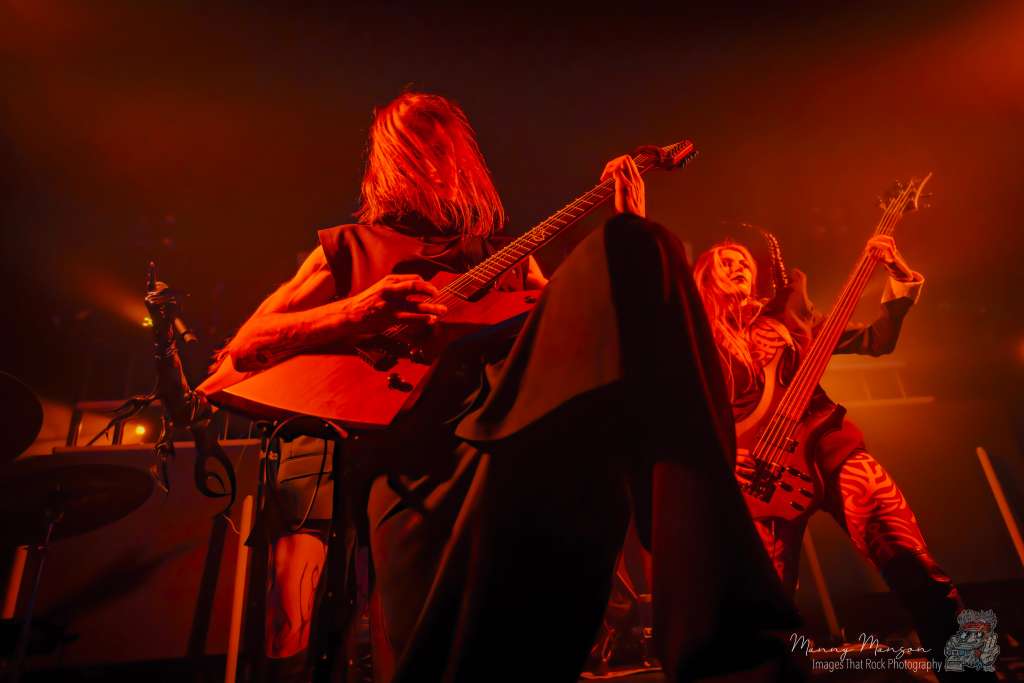
“Aurea” built gradually, its verses emphasizing texture and tone rather than outright aggression. Agni’s vocals floated over Mazvis’ shimmering chordal layers, then cut sharply into sudden high-register bursts that injected intensity without breaking the song’s contemplative core. Yaga’s leads added tension, bending notes at just the right moment, adding harmonic complexity that made the track feel almost cinematic live. Sime’s bass interlaced with the drums, anticipating rhythmic shifts, filling spaces with warm, resonant low-end that you could feel in your chest, while Titus’ subtle cymbal work and tom fills accentuated both the song’s delicacy and its crescendos.
Midway, the track erupted, Agni fully commanding the stage, voice both powerful and nuanced, cutting across the textured guitars with authority. The dancer mirrored her energy, spinning faster, arms extended, fabric trailing like fire, punctuating each dynamic peak. The crowd responded instinctively, swaying, raising fists, letting themselves be absorbed by the synthesis of sound, movement, and presence. Every member of Black Spikes was in perfect alignment, Mazvis and Yaga playing off each other, weaving intricate harmonic lines, Sime and Titus locking in tight grooves, and Agni leading the charge vocally, commanding but never overbearing.
As the final chorus swelled, the instrumentation layered into a rich, full wall of sound, the dancer’s movements becoming almost frenzied in their beauty, and Agni’s vocals soared to their apex, both melodic and raw, triumphant and vulnerable simultaneously. The song closed with a held, reverberating note from Mazvis, Yaga adding a final harmonic wail, and Titus and Sime tapering the rhythm to a heartbeat, leaving the audience suspended between awe and exhilaration.
When the last echoes faded, it wasn’t chaos that followed, it was reverent energy, a room alive with respect and exhilaration. Fists were raised, heads still nodding, and the crowd was united in understanding that they had witnessed something profoundly unique. Black Spikes had not merely played a set, they had conjured an experience, blending precision, power, atmosphere, and visual spectacle in a way that left the intimate crowd in the O2 Institute buzzing.